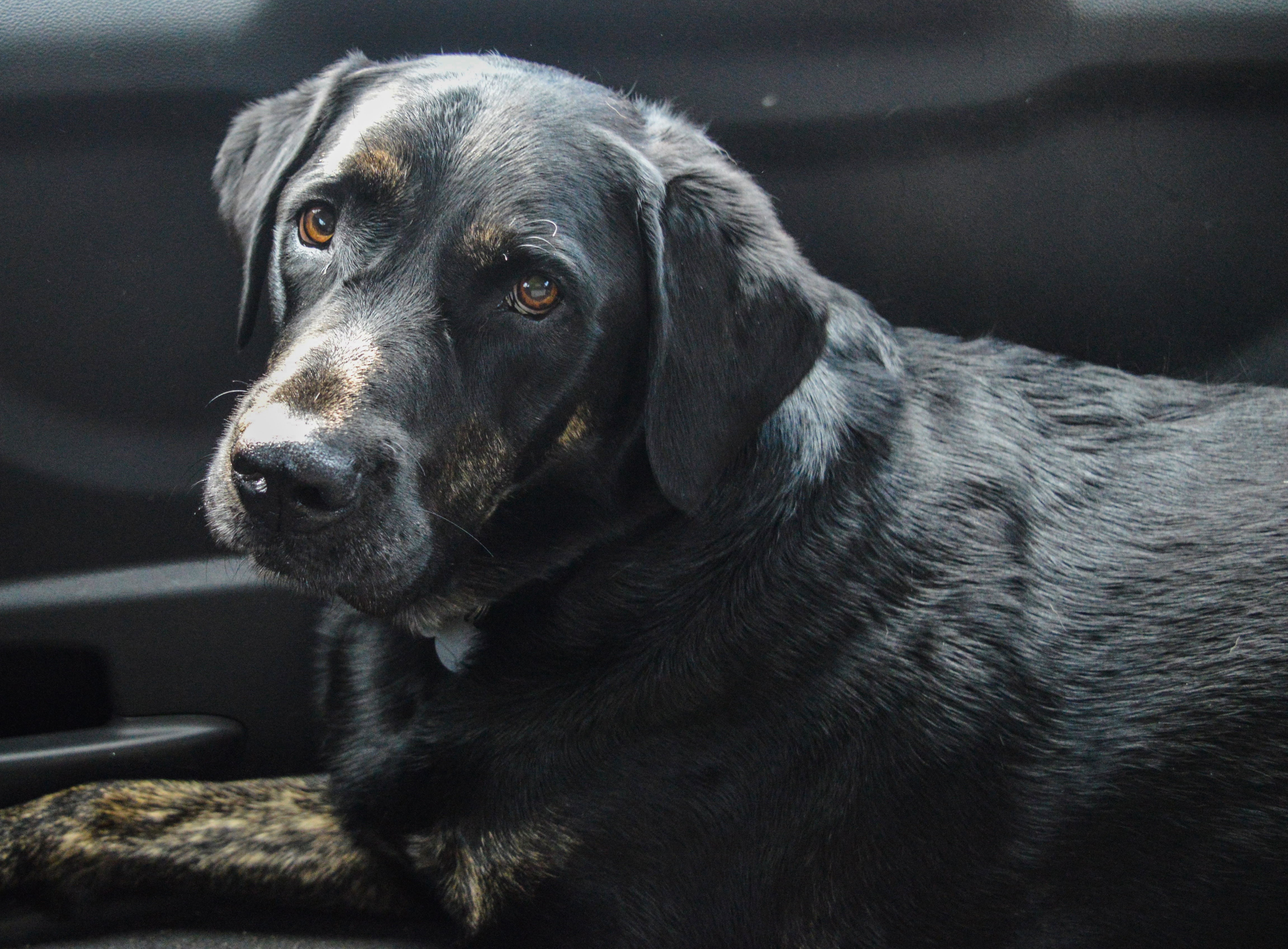
We’re a dog family.
I had dogs growing up as a kid. My wife and I got our first dog soon after buying our first house. His name was Wayne, but we changed it to Kane because who names their dog WAYNE?
Your first dog is the dog by which all others are measured, and Kane set the bar high. We adopted him from the Potter League for Animals in Middletown, RI, where Meg and I worked before we started dating.
Kane was about a year old when we adopted him as a full-grown shepherd mix. I remember approaching him in his cage – he crouched slightly and turned his head quickly towards my hand as I tried to clip the leash to his collar. He intended to inform, not injure – a way of stating we’re not acquainted well enough for you to approach so casually. His eyes said, “I’ve seen others leave on a leash and never come back.”
Kane’s reaction would have been a deal-breaker for some people – an excuse to walk away or visit the friendly Beagle-mix two cages down. But I was not willing to give up so easily. So, I backed up slowly and sat down at the opposite corner of the cage. Kane and I regarded one another like potential enemies who might one day become best friends – a future to be determined in the next few minutes.
I maintained an un-threatening posture, relaxed, head down, making eye contact only occasionally. Kane seemed skeptical but open to negotiation. Finally, after several minutes of détente, I patted my hand gently on the cold concrete floor, gesturing for Kane to make the journey across the cell. He wagged his tail slowly, still unsure what to make of me. Then, Kane stood, lowered his head somewhat submissively, and approached slow and steady.
When he sat, he regarded me in a friendly manner, dissipated skepticism replaced with a cautious trust.
This time when I went to put the leash on, Kane lowered his head and gently leaned in – and that was it. The deal was sealed. I knew that instant that Kane would be coming home with me.
Of all the dogs we have had, Kane was the most loyal. We would let him out the front door, and he would sit or lie down on the steps – if he ever wanted to run off, he never let on. So for about 2 years, it was just Meg, Me, and Kane. We took him to Colt state park for long walks and many high school baseball fields to play fetch – he bonded quickly and totally with us.
Even though he was our first, Kane knew (instinctively, it seemed) that when baby number one arrived, he would be relegated to a lower rung on the ladder. He accepted his demotion gracefully – if such a thing is possible for a dog.
He was a constant companion to Jake and Liam growing up. When our boys ventured across the street, Kane would always tag along, trotting slowly behind them, setting up watch on a corner of the neighbor’s lot – he would never intrude on the kickball or whiffle ball or basketball or football or Pokémon card trading activities. Instead, he would stay close and observe – with an air of guardianship and responsibility.
At around 12, Kane began suffering from congestive heart failure. I remember driving him to Ocean State Veterinary Clinic several times that year, where a vet would work a needle into Kane’s chest to draw fluid from his lungs. It was miraculous how well he responded – before falling ill again. The vet informed us the procedure would eventually stop working because scar tissue forms sand prevents them from being able to draw fluid.
Futility and the inevitable snuggled up to one another. We knew we were running out of time with Kane. We knew we would have to put him down.
When that time came, I was 42, old enough to have experienced some loss in life – loved ones, a parent, relatives, friends, and colleagues.
The longer you stick around, the better acquainted you get with death. Each time death pays a visit to someone you know, you gain perspective, begrudgingly accepting that death is part of the equation.
I’ve never felt more bereft with grief than when we had to put Kane down. A profound grief that wrecked me – left me in a heap for weeks.
We’ve had to part with two other dogs since Kane – and the grief was no less – not one scintilla. The begrudging acceptance that death is part of the equation didn’t soften the blow.
It was still like being hit in the heart with a hammer.
So why does the family dog’s death hurt so much? What about our relationships with our dogs make their death so poignantly and consistently painful?
I think it has to do with the dynamics – the one-sidedness of the relationship. This is not to say that we don’t love our dogs – we do – but they love us more (or at least that’s what registers in our brains), and they love us “regardless” – regardless of our faults, foibles, and frailties.
Over that 10 to 12-year span, we experience (over and over and over again) unconditional love and non-judgmental friendship, which (let’s face it) is so unlike the relationships we have with the people in our lives (even the ones we love the most – especially the ones we love the most).
Our experiences (the good, bad, and indifferent) are processed and stored as memories. Our brain never sleeps, so all this processing and storing is happening 24 7. This means that every time we’re greeted by our dog, tail wagging, eyes smiling, regardless of how shitty our day was or whether we ignored him — all those “I’m so happy to see you” moments are stored in memory.
And when it comes time to put our dogs down, the packaging containing every one of those experiences unravels, the memories spill out, and we’re forced to face the loss of the one relationship in our lives that seemed pure to us.
How could this not wreck you?

 bendingtheneedle