From Tech Writing to Dog Sitting

In December 2024, after more than 35 years, I stopped working as a technical writer.

I hesitated to call myself “retired” because I wasn’t sure that was true. I felt burned out but didn’t know whether the burnout would last. Maybe I just needed some time.

A month or so after I stopped working, I published a collection of essays, poems, and short stories I’d worked on for years in my spare time. That was fun. I worked with an editor, learned about self-publishing, and published my book on Amazon. The entire endeavor took a few months.

After that, I did a lot of sitting around—so much so that I considered reentering the workforce. I even took a few interviews.

Retirement taught me what I already knew: I’m not a “project guy.”

I don’t have a workshop in my basement, I don’t tinker with cars, I’m not a hobbyist in any sense, and I’m about as “handy” as Captain Hook. So, retirement became a bit of a vacuum for me – a lot of time with nothing to fill it with.

To make things worse, my wife retired shortly after me, and it turns out that she is a “project guy (or gal).”

Unlike me, my wife finds things to do every day. She’s in constant motion – organizing the basement, digging in the garden, putting up bird feeders. I’d be sitting on the couch, watching the news or Sports Center, and I’d look up and see my energetic wife in the yard, weeding, feeding, and seeding with purpose.

I felt like a lazy lump. She’d come in from the outside with a smile on her face and say, “It’s a beautiful day out there,” not necessarily wanting me to join her but wanting me to at least get off my ass.

Caring for our dog Pepsi kept us both busy during those early months of retirement. We spent a lot of time and energy helping Pepsi navigate illnesses and old age until that dreadful day when we had to put her down. It was a tough time for both of us. I’m thankful I was retired when all of that went down.

Though I miss Pepsi immensely and miss the joy of k9 companionship in general, it was freeing not to have that 24/7 responsibility for the first time in 12 years. But after a few months, I began to think it would be nice to have a dog again, leading me to Rover.

Rover is a pet-sitting, boarding, and walking service.

I thought to myself, “I love dogs, I know I’d be good at this, it’s going to get me off my butt, and we have a pretty good setup logistically (large, enclosed back yard with two dog-loving people who are home all the time).

I’ve been a Rover rep since January 2025, providing mainly boarding services, but I’ve also walked a few dogs.

Rover allows me to set my schedule, so I can block off weeks or months at a time in case I do suddenly become a project guy (unlikely) or if my wife and I decide to take a vacation, all while putting some spending money in my pocket.

Rover helped fill the hole Pepsi’s death left in my heart with an opportunity for K9 companionship while providing a service to pet owners looking for a warm, safe, and loving environment for their pets.

Honestly, it’s been a win-win.

So far, my clients include a loveable and playful hound mix named Cooper, a quiet and reserved basset/shepherd mix named Rene, a timid lab mix named Millie, a gentle geriatric bulldog named Tucker, and an enthusiastic, boundlessly energetic, and inquisitive German Short Haired pointer named Birdie.
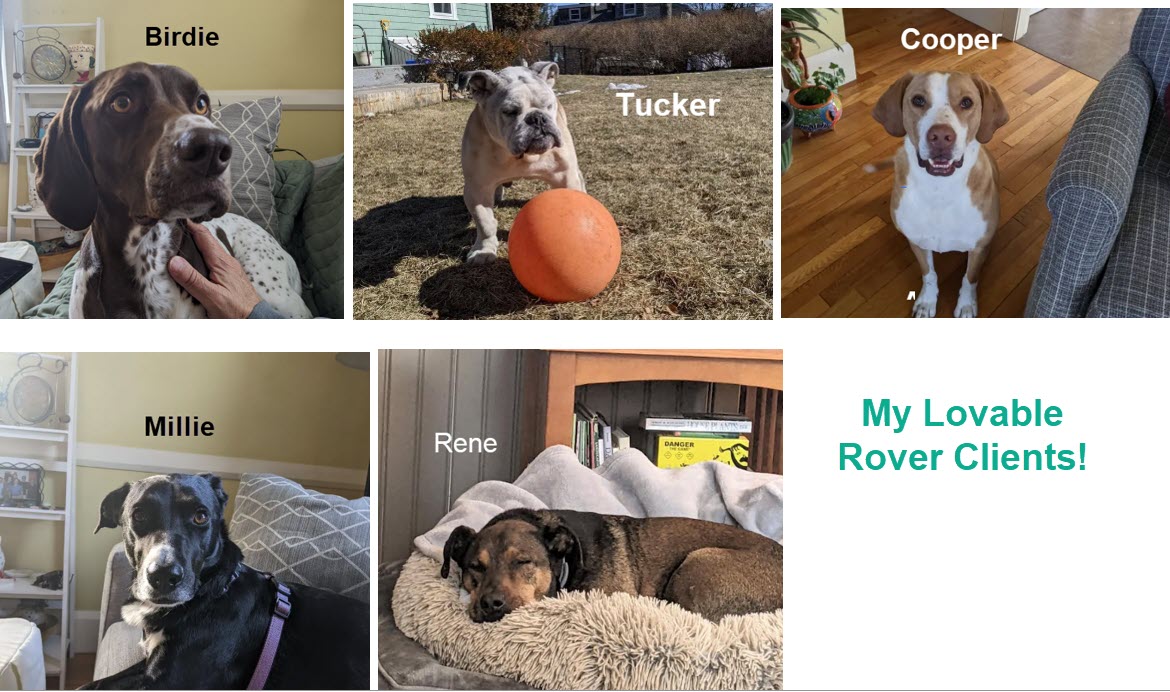
I’ve had several Meet and Greets that have resulted in bookings through the Summer.

Each dog has its own personality, and it’s been a joyful experience watching them adjust to me and learning how to adjust to them. All of the dogs I’ve boarded so far have acclimated fairly quickly—they become comfortable in a day or two.

Our house feels more like a home with a dog on the couch or sunning themselves on the back patio.

I’m sensitive to the fact that every dog that an owner drops off is probably feeling some anxiety, at least initially. My wife and I do our best to give the dogs the space to explore our house and become comfortable with new and unfamiliar surroundings. I try to keep the house quiet (maybe some soft music).

I’m discovering that when a dog is comfortable with where they are, they become comfortable with me, and that’s when I can begin building trust by going on walks, sitting together on the couch, or playing fetch in the backyard.

When it’s time for my K9 guests to leave, I feel a tinge of sadness, but mostly, I’m happy that I could provide them with a loving and welcoming place to stay while their owners are away.

Every pet owner I’ve dealt with has been great. I provide daily updates with videos and pictures and converse with them over the Rover app.

Being a Rover rep has been an emotionally uplifting experience while providing a much-needed distraction from the chaos in our country and the world.
Missing You Immensely

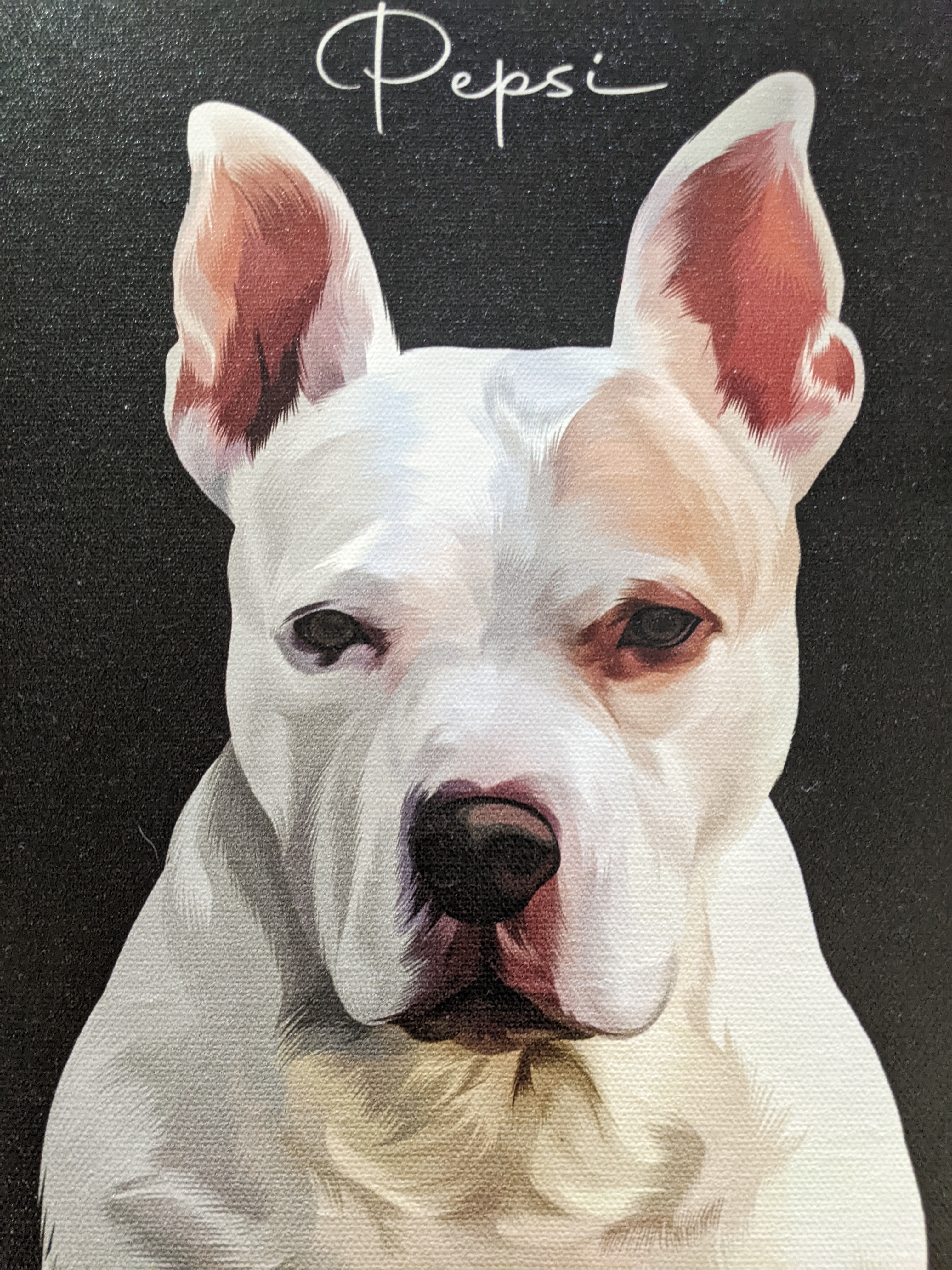
After more than eleven years of love and devotion, we had to put our beloved Pepsi down on Sunday.

Over the next several weeks, I’ll miss the routine I had with Pepsi for the last eleven years – all the daily interactions – from when I woke to when I went to bed.

Our pets affect us in ways that the people in our lives do not. Our relationship with them isn’t complicated by ego, insecurities, or pettiness. There are no traps, tripwires, or pretentiousness because our pets love us unconditionally. More significantly, they allow us to love with no contingencies—something we’re incapable of doing with people—no matter the relationship.

So, when our pets die, that pure and unblemished love and devotion disappears from our lives. The grief is so profound that it wrecks us for a time.   

How We Came to Know and Love Pepsi

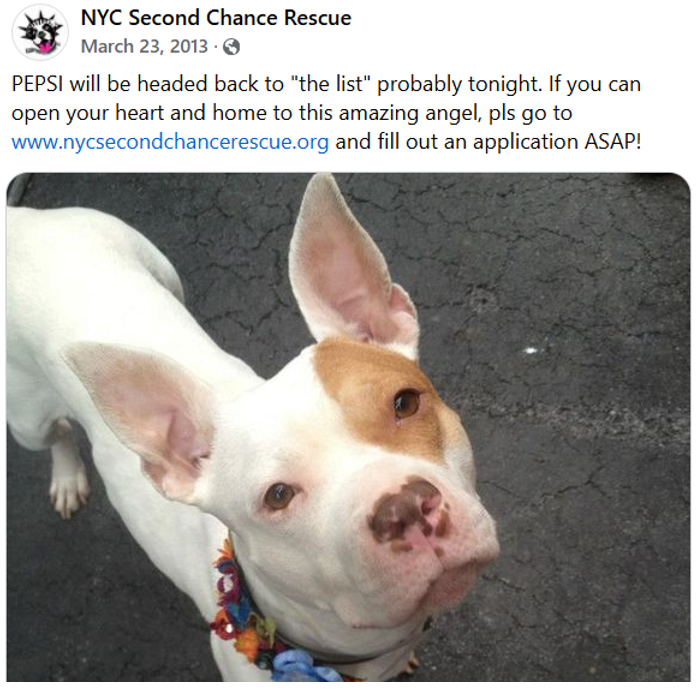
In 2013, months after losing our lab, Walter, to Cancer, I found myself searching for shelter dogs. As I remember, it was just a whim; I had no intentions of adopting.

I have no recollection of what I typed for my Google search – but I ended up on this Facebook post:

The post included a link to this video, showing Pepsi and a shelter volunteer:

Pepsi – YouTube

Unfortunately, as often is the case with Pitbull and Pitbull mixes, a NYC animal shelter put this sweet girl on their kill list.

As I watched the video of Pepsi, I felt an immediate obligation to contact Second Chance Rescue to get her off “the list.” So, I corresponded with them through their Facebook page, which initiated a sequence of events (filling out an application, putting down a deposit, and having a consultant visit our home to ensure it was a suitable environment) and ended with the ASPCA transporting Pepsi from Brooklyn, NY, to the Mystic Aquarium parking lot in Mystic CT, where she went from a dog on a video to a cherished member of our family.

Second Chance Rescue of NYC rescues and rehabilitates critically injured and neglected dogs and cats and those at high risk of euthanasia.

The Reilly’s picking up Pepsi in Mystic, CT

Pepsi was our first experience with the pitbull breed. The consultant from Second Chance Rescue told us that Pepsi should be the only dog in the household. We quickly learned of her distrust of other dogs, but of people, her affection was undeniable. She developed a strong bond with our family almost instantly, especially with my wife, Meg.

Pepsi’s mood spanned the spectrum from stoic and intimidating to warm and loving.

Her smiling eyes could melt the coldest of hearts.

She was loving, observant, doting, and intelligent. She was also deaf and, thus, the quietest dog we’ve ever owned.

I work from home, so Pepsi was my constant companion for more than 11 years. She loved resting on the recliner next to my work desk, stretching out on our bed, sleeping and sunbathing on the patio, going for walks, lounging in the yard, and crunching on carrots.

She chased squirrels and bunny rabbits and killed a groundhog behind the shed one summer.

If Meg was outside, Pepsi wanted to be outside. She would dutifully follow Meg to her gardens and lie down in the shade while Meg weeded, planted, or watered. When Meg was done, she would follow her back into the house. Every time Meg went to the bathroom, Pepsi would follow her. If Meg locked the door, you could hear Pepsi knock her head into it from the living room. If Meg happened to leave the latch off, well, she had a visitor.

We will miss Pepsi deeply – we’ll miss seeing her navigate the swivel chair as she walks from the kitchen to the living room in search of hugs – we’ll miss the gentle snoring and weight of her in the bed – we’ll miss the sound of rhythmic hopping as she descends the staircase from the upstairs bedroom to the kitchen, ending with the slight sliding and clicking of her nails when she reaches the kitchen – we’ll miss watching her morning routine, slowly walking the perimeter of the yard, we’ll miss the thump of her tail on the bed or the recliner – we’ll miss how she helped connect us as a family – I think that’s the most magical thing a family dog does – they connect us because we all love them in the same way.

Dogs bring out our humanity and kindness in ways people don’t.

Even before putting Pepsi down, I said that she’d be my last dog. This time around, the slow decline was more challenging to deal with emotionally and physically. In her final months, Meg and I carried Pepsi from room to room, putting off the inevitable as long as we saw a spark of life or tiny moments of enjoyment—until the day they no longer came.

Maybe my feelings will change over time, and my longing for a dog’s love will outweigh the sadness I know I’ll feel when we part. For now, I’ll simply cherish what I had with this wonderful dog.

I’m so grateful for Pepsi’s love and companionship to our family, and I will never forget her.

Rest in Peace, Pep. You were the best!

Daisy and Dad

I was tired. Take care of Daisy. Love, Dad.

That was the note (a sticky note, actually), pushed hard and pressed purposefully on the upper-left corner of the corkboard in his home office, now splattered with brain matter and blood – like a Jackson Pollock knockoff.

He woke that Tuesday to his routine—lying awake for several minutes before sitting up, scratching his dog Daisy behind the ear, and gesturing for her to get off the bed—but Daisy didn’t budge; she just thumps the mattress with her tail and yawns comfortably. She stares at him and, with her eyes, says, “Tell me again why we’re getting out of this wonderfully warm bed.”

He swings his legs over the side of the bed and stands, “Come on, girl, we’re burning daylight.”

They descend the narrow staircase slowly—her spine stiff with arthritis, his knees achy from age. “Aren’t we a pathetic pair?” he says. Daisy keeps her head down, focusing carefully on each step, but she wags her tail gently at the sound of his voice as if to say, “Yes, we are.” They reach the sunlit kitchen together. “Mission accomplished,” he says (only half-jokingly) and pets her softly.

She looks up at him warmly, tail wagging, eyes smiling.

It’s been four years since his wife passed, leaving him and Daisy to fend for themselves. He puts on a pot of coffee, opens the sliding glass door, and says, “Do your business,” as Daisy steps gingerly onto the patio and into the backyard. 

He glances at the manila envelope labeled Medical Imaging on the kitchen table; the clinically grim words: inoperable, terminal, three-to-six months, lurk in his thoughts like shadowy, hooded interlopers with ropes and daggers.

He pours himself a cup of coffee and steps onto the patio as Daisy patrols the yard’s perimeter. When he goes to sit, a searing pain from his belly to his back doubles him over, “fucking Christ,” he says through gritted teeth, imagining the tumors in his stomach rubbing against one another like malignant tangerines in a sack.

With trembling hands, he sets his coffee cup down and takes a deep, steadying breath until the pain subsides. He retrieves a pack of Marlboros from his flannel shirt pocket, lights up, and takes a long, satisfying drag while looking out over his backyard.

It’s always quiet at this time of day. Still, if you listen intently, you can hear the distant drone of early morning commuters—the wet rattle and hum of trucks and cars over potholes and puddles—while more closely, the thinly audible vibrations of birds and insects, their wings still wet with morning dew, dart through the yard before disappearing into the sun-kissed pines and maples that bordered his property.

In between drags, he sips and savors his dark roast, listening to the familiar, incongruent mashup of nature and civilization as Daisy slowly returns to him.

He’ll miss his mornings on the back patio with Daisy, but not enough to stick around for the metastasizing shit-show gathering in his gut. He knew immediately after his last doctor’s appointment that he wasn’t sticking around for that.

His children were grown and out of the house. He advised and counseled them directly and honestly about how to get on. In this regard, he felt accomplished. His parenting in the rearview made him feel he could exit this world with a clear conscience. “Mission accomplished,” he says under his breath, causing Daisy to look up at him curiously.

The afternoon comes quickly.

Daisy watches him sweep the kitchen floor. He pauses to look at her, struck by how time has touched his companion, from the floating cataract in her eye to the rounded and tanned teeth in her mouth.

He leans on his broom and speaks softly in Daisy’s direction, “From pearly whites to tiger’s eye, they tell the tale of you and I.” She thumps the floor with her tail.

He discards the small pile of crumbs and dog fur into the kitchen trashcan and gathers Daisy’s leash from the hall closet, “Are you ready, girl?” She perks up immediately. He slips a frayed collar decorated with dog bones and frisbees over her head. He clips the leash to it as Daisy wiggles with anticipation.

They walk out the front door together. 

Even in her arthritic state, Daisy relishes their daily walk – nose to the ground, intently sniffing clover, dirt, thistle, and weed. An amalgam of scents blossoms into a bouquet of memories. Daisy responds with a spritelier gait, bringing a slow smile to her master’s face.

They end up where they always do – by the open farms and fields near their house. He unleashes Daisy and gives her free reign, but she never strays too far from his side. When they return home, he slips Daisy an extra half dose of pain medication to make her sleepy and tells her to lie down. She trots to her bed beneath the bay window in the living room, curls up contently, and closes her eyes. 

He watches her until she falls asleep; at this point, he rises from his recliner, walks over to her quietly, gets on his hands and knees, kisses her on the head, and begins sobbing. The sound of his grief catches him off guard, and he immediately tries to suppress it, triggering his shoulders to tremble and quake. Daisy takes a deep breath but, to his relief, never opens her eyes. She’s everything to him.

He struggles to his feet and to compose himself before texting his sons to come to the house at 5:30 PM – ending the message with “It’s important.” Then, he tapes a brass key to a piece of paper torn from a legal pad, labels it Safety Deposit Box 347, and places it on the living room chair next to Daisy’s bed.

A few weeks back, he penned his wishes for Daisy in a letter addressed to his sons and placed it on top of the legal documents, trinkets, and keepsakes in that box. In the letter, he explains the reasoning behind his decision. He asks his sons to take good care of Daisy, keep with her routine as best they can, and, most importantly, walk her daily in the farms and fields by the house.

After reading his own words that day, he felt assured and comforted. He locked the box, put the key in his pocket, and walked out. As he passed the security officer guarding the vault, he winked and whispered, “Mission accomplished.”

With Daisy fast asleep, he walks into his office, sits in his chair, presses the sticky note onto the corkboard, retrieves a revolver from the desk drawer, puts the barrel to his temple, and pulls the trigger – never hesitating – not even for a second.

His actions played out gracefully, like a choreographed dance that he’d practiced in his head for months.

Daisy wakes momentarily to a sharp and unfamiliar popping sound. She raises her head and sniffs inquisitively at the burnt powder scent wafting above her. She looks around the living room and then towards the den and office. The door is closed. She whines for a bit before dozing off to the familiar sounds of home – the low hum of the refrigerator, the ticking clock in the living room, and the occasional knocks and pings from the furnace.

She opens her eyes a few hours later to two young men crying and cross-legged on the floor in front of her bed. She thumps her tail slowly, still under the effects of the medication.

They lean over in tandem, hug her, and tell her everything will be OK.

Tuesday, 6:45 AM

She’s been staring at him intently for 20 minutes, when finally, he awakes to her panting.

He raises his head from the pillow and, with eyes half-opened, pats the bed gently. She thumps the mattress with her tail, yawns, and wriggles up to him.

Good morning, friend. 

They begin their final day together with a loving scratch behind the ear. 

He scoops her into his arms and feels her heart’s clunky and irregular beat against his chest. He lowers her carefully to the floor; her hips wobble, her back legs fold, and she collapses.

This has been their morning routine for the last several weeks.

She looks at him apologetically. He whispers, “It’s okay, girl” and helps her to her feet.

She walks gingerly to her water bowl, takes a few sips, looks up at him, and wags her tail. For a decade, they’ve inhabited each other’s world. A life wrapped in routine and the warmth of deep companionship.

Age has slowly crept up on her – from the floating blue cataract cloud in her eyes to the rounded and tanned teeth in her mouth. Then, with resignation, the man mutters, “From pearly whites to tiger’s eyethey tell the tale of you and I” and gives her a pat.

He slips a frayed collar decorated with dog bones and frisbees over her head, clips the leash to it, and together they walk out the door. 

Even in her declining state, she relishes the ritual, nose to the ground, intently sniffing clover, dirt, thistle, and weed. A complex puzzle of smells awakens a flood of memories; momentarily, she becomes infused with a youthful spirit. A stiffened gate and spritelier walk return, bringing a slow smile to the man’s face. 

She raises her head towards a gentle gust of wind, wistfully smiling at the gift-bearing breeze. But by the time they return home she’s laboring. He carries her into the house.

He decided last year to take a leave from work when he noticed a change in her health. On a fast track for promotion and highly regarded throughout the company, he sometimes heard whispers in the halls, “For a dog—a DOG?

Their appointment with the veterinarian is an hour away. He sits with her on the kitchen floor and cries. She looks at him forgivingly, then places her head on his lap and closes her eyes. 

Dogs and Grief

pexels-gotta-be-worth-it-1431557

We’re a dog family.

I had dogs growing up as a kid. My wife and I got our first dog soon after buying our first house. His name was Wayne, but we changed it to Kane because who names their dog WAYNE?

Your first dog is the dog by which all others are measured, and Kane set the bar high. We adopted him from the Potter League for Animals in Middletown, RI, where Meg and I worked before we started dating.

Kane was about a year old when we adopted him as a full-grown shepherd mix. I remember approaching him in his cage – he crouched slightly and turned his head quickly towards my hand as I tried to clip the leash to his collar. He intended to inform, not injure – a way of stating we’re not acquainted well enough for you to approach so casually. His eyes said, “I’ve seen others leave on a leash and never come back.”

Kane’s reaction would have been a deal-breaker for some people – an excuse to walk away or visit the friendly Beagle-mix two cages down. But I was not willing to give up so easily. So, I backed up slowly and sat down at the opposite corner of the cage. Kane and I regarded one another like potential enemies who might one day become best friends – a future to be determined in the next few minutes.

I maintained an un-threatening posture, relaxed, head down, making eye contact only occasionally. Kane seemed skeptical but open to negotiation. Finally, after several minutes of détente, I patted my hand gently on the cold concrete floor, gesturing for Kane to make the journey across the cell. He wagged his tail slowly, still unsure what to make of me. Then, Kane stood, lowered his head somewhat submissively, and approached slow and steady. 

When he sat, he regarded me in a friendly manner, dissipated skepticism replaced with a cautious trust.

This time when I went to put the leash on, Kane lowered his head and gently leaned in – and that was it. The deal was sealed. I knew that instant that Kane would be coming home with me.

Of all the dogs we have had, Kane was the most loyal. We would let him out the front door, and he would sit or lie down on the steps – if he ever wanted to run off, he never let on. So for about 2 years, it was just Meg, Me, and Kane. We took him to Colt state park for long walks and many high school baseball fields to play fetch – he bonded quickly and totally with us.

Even though he was our first, Kane knew (instinctively, it seemed) that when baby number one arrived, he would be relegated to a lower rung on the ladder. He accepted his demotion gracefully – if such a thing is possible for a dog.

He was a constant companion to Jake and Liam growing up. When our boys ventured across the street, Kane would always tag along, trotting slowly behind them, setting up watch on a corner of the neighbor’s lot – he would never intrude on the kickball or whiffle ball or basketball or football or Pokémon card trading activities. Instead, he would stay close and observe – with an air of guardianship and responsibility.

At around 12, Kane began suffering from congestive heart failure. I remember driving him to Ocean State Veterinary Clinic several times that year, where a vet would work a needle into Kane’s chest to draw fluid from his lungs. It was miraculous how well he responded – before falling ill again. The vet informed us the procedure would eventually stop working because scar tissue forms sand prevents them from being able to draw fluid. 

Futility and the inevitable snuggled up to one another. We knew we were running out of time with Kane. We knew we would have to put him down. 

When that time came, I was 42, old enough to have experienced some loss in life – loved ones, a parent, relatives, friends, and colleagues.

The longer you stick around, the better acquainted you get with death. Each time death pays a visit to someone you know, you gain perspective, begrudgingly accepting that death is part of the equation. 

I’ve never felt more bereft with grief than when we had to put Kane down. A profound grief that wrecked me – left me in a heap for weeks.

We’ve had to part with two other dogs since Kane – and the grief was no less – not one scintilla. The begrudging acceptance that death is part of the equation didn’t soften the blow.

It was still like being hit in the heart with a hammer.

So why does the family dog’s death hurt so much? What about our relationships with our dogs make their death so poignantly and consistently painful?

I think it has to do with the dynamics – the one-sidedness of the relationship. This is not to say that we don’t love our dogs – we do – but they love us more (or at least that’s what registers in our brains), and they love us “regardless” – regardless of our faults, foibles, and frailties.

Over that 10 to 12-year span, we experience (over and over and over again) unconditional love and non-judgmental friendship, which (let’s face it) is so unlike the relationships we have with the people in our lives (even the ones we love the most – especially the ones we love the most).

Our experiences (the good, bad, and indifferent) are processed and stored as memories. Our brain never sleeps, so all this processing and storing is happening 24 7. This means that every time we’re greeted by our dog, tail wagging, eyes smiling, regardless of how shitty our day was or whether we ignored him — all those “I’m so happy to see you” moments are stored in memory. 

And when it comes time to put our dogs down, the packaging containing every one of those experiences unravels, the memories spill out, and we’re forced to face the loss of the one relationship in our lives that seemed pure to us.

How could this not wreck you?