
Let’s Ask Arty uses existing Artificial Intelligence (AI) technology to query LLMs about politics in these troubled times.
Query 1: Donald Trump stated that Ronald Reagan “Loved tariffs for our country and its national security.” Does Donald Trump’s statement accurately reflect President’ Reagan’s views on tariffs?
No, Donald Trump’s statement that Ronald Reagan loved tariffs for our country and its national security does not accurately reflect President Reagan’s views on tariffs.
Reagan was a strong advocate for free trade and often spoke against tariffs, viewing them as harmful to economic prosperity.
In fact, in a 1987 national radio address, Reagan explicitly criticized tariffs, stating they “hurt every American” and arguing that protectionist policies like tariffs lead to “shrinking markets, collapsing businesses, and widespread job losses”. He believed that while tariffs might seem patriotic or protective in the short term, they ultimately stifle innovation, provoke retaliatory trade measures, and damage the broader economy.
Query 2: Donald Trump stated that an Ad created by the Government of Ontario of Ronald Regan criticizing tariffs was “fake.” Is Donald Trump telling the truth? Was the ad fake?
No, Donald Trump was not telling the truth.
A recent controversy arose when the Ontario government aired an ad using clips from Reagan’s 1987 speech to highlight his anti-tariff stance. Donald Trump responded by calling the ad “fake” and claimed it misrepresented Reagan’s views. However, fact-checks and the full context of Reagan’s speech confirm that he genuinely opposed tariffs and championed open markets.
While Reagan did occasionally use targeted trade measures for strategic purposes, his overall philosophy was rooted in free and fair trade, not broad protectionism or nationalistic tariff policies.
So, while Trump may frame tariffs as essential for national security, invoking Reagan as a supporter of such policies misrepresents the former president’s well-documented economic views.
My Take
Anyone with a cell phone or computer can do a quick Google search and know definitively that Trump was lying about the Ontario government’s Ad being fake and lying about Ronald Reagan “loving tariffs.”
It took me less than 5 minutes to debunk President Trump’s statements.
The more prescient issue is how fluidly this administration weaponizes lying.
Most politicians (and non-politicians for that matter) lie to get out of a jam. The Trump administration’s repetitive lying is part of a strategy to manipulate public opinion.
This administration is taking a page from the 1930s Nazi party playbook, where writings and speeches consistently emphasized emotional appeal, repetition, and the subordination of truth to political strategy.

More from Arty
According to Arty, Joseph Goebbels, the Nazi Minister of Propaganda, believed:
- Propaganda as Emotional Weaponry: Goebbels believed propaganda should appeal to emotions, not intellect. He once wrote that the goal was to make people “succumb to it utterly and can never again escape from it”.
- The “Big Lie” Technique: While the phrase “big lie” is often attributed to Hitler, Goebbels is frequently associated with the idea that a lie, if colossal and repeated often enough, becomes accepted as truth. He accused others—like Winston Churchill—of using this method, even as he employed it himself.
- Truth as a Tool, Not a Principle: Goebbels preferred to use partial truths or truths that served his agenda, but he was not above outright lies when necessary. He believed that the effectiveness of propaganda lay in its ability to shape perception, not in its factual accuracy.
- Propaganda as Art and Power: In a 1936 commentary, Goebbels described propaganda as “a political power of the highest magnitude,” emphasizing its role in shaping national spirit and identity.
- Creating a False Reality: His propaganda efforts aimed to construct an alternate reality in which the Nazi regime appeared righteous and justified, even as it committed atrocities. This manipulation of truth was central to his strategy.
The Trump administration has been widely criticized for employing repeated falsehoods as a political strategy, often aligning with the idea that repetition can foster belief.
Here are several notable examples of falsehoods repeated by Donald Trump and his administration:
1. Election Fraud Claims
- Claim: The 2020 election was stolen or rigged.
- Reality: These claims were repeatedly debunked by courts, election officials, and independent audits.
- Strategy: Trump and allies repeated this claim hundreds of times across rallies, social media, and interviews, leading many supporters to believe it despite a lack of evidence. This lie continues to this day.
2. COVID-19 Misinformation
- Claim: COVID-19 would “disappear” or be “under control.”
- Reality: These statements contradicted public health data and expert warnings.
- Strategy: Trump repeated these claims to downplay the crisis and maintain public confidence, even as cases surged.
3. Tariff Economics
- Claim: China was paying the tariffs imposed by the U.S.
- Reality: Importers, usually American businesses and consumers, pay tariffs.
- Strategy: Trump repeated this economic falsehood to frame the trade war as a win for the U.S., despite its domestic costs.
4. Climate Change Denial
- Claim: Climate change is a hoax or exaggerated.
- Reality: Scientific consensus affirms climate change as real and human-driven.
- Strategy: Trump used repetition to cast doubt on climate science and justify environmental deregulation.
5. George Soros Conspiracies
- Claim: Soros funded protests and radical left movements.
- Reality: No credible evidence supports these accusations.
- Strategy: Trump repeatedly invoked Soros as a villain to energize his base and delegitimize opposition.
A 2023 study published in Public Opinion Quarterly found that repeated falsehoods from Trump’s presidency significantly influenced public misperceptions, especially among partisan audiences. The more often Trump or officials from his administration repeated lies, the more likely people were to believe them, even after the falsehoods had been publicly debunked.


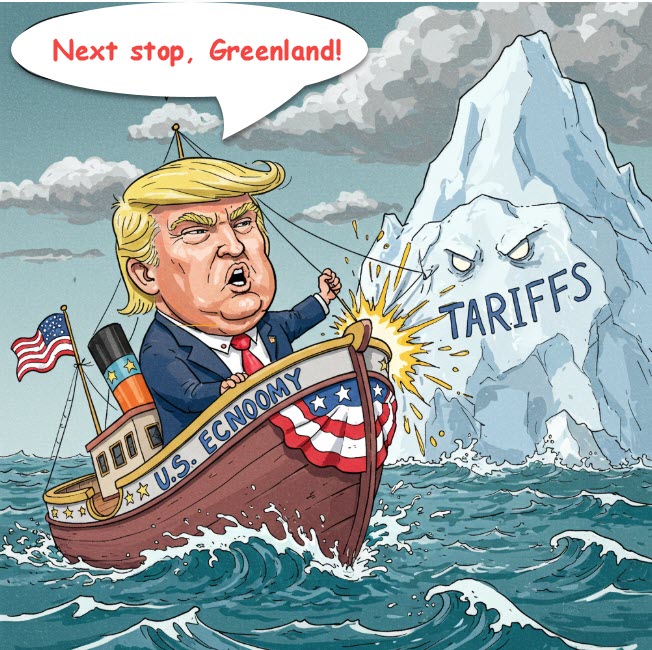
 bendingtheneedle