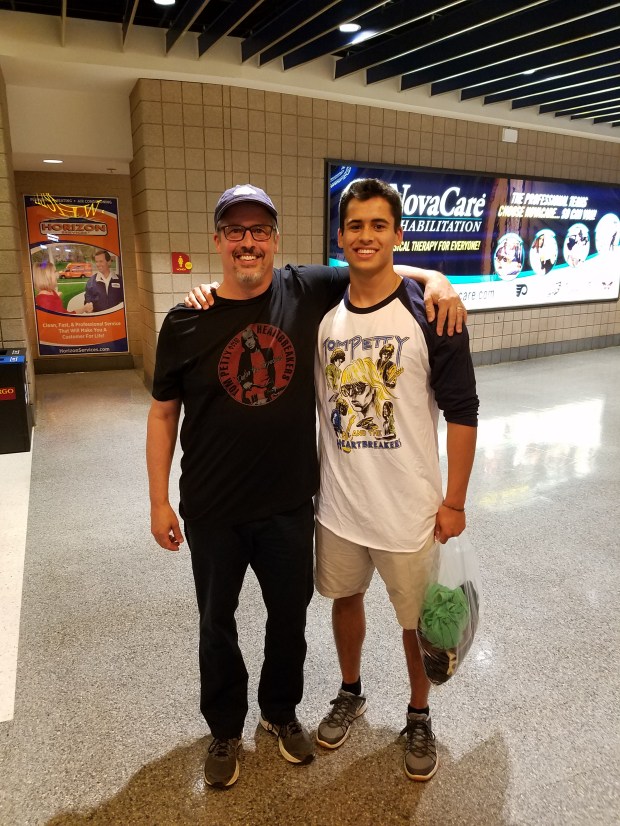
R.I.P Tom Petty

Some artists stick with you, through good times and bad, like a trusted friend you’ve never met.

I remember the first time I heard Tom Petty and the Heartbreakers. It was 1979, and I was a junior in high school — the song was Refuge. As soon as I heard that song, it resonated with me. I loved the musical snarl and punch, Petty’s drawl and attitude, and everything about it.

It’s a curious thing how we connect to artists – musicians specifically. For me and Tom Petty, it was a convergence of things — a perfect storm of his aggressive-edged rock and roll and my teen angst, bottled-up energy, insecurity, and the malaise of adolescence.

When I first heard Refuge in 1979, it felt like a chemical reaction in my mind. For three minutes and twenty-two seconds, I felt clarity, like the song physically pushed shit aside in my head – so it was just me and the music – I remember there was something pure about the experience. I suppose that’s why I kept returning to Tom Petty for 38 years – and he never disappointed. That’s what was so special about Tom Petty – he grew as an artist and aged gracefully, which allowed me to grow with him – as much as I loved Refugee as a teenager, listening to that song as an adult was mainly a way of reconnecting to my youth. As Tom matured, he became a master songwriter, tapping into the complexities of human relationships – doing so with sparse, straightforward language – clarity.

When I heard Tom Petty had died, I cried — sitting alone in front of my laptop. With a conference call a little over an hour away, I got up, found my iPod, connected it to a Bluetooth speaker, turned up the volume, hit shuffle, and cried a little more.

Later that afternoon, I went into my son’s room. He was staring blankly at his laptop. I touched him on the shoulder, and he broke — we both did — had a real good cry – together.

From adolescence to fatherhood, Tom Petty was an integral part of my life; he was my go-to artist — always a drop of the needle away, a CD shuffle away, or an iPod click away — he never failed to lift me and help me through.

R.I.P. Tom Petty.

20170729_185000

Public access, private thoughts

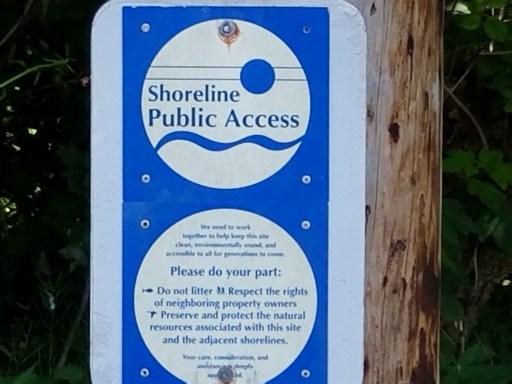
I was walking down Tuckerman Avenue earlier today, when I came across this sign:

shore

Public access to the shore is the way the public can legally reach and enjoy coastal areas and resources.

Feeling adventurous, I decided to take the path less traveled (at least for me).

On my trek from curbside Tuckerman Ave to the shoreline, I couldn’t help but think, this public access is not very accessible.  The path was overgrown, uneven and rocky in most parts, muddy and narrow in others. At one point, I had to crouch to make my way through a tunnel of shrubbery, the ground beneath my feet, a treacherous gully (can a gully be treacherous?).

As I made my way down the path, I imagined an animated discussion between Meriwether Lewis and William Clark, with an exasperated Clark shouting “Turn around Lew, she’s impassable” and “It’s risky business, this path to the shoreline, I fear we may lose some people!” – but I soldiered on.

If you ask me, accessible should mean accessible to a wide spectrum of people. If your  Nana can safely walk the path with a less than 50 % chance of fracturing a hip, then I say its accessible. I’m not sure the path from Tuckerman Ave to the shoreline passes the Nana test.


Once I made it to the shore, I headed in the direction of Sachuaest beach, hoping to make my way to Purgatory chasm and to the lower end of Tuckerman Ave — and eventually back to my car, which  I had parked at the local YMCA.

I’ve lived on Aquidneck Island for nearly half a century and this was the first time walking this particular shoreline – its really quite beautiful.

The rocky terrain was not easy and it was slippery in parts. I was reminded several times that mother nature doesn’t give a shit when you say “I got this” — having slipped twice on slimy seaweed-covered rocks.

I ran out of walkable terrain before I could reach Purgatory Chasm, so I had to double back. But all-in-all, it was a productive, mind-clearing walk, and a nice reminder of how fortunate I am to have ended up on Aquidneck Island.


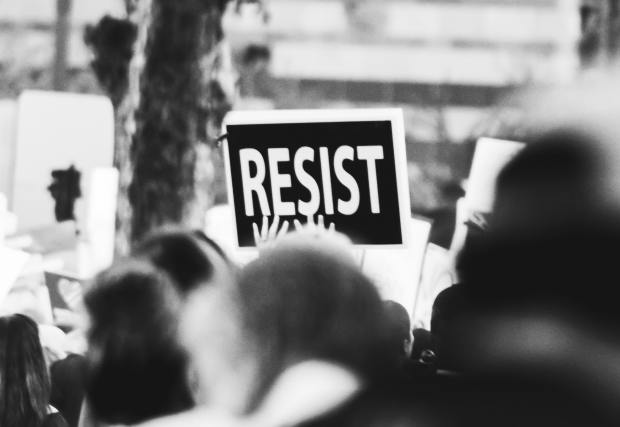
Resist

The orange one

pexels-sides-imagery-3141240

With sheer vanity he glows

like a bulb on a tree

It’s always “I, I, I”

or “Me, ME, ME”!

He’s a whiny wall-building

science denier

A thin-skinned, fear-mongering

Orange faced liar

He’s the tear in the fabric

that holds us together

He’s the bend in the hose,

and the blood on the feather

He’s an embarrassing blowhard

shallow and loud

A stain on the world stage

all cocky and proud

He’s the America we hoped

no longer existed,

Bigoted, intolerant, fearful, and twisted

With a stroke of the pen,

He poisons the water,

He willfully separates

Mother from daughter

He belittles anyone

who dares to oppose him

He stomps up and down

and screams America chose him!

With no sense of history

spewing nothing but junk

He’s an arrogant gasbag

a scoundrel, a skunk.

Now it’s up us

to form the resistance

To push back on the orange

with steadfast persistence

Engage in the process

hold his feet to the fire

Because facts are the enemy

of the orange faced liar

Riffs, memory, and a sense of self

pexels-juan-pablo-serrano-arenas-1250452

I remember this day.

According to the timestamp on the video, it was more than six years ago. Two months shy of your 15th birthday.

It was late in the afternoon – I recall getting off the couch to the buzz of your amplifier… By the time I reached your room, you had already programmed the loop — I walked in with my camera, sat on your bedroom floor, and started recording.

You play for almost 12 minutes, at times oblivious to my presence — passionately engaged in the endeavor, beautifully lost in your music — but every now and then (as shown in this clip), you play a riff or come across a note that surprises and delights you.

I love that.

I remember posting the video later that day to YouTube — the entire 12 minutes — and how mad you were at me for doing so. I took the video down immediately. As I recollect, I was angry at myself — and I remember feeling agitated at how everything had turned out.

Looking back, I realize that day was a bit of a crossroads for us, a realization that you were coming into your own, and sharing that video without your permission was a clear case of parental overreach — an infringement on your sense of self.

I’m not sure I ever apologized in a meaningful way.

Sorry about that, Jake. 🙂

For years I had no idea where the 12-minute video was. First, I was disappointed at myself for misplacing it – an irritating reminder of how scatterbrained I can be. Then, I began to think it was gone forever, that perhaps I deleted it inadvertently.

Only a few weeks back, I came across the full video on an external storage device.

Thanks for letting me share a snippet some six years later, on your birthday.

Dad.

Free Play Gone

pexels-lukas-296302

Some 48 years ago, my parents (perhaps over a glass of wine and bottle of scotch) decided to move the family to Aquidneck Island — where I was raised, not far from the ocean, in a neighborhood of shabbily constructed raised ranches — where on warm summer days, squinty-eyed kids staggered zombie-like from their garages or front doors, pop-tarted, sugar-smacked, and ready to roll.

We played ball (whiffle, base, foot, basket, and stick) in our backyards or in the street — we rode bikes everywhere, we “red rovered, red rovered,” and kicked the can against a near-perfect backdrop of New England sunsets and warm summer breezes, to a generous and harmonious soundtrack of crickets, peepers, and nightingales.

We hunted salamanders in the woods and flash-lighted our way to collecting night crawlers for fishing expeditions at the town reservoir, to which we walked unattended by adults, poles over our shoulders, the sun warm on our backs, our conversations held together with lite laughter and kinship.

The entire summer, we hardly interacted with Mom or Dad except at dinner time, which was had around the dining room table without exception.

And so it was on Aquidneck Island I stayed, met my wife, and raised 2 good boys and 4 dogs — the latest, a pocket-sized pit bull, full of spittle and spunk, who envelops me in rhythmic doggy snores as I write this piece.

What strikes me most on this stroll down memory lane is the magnitude of change in parenting over a single generation. Our generation, handicapped by socioeconomic conditions requiring two working parents, and a feeling of fear and mistrust (largely unwarranted), the flames of which were fanned by continuous exposure to 24-hour cable news, which made us believe we could never leave our kids alone, that they had to be within earshot or eyesight 24 hours a day, less someone steals them away forever — and so it was by these phenomena, that free play, that priceless gift and ever-important ingredient in child development, was killed.

Gone are the days when kids gathered at a park or in someone’s backyard to organize on their own and “get a game going” — sadly, this has been replaced by regularly scheduled league games on sun-splashed well-manicured fields with perfectly chalked sidelines and clipboard-carrying, whistle-blowing, score book-keeping adults shouting out instructions while pacing in front of tight-jawed fathers in sunglasses and Bermuda shorts (newspapers tucked firmly under their arms), while antsy, floppy-hatted moms in folding chairs with cup holders, try to capture every moment of play on their iPads or cell phones.

We’ve forgotten the value of neighborhood free play on uneven surfaces where the end zones were marked by a rock and a tree. The sidelines were guesstimated according to natural or not-so-natural boundaries and, most importantly, where kids worked out the teams and the rules and addressed issues that arose without “expert” interference by adults.

As my children enter adulthood, I wonder about the absence of free play and the implications of an overly-scheduled, overly-structured, and, quite frankly, overly-parented childhood.

Cecile the Lion, the American Dentist, and Instagram

pexels-public-domain-pictures-41315

Let’s talk about trophy hunting.

I want to hear from the people who think it’s “OK” to kill animals purely for its sport. If you are such a person, I’d love to hear why you think it’s OK and what you enjoy about the experience. What do you get out of it? I’m not talking about a head – or a tusk – or a pelt – I mean, what do you get out of it emotionally?

I’m not being a sarcastic left-wing dick — I’m actually curious.

When I see a lion, an elephant, a leopard, or a rhino, my first thought isn’t, “man would I love to kill that thing .”To be honest, I can’t imagine ever thinking that way. But there are people out there who shell out serious coin to star in their own wildlife snuff film — and I just don’t get it.

Not being raised in a hunting culture, the thought of killing a living creature purely for the thrill of it — then posting pictures of the kill on social media — disturbs me at an elemental level. When I see these pictures flash across my TV, or when I see them online in stories about hunting — I experience a rush of anger, dismay, and befuddlement.

I know the person standing over that dead lion, elephant, leopard, or rhino is human like me. But the “common humanity” that would typically connect me to these people gets obliterated when I see these photographs. Suddenly, the person in that picture is not like me at all. On a purely human level, my connection to them evaporates.

Besides barbarism disguised as bravado, what I mostly see in these pictures of grinning humans standing over beautiful dead animals, is ego and entitlement. If I had to caption the image, I would surely use those two words. Moreover, the pictures exude an ideological view of man’s dominion over all creatures – you get a real sense that these people believe the purpose of the lion, the elephant, the leopard, and the rhino is to satisfy an evolutionary hardwired human desire to hunt and kill – a bloodlust.

I don’t see in these pictures our “higher” human qualities; decency and kindness; empathy and appreciation; respect and civility. And though I don’t know any of the people in these pictures, I immediately see them as lacking these higher human qualities. This can be dangerous because once that happens, it becomes easy to treat these people as less than human, leading to a social-media-mob-justice that we are witnessing in the Cecil the lion case.

My hope is that over time, we humans become a little less human and a little more humane – that more of us evolve towards the higher human qualities, where we finally put an end to the practice of trophy hunting.

American Sniper and Michael Moore

pexels-kony-xyzx-3706666

I like Michael Moore. I like his movies. I share many of his views. Though I don’t know him personally, from what I have seen of him on television, he likes to argue – – he is a bit of a provocateur and I think he enjoys being the stick in the eye of conservatives. A few weeks ago, he riled-up a lot of those conservatives with some comments about snipers being cowards.

Michael is not dumb. I’m sure he is aware of the tactical value of snipers. In addition to being highly skilled marksman (as highlighted in the movie American Sniper) snipers use their abilities to sneak behind enemy lines to provide command with information about the enemy’s size, strength, and location. The information they provide and the actions they perform can save lives. If you’re a soldier heading into a hot zone, you want good snipers on your side — And by most accounts, Chris Kyle was one of the very best.

Michael Moore relies more on the definition of “snipe” than the tactical role of a sniper to try and strengthen his argument that snipers are cowards.

Here is the definition of the word snipe:

a shot, usually from a hidden position.

to shoot at individuals as opportunity offers from a concealed or distant position.

to attack a person or a person’s work with petulant or snide criticism, especially anonymously or from a safe distance.

And here are Michael Moore’s comments about snipers:

‘I think most Americans don’t think snipers are heroes’

“My uncle was killed by sniper in WW2. We were taught snipers were cowards. Will shoot u in the back. Snipers aren’t heroes. And invaders are worse.”

That last sentence – – – “And invaders are worse” – is most telling.

I suppose if you look at the definition of snipe, then sniping can be seen as a cowardly act. The sniper is almost always protected (by distance) from retaliation. His enemy is almost always unaware of his presence, there is rarely any direct confrontation with the enemy – there is no dodging machine gun fire to rescue a fallen comrade – no being overwhelmingly outnumbered while holding off an advancing enemy — and no ultimate sacrifice by jumping on the proverbial grenade to save your buddies – – all of which we (in the traditional sense) consider “heroic”.

Clearly Michael Moore’s remarks about snipers and the movie American Sniper are by proxy a commentary on the Iraq war itself – I think he felt compelled to speak out because of all the fanfare that the movie is receiving – he is likely appalled and disgusted at the possibility that people who see this movie will forget that the invasion of Iraq was, at best, a horrible mistake, and at worse a criminal act (. . .And invaders are worse.”).

As expected, his remarks set off a predictable response on social media – those on the right lambasting him as a Hollywood-elitist-scumbag (while canonizing Chris Kyle as the ultimate Patriot) and those on the left criticizing the movie as propaganda and some even attacking Chris Kyle’s character.

There is a scene in American Sniper where an adult woman hands a grenade to a child so that it can be used against an advancing American Convoy – – In Chris Kyle’s book, there was no child –  the film makes this Iraqi woman more evil and inhumane by having her send a child to his death. Simplistic caricatures that dehumanize Iraqis as savages in the movie probably rubbed Mr. Moore the wrong way – not because he loves Iraqis, but because he feels such portrayals obfuscate the bigger picture of the Iraq conflict – of which he has very strong views.

In my eyes, all the hubbub from Michael Moore’s comments highlights the differences between liberals and conservatives when it comes to how they view the Iraq war.

Many on the right can overlook the complexities and ambiguities of everything that led up to the Iraq war. To many of them, Chris Kyle is a hero simply because he is an American Soldier at war – end of story.

Those on the left tend take a more nuanced comprehensive view of the war – – and therefore have trouble disentangling Chris Kyle the soldier, from the misguided decisions that put him in Iraq. Those on the left get angry when they see a movie like American Sniper that disregards the bigger and the messier questions about how we ended up in Iraq in the first place.

To me, anyone who volunteers to serve deserves our gratitude and respect. I can understand how Michael Moore’s comments might be interpreted as disrespectful to American servicemen. And although I agree with his views on the war – criticizing snipers as a way of reminding us that invading Iraq was a huge mistake feels a bit strained – even to a lefty like me.
Ambien, time, and the ferryboat captain

pexels-daria-shevtsova-3794732

For more than a decade, I waged a nightly battle against sleeplessness.

Every night, shortly after shutting my eyes, a movie reel of the worst parts of my day and an unending series of previews for upcoming work-related deadlines would play inside my head.

No matter what I did – or how hard I tried – I could not turn off the projector and fall asleep.

Before being introduced to Ambien, I devised strategies to combat my worry-borne sleeplessness. As soon as I flipped the bedroom light off and plopped my head onto my pillow, I would construct a quiet secluded place in my mind. For example, a cabin on the side of a mountain – surrounded by acres and acres of protective evergreens that shielded me from the buzzing reverberations of my day. I placed myself in this imaginary cabin, alone in a bed. Then, like a god, I painted a cold, crisp, blue-black sky and splashed it with sparkling stars – I envisioned myself enveloped in a cocoon of silence and serenity – sheltered safely from the remains of my day and the rumblings of my tomorrow.

This nightly exercise kept anxiety at bay for a while. But eventually, all my dreamscapes (be they cabins in the mountains or mud huts on a beach) would dissolve in a wave of worry- and I’d end up right where I was the night before – tossing and turning and unable to fall asleep.

I don’t t know what Ambien does physiologically – I have no idea how it acts on the brain – all I know is it works. I envision Ambien chemical agents starving the part of my brain that feeds on the memories of my day and the fear of my tomorrow – somehow disabling the mechanism that switches on that relentless movie-like projection of all things stressful.

It was 5 years of taking Ambien before I started to think hard about the fact that I needed this drug to trigger what was supposed to be a natural human function – drifting off to sleep at the end of a busy day. 

I wondered what had changed in my life, making it impossible to fall asleep without chemical aid. I couldn’t pin it on one specific event. Perhaps it was the troubling realization (that simmered and hummed just under the surface of me) that more than half my life was over and that, as a commodity, time was in short supply while responsibilities and obligations were growing, creating a perfect recipe for worry.

After five years of being prescribed Ambien, I began to look at my habit as a character flaw. A drug addiction with none of the perks.

Last year our family visited Maine to tour some colleges and universities. I left my Ambien home on that trip, and I’ve not taken it since.

I couldn’t tell you what changed in my life that allowed me to fall asleep without that little pill. My work is still stressful, and achieving a work-life balance is as impossible as ever – one son is heading to college in the Fall – and the other is close behind – so if anything, there has been an uptick in financial stress.

The only conclusion I can come to is that somewhere along the road, I arrived at perspective. Everything that kept me awake for years remains firmly ensconced in my life. Perhaps I understand futility – that all the worrying in the world will not shake these things loose – and that time remains a steadfast and unapologetic ferryboat captain – not caring one bit about what lies on the other shore or whether our arrival suits our schedule.

And so it is – and so I sleep.

The boulevard of the unsuspecting

pexels-derwin-edwards-4001530

A mentally disturbed and delusional kid – spurned by others – sitting behind the wheel of a BMW – firing a legally purchased 9 mm semi-automatic pistol into a crowded café and deli – killing and maiming – just as he promised.

On any given day in America, any one of us can get cast for the role of the unintended victim in the twisted wreckage of someone else’s tragic life– like we are all just a trigger finger away from a becoming a profile on CNN’s website.

The only thing that stops a bad guy with a gun – is a good guy with a gun, except that almost never ever happens – even though Americans are armed to the teeth – we still wake up (on average) to a mass murder every two weeks – and in most of these cases, the only thing that stops the bad guy with a gun, is that very same bad guy, when after killing a slew of people, he decides to eat a bullet.

Unfortunately, many American’s are as delusional as some of these shooters – as they continue to tell themselves that more guns make for a safer society, when the data tells us the exact opposite is true.

We are immersed a culture that glorifies violence, where too many believe that violence and aggression are the solution to problems – we have inadequate and often ineffective mental healthcare and way too many people who should not have access to guns – –  have access to guns.

I am sick and fucking tired of the NRA denying the role guns play in mass murder – there is clearly a gun component to this problem – but any time anyone even mentions, considers, whispers that maybe we should look at gun regulation along with other components of the problem, the NRA ratchets up a campaign of lies and fear.

We need to wake up.

Time, it goes


dad_jake2

How many times have we heard the question or uttered the phrase

Where has the time gone?

In almost all cases, it’s a hackneyed expression, of little meaning to anyone living amid the whirring now – where time is like air and noise filling the gaps between atoms. But, to those living in the here-and-now, time is an ever-present, unconsciously tapped resource.

That said, the expression “Where has the time gone?” becomes “unhackneyed” to a parent whose child is preparing to leave home for the first time. As your child takes flight from the protective, loving, and caring environment that they worked so hard to provide, the question “where has the time gone?” seems as concrete a question as “Where are my keys?” or “Has anyone seen my wallet?” 

As that day of departure approaches, I find myself whispering that phrase in pre-dawn seclusion, puffy-eyed in front of the bathroom mirror – I feel the words knocking around the inside of my skull late at night as I lay wide-eyed in darkness.

WHERE HAS THE TIME GONE?

As parents, we know where it went.

It went to the thousands of moments that (over time) formed the connective plasm between you and your child.

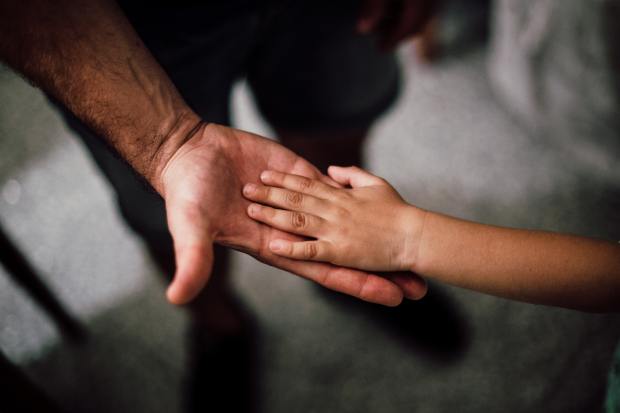
As parents we immersed ourselves in the fecundity of time – we became part of it – and it became part of us – we used it as needed, for whatever circumstance we faced – on a daily, hourly, or minute-by-minute basis – from the big life-lessons to the little league games – we took the time to sooth our kids through the transitory aches and pains of skinned knees and bruised egos. 

Like Sherpa, we packed time away, along with knowledge, life experience, and love to help our kids crisscross the complex landscape of a wounded soul — to scale the jagged edges of a broken heart or to seek respite from the deep sorrow of loss. A sorrow that we will wallow in when our kids leave.

Who will be our Sherpa?

dad_jake

As the day of flight draws near, time becomes a sacred commodity – I wish I could cast a spell on it – to thicken it – to slow it down – I want desperately to corral it, stockpile it, and optimize its use.

But no matter my desire to control time, it marches on steadfastly and unapologetically. To our son, who is getting ready to leave, time stretches out before him like a shimmering ocean of opportunity – a totally different perspective on time.

I’m learning the most satisfying use of time these days is simply enjoying it – to savor it – even the most transient of moments.

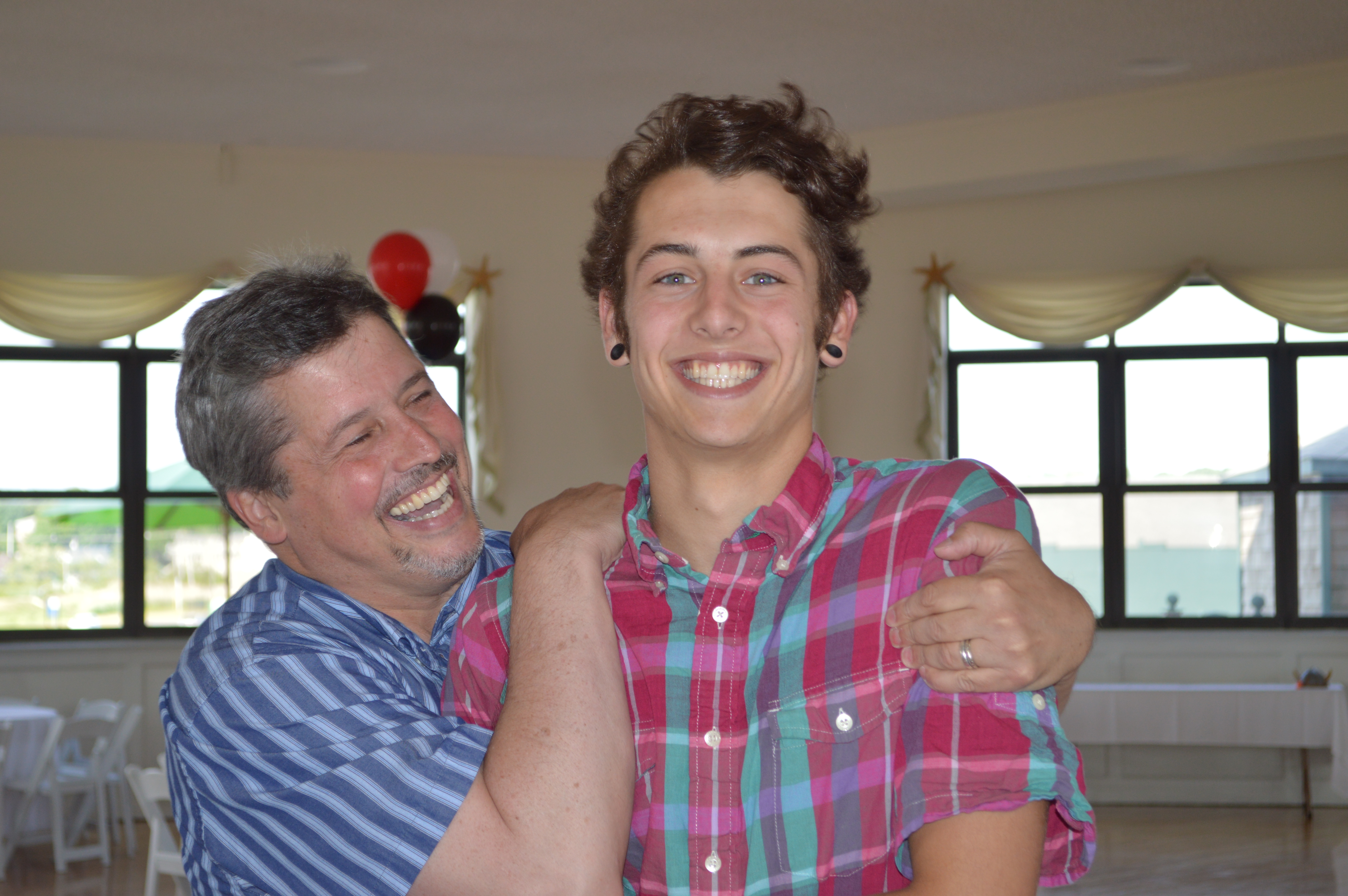
An evening ago, I watched my son back out of the driveway. A waning late afternoon sun reflected off the dogwood and pine, giving birth to a speckled blanket of light on the lawn. From his car, the melodic sound of Henley’s “Boys of Summer” became one with the cool summer breeze. He looked good – comfortable in his skin – he was on his way to pick up his girlfriend. This was a moment in time that 2 years ago, I would not have given a second thought to – but now I let it wash over me, and I settle peacefully in its glow.