What a shame and disservice to the men and women being sworn into the military at yesterday’s football game in Washington, DC.
In what should have been a proud and patriotic moment for these young men and women, the fans could not hold back their boos and distaste for the draft-dodging coward and enemy of American democracy swearing them in.
I want to think if I were in attendance I would have applauded in celebration of the men and women on the field rather than boo the putz in the press box who has embarrassed our country in front of the rest of the world – but honestly, I don’t know if I would have been able to hold back my anger at the man responsible for the rampant divisiveness ripping at the fabric of our country.
The adverse reaction that a stadium full of American citizens had to President Trump’s public appearance would be a wake-up call to any other politician. But Trump is so thickly coated in narcissism that nothing outside of the inflated opinion he has of himself matters, as the big, fat, ugly shadow he casts continues to eclipse the hope and optimism that used to shine brightly from America.
Through his organization Turning Point USA (TPUSA), Charlie Kirk became a significant force in conservative youth politics by tapping into a feeling of cultural displacement among young white men—especially those outside elite institutions—by validating their frustrations and offering a political identity that felt empowering.
He successfully rebranded conservatism for youth by leaning into cultural grievances, opposing progressive ideas (like DEI, CRT, gender fluidity), which resonated with young men who felt blamed or sidelined in mainstream discourse.
In many ways, Charlie Kirk’s meteoric rise embodies the quintessential American success story, where money, power, and fame are all that matter and where kindness, empathy, and service to others are for suckers.
On the surface, some of what Charlie Kirk did and achieved seems almost noble. He reached out to a segment of society that felt politically voiceless and culturally alienated, and he gave them a voice. He recognized the underrepresentation and an utter lack of organized advocacy for non-college-educated white males in America and championed their needs.
The problem was how Charlie Kirk framed their economic disenfranchisement.
Kirk sold young white non-college-educated males on the simplistic notion that the source of their economic disenfranchisement were immigrants, women, minorities, and wokeism, when in reality, their alienation from mainstream American society and its institutions and their feeling of lost purpose and status stems from economic and social shifts that have eroded the traditional path of a stable, middle-class life for those without a bachelor’s degree.
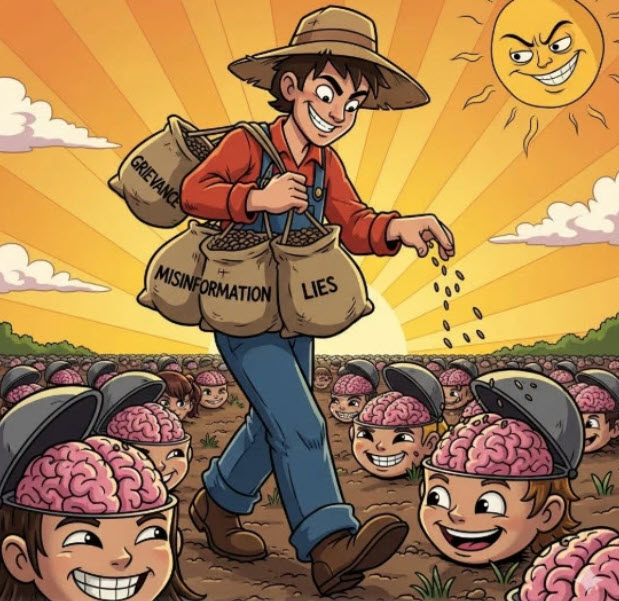
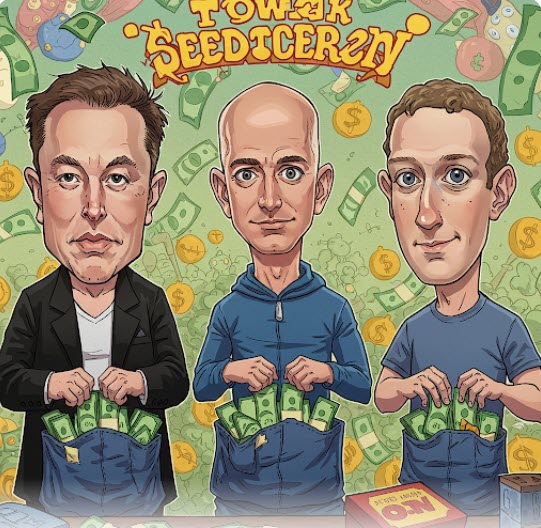
When a large segment of the population feels economically useless and politically invisible, it creates fertile ground for resentment, polarization, and instability. Discontentment is low-hanging fruit for the opportunistic and power-hungry, and Trump and Kirk cultivated and harvested that low-hanging fruit with great success, while continuing to spread the seeds of grievance, misinformation, and lies across the fertile minds of disaffected American youth for fame, fortune, and power.
Charlie Kirk and Donald Trump are emblematic of the deep rot in America’s political system, where politicians and influencers exploit the disaffected for their own personal gain, indoctrinating followers with cultural hot-button issues and identity politics to the point where the cultivated group doesn’t even care that they’re not being helped.
Like Trump, Kirk was never interested in helping his followers; he was only interested in exploiting them. To Charlie Kirk, America’s disaffected youth were a cash crop.
Genuine solutions to political disempowerment and economic disenfranchisement are complicated, expensive, and require systemic intervention from empathetic, pragmatic, and intelligent leaders who are genuinely interested in helping others. Amplifying polarization, promoting misinformation, and framing politics as a zero-sum cultural war are not solutions; those actions ensure the status quo.
We must connect the disaffected to hope and aspiration, rather than hatred and anger. It’s one thing to say, I feel your pain, quite another to do the hard work of alleviating the pain – and as we see with Trump and saw with Charlie Kirk, it’s a lot easier and more lucrative to point a finger and say, “them, they, those people, they’re the reason you are not flourishing.“
Doing the hard work to bring the disaffected back into the fold means investing in government-sponsored programs, training, and empathy, and those things are a tough sell in today’s political environment.
My Paper, My Words is a collection of essays, stories, and poems that reflect the challenges of a middle-class husband and father trying to navigate a rapidly changing political, religious, and technological landscape of post-911 America.
My Paper, My Words is a collection of essays, stories, and poems that reflect the challenges of a middle-class husband and father trying to navigate a rapidly changing political, religious, and technological landscape of post-9/11 America.
Emoluments are a salary, fee, or profit from employment or office.
The Emoluments Clause of the US Constitution aims to prevent corruption and foreign influence on government officials.
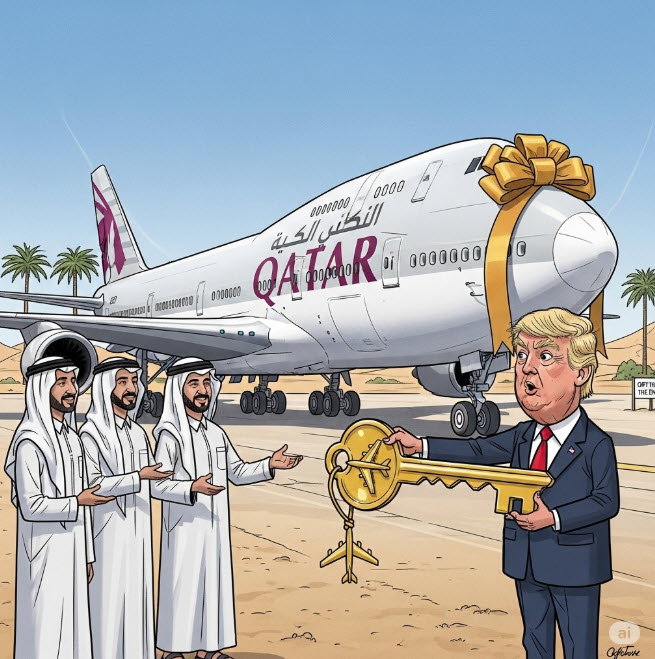
The Qatari Jet Controversy
When Donald Trump accepted a 747-8 luxury jetliner from the Qatari government, it raised concerns of a potential violation of the Foreign Emoluments Clause of the US Constitution, which prohibits federal officeholders from accepting gifts, payments, or titles from foreign governments or the US government without the consent of Congress.
I doubt Donald Trump, who demonstrates ignorance and disdain for our Constitution on a regular basis, give’s a flying fuck about the Emoluments Clause. According to Donald Trump, “It would be stupid not to take the gift.”
Here are the tids and the bits:
Qatar reportedly gifted a luxury Boeing 747-8 to President Trump, intended for use as Air Force One and later transfer to his presidential library.
Critics argue this is a clear violation of the Emoluments Clause, especially since the jet is valued at $400 million or more.
Legal experts and former ethics officials say the gift appears to benefit Trump personally, even if routed through the U.S. military.
A DOJ memo reportedly justified the acceptance, but its contents haven’t been publicly released and are now the subject of a lawsuit
And although Trump claims the plane is a “GIFT, FREE OF CHARGE,” the American taxpayer will foot the bill for retrofitting the plane, just so our American Dumbo can fly his Qatari Jumbo.
The cost estimate for retrofitting the gifted jet liner for presidential use is between $400 million and $1 billion or more, the latter amount taking into consideration advanced security systems, encrypted communications, anti-missile defenses, and a full sweep for espionage threats.
The Qatari Jet Controversy isn’t the only potential violation of the Emoluments clause. Here’s a look at other Trump political initiatives and actions that have enriched him personally during his presidency.
Political Initiatives that Enriched Trump Personally
Retention of Business Empire
Trump refused to divest from his businesses while in office, maintaining ownership and control of the Trump Organization.
His properties—including hotels, golf courses, and real estate—continued to operate and profit during his presidency.
Foreign Government Patronage
Over 150 foreign officials from 77 countries stayed at or hosted events at Trump properties.
The Chinese government alone reportedly spent at least $5.5 million at Trump-owned venues.
Domestic Government Spending
U.S. government agencies spent taxpayer money at Trump properties, including Secret Service lodging and event hosting.
State governments also used Trump venues for official functions, raising concerns under the Domestic Emoluments Clause.
Promotion of Trump-Branded Products
Trump promoted personal products like branded Bibles, cologne, and even guitars during his presidency.
His media ventures, including Truth Social and Trump Media & Technology Group, gained visibility and investment while he was in office.
International Real Estate Deals
Trump’s business pursued or maintained real estate developments in Saudi Arabia, Oman, and the UAE, some allegedly funded by foreign entities.
These ventures continued without congressional approval, despite constitutional requirements.
Emoluments Clause Violations? You Be the Judge!
The U.S. Constitution contains two key provisions:
Clause
Description
Alleged Violation
Foreign Emoluments Clause
Prohibits federal officials from receiving gifts, payments, or benefits from foreign governments without congressional consent (Article I, Section 9, Clause 8)
Trump received millions from foreign governments via business transactions without congressional approval
Domestic Emoluments Clause
Prohibits the president from receiving any benefit from the federal or state governments beyond salary (Article II, Section 1, Clause 7)
Trump profited from federal and state spending at his properties
Should a sitting president be allowed to retain ownership of private businesses that receive payments from foreign or domestic governments?This question strikes at the heart of the Emoluments Clause debate. Trump’s refusal to divest created a direct conflict of interest and undermined the Constitution’s anti-corruption safeguards.
My Paper, My Words is a collection of essays, stories, and poems reflect the challenges of a middle-class husband and father trying to navigate a rapidly changing political, religious, and technological landscape of post-911 America.
Let’s Ask Arty uses existing Artificial Intelligence (AI) technology to query LLMs about politics in these troubled times.
Query 1: Are religious fundamentalists drawn to authoritarian political leaders? If so, why?
Yes, religious fundamentalists often show a strong affinity for authoritarian political leaders – and there’s a fascinating psychological and sociological logic behind it.
Shared Traits and Psychological Alignment
Rigidity and Certainty: Fundamentalism is rooted in the belief in an inerrant set of religious teachings; religious rigidity and certainty mirror Authoritarianism’s emphasis on strict rules, obedience, and moral absolutism.
Low Openness to Experience: Both religious fundamentalists and authoritarian personalities tend to resist ambiguity, novelty, and complexity.
Cognitive Simplicity: Studies show that fundamentalists often prefer clear-cut answers and hierarchical structures, which align with authoritarian leaders who promise order and control.
Perceived Threats and Social Change
Fear of Cultural Shifts: Fundamentalists may feel threatened by secularism, liberal social movements, or pluralism, as they perceive these as challenges to their traditional values. Authoritarian leaders often position themselves as defenders of “traditional values,” making them appealing protectors.
Us vs. Them Mentality: Authoritarian rhetoric thrives on identifying enemies—whether immigrants, minorities, or dissenters. An us vs. them mentality resonates with fundamentalist groups that view the world in moral binaries.
Political Strategy and Mobilization
Christian Nationalism: In the U.S., for example, white evangelical Protestants and Christian nationalists score high on authoritarianism scales and are more likely to support leaders who promise to restore religious dominance in public life.
Religious Endorsements: Authoritarian leaders often co-opt religious symbols and institutions to legitimize their rule. This creates a feedback loop where religious fundamentalists feel seen and empowered
Query 2: So, do all religious people have an affinity for authoritarians?
No, not all religious people are drawn to Authoritarianism.
The link between Religiosity and Authoritarianism is strongest among those with rigid, dogmatic beliefs. More open, reflective forms of spirituality tend to correlate negatively with authoritarian attitudes.
Query 3: Is there a link between Religiosity, the MAGA movement, and Authoritarianism?
Yes, there’s a well-documented link between religiosity, the MAGA movement, and authoritarianism—though it’s nuanced and varies across race, gender, and religious traditions.
How Religiosity Connects to MAGA and Authoritarianism
White Christian Nationalism plays a central role. Surveys show that white evangelical Protestants and Christian nationalists are among the strongest supporters of authoritarian politics and the MAGA agenda.
Dominionist Ideologies like the Seven Mountains Mandate—which calls for Christians to control key societal institutions—are embraced by some MAGA-aligned religious leaders.
MAGA figures frequently use Religious Rhetoric and Symbolism to frame political battles as spiritual warfare, reinforcing authoritarian narratives of good vs. evil
Psychological Drivers
Right-Wing Authoritarianism (RWA) is a key predictor of MAGA support, especially among white men and white women. RWA includes submission to authority, aggression toward outgroups, and adherence to traditional norms.
Social Dominance Orientation—a belief in group-based hierarchies—also correlates with MAGA support, even among some women and people of color.
Race and Gender Matter
White Women show surprisingly high levels of authoritarianism and MAGA support, challenging assumptions that women are uniformly progressive.
Women of Color, by contrast, consistently show the lowest levels of authoritarianism and MAGA support, even when controlling for religiosity.
Religion as a Political Tool
MAGA leaders often invoke religious identity to legitimize their authority and mobilize voters. Trump’s use of phrases like “our religion” signals a vision of America as a white Christian nation.
Some former members of religious sects have even compared MAGA’s structure and messaging to authoritarian religious movements they escaped.
My Input
Religious fundamentalism and nationalist-tinged religious views are fueling authoritarian politics within the MAGA movement, putting Americans on a dangerous path, unseen since our war of independence in 1776.
Many of us probably never imagined America, a country that fought a world war to end fascism in Europe, would be on the precipice of falling to it at home. But we are.
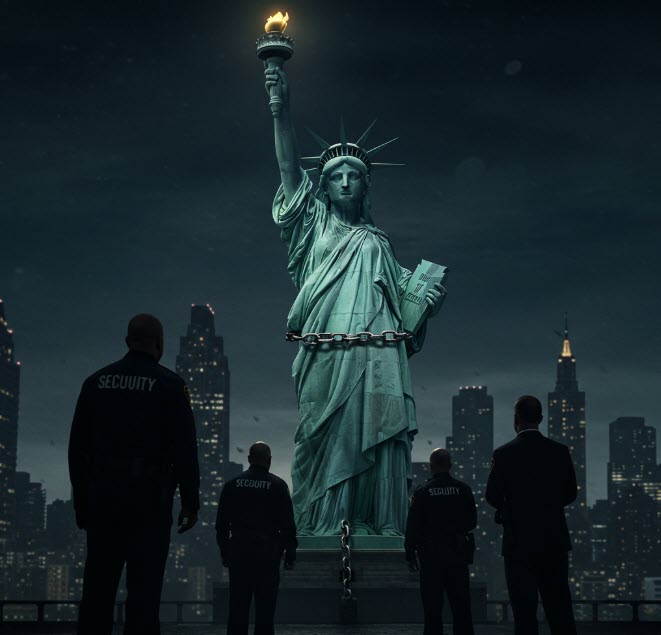
Religion is fueling America’s flirtation with fascism.
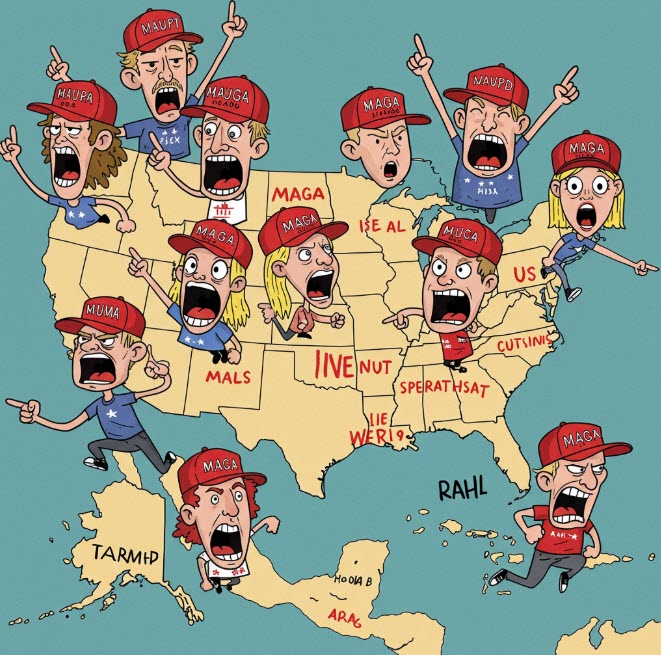
We’re in a high-conflict / high-stakes environment, where groups (like MAGA) with an undying commitment to religious, political, and cultural identity flourish. Through Group Cohesion, Mobilization Power, and Clear Identity, MAGA’s loyalty, zeal, and adherence to rigid beliefs serve as the engine to Trump’s authoritarian politics.
To many in the MAGA movement, America’s constitutional democracy takes a back seat to religious and cultural identity. When MAGA members think the Constitution infringes ontheir perception of America’s religious or cultural identity, they’re okay with disregarding or tossing the Constitution altogether.
So, how do millions of Americans who don’t have the Group Cohesion, Mobilization Power, and Clear Identity of MAGA fight fascism and save democracy?
Because honestly, this fight is coming.
Fascism doesn’t go away on its own – it either takes root, or it’s rooted out.
Donald Trump manufactures and feeds the MAGA mob a constant diet of chaos, grievance, conspiracy theories, and lies. It’s the lifeblood of that movement.
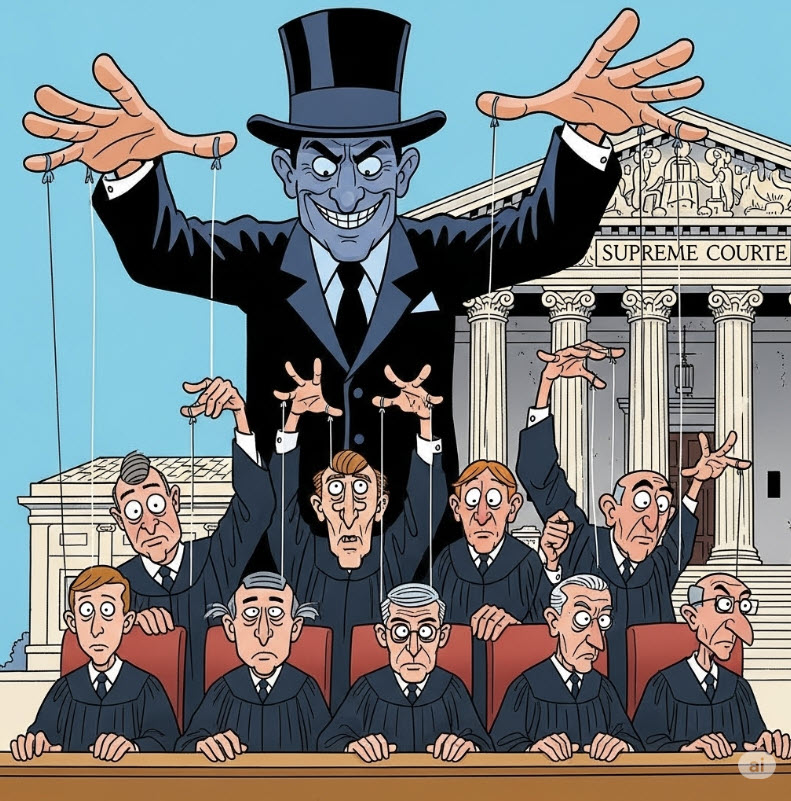
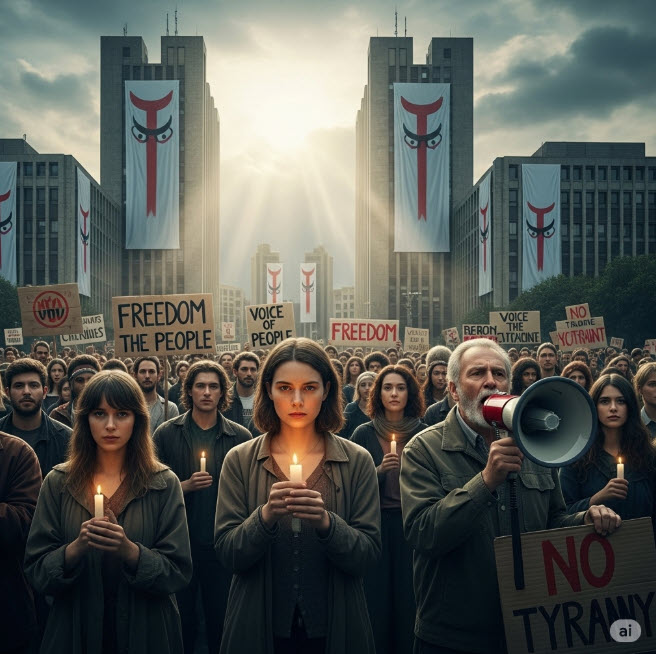
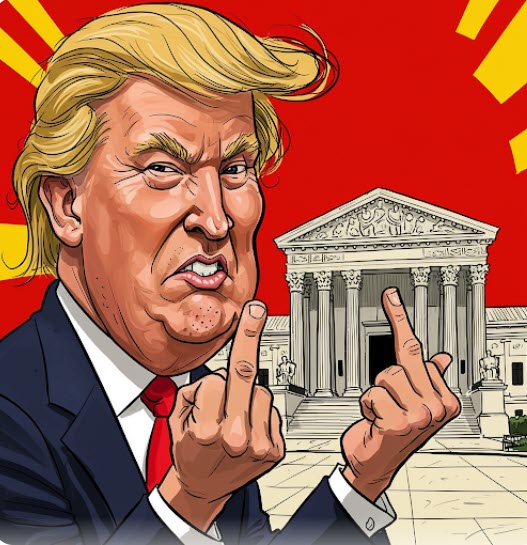
Authoritarian forces are clamping down on democratic institutions and values in America. And because the confederacy of cowards in Congress refuses to serve as a check on executive power and because the judiciary continues to provide cover for Trump’s unchecked power, the last line of defense is citizen resistance, led by the pragmatic and morality-driven.
Pragmatic and morality-driven groups tend to be more adaptable and sustainable over time, as explained here by Arty:
Flexibility: Pragmatists can adapt their strategies to changing conditions, which is crucial in complex societies.
Cooperation: Morality-driven groups foster trust and reciprocity, which are essential for large-scale collaboration and innovation.
Reduced Internal Conflict: Moral norms help regulate behavior and reduce destructive competition within the group.
“While fanaticism is a high-risk, high-reward strategy that can dominate revolutionary movements like MAGA, it often burns out or fractures when the environment shifts. Whereas morality and pragmatism are slower-burning fuels that build civilizations, institutions, and long-term alliances.”
With the Epstein files we’re seeing a slight shift in the environment, causing some turmoil and fractures in the MAGA-sphere. But I don’t think we can rely on an Epstein-file-fueled MAGA collapse to save America.
Here is how American citizens can push back against fascism, with some help from Arty:
Build Parallel Structures of Power
Grassroots organizing: Form local networks that provide mutual aid, legal support, and community safety. These become lifelines when official institutions fail.
Alternative media: Create and support independent journalism to counter propaganda and amplify truth.
Solidarity economies: Support cooperatives and local businesses that resist authoritarian influence.
Shift the Narrative
Expose authoritarian tactics: Use storytelling, art, and social media to reveal abuses and rally public opinion.
Frame resistance as patriotic: Reclaim national symbols and values to show that defending democracy is not fringe—it’s foundational.
Strategic Nonviolent Resistance
According to civil resistance experts like Gene Sharp and Erica Chenoweth:
Disruption works: Strikes, boycotts, and mass noncooperation can paralyze authoritarian regimes.
3.5% rule: Movements that mobilize at least 3.5% of the population in sustained nonviolent protest have historically succeeded in toppling regimes.
Forge Broad Coalitions
Cross-ideological unity: Bring together liberals, conservatives, religious groups, labor unions, and marginalized communities around shared democratic values.
Intersectional movements: Link struggles—racial justice, climate action, LGBTQ+ rights—to build a united front.
Protect Vulnerable Communities
Rapid response teams: Organize legal observers, medics, and safe houses.
Digital security: Train activists in encryption and surveillance evasion.
Defend Electoral Integrity
Even if institutions are compromised:
Monitor elections: Document abuses and mobilize international attention.
Run insurgent candidates: Use local races to build power from the ground up.
Learn from Global Movements
South Korea: Citizens blocked martial law by physically surrounding Parliament.
Chile: Small affinity groups quietly resisted Pinochet’s dictatorship through coordinated strikes and art.
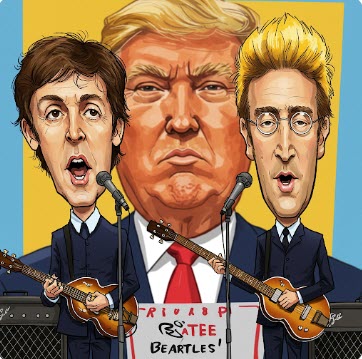
Read loosely to the tune of “Rocky Racoon” by the Beatles
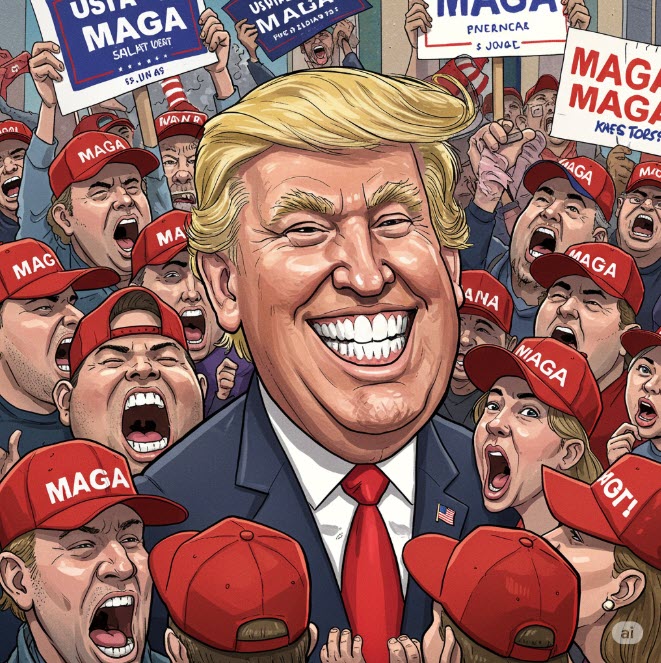
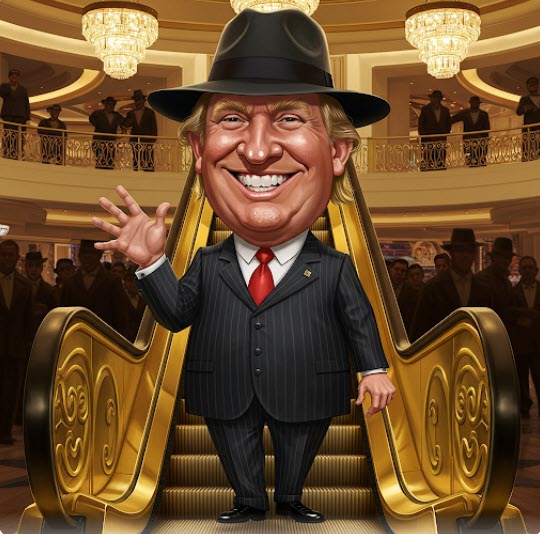
On a staircase of gold braggadocious and bold Is where all this nonsense got started
Make America Great tapped into our hate and our union became the departed
Donny the Goon, was grabbing some poon (one day he would find he was libel)
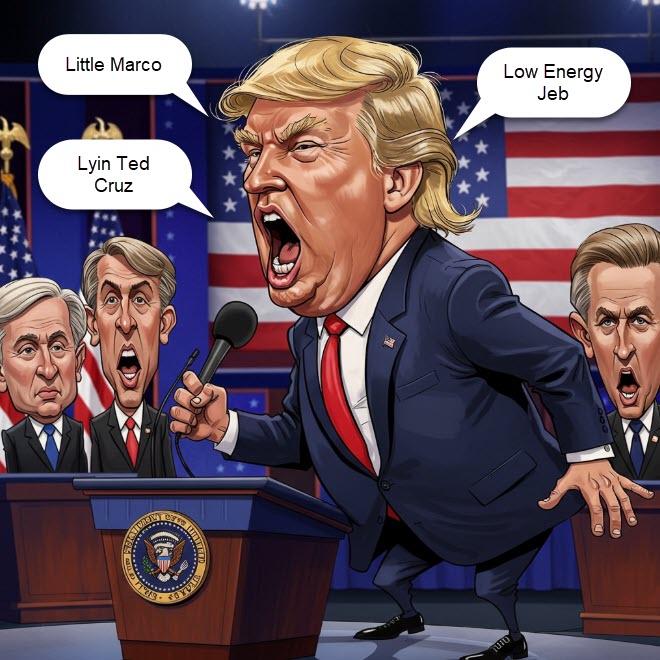
Donny had come equipped with a tongue giving new names to his rivals
His rivals would cringe at the lunatic fringe That made up a 3rd of the nation The country was ill and so lacking in skill that they leaned into hate escalation
When Don and his team were picking up steam A virus caused a big slowdown Donny came in a grift in a grin He said, “COVID’s ain’t shit it’s a hoedown”
The nation got smart decided to part And Donny went back to Mar Lago
When Donny got beat he took to the street and congress collapsed in the corner Since Donny’s come back he’s been on the attack Blaming our woes on the foreigner
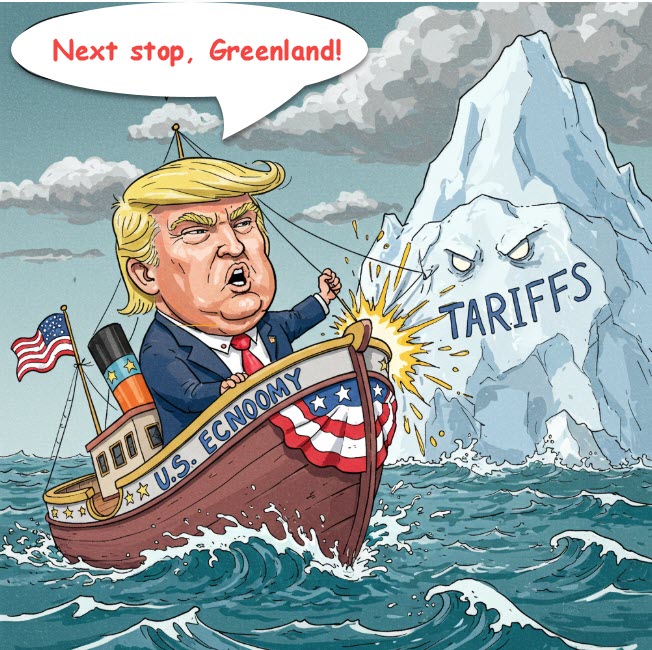
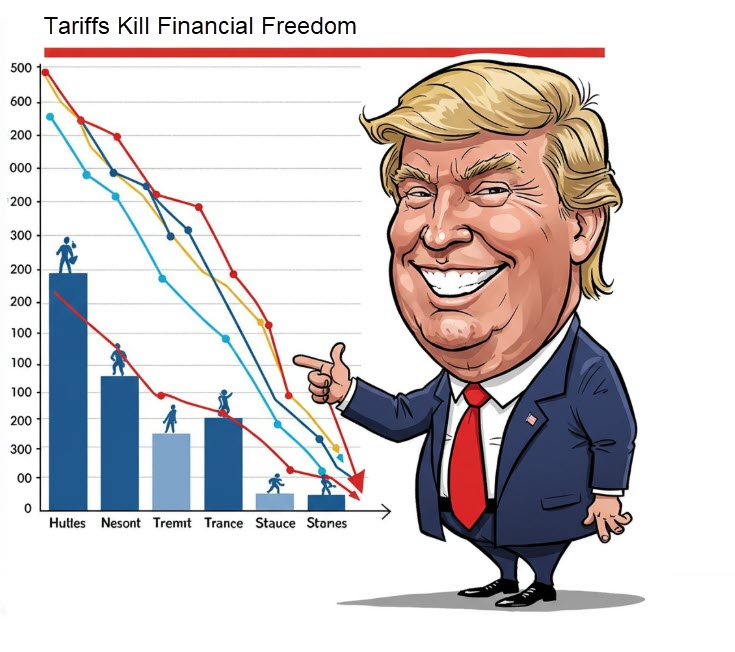
With tariffs and threats to Greenland and vets America’s dead and we mourn her
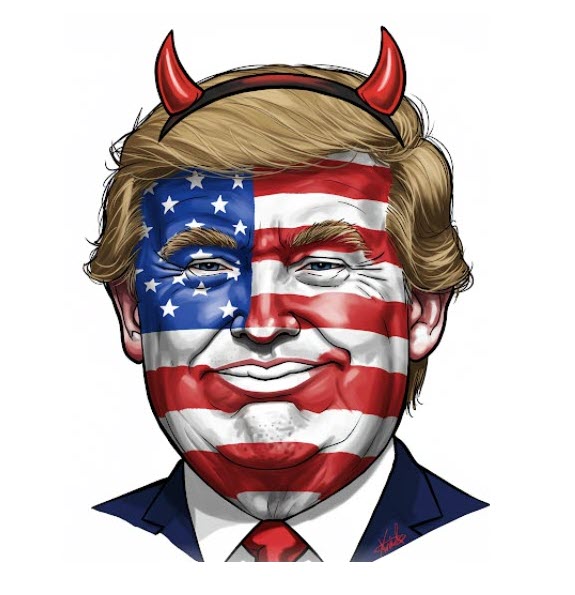
When Donny the Goon an orange buffoon sits at the helm of a nation The nation will rot at the end of a knot That’s a lot worse than inflation Yeah, yeah























 bendingtheneedle