I’m going to be 61 this year. Looking back, there’s not a lot to brag about, but not much to be ashamed of either.
If I had to come up with a tombstone inscription, it might be:
Not a Hall of Famer, but a solid and dependable contributor (somewhere between Rico Petrocelli and Dwight Evans).
As I head into my later years, I can say without hesitation that fatherhood has been the most consequential and vital endeavor in my relatively ordinary life.
On fatherhood, I’m by no means an expert. I failed many times, too many to count. But I learned a lot and improved over time (I think).
One thing I learned is that our children are not us.
Sure, they come into the world with DNA from both parents, but they’re not carbon copies of mom and dad. Instead, they’re pre-packaged with a distinctive thread of familial traits and characteristics going back generations, to be woven over time by master weavers’ Nature and Nurture into unique and complex tapestries.
Those tapestries are colored and tamped by life’s sights, sounds, and touchpoints. From an early morning speckled splash of sunlight on the nursery ceiling – to the stony silence of a disengaged parent – to the warm embrace of a loving grandparent – every experience sets off a spark of emotion, which forms a memory to be stored and drawn upon continuously and subconsciously throughout their lives.
Just “being” in the world exposes our kids to arbitrary cruelness and spectacular wonder (along with a healthy dose of the mundane).
How they react to the cruel, wonderous, and mundane can’t be predicted. Their reactions depend on a sprawling range of environmental and sociological conditions and an unknown dose of biological and genetic factors. From the stability of the family unit to a kink in the banding pattern of a chromosome – it all gets factored into how kids develop and who they become.
Maybe there’s a proclivity for sadness, anxiety, or an innate gentle disposition. Maybe a child is born with an unbridled competitive spirit or an affinity for music or math. Perhaps there’s a dash of gender dysphoria. Whatever the case, the traits and characteristics kids are born with get stretched onto life’s loom, along with spools of environmental and sociological factors, out of which come these beautifully unique and flawed tapestries.
In life, there are no uniform patterns.
So, what’s our role as parents? How do we affect these tapestries that are our children?
As I see it, our primary role is to help our kids understand and accept their distinctive ” self ” to reach their fullest potential.
This is easier said than done because even with the best intentions, our parenting skills are naturally dulled or diminished by the bias of our own experiences and expectations – I know mine were.
I think many parenting failures are grounded in a shared belief; because our kids are borne from us, we have some innate understanding of them.
But we don’t.
And if we’re unwilling to recognize and accept that many of our preconceptions are wrong — or if we’re so hemmed in by our own experiences and expectations that we can’t break from them, we are liable to screw things up royally.
Parenting is a dynamic and fluid process.
Acknowledging we don’t genuinely know our children can open the door to getting to know them, which can lead to a more authentic understanding of them and help us parent more empathetically and effectively.
Of course, for any of this to happen, parents must be present, loving, accepting, and willing to engage. When kids have someone in their life who is present, loving, accepting, and willing to engage – they’re more likely to open up and share.
Recently I’ve been watching footage from parents of transgender kids testifying before committees on pending legislation restricting gender-affirming care for children. In almost all cases, there’s a point in their testimony where they recall the moment when they realized their child was different. That moment was often characterized by confusion and worry (this was not the tapestry they imagined!). What touched me as I listened to these parents was what they did after the confusion and worry settled.
These parents listened to their children, talked to medical experts, and became advocates for their children. They overcame their biases (many of which were woven into their tapestries by their parents, churches, or communities) to see their children for who they are.
These fathers and mothers learned that even though their own tapestries were of a particular color or pattern, their children’s tapestries differed. They understood that trying to prevent the child from being their authentic self was detrimental to their emotional well-being and that the best thing they could do for their child was to be present, loving, accepting, and engaged.
Some 48 years ago, my parents (perhaps over a glass of wine and bottle of scotch) decided to move the family to Aquidneck Island — where I was raised, not far from the ocean, in a neighborhood of shabbily constructed raised ranches — where on warm summer days, squinty-eyed kids staggered zombie-like from their garages or front doors, pop-tarted, sugar-smacked, and ready to roll.
We played ball (whiffle, base, foot, basket, and stick) in our backyards or in the street — we rode bikes everywhere, we “red rovered, red rovered,” and kicked the can against a near-perfect backdrop of New England sunsets and warm summer breezes, to a generous and harmonious soundtrack of crickets, peepers, and nightingales.
We hunted salamanders in the woods and flash-lighted our way to collecting night crawlers for fishing expeditions at the town reservoir, to which we walked unattended by adults, poles over our shoulders, the sun warm on our backs, our conversations held together with lite laughter and kinship.
The entire summer, we hardly interacted with Mom or Dad except at dinner time, which was had around the dining room table without exception.
And so it was on Aquidneck Island I stayed, met my wife, and raised 2 good boys and 4 dogs — the latest, a pocket-sized pit bull, full of spittle and spunk, who envelops me in rhythmic doggy snores as I write this piece.
What strikes me most on this stroll down memory lane is the magnitude of change in parenting over a single generation. Our generation, handicapped by socioeconomic conditions requiring two working parents, and a feeling of fear and mistrust (largely unwarranted), the flames of which were fanned by continuous exposure to 24-hour cable news, which made us believe we could never leave our kids alone, that they had to be within earshot or eyesight 24 hours a day, less someone steals them away forever — and so it was by these phenomena, that free play, that priceless gift and ever-important ingredient in child development, was killed.
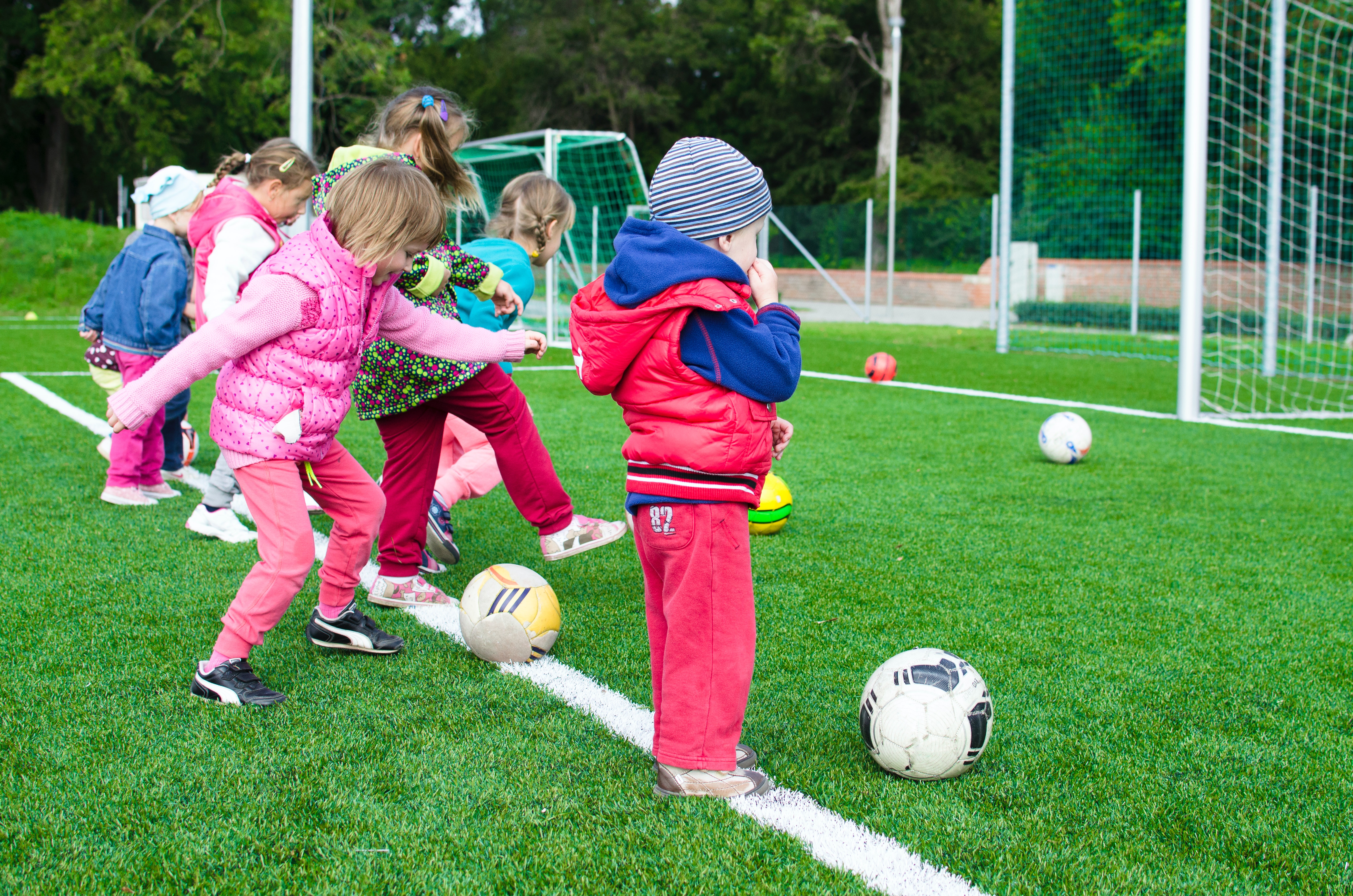
Gone are the days when kids gathered at a park or in someone’s backyard to organize on their own and “get a game going” — sadly, this has been replaced by regularly scheduled league games on sun-splashed well-manicured fields with perfectly chalked sidelines and clipboard-carrying, whistle-blowing, score book-keeping adults shouting out instructions while pacing in front of tight-jawed fathers in sunglasses and Bermuda shorts (newspapers tucked firmly under their arms), while antsy, floppy-hatted moms in folding chairs with cup holders, try to capture every moment of play on their iPads or cell phones.
We’ve forgotten the value of neighborhood free play on uneven surfaces where the end zones were marked by a rock and a tree. The sidelines were guesstimated according to natural or not-so-natural boundaries and, most importantly, where kids worked out the teams and the rules and addressed issues that arose without “expert” interference by adults.
As my children enter adulthood, I wonder about the absence of free play and the implications of an overly-scheduled, overly-structured, and, quite frankly, overly-parented childhood.


 bendingtheneedle