Does anyone else feel a wave of inadequacy when scrolling through their LinkedIn feed?
For me, it’s the professional equivalent of dragging my flabby ass into a Maxx Fitness Gym full of fitness junkies and muscle heads.
Are these people for real? Doesn’t anybody just work a crappy job to pay their bills anymore?
When did we become our jobs?
Are there really this many passionate professionals who love what they do – or are most of us just playing the game?
For me, it’s difficult not to feel like a fraud when I post about work because I am not my job.
My job is a taxing and challenging endeavor to endure. I work hard at it to keep a roof over my head and food on my table and grow my savings so that eventually I can get the fuck out.
LinkedIn is an advertising agency for the self – where we all try and keep up with the Joneses and match the energy of everyone that’s on the platform saying how proud they are to be part of a company or industry or technology and what a positive experience working for company x has been and how they can’t wait for the next exciting chapter in their career.
When you’re in the gym next to a guy like this, you immediately throw an extra 25-pound plate on the bar because you don’t want to look and feel like a failure.
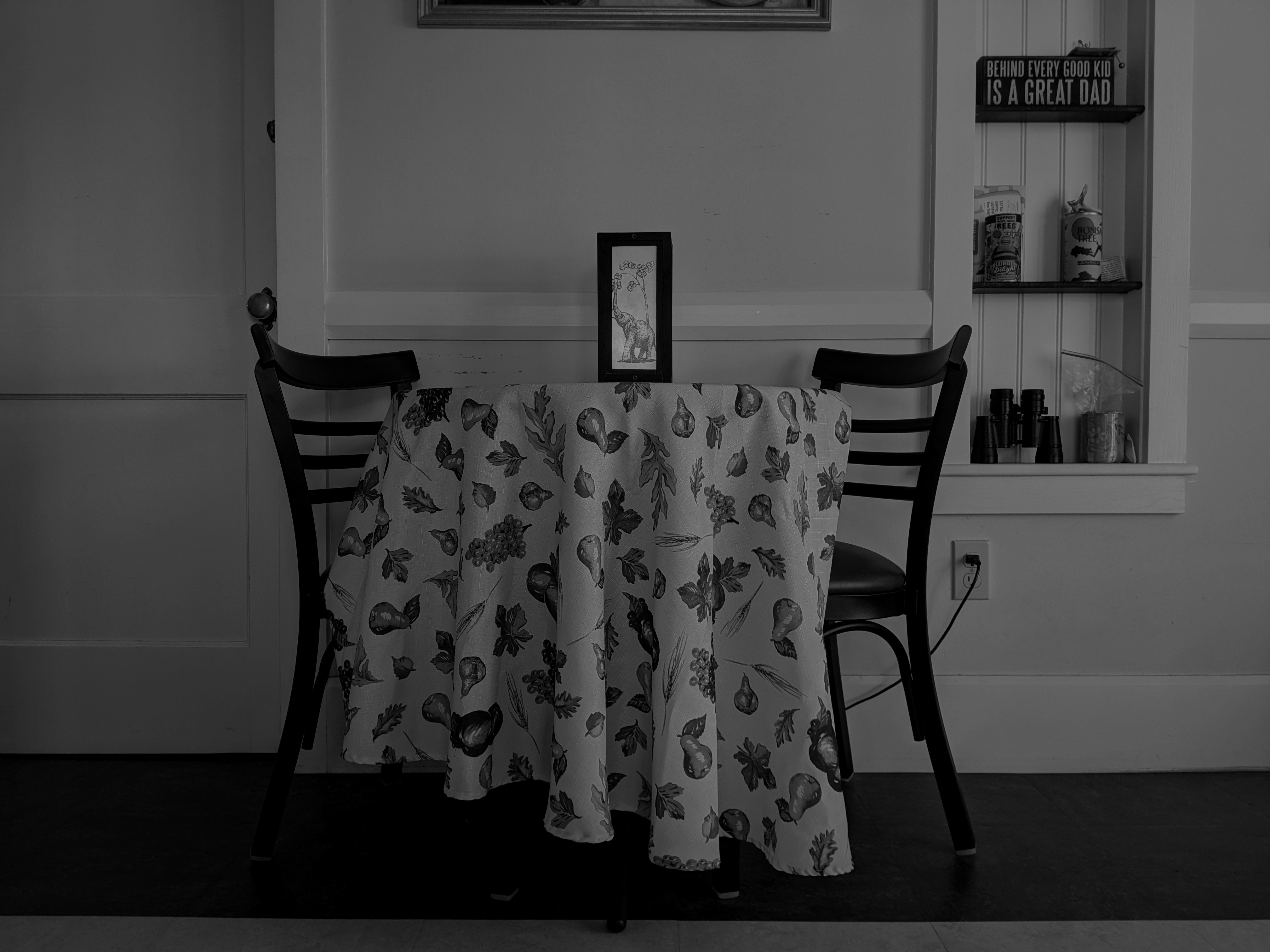
“I know I could do this if things would just slow-the-fuck down,” he muttered. Head bowed, sitting at a dimly lit kitchen table, teetering on the edge of a midlife meltdown.
With more than 30 years in the industry, you think he’d be brimming with confidence. For most, that kind of experience leads naturally to calm assuredness. But with experience comes expectations, and those expectations smother him like a blanket of boulders.
He feels incapacitated by his experience, not buoyed by it.
He fixates momentarily on his wife’s furrowed brow and imagines himself tiny, wandering through those deep valleys of disappointment.
At work, he’s surrounded by the young and hungry. Buzzing with ambition, their bright voices float on currents of frenetic energy.
Was he ever that exuberant (about anything)? He struggles to remember his younger self, but it’s like painting with numbers without the numbers.
In his cubicle, yellow sticky notes pop off the edge of his monitor. A sleek uninviting techno-flower, daring him to delve in – begging him to fail. Tossed to the corner of the desk, a coffee-stained and panic-scrawled legal pad.
His “to-do list.”
After a full day’s work, that list somehow gets longer, not shorter.
Early in his career, he’d slide into a work groove and rip through his “to-dos” effortlessly, like a sickle slashing through wheat. But nowadays, he’s easily and willingly distracted. His ability to focus comes in short bursts only, and the mental elasticity of youth is frustratingly absent.
His focus is hampered further by a barrage of instant messages and multiple meetings a day. As a result, he always feels two steps behind in a mad dash to a deadline.
He wears his age like an ill-fitting suit, and he struggles to keep pace with his profession.
He lifts his head and speaks again.
“Honestly, I don’t think I can do it anymore. I’m sorry, because I know that puts us behind the eight-ball financially, but every day’s a struggle, and I’m barely keeping my head above water.”
He wasn’t being lazy. He was being honest.
He remembers how the quest for success propelled him early in his career. He remembers plowing through whatever work stress he encountered, because on the backside of that stress were people who depended on him. For 25-plus years, that was all the motivation needed to keep at a job he never truly enjoyed.
Now that his kids are grown and on their own, he faces an increasingly stark scenario. Deadlines approach, the work pace quickens, his ability to keep up wanes, and the desire and motivation needed to plow through it all has vanished.
He concludes that what’s required of him, and where he is philosophically (at sixty), have diverged irreconcilably. He feels this in his bones and in his gut every morning when he wakes.
And there’s a nagging sense of entitlement, that at this phase of life he’s earned the right to slow down — to take his foot off the gas — to smell the roses. He romanticizes about a job that doesn’t follow him home every night. A job that ends when the day ends and doesn’t occupy his mind ceaselessly.
At sixty, he has no interest in climbing the corporate ladder. Instead, he wants to set it ablaze, sit cross-legged on his cubicle floor, and watch it burn to ash.
At sixty, he has no illusions about discovering job satisfaction. That boat has sailed, and there’s no sense lamenting he never got on it. Instead, he’s looking for balance.
He’s looking for “just enough.”
Just enough to pay his bills and free up some time.
Just enough to sip coffee in solitude, and not worry about work.
At sixty, he sits at a dimly lit kitchen table, looking for a way out.

 bendingtheneedle