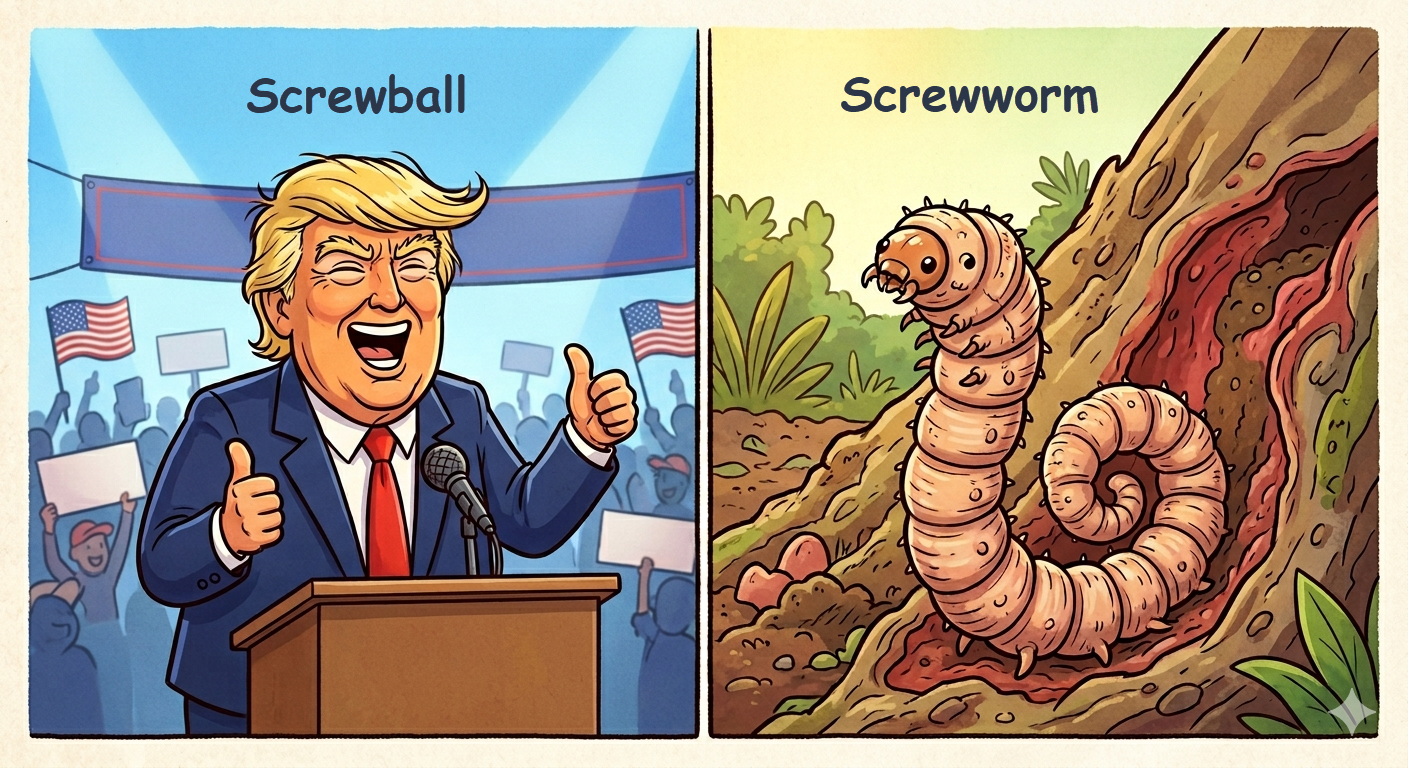
A fully funded international screwworm monitoring program very likely would have improved early detection and slowed the spread, reducing the scale and speed of the current outbreak, perhaps even preventing the disease from reaching the U.S.
Historically, the U.S. kept screwworm from reaching our border by applying a three‑layer defense:
- Panama biological barrier (sterile‑fly zone)
- Central American surveillance (USAID/FAO programs)
- U.S.–Mexico border surveillance (USDA APHIS)
The 2025 Department of Government Efficiency (DOGE) cuts removed layer #2. When layer #2 fails, layer #3 becomes a last‑minute firewall — and by the time screwworm reaches the border, eradication is much more difficult.
So, how much money did the US save when DOGE cut programs that included screwworm monitoring? The savings from cuts, which eliminated thousands of USAID grants (including more than 100 FAO animal‑disease monitoring projects), were never quantified. The Trump administration said the cuts eliminated “waste,” but no budgetary analysis or savings estimate was released publicly. What we do know historically is that FAO/USAID animal‑health surveillance projects cost millions, not billions.
While the savings were tiny and unreported, the potential cost of failure is massive:
- Texas cattle industry losses could reach $1.8 billion per year if screwworm spreads.
- USDA has already invested over $1 billion in emergency response and sterile‑fly infrastructure after the outbreak.
And if the U.S. fails to contain the outbreak, projected costs balloon to an astounding $675 billion dollars.
So, the U.S. “saved” an unreported amount—likely in the low millions—while exposing itself to billions in economic risk.
Good job, Mr. President!

