Working From Home and the Reflexive “Fuck You!” From a Sixty-Year-Old Man

So, I have noticed this about myself lately.

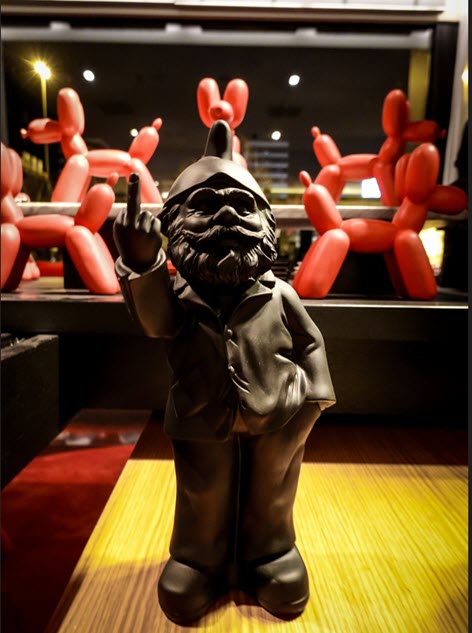
I’ll randomly blurt out “fuck you” throughout the day, at nothing in particular.

Like a hiccup, my “fuck yous” arrive without warning.

Most of the time, they happen when I’m alone, but not always, as my wife can attest.

I might be walking from the kitchen to the living room when BAM! – a sharp and sincerely felt “fuck you” burst from my lips.

Sometimes the “fuck yous” happen when driving alone in my car.

These car “fuck yous” aren’t preceded by a driver cutting me off or failing to use a turn signal (e.g., the standard “fuck you” driving scenarios). No, instead, it’s just me driving in peace and quiet when out of nowhere comes a terse and curt “fuck you!”

I’m not afflicted by a sudden onset of Tourette Syndrome, but something’s definitely going on with me. So, I’ve been trying to self-diagnose.

The first step in diagnosing Random Fuck You Syndrome (it’s what I’m calling this) is identifying life changes that might be contributing factors.

 Change 1: Being Alone

One thing that’s changed for me is the number of hours I spend alone.

I’ve worked from home for more than 20 years — but recently, working from home has transitioned to working from home alone.

For most of my career, there’s always been another human in the house (for at least part of my workday). But this past year, our younger son moved out, and my wife, who leaves for work at 4:15 in the morning, goes to her mom’s house after work to visit and help with chores.

We have a dog who keeps me company throughout the day, but she’s deaf and, consequently, quiet as a mouse.

So, the number of hours I spend alone during the workday has increased significantly. For long periods, it’s just me, my laptop, the refrigerator’s hum, and my deaf dog snoring.

Being alone is not the sole cause of Randon Fuck You Syndrome, but I think it contributes to it.

Change 2: My TV and Phone 

When you work from home alone, your smartphone and television become closer companions to you than they used to be.

I turn my TV on shortly after waking up and listen to the news while going about my morning routine of putting on a pot of coffee, feeding, petting, and talking to my dog (yes, I know she can’t hear me), making the bed, and emptying the dishwasher.

When I’m not absorbing content from work, I’m absorbing it from my smartphone and television. Throughout the day, I’m receiving input constantly – All that input gets stacked in the recesses of my mind, where it sits for hours, without interruption from healthy interactions and conversations with other human beings.

Change 3: Our Turbulent World and the Nature of Content

When the world is a mess, as ours is, having access to information is a double-edged sword. You stay informed, but you worry – a lot.

We have constant access to information about the war in Ukraine, the rise of fascism at home, the climate crisis, inflation, and the looming influence of AI, all contribute to an overwhelming feeling of uncertainty and anxiety.

On top of the pile of the undeniable mess sits a fairly new development (in terms of consequence): the demise of critical thinking and American’s willingness to relinquish their mental and intellectual autonomy to fantastical conspiracy theories and a known crook whose vision for America rests on retribution, revenge, and fascist-ideologies.

I can’t tell you how many interviews I’ve seen recently of Qanon followers who believe JFK is still alive, JFK junior faked his own death, and Donald Trump is a Christ-like figure divinely sent to save America from a cannibalistic cabal of elites.

Donald Trump, (a man credibly charged with stealing top-secret documents, directing a collaborative effort to overturn a free and fair election (and strong-arming state officials to do the same) said, “Don’t believe what you see or hear, believe what I tell you.” And millions of Americans are doing just that.

I stew at the knowledge that these people get a seat at the table and have a say in selecting the next president – that their vote counts the same as the vote from rational individuals who use critical thinking to guide their decisions.

This is a significant change, not just for me (a guy working at home alone), but for our country.

Change 4: Work Burnout 

At sixty, what’s required of me at work and where I am philosophically have diverged irreconcilably.

I feel it in my bones and gut every morning I wake up.

There’s a nagging sense of entitlement that at this phase of life, I’ve earned the right to slow down, take my foot off the gas, and smell the roses.

I romanticize about a job that doesn’t follow me home every night. A job that ends when the day ends and doesn’t occupy my mind ceaselessly.

When I look at my workstation, I stress out about the amount of work I have to complete – work that no longer interests me – and the mental energy required to barely push through it.

That agitates the shit out of me.

So, these four changes – an increase in the amount of time being alone, unfettered access to information, the shit-state of our world and America’s growing population of unthinking Trump supporters, and job burnout – are contributing factors to the “Fuck Yous!” building inside my head and Random Fuck You Syndrome (RFYS).

At this phase of life, I have both no fucks to give, yet I’m full of “fuck yous” – it’s a strange dichotomy. 

As I see it, the cure is retirement (a year or two off) and voting the current Trump culture into oblivion.

After that, I’ll regain control of my “fuck yous.” Until then, Random Fuck Yous will reign.
Robots in Human-Skin Suits

And round-and-round we go.

I’m more than a bit dismayed that I still wallow in work worry.

At 60 years old, I thought that shit would have dissipated by now, but it hasn’t.

I still lie awake at night and stress out about work.

And lately, worry is partnered (weirdly enough) with a growing and sustained apathy, where even though I’m frenzied and panicked about my job, I struggle to find the motivation needed to push through the mile-high mountain of inane yet necessary Zoom meetings, team stand-ups, One-on-ones with my managers, deliverable deadlines, and new processes, procedures, and tools.

You know you’ve reached a saturation point when you can’t summon the energy needed to organize your thoughts and quell your work worry.

And I’m beginning to think that’s where I am – at the intersection of panic and apathy.

If I never hear another “let’s jump on a call” or “find some time on my calendar,” I’ll be OK because honestly, after 35 years, work has become an exhaustingly joyless and life-draining endeavor – a toxic and twisted nest of feigned interest and stress made worse by the fact that our daily lives are unfolding against a devastatingly bleak backdrop of worldwide calamity; from our crumbling democracy to the rise of authoritarianism to the climate catastrophe, humanity is in shambles – making it damn-near impossible to focus on two-week Agile sprints and software deliverable deadlines.

At least, for me, it does.

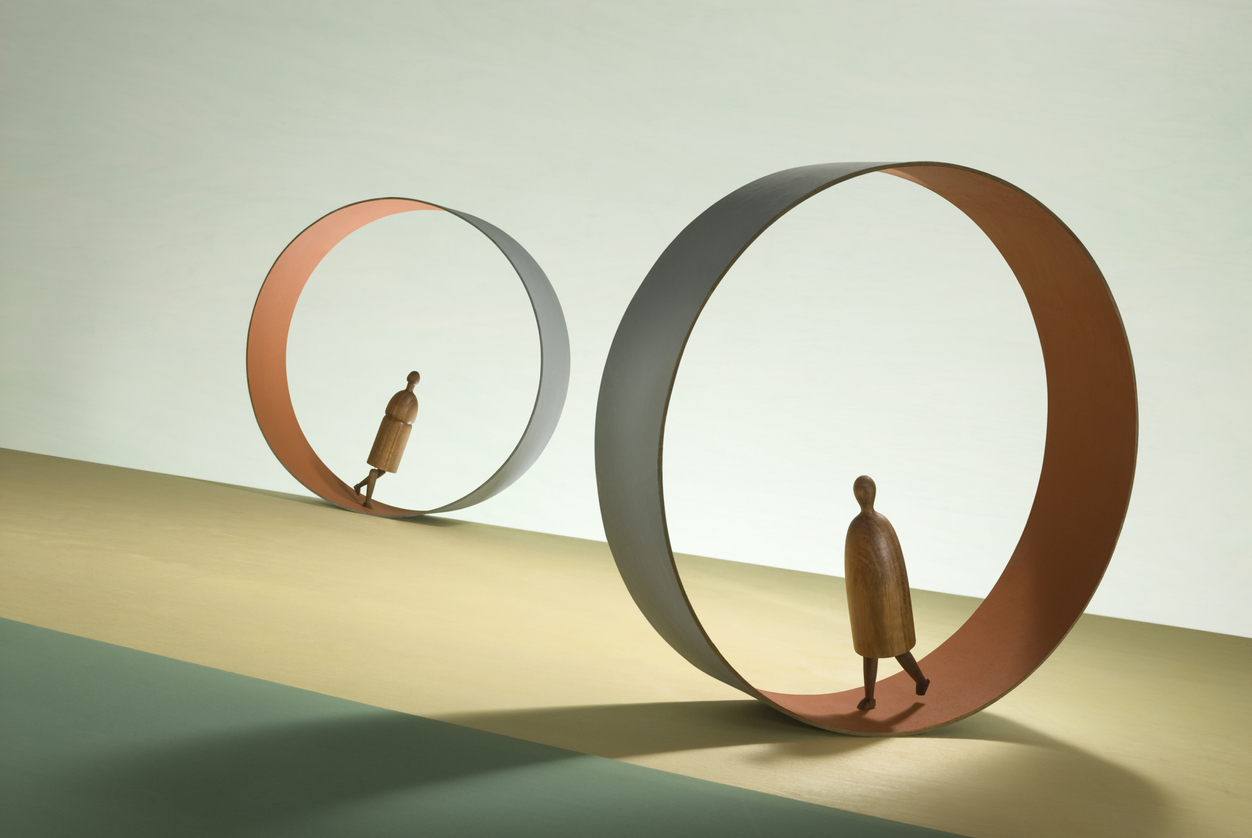
And so, I’m itchy to retire. I want to step off the “dread mill,” put my work worry aside, and use the surplus of time and onset of calm to focus on things that matter – family, personal relationships, health and relaxation, and preparing for the apocalypse.

And actually, it’s beginning to feel like retirement might be close at hand — I mean, after 35 years, the next step, the one where my wife and I get to relax and smell the roses, should be just around the corner.

Right?

I consider myself one of the lucky ones. Barring a catastrophic financial meltdown, I hope to retire while I still have some tread on my soul. But for millions of Americans, the high cost of healthcare, housing, food, gas (and just about everything else) makes retirement a pipe dream.

If I had to continue the rest of my days writing bland and drier-than-dessert-dirt descriptions of software features, I don’t know what I’d do.

I did it for 35 years.

I’m ready to stop.

To keep at it when I no longer care would damage my emotional well-being.

Humans are strange; we keep doing what we do, even when we’re dead tired, exhausted, and deflated by it. Even when it brings us no joy and turns us into stressed-out, fidgety, and fragile work zombies, we keep on with it. Maybe because we have to. Maybe because we have no choice – we work or get swallowed up and spit out.

And fear prevents us from stopping (even for a minute), stepping back, and considering another path.

The system that we’re part of has turned millions of Americans into robots. Programmed and cultivated by the carrot-and-stick, the pot-of-gold-at-the-end-of-the-rainbow message of capitalism.

And so, we move ahead, expressionless, one foot in front of the other, until that final day when we stop and fall over into our shiny and perfectly polished coffins.

That’s no way to live, and not a good way to die either.

At Sixty

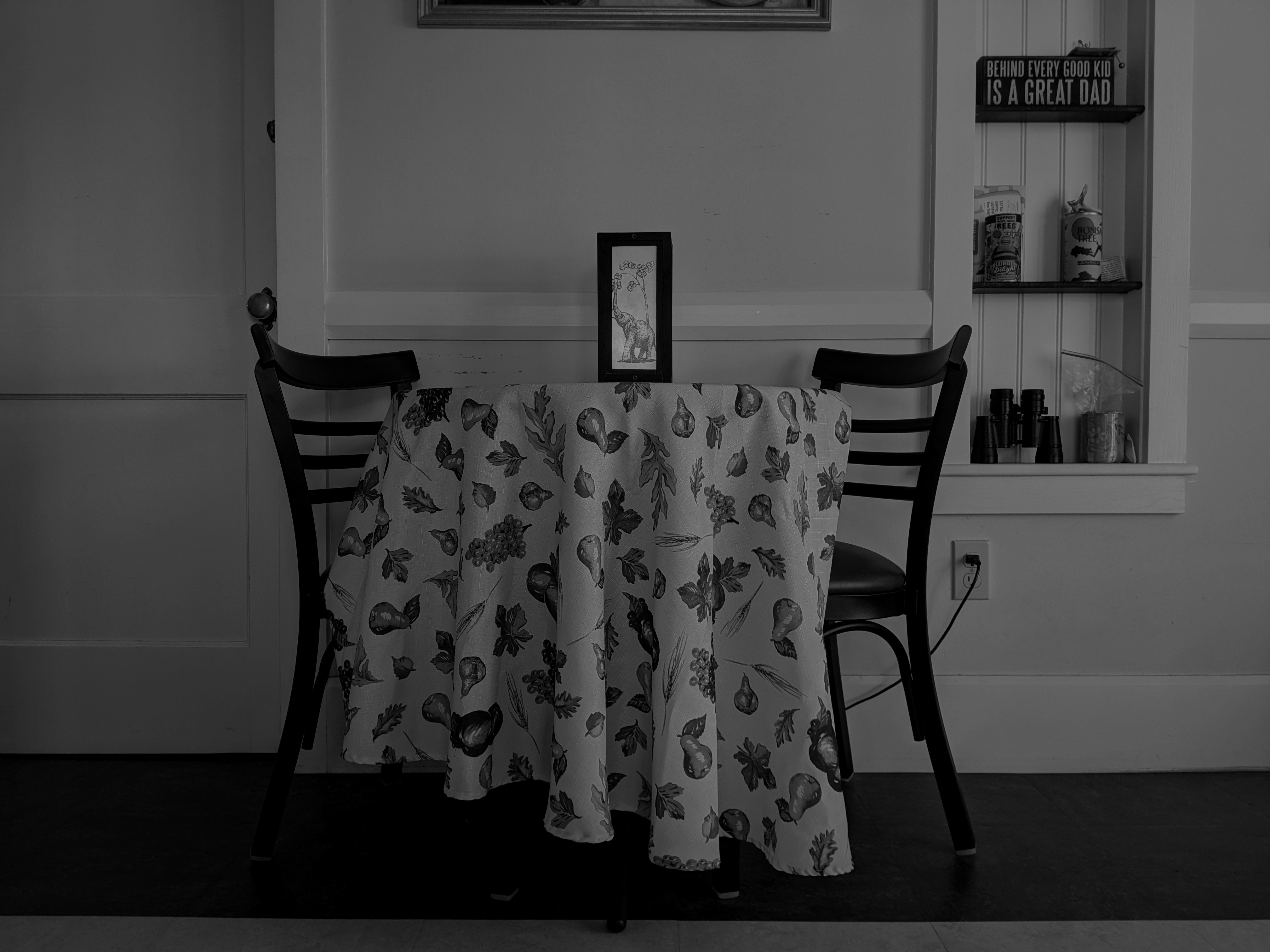
I know I could do this if things would just slow-the-fuck down,” he muttered. Head bowed, sitting at a dimly lit kitchen table, teetering on the edge of a midlife meltdown.

With more than 30 years in the industry, you think he’d be brimming with confidence. For most, that kind of experience leads naturally to calm assuredness. But with experience comes expectations, and those expectations smother him like a blanket of boulders.

He feels incapacitated by his experience, not buoyed by it.

He fixates momentarily on his wife’s furrowed brow and imagines himself tiny, wandering through those deep valleys of disappointment.

At work, he’s surrounded by the young and hungry. Buzzing with ambition, their bright voices float on currents of frenetic energy.

Was he ever that exuberant (about anything)? He struggles to remember his younger self, but it’s like painting with numbers without the numbers.

In his cubicle, yellow sticky notes pop off the edge of his monitor. A sleek uninviting techno-flower, daring him to delve in – begging him to fail. Tossed to the corner of the desk, a coffee-stained and panic-scrawled legal pad.

His “to-do list.”

After a full day’s work, that list somehow gets longer, not shorter.

Early in his career, he’d slide into a work groove and rip through his “to-dos” effortlessly, like a sickle slashing through wheat. But nowadays, he’s easily and willingly distracted. His ability to focus comes in short bursts only, and the mental elasticity of youth is frustratingly absent.

His focus is hampered further by a barrage of instant messages and multiple meetings a day. As a result, he always feels two steps behind in a mad dash to a deadline.

He wears his age like an ill-fitting suit, and he struggles to keep pace with his profession.

He lifts his head and speaks again.

“Honestly, I don’t think I can do it anymore. I’m sorry, because I know that puts us behind the eight-ball financially, but every day’s a struggle, and I’m barely keeping my head above water.”

He wasn’t being lazy. He was being honest.

He remembers how the quest for success propelled him early in his career. He remembers plowing through whatever work stress he encountered, because on the backside of that stress were people who depended on him. For 25-plus years, that was all the motivation needed to keep at a job he never truly enjoyed.

Now that his kids are grown and on their own, he faces an increasingly stark scenario.  Deadlines approach, the work pace quickens, his ability to keep up wanes, and the desire and motivation needed to plow through it all has vanished.

He concludes that what’s required of him, and where he is philosophically (at sixty), have diverged irreconcilably. He feels this in his bones and in his gut every morning when he wakes.

And there’s a nagging sense of entitlement, that at this phase of life he’s earned the right to slow down — to take his foot off the gas — to smell the roses. He romanticizes about a job that doesn’t follow him home every night. A job that ends when the day ends and doesn’t occupy his mind ceaselessly.

At sixty, he has no interest in climbing the corporate ladder. Instead, he wants to set it ablaze, sit cross-legged on his cubicle floor, and watch it burn to ash.

At sixty, he has no illusions about discovering job satisfaction. That boat has sailed, and there’s no sense lamenting he never got on it. Instead, he’s looking for balance.

He’s looking for “just enough.”

Just enough to pay his bills and free up some time.

Just enough to sip coffee in solitude, and not worry about work.

At sixty, he sits at a dimly lit kitchen table, looking for a way out.

Loose Pile of Rubber Bands

pexels-pixabay-39675

I am exhausted. Inside my skull there is a frazzled mix of broken synapses and buzzing noises.

I want 3 weeks of nothing. I want 3 weeks to clear my head and empty my brain – to decompress and decelerate to a normal pace, if at all possible. I want to disconnect from everything and everyone so that I can rediscover who the fuck I am – I am totally and undeniably lost. I am over connected to everything but myself.

What happens next is anyone’s guess. I need a radical shift, to jump paradigms, to poke my head through the streaming protoplasm of some parallel universe, to stick out my neck and look left, and right, and then left again and decide whether to pull the rest of myself out of the only world I have ever known and into this new place.

I need to rage against myself (screw the machine) I need to lead a coup d’état on my mind, body, and soul, to rise up and throw out the new me and retrieve the old me, to restore myself to power in a bloodless revolution. How did I get so twisted and discombobulated? It’s like someone blindfolded me, spun me around and placed me in the center of a crater on the dark side moon and said, “OK. . . READY? . . . GO!”

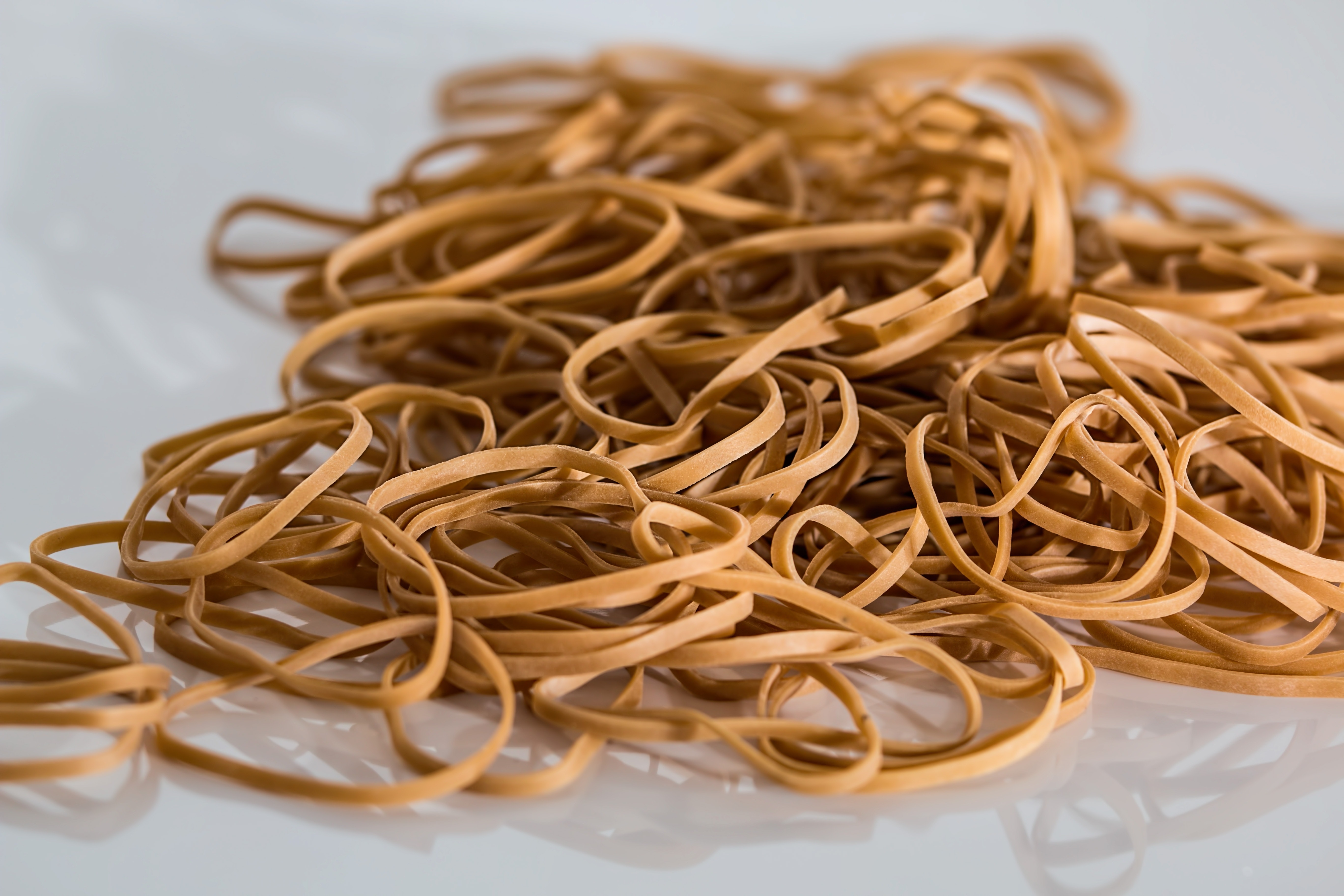
Inside my head, pressed up against the inside of my skull is a mess of wires, tangled and thick with no beginning or end. Basically, it’s a fucking mess in here. Like a tightly wound ball of rubber bands on steroids. I wonder what would happened if I picked at it, pulled on it just a little, would it suddenly heave, expand, and unravel all at once? What if it did? Then what?

I see myself staring inquisitively at this freshly unraveled mass of rubber bands, wondering why there was nothing at its core. What was I expecting, something pure and pulsating and glowing? But there is nothing now but a loose pile of rubber bands – Maybe the ball of rubber bands was the core? Could it be that THAT THE BALL OF RUBBER BANDS WAS THE CORE?? If I had thought this possible, I never would have curiously tugged and picked at it – I would have just walked away from it. But now I have a loose pile of rubber bands. I thought I had synapse issues before the unraveling. Now it will surely be worse – whose idea was this? NOTHING AT THE CORE? Rubber bands with no purpose, with nothing to rally around, nothing to hold them together – now what? Should I roll them up again? Should I reform this pile of rubber bands back into a ball or should I just let them lie loosely all over the place? If I choose to reconstitute this loose pile of rubber bands, will things be any different?

I am standing in the middle of a white room staring at this pile of loose rubber bands, my arms dangling uselessly by my side like clapboards, my mouth agape, my eyes wide shut, screaming at the top of my lungs and from the bottom of my heart in total silence.