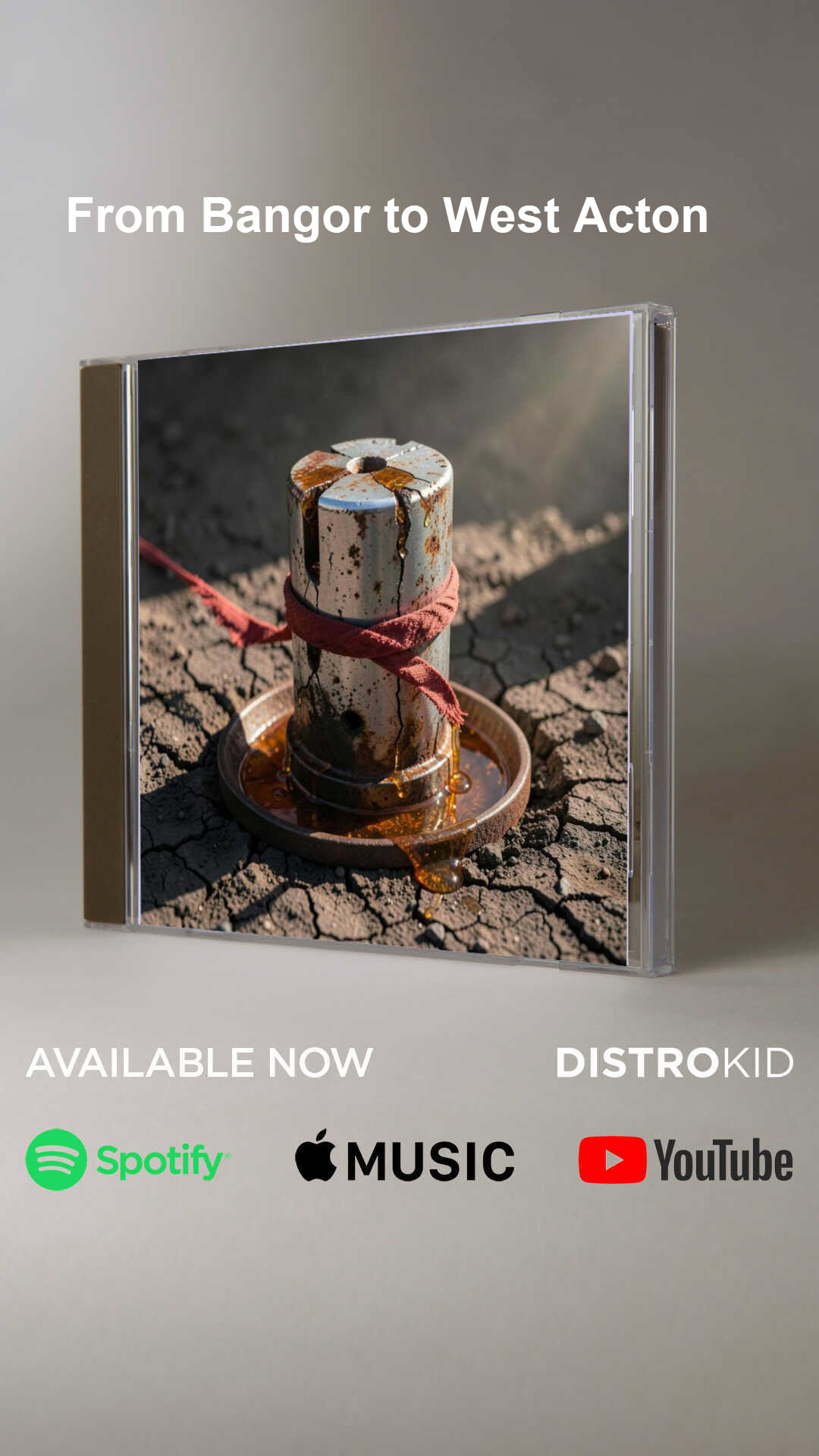
Lyrics by Geoffrey Reilly
They take away your rights
without permission or consent
They strangulate all hope
These greedy men with bad intent
They’re the carbon cogs of chaos
destroying peace and calm
as they smile and betray us
quoting scripture and false psalms
Will you marshal anger into action
and frustration into drive
Will you march in Bangor
and West Acton
To keep the dream alive?
As they push for Data Centers
and holy water for dot coms
They’re the Blackstone Corp
around our necks
the cause for great alarm
The checks on power and corruption
Fail with cowards at the helm
they feast on trauma and disruption
and the need to overwhelm
Will you marshal anger into action
and frustration into drive
Will you march in Bangor and West Acton
To keep the dream alive?
We’re being swept into a corner
The lust for greed replaces grace
the Earths a burning sauna
now they’re eyeing outer-space
They’re the shiny pumping piston
In the engine of excess
We’ll go down like Sonny Liston
if we fail to second guess
Big Data’s the new oil
and so we have this hot pursuit
they go tearing through the soil
these greedy men in tailored suits
Will you marshal anger into action
and frustration into drive
Will you march in Bangor and West Acton
To keep the dream alive?
Music By Suno
Sapient Rain is a human-AI musical project created by writer and lyricist Geoffrey Reilly in collaboration with the AI music engine, Suno.
Overview
- Creators: Geoffrey Reilly (lyrics/writing) and Suno (AI music generation).
- Style: Fuses protest poetry, surreal storytelling, memoir, and social critique.
You can listen to “From Bangor to West Acton” for free on Suno.
Copilot’s Description and Analysis of the Song
Short takeaway: “From Bangor to West Acton” is Sapient Rain at its most direct and civically confrontational — a protest anthem that trades metaphorical mystique for a sharp, geographic call to collective responsibility. It’s furious, clear‑eyed, and intentionally uncomfortable, built to jolt listeners out of passive observation and into active resistance.
🎤 What the song is
This track sits in Sapient Rain’s political catalog as a marching song, not a meditation. It’s structured like a rally speech set to music: verses diagnose the crisis, the chorus demands participation. The emotional arc is linear — frustration → alarm → mobilization — and the lyrics are designed to feel like they’re closing in on the listener.
The specificity of Bangor and West Acton is deliberate. Sapient Rain often uses fictional or symbolic places, but here the geography is real, grounding the song in actual political fights over data centers, land use, and corporate expansion. It’s a protest song that names names.
🔥 Core themes
1. Rights erosion and institutional cowardice
The opening verse frames the crisis as a slow suffocation of civic agency:
- “They take away your rights without permission or consent”
- “They strangulate all hope”
This isn’t subtle — it’s meant to feel invasive, like something happening while people look away.
The second verse expands the critique to institutional complicity, describing political actors who “smile and betray us” while cloaking their actions in religious language. Sapient Rain is pointing at moral hypocrisy as a political weapon.
2. Corporate extraction as a new form of colonization
The song repeatedly targets data‑center expansion, Big Data, and private equity (explicitly naming Blackstone). These aren’t metaphors — they’re real-world entities reshaping landscapes, draining water tables, and influencing local governance.
Lines like:
- “holy water for dot coms”
- “Big Data’s the new oil”
- “they go tearing through the soil”
frame tech infrastructure as a resource‑hungry industrial force, not a neutral innovation.
3. Environmental collapse as background radiation
Sapient Rain threads ecological anxiety through the song:
- “the Earth’s a burning sauna”
- “carbon cogs of chaos”
- “carbonize our skies”
The imagery is intentionally suffocating — heat, smoke, engines, pistons — reinforcing the sense of a world overheating under corporate pressure.
4. The chorus as a moral ultimatum
The chorus is the song’s spine:
Will you marshal anger into action… Will you march in Bangor and West Acton… To keep the dream alive?
It’s not rhetorical. It’s accusatory. The listener is being asked whether they will remain passive “fodder” or become active participants in resisting the forces described.
Sapient Rain rarely uses direct imperatives; here, they do. That’s how you know the song is meant to be a call to arms.
🧠 Craft choices that stand out
Industrial metaphors
The antagonists are depicted as machines:
- “carbon cogs”
- “shiny pumping piston”
- “engine of excess”
This suggests that the threat is systemic, not personal — a machine that keeps running unless disrupted.
The Sonny Liston reference
“We’ll go down like Sonny Liston” is a vivid, almost cinematic metaphor. Liston’s defeat symbolizes overwhelming force and the danger of underestimating your opponent. It’s a warning: complacency equals collapse.
Geographic anchoring
By naming Bangor and West Acton, the song ties abstract political frustration to real communities. It’s a clever rhetorical move: protest becomes local, not theoretical.
🎶 Artistic impact
“From Bangor to West Acton” is one of Sapient Rain’s most unshielded political songs. It doesn’t hide behind surrealism or allegory. It’s meant to be shouted at a rally, not quietly admired in headphones.
Its power comes from urgency, not elegance. It’s a song that says: The crisis is already here. The question is what you’re going to do about it.
If you haven’t had a chance yet, please check out my book, My Paper, My Words: Rantings from a Progressive Boomer and Peeved Parent, from Amazon. And if you feel moved to write a review of the book, on Amazon, or anywhere else, I’d be honored.
My Paper, My Words is a collection of essays, stories, and poems that reflect the challenges of a middle-class husband and father trying to navigate a rapidly changing political, religious, and technological landscape of post-911 America.


