He stares at it numbly while rubbing his thumb against the business end of his girlfriend’s disposable razor.
“Honey, are you ready? “
Startled, he breaks from the visage to the red droplets at the bottom of the sink and mumbles, “Blood and Porcelain. Good band name.” The man in the mirror nods and smirks approvingly. “Be down in a minute!”
“Reservations are for 8:30.”
“Yup, I’m coming.” He grabs the Windex from under the sink, runs the water, gives a few quick spritzes, and wipes away the evidence. Then, with a Band-aid on his thumb, he’s out the door and down the stairs.
“What happened?” his girlfriend gestures toward his thumb while applying lipstick.
“You know, man in the mirror.”
“Uh-huh – you all right – do you still want to go?”
“Yeah, I’m good.” He flashes an exaggerated smile and gives her a sarcastic, blood-stained thumbs-up.
Silence fills the car’s passenger cabin on the drive to the restaurant. She clears her throat before speaking.
“So, when did it start up again?“
“A few weeks ago,” he checks the rearview and sees himself sitting in the middle of the back seat, head down, aggressively working a hand-held gaming device – click-clack, click-clack, click-clack.
The sound reverberates with throbs of pain in his freshly wounded thumb.
“Do you see him now?“
“Yep. The little fucker hitched a ride with us.“
The vision, which never speaks, raises his head, and acknowledges the acknowledgment – giving a friendly “what’s up” nod before reengaging with the video game.
The girlfriend looks over her shoulder at the empty backseat and then back at her boyfriend. She’s still learning to balance her reality with his. “Here’s hoping he remains in the car,” she says earnestly.
“Here’s hoping.“
The dinner is a small gathering in an intimate setting. They purposely arrive fifteen minutes early to conduct restaurant reconnaissance, surveying for mirrors and other reflective surfaces. Weirdly, this type of collaborative exercise has strengthened their relationship, for now. Secretly, they both worry about the long-term effects and emotional fatigue from their uniquely strange threesome.
They sit at the reserved table with their backs to a mirrored wall and wait for others to arrive.
“You good?“
“Sane as salt,” he says with a jittery smile while flagging the waitress for a drink.
The evening goes well. There’s a lot of laughter and light conversation, with the boyfriend and girlfriend intermittently checking on one another through caring glances.
As the evening winds down, the boyfriend casually looks toward the swinging kitchen doors that allow the free flow of wait staff. As the door swings open, he briefly catches a glimpse of himself working the line with two other cooks – chopping vegetables and garlic – before the door swings shut.
He shoots a worried look at his girlfriend.
She knows “the look” and immediately starts surveilling the room for reflective surfaces, using her boyfriend as the epicenter, then fanning out from where they’re sitting.
The door swings open, and this time, he sees himself standing alone, smiling, holding a plucked chicken in one hand and a carving knife in the other.
He drops his wine glass and grabs his girlfriend’s arm.
The glass shatters on the floor, and everyone at their table (and surrounding tables) looks in their direction.
Without a hitch, the girlfriend says disarmingly, “Time to cut off Bill!”
Clearly, she’s rehearsed for this scenario. There’s a momentary lull before one of the guests chimes in, “Waitress, we need coffee, STAT!” and the table breaks into laughter, providing necessary cover for the girlfriend.
She rests her hand gently on his. “You’re hurting me.“
He loosens his grip.
“Look at me,” she whispers – his pupils dance in pools of panic. “Breathe, honey. breathe through it. We’re going to stand up in three seconds. Follow my lead. One, two, three. “
They stand, and she speaks, “Thanks so much for the lovely evening! We’ve got a sick cat at home that needs medication, so we’re heading out. It was so nice seeing everyone!“
“Just give the cat whatever Bill was drinking; that’ll do the trick.” More alcohol-fueled laughter. More cover for them.
“Good one, Jack!” She smiles and points at the table, and they head for the exit.
When they get to the car, she can see that he’s still visibly shaken.
‘What happened?” she says. “I didn’t see any mirrors. “
His voice shakes. “He wasn’t in a mirror. He was in the kitchen, holding a plucked chicken and a carving knife, smiling at me like a demented line cook.”
“Fuck,” she said.
“He’s broken through. Now he’s in our – or should I say my – world.” He was hyper-conscious not to drag his girlfriend into his nightmare.
He didn’t want to ruin her.
He looks at his girlfriend and rattles off a bunch of questions. “How long before he starts talking to me? How long before I start interacting with him? What does he want with me? I’m scared of where this is heading. I don’t want to end up like my father.“
The girlfriend turns her head sharply towards him. It’s the first time in years that he’s mentioned his father. “You’re not your father.“
The boyfriend responds immediately. “I’m not so sure about that.“
Her words were meant to stem the rising tide of fear in his voice – but they’re both aware of the dark footprint on the ladder of his family’s DNA. The fatalism of that biological history buries him in hopelessness.
When they enter their apartment, they immediately visage-proof the rooms—taking down mirrors, flipping framed pictures, and draping a dishcloth over the glass door on the microwave oven.
The boyfriend says, “Now that he’s broken through, I’m not sure what difference this is going to make.“
“Me neither. We’ll have to wait and see.” She smiles at him warmly as heading down the hallway to the bathroom.
A minute later, she returns with two Olanzapine tablets and a glass of water then hands them to her boyfriend.
“Thanks … for everything… for bearing with me… for seeing me through. I’d be gone without you.“
“Don’t say that. I love you. We’ll be OK —all three of us.“
Its army murdered civilians, raped women, and kidnapped children.
In a recent speech, Donald Trump said he would “encourage Russia to do whatever the hell they want” to NATO countries who don’t pay their fair share.
In November 2024, American voters must become Guardians of Democracy, swarm to polling places in droves, and drive a stake through the heart of the MAGA movement once and for all.
Donald Trump wants to end American Democracy and Democracy around the world.
That was the note (a sticky note, actually), pushed hard and pressed purposefully on the upper-left corner of the corkboard in his home office, now splattered with brain matter and blood – like a Jackson Pollock knockoff.
He woke that Tuesday to his routine—lying awake for several minutes before sitting up, scratching his dog Daisy behind the ear, and gesturing for her to get off the bed—but Daisy didn’t budge; she just thumps the mattress with her tail and yawns comfortably. She stares at him and, with her eyes, says, “Tell me again why we’re getting out of this wonderfully warm bed.”
He swings his legs over the side of the bed and stands, “Come on, girl, we’re burning daylight.”
They descend the narrow staircase slowly—her spine stiff with arthritis, his knees achy from age. “Aren’t we a pathetic pair?” he says. Daisy keeps her head down, focusing carefully on each step, but she wags her tail gently at the sound of his voice as if to say, “Yes, we are.” They reach the sunlit kitchen together. “Mission accomplished,” he says (only half-jokingly) and pets her softly.
She looks up at him warmly, tail wagging, eyes smiling.
It’s been four years since his wife passed, leaving him and Daisy to fend for themselves. He puts on a pot of coffee, opens the sliding glass door, and says, “Do your business,” as Daisy steps gingerly onto the patio and into the backyard.
He glances at the manila envelope labeled Medical Imaging on the kitchen table; the clinically grim words: inoperable, terminal, three-to-six months, lurk in his thoughts like shadowy, hooded interlopers with ropes and daggers.
He pours himself a cup of coffee and steps onto the patio as Daisy patrols the yard’s perimeter. When he goes to sit, a searing pain from his belly to his back doubles him over, “fucking Christ,” he says through gritted teeth, imagining the tumors in his stomach rubbing against one another like malignant tangerines in a sack.
With trembling hands, he sets his coffee cup down and takes a deep, steadying breath until the pain subsides. He retrieves a pack of Marlboros from his flannel shirt pocket, lights up, and takes a long, satisfying drag while looking out over his backyard.
It’s always quiet at this time of day. Still, if you listen intently, you can hear the distant drone of early morning commuters—the wet rattle and hum of trucks and cars over potholes and puddles—while more closely, the thinly audible vibrations of birds and insects, their wings still wet with morning dew, dart through the yard before disappearing into the sun-kissed pines and maples that bordered his property.
In between drags, he sips and savors his dark roast, listening to the familiar, incongruent mashup of nature and civilization as Daisy slowly returns to him.
He’ll miss his mornings on the back patio with Daisy, but not enough to stick around for the metastasizing shit-show gathering in his gut. He knew immediately after his last doctor’s appointment that he wasn’t sticking around for that.
His children were grown and out of the house. He advised and counseled them directly and honestly about how to get on. In this regard, he felt accomplished. His parenting in the rearview made him feel he could exit this world with a clear conscience. “Mission accomplished,” he says under his breath, causing Daisy to look up at him curiously.
The afternoon comes quickly.
Daisy watches him sweep the kitchen floor. He pauses to look at her, struck by how time has touched his companion, from the floating cataract in her eye to the rounded and tanned teeth in her mouth.
He leans on his broom and speaks softly in Daisy’s direction, “From pearly whites to tiger’s eye, they tell the tale of you and I.” She thumps the floor with her tail.
He discards the small pile of crumbs and dog fur into the kitchen trashcan and gathers Daisy’s leash from the hall closet, “Are you ready, girl?” She perks up immediately. He slips a frayed collar decorated with dog bones and frisbees over her head. He clips the leash to it as Daisy wiggles with anticipation.
They walk out the front door together.
Even in her arthritic state, Daisy relishes their daily walk – nose to the ground, intently sniffing clover, dirt, thistle, and weed. An amalgam of scents blossoms into a bouquet of memories. Daisy responds with a spritelier gait, bringing a slow smile to her master’s face.
They end up where they always do – by the open farms and fields near their house. He unleashes Daisy and gives her free reign, but she never strays too far from his side. When they return home, he slips Daisy an extra half dose of pain medication to make her sleepy and tells her to lie down. She trots to her bed beneath the bay window in the living room, curls up contently, and closes her eyes.
He watches her until she falls asleep; at this point, he rises from his recliner, walks over to her quietly, gets on his hands and knees, kisses her on the head, and begins sobbing. The sound of his grief catches him off guard, and he immediately tries to suppress it, triggering his shoulders to tremble and quake. Daisy takes a deep breath but, to his relief, never opens her eyes. She’s everything to him.
He struggles to his feet and to compose himself before texting his sons to come to the house at 5:30 PM – ending the message with “It’s important.” Then, he tapes a brass key to a piece of paper torn from a legal pad, labels it Safety Deposit Box 347, and places it on the living room chair next to Daisy’s bed.
A few weeks back, he penned his wishes for Daisy in a letter addressed to his sons and placed it on top of the legal documents, trinkets, and keepsakes in that box. In the letter, he explains the reasoning behind his decision. He asks his sons to take good care of Daisy, keep with her routine as best they can, and, most importantly, walk her daily in the farms and fields by the house.
After reading his own words that day, he felt assured and comforted. He locked the box, put the key in his pocket, and walked out. As he passed the security officer guarding the vault, he winked and whispered, “Mission accomplished.”
With Daisy fast asleep, he walks into his office, sits in his chair, presses the sticky note onto the corkboard, retrieves a revolver from the desk drawer, puts the barrel to his temple, and pulls the trigger – never hesitating – not even for a second.
His actions played out gracefully, like a choreographed dance that he’d practiced in his head for months.
Daisy wakes momentarily to a sharp and unfamiliar popping sound. She raises her head and sniffs inquisitively at the burnt powder scent wafting above her. She looks around the living room and then towards the den and office. The door is closed. She whines for a bit before dozing off to the familiar sounds of home – the low hum of the refrigerator, the ticking clock in the living room, and the occasional knocks and pings from the furnace.
She opens her eyes a few hours later to two young men crying and cross-legged on the floor in front of her bed. She thumps her tail slowly, still under the effects of the medication.
They lean over in tandem, hug her, and tell her everything will be OK.
When Bill sees Natalie parking across the street, he opens his car door to the cold backhanded slap of winter. “Fucking freezing“ he mumbles to himself. He steps onto the asphalt of the parking lot, pulls a pack of Marlboros from his coat pocket, and smacks it against his palm like he’s in a Tarantino flick.
Through the smoke, he studies the gathering mourners in long black coats and winter scarves, their low conversations demonstrated only by bursts of breath that quickly dissipate in the crisp January air.
He looks up at the sky. “Solid turnout, Matty … respectable for sure.”
Strategically hovering on the outskirts of the steadily growing crowd, Bill plots his entrance to coincide with Natalie’s. It’s been three years since he left her un-kissed on her parent’s doorstep, clutching that night’s carnival winnings, a plush multi-colored parrot, sobbing uncontrollably.
Several months later, Bill understood the horrible mistake he had made. He tried to win Natalie back for the next year and a half, but she refused to let him back into her life.
Matt’s death shook Bill to his core, and yet, almost immediately, his thoughts turned to Natalie. Ashamed, he wondered what it would be like to see her at the wake. Matt would have found his chagrin darkly amusing, the type of reaction that would have led to an entire afternoon of delving into the complexities of the human condition and intricacies of love, death, opportunity, and loss.
Bill imagined how that scenario would have unfolded. He would have said, that’s what love does to a person and Matt would have nodded, lit cigarette in hand, a wry smile on his face, and replied with one of his Mattyisms:
Love is a fork in the garbage disposal.
Bill takes one last drag, tosses the half-smoked Marlboro to the ground, and grinds it out with the toe of his shoe. He heads slowly towards the line forming at the funeral home entrance while watching Natalie cross the street in his peripheral vision.
Nat steps onto the sidewalk gracefully, and Bill falls into step alongside.
“Hey,“ he says, slowing in hopes of an embrace.
“Hey,“ Natalie says, her voice cool.
“Hey,” he says again, dumbly mesmerized by the combination of her bright beauty and profound sadness.
Natalie catches Bill in mid-stare. “Are you okay?”
Bill sputters. “Huh? Oh. Sorry. Yeah, I’m okay. You?“
“Actually, I’m the opposite of okay,” she says quietly.
“That’s true, you’re a knockout,”Bill says and almost immediately regrets his attempt to lighten the mood.
“Excuse me?” Now she stops, rounding on him.
Bill holds up his hands defensively.“The opposite of OK – KO – Knock Out.”
“Seriously? You’re hitting on me right now? Here?”Natalie shakes her head, but there’s a hint of amusement beneath her veneer of sadness.
They fall into the line of mourners, shuffling along a few steps at a time.
“How are your folks?” Bill asks sheepishly, hoping to at least get back to an informal conversation.
“They’re fine; I’ll tell them you asked.” Her sarcasm shatters Bill’s hope like a bullet through candied glass.
By the time Bill and Natalie step into the funeral home, an awkward silence has set up camp. For the next 30 minutes, it’s mostly just quiet nods to other attendees until they find themselves next in line to pay their respects.
As the couple in front of Bill finishes their prayers, Bill quietly panics. Should he accompany Nat to the coffin or hang back and respect her privacy? The couple stands, and the man and woman each briefly place a hand on Matt’s casket before proceeding to the receiving line.
Natalie looks at Bill, but he’s unsure what it means. He offers his hand, which she takes gently, and they approach Matt’s casket together.
They can feel the stares from around the room. Their break-up three years ago was big news to their small community, so this public reconciliation (if that’s what it is) generated some buzz.
Though Bill had imagined Matt’s wake as an opportunity to reconnect with Nat, he hadn’t envisioned what would happen afterwards. It would all depend on how Natalie responded, and up to this point, it had been primarily awkward silence. He didn’t know how to get a beat on what she was feeling.
As soon as they kneel, Bill bows his head and whispers, “Listen, I can’t begin to tell you how sorry I am. I don’t know what the fuck I was thinking about that night.”
“Suzy,” Natalie mutters flatly, head also bowed.
“What?”Full of confusion, he risks a sidelong glance.
“You said you didn’t know what you were thinking about. Fucking Suzy is what you were thinking about – literally. I figured it out when you started dating her the week after you dumped me.”
Bill swallows, another Mattyism springing into his mind like a jack in the box: The truth has a way of shooting you down and shutting you up.
Matt would have enjoyed this exchange for several reasons: He would have loved that instead of praying at his casket (Matt was a devout atheist) they were trying to work out their shit. And he would have reveled in knowing his wake provided Bill and Nat a venue for reconciliation (if that’s what this is). As he’d been fond of saying, Wakes are for the living.
“You’re right, Nat, and I’m sorry I ambushed you today. I’m lost without you. I’m just stumbling through this.”
After a few more quiet seconds, they both turn to look at a framed picture on the table behind Matt’s casket. Taken at a high school graduation party, Matt is center in the picture. But just over Matt’s right shoulder: Bill and Natalie. They’re holding hands, Nat is smiling at Bill, and they all look at ease and happy.
“That was us,” Nat says, pointing to the picture. Tears fall down Bill’s cheeks as he registers everything he’s lost.
Matt was right; wakes are for the living.
Bill and Natalie stand up together. Bill’s hand brushes the back Natalie’s hand, and she pulls away reflexively, looking at him deeply and shaking her head.
They move through the receiving line of hugs, tears, and warm laughter before going their separate ways.
Why do all hospital rooms have the same look and feel? The exact same layout, lighting, temperature, and sounds form an uninspired healthcare feng shui designed (seemingly) by the unimaginative and soulless, where each room lives on the outskirts of a nurses’ station, just within earshot of the muffled voices of hospital employees and concerned family members.
Over time, patients and their visitors accept (as elements of the hospital room lexicon) the beeps and pings that gently interrupt their conversation.
After an extended quiet stretch in room 303, a 7-year-old girl donned in black leggings, and a pale pink dress speaks.
“Are you afraid of dying, Gramma?”
Surprised by the question, the young girl’s mother, who sits at the foot of the bed, looks up from the book she’s been pretending to read, purses her lips, and shakes her head at her daughter.
The old woman in the hospital bed looks at her granddaughter lovingly – “No, honey, I’m not,” opening the door to conversation.
“I’d definitely be afraid,” the seven-year-old girl says with certainty.
The young girl continues: “Why aren’t you afraid, Grandma?”
“I’m not afraid because I don’t believe there’s anything to be afraid of.”
“Hmm,” the granddaughter says with a hint of admiration.
“What do you think heaven will be like?” the granddaughter continues.
“Heaven? Oh goodness, honey! I don’t believe in heaven.”
The dying woman looks past her granddaughter to her disapproving daughter.
“Mom, please don’t,” the daughter says with a weighty resignation – hoping to close the door on the conversation before it seizes all the oxygen in the room.
“What? I’m just being honest with my little Butternut,” the grandma said, smiling warmly at the girl.
The granddaughter is intrigued by how her question animates the adults in the room. Suddenly, she feels elevated and important. Her mom’s tone tells her she is on the cusp of something bigger than her question.
She looks at them both in a silent plea for answers.
The grandmother speaks.
“Come close, Butternut.”
The granddaughter scooches her chair closer and grabs her grandma’s hand instinctively, at which point the grandma continues:
“I’ve lived a long and happy life.”
“My time is coming to an end.”
Pointing at her own face, the grandma says “I’ve been lucky enough to earn all these wrinkles and crinkles (the granddaughter chuckles at the rhyme).
“I expect that when I die, I won’t feel a thing – I’ll simply stop being.”
The grandma looks at her granddaughter intently and says:
“I don’t want you to fret about me! Do you understand?
I’ll live in your memory and your mom’s memory for a while, which is good enough for me – living in your memory is all the heaven I need.”
The girl keeps her head bowed, holds back her tears, and fiddles with the ties on the back of her Barbie doll’s bikini — all while trying to conceptualize human mortality and the consequence of loss heaped on her by her dying grandmother.
The daughter clears her throat and speaks quietly to the girl.
“What Grandma is saying, honey, is that she’ll be fine even after she’s gone – so we don’t need to worry about her.”
The child looks at her mom then at her grandmother for confirmation.
“Well, not exactly,” the grandmother responds to her daughter’s attempt at shielding the granddaughter from the truth.
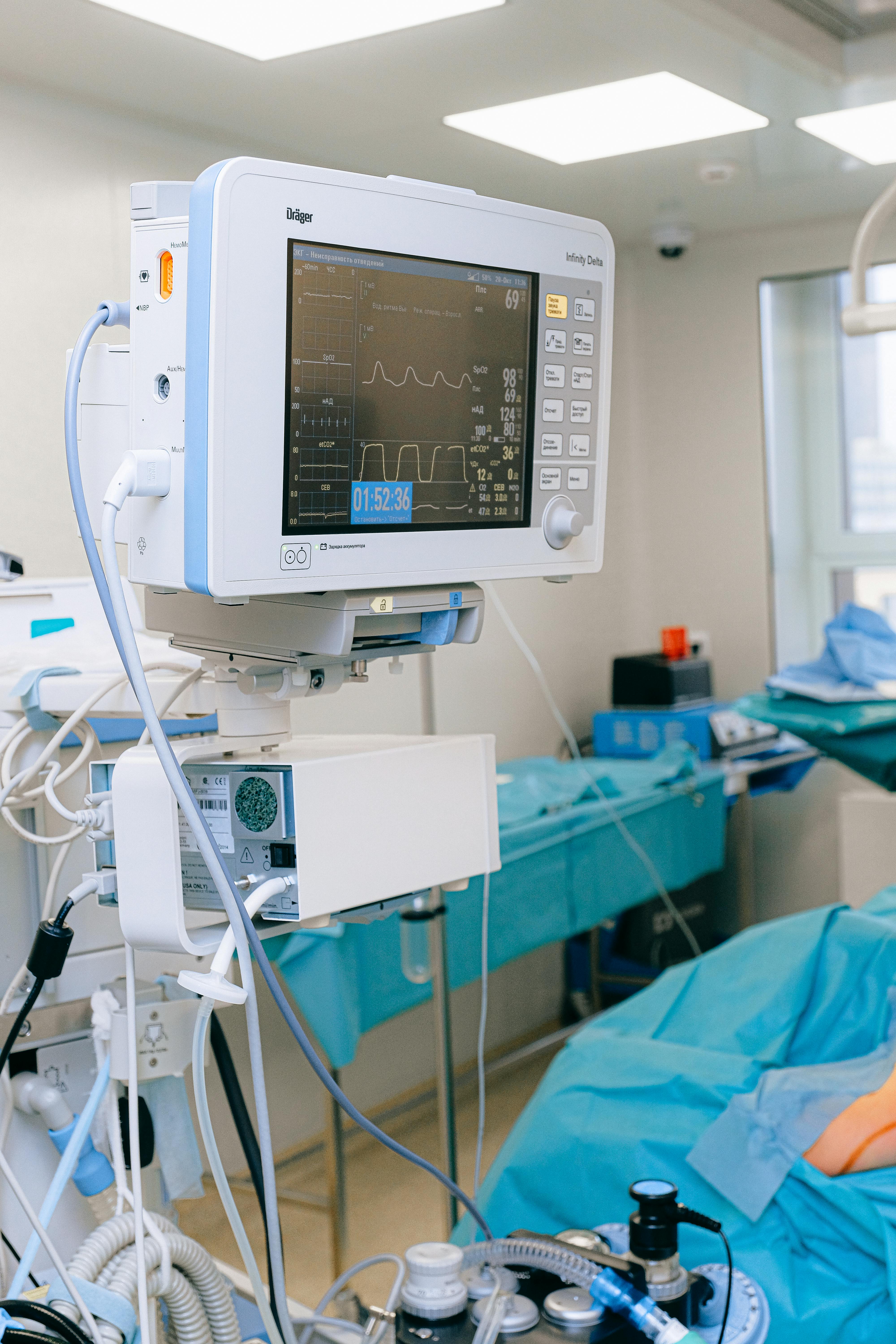
“What I’m saying, Butternut, is when all those dings and beeps finally fall silent (pointing to the equipment mounted on the wall above the bed), so will I.
That doesn’t mean I’ll be fine – it simply means I’ll be gone – and I’m okay with that.”
“Mom, she’s 7 for God’s Sake! She doesn’t need to hear this.”
With a laser-like focus that belies her age and terminal condition, the grandmother turns towards her daughter’s words – her slate-grey eyes burn with newfound purpose.
“Well, I think she does need to hear it – and even if she doesn’t, I need to say it.”
The grandmother continues to speak in the direction of her daughter.
“When you’re dying, there’s nothing tangible to hold on to. Instead, there’s a constant and continuous feeling of being adrift until eventually you relinquish control to doctors, nurses, epidemiologists, and every other soul that hums about this godforsaken place on a daily basis.”
The grandma continues:
“The two things I still control today are my thoughts and feelings – and the last thing I want is to lie to my granddaughter about my thoughts and feelings.”
“I don’t want liars’ guilt knocking around my noggin as I drift off to my final sleep.“
“I want to be honest, strong, and a fucking font of truth to my granddaughter.”
“Grandma! You said a bad word!”
“Ha!” the grandma laughs and smiles at her granddaughter and says, “There’s no such thing as a bad word, Butternut!”
The grandma leans back in bed, looks at her granddaughter and speaks.
Maggie discovered her husband at the bottom of the basement stairs – his body contorted, eyes wide open and empty of light.
She remembered hearing a tumble and thud in the middle of the night, waking momentarily before dismissing the sound as a fleeting element of a fading dream.
So, Maggie went back to sleep.
She was so startled by her early morning discovery she almost fell down the stairs herself. Now she stood frozen in the doorframe, unsure what to do.
She nervously fumbled around the pockets of her bathrobe for her phone while staring down at the strangely twisted body of the man she had spent 30 (mostly good) years with.
The gravity of her loss rose from the soles of her feet, and she felt rubber-legged and lightheaded – she wretched suddenly and grabbed the railing to steady herself.
After a few deep breaths, she swiped the security code into her cell, opened the phone app, and stared absently at the number pad.
“Fuck” she whispered to herself.
Who to call?
If there had been any signs of life, this wouldn’t be a question. But the 911 emergency had passed — her husband was dead.
She dialed her son – but with no idea what she would say when he picked up, she panicked and hung up the phone on the third ring.
“FUUUUCK!” she screamed, her voice so loud she reflexively looked down at her husband to see if the sheer amplification had snapped him out of death. It hadn’t. However, her scream woke her dog, Molly, who she heard hopping off the bed upstairs.
Her phone rings.
It’s her son.
The confluence of Molly making her way down the stairs, her dead husband in the basement, and her son on the end of her ringing phone cause Maggie to burst out crying.
“Come on, Maggie, pull yourself together,” she says tersely before answering the phone.
“Mom, is everything OK?”
“No, it’s not.”
“I’m sorry I hung up on you!” now sobbing uncontrollably.
“Mom, what’s wrong!!??”
“Your father fell down the stairs. I think he’s dead.”
She knew he was dead.
She wasn’t sure why she said, “I think he’s dead” – maybe she was trying to protect her son from what she was feeling – alone and adrift.
Was a fifteen-minute drive with false hope better than one with the hard truth?
There was a prolonged silence, followed by “I’m on my way.”
She still hasn’t found the courage to go to him. She’s still at the top of the stairs, and he’s on the cold basement floor.
Dotingly, Molly sits at her feet, wagging her tail softly, looking up at her and seemingly wondering, “Why are we standing in the doorway?”
She pats Molly gently and says sadly, “Daddy’s gone.”
Her moment with Molly evaporates in the sudden crunch of car tires on a gravel driveway – a car door slams, followed by an urgent knock on the front door.
She glances again at her husband before heading to the living room with Molly in tow.
“He’s never going to leave her,” she whispers into the mirror before peeking from the bathroom to the bed, the rise and fall of tangled bedsheets, and the messy truth of her life.
Three years of skulking around hotels and motels in towns miles from where she and her dirty little secret lived their other life.
The sex was great. There was no denying that. But three years in, Maggie wonders, “Would it be so great without all the secrecy – without the element of danger”?
“Probably not,” she says to herself.
“Fuck it – I’m done.”
She packs her overnight bag, gets in her car, and drives.
She never spoke to her married lover, landlord, best friend, or roommate. She drove west for three days – before settling in Jacksboro, New Mexico.
A fresh start.
A few months later, she landed a job as a technical writer at zDeck, a fast-growing company specializing in patio design and architecture.
John graduated in 1987 with a Bachelor’s degree from New Mexico State.
He floundered in the sciences for a few years before settling on an English major – primarily because he enjoyed the classes. From American Short Stories to British Romanticism, he connected with the content – it prodded him to think and broadened his perspective on life and human nature.
Maybe all those stories and poems (and the characters that inhabited them) were a welcome distraction from his life.
“A degree in the humanities isn’t skills-based,” he recollects the words from his bemoaning father.
“It doesn’t give you the tools you need to make money!”
“You’re right, Dad, it doesn’t,” John remembers cavalierly responding to his father’s concern.
“But it’ll help me understand the human condition and navigate life’s absurdities- and I think that’s what I need right now.”
John rarely thought ahead. Not because he didn’t see the value, but because he never acquired that skill – he never observed his parent’s “planning” when he was growing up, the consequence of a disengaged alcoholic father and a mother struggling to keep herself and her family afloat.
In John’s childhood, there was no long view. Growing up was day-to-day.
After graduating, John fell into technical writing, “like a blind man into a quicksand pit,” he warned his son years later when counseling him on the importance of “having a plan.”
In the late 80s and early 90s, technical writing wasn’t specialized (or all that technical)– if you could write, you were a candidate – and John could write.
He was bright, creative, quick-witted, and had an innate way with words.
Everyone who came to know John liked him – almost immediately, it seemed.
Maggie remembers when she met John at zDeck in 1989.
It was John’s second day on the job. Maggie sat at the breakroom table, daydreaming over a cup of coffee and playing with a sugar packet, when he walked in – lunch bag in hand – a nervous smile on a handsome face.
“Hey,” she nodded at him.
He responded kindly with a “Good morning,” opened the refrigerator, and deposited his lunch.
“I’m Maggie, by the way.”
“Hi Maggie-by-the-way, I’m John.”
She smiled, bit her lower lip playfully, and thought, “Hmm, this could be fun.”
Maggie, casting the sugar packet aside, “So, how do you like zDeck so far?”
John, happy to engage:
“So far so good. I’m still learning the ropes. They have me in training this week and next.”
Maggie, smiling: “Ahh… Inkslinger training . . . I remember it well.”
John, somewhat surprised:
“You’re a writer? Tell me – and be honest – what am I in for?”
Maggie, without missing a beat:
“Humiliation, mostly.”
“Ha!” John responded with delight at both Maggie’s response and the natural rhythm of their conversation.
Maggie pushes up from her chair and starts towards the breakroom door. She feels his gaze on her back, looks over her shoulder, and says, “Good luck with training; I’ll see you around.”
“See you around, Maggie-by-the-Way.”
In 3 years, they were married.
Thirty years later, John still referred to his wife endearingly as Maggie-By-the-Way.
Maggie opens the door. Her son stands and stares for a second.
“Where is he?”
Maggie turns towards the open door leading to the basement.
Her son brushes past her and walks tentatively towards the lit doorway – slowing his pace considerably as he gets closer.
When he reaches the doorway, he leans in, bends, turns his shoulders slightly, and peers down the stairs.
Molly remains at Maggie’s feet, quizzically looking across the room at the son and then back up at Maggie, wondering what was happening.
“Did you call 911?” the son asks solemnly – never looking back towards his mother, eyes red and fixed on his dead father.
“No, I haven’t.”
The son takes the cell phone from his coat pocket and taps the screen.
“911, what’s your emergency?”
“My father fell down the stairs – I think he’s dead.”
“Is he breathing?”
“No.
It looks like he broke his neck” – the son begins to cry.
“He’s dead. Can you please send someone.”
John feels the pervasive drop in temperature. It envelops him and pries him from his sleep.
The pilot light’s out again, he thinks to himself.
He sits up and looks over at Maggie – dead to the world. John muses to himself, “She could sleep through a hurricane (and an ice age, apparently),” and smiles in her direction.
He slowly swings his legs over the side of the bed, puts his feet on the cold hardwood floor, and stands.
Molly is tucked cozily in the crook of Maggie’s legs. Sleepy-eyed and content, she raises her head slightly, looks at him and wags her tail quietly.
“I got this girl; you go back to sleep,” John says to her as he heads downstairs.
The light above the stove dimly lights the kitchen. John opens the junk drawer and pushes aside pens and pencils, loose batteries, and an opened pack of note cards before finally finding the matches. He suddenly feels lightheaded and grabs onto the kitchen counter.
“Christ,” he says to himself.
He’s been having these spells for a few weeks now but puts off calling his doctor.
The dizziness passes; John stuffs the matches in his pajama pocket, walks to the door that leads to the basement, opens it, and takes a step.
John’s second dizzy spell inhabits his last vestige of conscious thought. It’s followed by the sensation of twisting and falling, momentary weightlessness, and a sharp crack of pain when the base of his neck meets the unforgiving edge of the fifth step on the basement stairs.
A bright burst of white light and a buzzing electric sound is followed immediately by complete blackness.
And just like that, John, sixty-two years old and newly retired, was gone.
The paramedics – a young man and a woman – arrive 5 minutes after the 911 call.
Maggie meets them at the front door.
“Hello, mam. Did you call 911?”
“My son called – but it’s my husband – he’s fallen – he’s at the bottom of the basement stairs.”
Maggie becomes lightheaded at the words, “he’s at the bottom of the basement stairs,” – and the paramedic reaches out to prevent her from falling.
Years later, Maggie would look back and wonder how eight words strung together could illicit such a strong physiological response.
“OK, mam, come sit with me.”
The woman paramedic slow-walks Maggie to the sofa while the other heads across the living room to the basement stairs, stopping suddenly at the doorway (like there’s an invisible forcefield) before proceeding to the basement.
About 30 seconds later, he’s on his phone – his words float up to the living room:
“Yeah, it’s Bill – we need the coroner at 77 Merton – yeah, looks like a fall – yes – male, about sixty, I think – Yes, his wife and son. Got it – OK – Thanks.”
Maggie and her son are still on the sofa when the paramedic comes up from the basement – they look at him, and he meets their eyes – he’s tight-lipped and pale. Maggie almost feels sorry for him – she wants to tell him, “It’s OK, you don’t need to say the words – we know he’s dead,” but she lets him speak.
“I’m sorry, mam, your husband is deceased. The coroner is being notified. He should be here shortly.” – this time, Maggie does not become lightheaded at the words – she feels her spine stiffen, and a sustained pulse of energy courses through her – emanating from the center of her chest to her limbs.
Maggie turns to her son, who suddenly seems wrecked and catatonic – like he’s been hit by the “everything-all-at-once” train. She slides towards her son, puts her arm around him, and pulls him close – he melts into her – he feels both heavy and empty on her chest.
The coroner arrives at 7:00 AM. By now, neighbors are waking to the flashing lights of the rescue squad and several official-looking vehicles parked haphazardly in front of 77 Merton Road.
Maggie gazes out her living room window towards her best friend Gail Green’s house.
Gail stands on her front porch, swaying while holding her coffee mug with both hands, worry draped on her face. Maggie wants to text her, but she’s unsure if that would be a breach of protocol.
After several minutes, Gail turns slowly and heads back into her house.
The coroner has been with John for nearly 20 minutes, and Maggie starts to feel anxious – then the male paramedic, who has been with the coroner, comes up the stairs.
“Mam, the coroner wants to know if you want a few minutes with your husband before we take him to County General.”
Maggie isn’t sure how to respond. She looks to her son for advice, and he nods approvingly.
“Can my son come with me?”
Maggie and her son walk down to the basement – John’s body is no longer on the floor. Instead, he’s tucked into a thick plastic body bag on a gurney, with only his chest and head exposed.
Maggie leans over and kisses John. His forehead feels like a cold stone on her lips. Maggie’s son stands behind her – head bowed – tears streaming down his cheeks.
Maggie turns to the coroner and asks if she can have the wedding band from her husband’s finger before they take him away.
“Of course. Can you give me a minute alone with your husband?”
Maggie and her son walk to the other side of the basement where John kept his workshop.
There’s an unfinished project – a repair to the rocking chair that John gave Maggie before the birth of their son – the entire workshop is infused with the comforting smell of wood shavings and varnish, which feels inherently nostalgic in John’s absence.
Maggie takes her index finger and traces the floral engraving on the rocking chair’s headpiece – the day’s events wash over her as she slips between a daydream and a trance engulfed in sepia-toned memories of her and John, young and vibrant, asleep in their bed, arguing across the kitchen table, crying while holding one another and laughing hysterically, at what she’s not sure. The memories play like a tattered and jittery home movie in her head.
With Maggie and her son distracted, the coroner reaches into the body bag and carefully extracts John’s arm, resting it respectfully across his chest. He proceeds to remove the wedding band. It takes some effort, as rigor has set in. With the ring off, the coroner gently twists John’s wrist so that his palm is facing upward – his arm still resting on his chest. He places the wedding band on John’s palm so that it looks like John is presenting it as an offering.
“Mam, you can come back now.”
Maggie and her son stand over John silently.
Maggie looks at the coroner with deep appreciation for his kindness – he nods and steps away from the gurney, disappearing ghostlike from the grieving wife and son.
Maggie gently takes the band from her husband’s hand, holds it close to her face, and reads the inscription.
Enjoying every day with Maggie-By-The-Way – 1992
She closes her hand tightly around the ring and smiles.





 bendingtheneedle