Debating the Undebatable

For as long as he can remember, he loved to argue.

He wasn’t sure where this penchant for debate came from.

His mother had firmly held beliefs, but he had no recollection of her engaging others in a passionate discourse about politics or religion, or anything else for that matter. 

His father’s passions revolved primarily around a reclining chair by the fireplace, an after-work scotch on the rocks, and cigars.

He remembers a heated debate with a friend at a sleepover when he was just a kid.

They argued fervently about which baseball league (the National or American) had better players and teams. He remembers being energized by the back-and-forth discussion. He remembers the thrill of responding on-the-fly to his friend’s assertions, countering them with well-thought-out retorts.

That debate dragged into the early-morning hours. The warm stuffy bedroom became thick with a swampy August heat and the two boys’ passion for sports.

Eventually, he and his friend drifted off to sleep, no hard feelings, no carryover.

The arguer never put his love of debate to practical use. He lacked direction and parental guidance. In the absence of a nurturing nudge, his life was shaped primarily by the stance brothers (circum and happen).

Later in life, when jonesing for a debate, he’d engage others over social media, arguing with vigor and passion about politics and religion.

It was from 2016 onward, that the arguer noticed a fundamental change in some of the individuals he debated. Many of them disregarded verifiable facts and truth in favor of falsehoods and outright lies.

So, for example, when the arguer made a declarative statement about Trump supporters attacking the capital on January 6th, some of his friends took this as an invitation to debate.

They argued the attackers were not Trump supporters.

They argued that the attackers were tourists that posed no threat.

They argued against what everyone saw with their own eyes and heard with their own ears.

It was stunning.

A basic premise of debate is that there are facts on both sides of the issue being argued.

The intellectual joy of debating comes from being challenged with factual information that counters your argument. The idea that you’ll be able to convince the person that you’re debating to change their mind (and vice versa) is what made debating so enjoyable to the arguer.

The COVID-19 vaccines are safe and work, is not a debatable statement.

On January 6th, the United States Capital was attacked by Trump supporters at the behest of the defeated former president. This also is not a debatable statement.

Climate change is real and poses a genuine threat to our planet. Again, not up for debate.

The point here is that some issues have been settled definitively by evidence, truth, and facts. But because old habits die hard, the arguer was drawn into debating the undebatable.

The result was exhausting, frustrating, depressing, and ultimately revelatory.

The arguer concluded that America is inundated with millions of willfully disingenuous people who are guided by politics over truth. These people are continuously debating the undebatable with falsehoods, misinformation, and quackery.

This represents a default way of thinking and arguing for nearly half the country, to the chagrin of the arguer.

Because this is all there is

When you reach the end

I hope you had more good times than bad, 

laughed more than you cried, and

loved more than you hated


I hope regrets were few,

achievements many,

and that your wealth

could be measured in smiles


I hope you enjoyed your stay,

were buoyed by happiness,

oxygenated by love,

and were at peace when you left


Because this is all there is

Support the Voting Rights Act

Republicans not supporting the John Lewis Voting Rights Act is an act of self-preservation.

Republicans know that making it easier for black and brown people to vote, makes it harder for Republicans to hold on to their job.

So, rather than engaging black and brown voters and trying to understand issues from their perspective, Republicans are supporting legislative barricades that restrict access to the ballot box and make it harder for black and brown and poorer people to vote.

In America, the gap between “the haves” and “have nots” has a racial element to it and the gap grows wider every day. The truth of the matter is that Democrats are proposing programs to try and stop the gap from growing, while Republicans are fine with the current trend. To put it more bluntly, Democrats are more likely to support programs that help level the playing field, while Republicans long for the good ole days when black and brown people worked in a field.

America’s population is browning.

Republicans see this tinting as a threat to their vision and version of America.

To Republicans, this feels like an ominous fade to black scenario.

And the only way Republicans think they can prevent this from happening is to hinder black and brown people from voting — and that’s what they’re doing by blocking the John Lewis Voting Rights act, while supporting state laws that make it harder for black and brown people to vote.

Republican attacks on voting rights are another shameful assault on our republic and a further tugging on the thread that holds our democracy together.

Trumpocrisy

Concept, american flag on cracked background

The other day, I watched former President Trump praise his relationship with North Korean dictator Kim Jong-Ill in a televised interview.

I listened to the former disgraced and seditious-prick-of-a-president say how well he got along with dictators and autocrats and how he admired their strong leadership.

None of this surprised me.

Trump is an easily manipulated, egotistical fool. Leaders like Kim Jong-Ill and Vlad Putin simply blew a little smoke up the orange one’s undies to court favor with Trump.

What disheartened me most about the interview was the applause from my fellow Americans in the audience.

When did getting along with murderous dictators become a praiseworthy trait in an American president?

Had President Obama or candidate Clinton said anything remotely like this, they would have been crucified by the very same people who were applauding. As Forest Gump would say, Trump supporters and hypocrisy go together like peas and carrots.

Republicans and Democrats have always differed on policy. But when it came to condemning brutal dictators and autocrats, we stood together.

That used to be common ground.

Why is this no longer the case?

What changed?

Well, for one, we had four years of being led by a self-absorbed, morally corrupt, and intellectually vapid president. Trump rose to power by tapping into many Americans’ grievances and fears around race and then, with purposeful malevolence, sold them a solution based on a warped definition of Americanism.

Trump understood that a divided country was his only path to power. So, from the onset of his candidacy, all the way through his presidency, he divided this country.

Five years later, we see the result in a fact-resistant confederacy of MAGA-hat-wearing morons and the cowering politicians who fear them.

Trump and his supporters are the blood in the boner of an alt-right movement in America — and you can’t reason with a boner.

But usually, over time, it subsides on its own.

Hopefully, that happens here.

Gravely Still

Not a single mourner in the mist

No priest to say “And now we pray”

Just a casket

a freshly dug hole

two gravediggers and a crow

Cold enough to see your breath

But warm enough to dodge the mausoleum

No one in attendance

No one to toss that first handful of dirt

signifying the end of earthly ties to the living

I imagine a nattily attired corpse

still able to hear

Weeping at the silence

Embarrassed and dismayed at the poor showing

The muffled mummers

of the two unknown grave diggers

the very last voices he hears

a faint and fading

“Rest in Peace, Bro” followed by

“Do you want to grab a coffee at Dunkin?”

As a smile comes over his face

Relentless Time Regardless

time

We begin life nervously

Waiting in the wings

Queued up and ready to take center stage

each of us a rusty fragile link

in a fractious chain of humans

We embark on our quixotic quest

for meaning and connection


The truth of our transience

evades us at first

Or maybe we just refuse to let it creep in

We keep those thoughts at bay

We bury them under daily routine

for years at a time

Until we begin to sense

the slowing of the merry-go-round

and we see and feel

the snarled and toothy grin

of the carney worker

All rides must end


We lean hard from our painted ponies

Elbow pit married to the pole

We reach and stretch for the brass ring

And it’s promise of another ride

As if more ride is a cure-all

 it isn’t

As if more time will sand the jagged edge

of disappointment and regret

It won’t.

We don’t need more time.

We need understand how little we have of it

Once Upon A Time, When The GOP Had Some Integrity

America has more than her fair share of fascists and white nationalists.

Some of them even serve in congress.

The vast majority, if not all, vote republican.

Donald Trump is a White Nationalist. That’s why White Nationalists supported his presidency.

When someone says they supported Trump’s policies but not his white nationalist and authoritarian views, its no less ludicrous than a German citizen in 1939 saying they support Hitler’s economic policies, not his views on the Jewish population.

In throwing your support behind a president, you have to look at the totality of the man – not just policy bits and pieces that you can align with and rationalize to yourself and your friends.

As we saw with President Trump, it’s the totality of the man (all of his views and values) that set the tone and attitude of his administration. Under Trump, the party’s platform was built on divisiveness, hate, mistrust, and anger, and that’s exactly what was reflected in most of Trump’s policies and actions.

It’s important to keep in mind that the anger, hate, and mistrust of government and institutions that Trump used to divide America and strengthen his position politically, are alive and well today. Those feelings and attitudes didn’t magically disappear when Trump was trounced in the 2020 election.

Many Americans who supported Trump are simply waiting for him, or the next Trump-wannabee to come along and validate those feelings, while cultivating and promoting policies that weaken our democracy and march us down the path to authoritarianism.

Colin Powel was a lifelong republican, military man, and honorable public servant who understood the danger of authoritarianism. When he saw fellow republicans refuse to stand against a dangerously authoritarian president, he called them out for their cowardice and left the party.

We need more republicans of stature to do what Colin Powell did – speak up and shine a light on the dangerous and dark influences taking hold of their party. And more importantly, we need strong and outspoken leaders in the GOP to provide a roadmap for getting the party back on track to decency, integrity, and basic American ideals. Without a roadmap, we’re going to see the GOP continue it’s downward spiral towards authoritarianism.

The four years of the Trump administration laid the groundwork for dismantling democracy in America. Colin Powel understood that and voiced his disdain for Trump and the political cowards who failed to stand up to him.

If democracy is to survive in America, we’ll need more voices like Colin Powel’s.

Why I broke up with Facebook

You might have some real friends on Facebook. But Facebook isn’t one of them.

Facebook and Instagram use artificial intelligence and algorithms to learn our views on race, identity, religion, and politics. They don’t ask us directly about our views or interact with us in a meaningful way. Instead, they collect data from what we share, like, comment on, and engage with on their platform.

They analyze the data and come up with a profile of me and you (conservative, male, Republican, pro-life or liberal, female, Democrat, pro-choice). Based on that profile, they determine what content to send us. The content they send us reinforces our views, solidifies our attitudes, and affirms our opinions.

Facebook knows which content pulls us in and which content we breeze over.

Facebook knows what we like, who we like, and with whom we like to share. 

What’s the danger in that? 

What’s the danger of analyzing and understanding our behavior and then delivering content based on that understanding? 

Isn’t that a good thing?

No, it is not.

And here’s why.

We share more about ourselves with data scientists at Facebook than with our priests in the confessional. 

But the priest (in theory) wants to counsel and help us. Facebook wants to use us.

To Facebook, we are a commodity. And when you’re a commodity on a technology platform with a data-driven business model, you’re prone to exploitation and manipulation by powerful and self-serving individuals and institutions. 

Facebook and Instagram are conduits for misinformation and lies. We saw this in real-time with the Big Lie about a stolen election.

We felt it with the fire hose of misinformation about COVID-19 and the COVID-19 vaccine.

The people who consumed and bought into those lies are lost—perhaps forever. Tragically, they’re part of a growing community of people who believe in misinformation. As humans, we long for a sense of community—more so, it seems, than truth.  

Mark Zuckerberg and the other executives who launched Facebook did not have bad intentions. They had a business model and the technology to make that business model successful.

What they should have accounted for was the consequence of their success. 

Categorized and codified by cold-calculated algorithms, Facebook incentivizes our human desire to be with people who share our views while fueling our dislike of those who don’t.

Because of Facebook, our society is more divided, less trustful, and has more built-up animus than ever before. 

We see the unintended consequences of technology and human nature smashing into one another.

That’s why I broke up with Facebook.

For me, the detriments far outweigh the benefits – it’s scary because sometimes I think the best and only way to fight misinformation is to counter it with truth.

If lies and misinformation can spread fast on FB, why not use that platform to spread the truth? 

Many of us buy into that argument.

So, we get caught up in this endless battle with others. We live for hours at a time in an environment of constant combat and argument—we look for mistruths, engage the enemy, and fight the fight.

Post-to-Post combat. 

Blood pressures rise.

Friendships get wrecked.

Family members are disowned.

Nothing gets solved. We just become agitated at those who don’t share our views.

We willfully retreat to our camps, losing empathy, trust, and any sense of what holds us together as a country and a society.

We lose our ability to compromise and discuss coherently and intelligently with whom we disagree.

Facebook is toxic, destructive, and a danger to society.

We should turn away from it en masse.

The Dangers in Pittsburg, The Dangers in Norway. . .

our ecosystem is raging

ferociously so

yet round and round

and round we go


stop mashing clarity

into morass

open your eyes

get off of your ass


hurricanes and heatwaves

mass flooding and drought

the science is clear

there’s no room for doubt


yet we’re still digging coal

and day-tripping on oil

it’s taking a toll

on the air and the soil

we’re shredding our forests

polluting our seas

and with chemical weeding

we’re killing off bees

Its time to stop pleading

and get off of our knees

put all your support

behind green policies


Musk in a rocket

Bezos-a-blasting

they reach for the stars

and life everlasting

a climate disaster

our earth is-a-blazing

and those who can help

are ego star gazing


the dangers in Pittsburg

the dangers in Norway

wherever we live

its outside our doorway


what world do you want

to give to your kids

a world with some hope

or one on the skids?

Gilead, TX

The anger and frustration sweeping across America after the Supreme Court overturned Roe exemplifies minority rule politics.

A crooked, twice-impeached president who lost the popular vote appointed 3 justices, which was enough to overturn a decision that most Americans agreed with.

Since the federally protected right to an abortion was stripped away, right-to-lifers and pro-choice advocates have been battling over women’s reproductive rights in states nationwide.

What we’re seeing in states like Kansas, Ohio, and Wisconsin is majority rule politics — where abortion rights are being codified because that’s what the majority of citizens in those states want.

The fight over abortion will intensify and undoubtedly impact the 2024 elections. Abortion is a hot-button issue because it’s inextricably tied to religion and freedom, two things Americans care deeply about.

Right-to-lifers believe life is sacred and God-given. They believe life begins at conception, and a zygote has the same inalienable rights as a fully developed human. And because a zygote is defenseless, right-to-lifers see themselves as self-appointed and divinely anointed protectors of the unborn.

It’s a crusade for these people.

With placards and posters splattered with images of aborted fetuses, they march at pro-life rallies, scream at, harass, and intimidate women at abortion clinics, and vote only for pro-life candidates (regardless of the candidate’s character or qualifications – see Donald J Trump). 

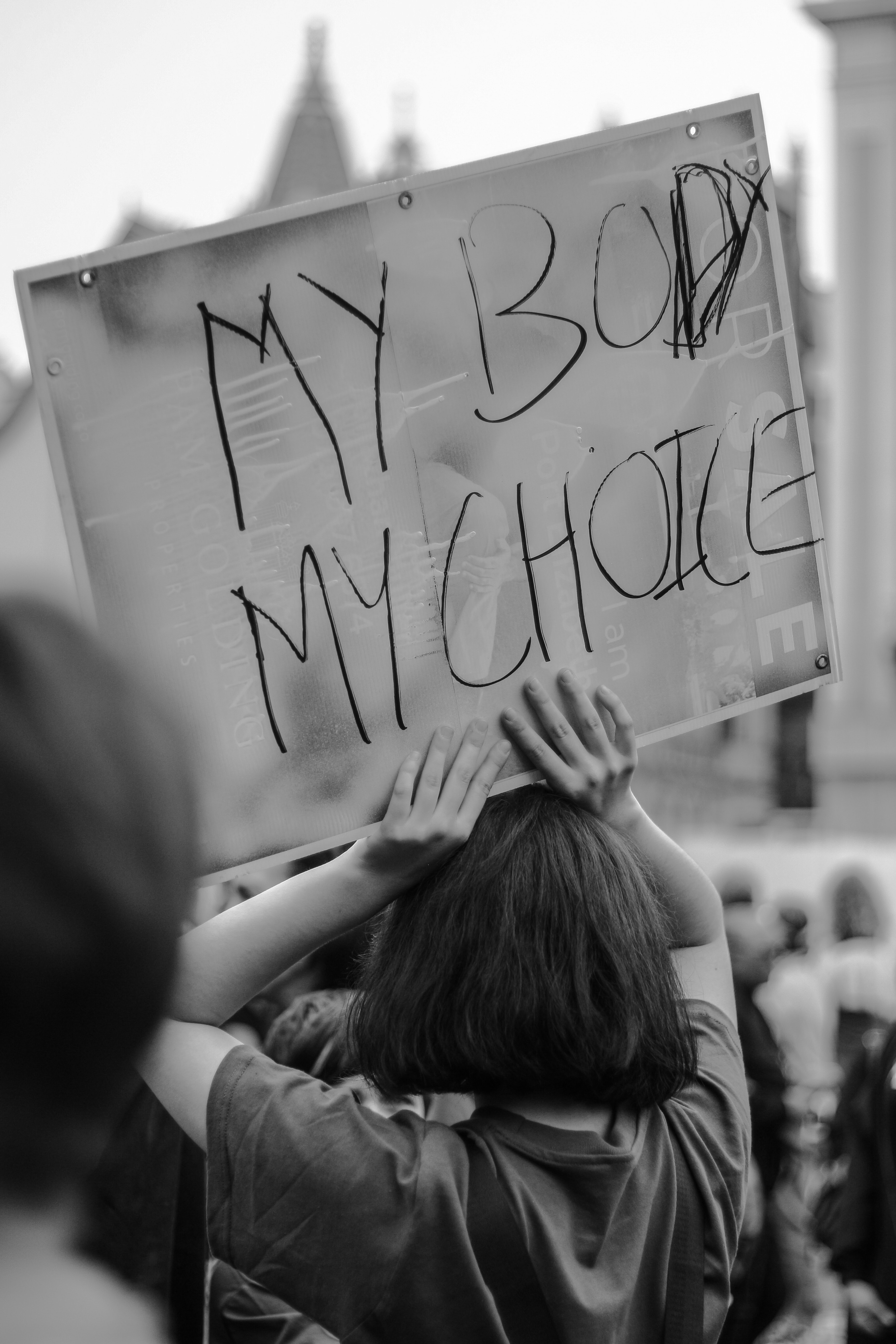
Conversely, pro-choice advocates feel as strongly about women’s autonomy over their bodies. Pro-choicers believe any decision around pregnancy is solely up to the woman – her body, her choice. They believe life begins outside the womb after the baby is born and that being forced to carry a pregnancy to term, based on someone else’s philosophical or religious views, is an unacceptable assault on autonomy and human dignity.

Pro-choicers march at rallies, support organizations that provide reproductive health services to women, and vote only for pro-choice candidates. 

From a plumbing and religious perspective (male/atheist), I don’t feel invested enough to opine on either side of the issue.

But maybe a lower emotional investment makes me more objective? 

I’m not one for telling others what to do or how to think, especially about personal reproductive rights. Ultimately, we make our own decisions. 

Well, hopefully, we do.

As I mentioned, I don’t believe in God, heaven, or the notion of a soul – I see no evidence of these things. I believe we are born of biology, just like every other animal. I believe our lives are shaped primarily by what happens (the good and the bad) after entering the world. 

That said, none of us can deny that we all begin in the same manner, moving from a fertilized egg to an embryo, from an embryo to a fetus, and finally, from a fetus to a baby. Disrupting that process through abortion prevents a natural biological transformation. Without that disruption (if all goes well), the result is a baby – soul or no soul). 

There can be many reasons for disrupting that biological process. And those reasons can run the gamut from the profoundly emotional to the detached and dismissive.

I imagine how a woman feels about her pregnancy depends on the circumstances surrounding it and that those circumstances can vary greatly. Maybe it’s a pregnancy from a casual and consensual fling, a meticulously planned pregnancy with a life partner, or a pregnancy resulting from violent rape. Maybe it’s a planned pregnancy that becomes unviable. 

Each circumstance is going to evoke different emotions and thought patterns.

In addition to the circumstances surrounding the pregnancy, the individual woman’s situation is unique. Is she emotionally stable and physically healthy? Does she have a solid social and familial support system? Is she financially independent? Can she and her partner (if she has one) emotionally, physically, and financially support another human being?

Right-to-lifers say the circumstance of the pregnancy and the woman’s situation is not what matters most. Regarding pregnancy, the focus is not on how or why the woman became pregnant or whether she can support a child. Instead, right-to-lifers put all their focus and support on the unborn child. 

Regardless of how the seed was planted, in the eyes of a pro-lifer, the woman transforms from an autonomous human being to a vessel – as soon as fertilization occurs. 

Imagine having no say. No voice. This is the most important and challenging thing for men to wrap their heads around.

Imagine being told by the state that regardless of the circumstance of your pregnancy or your physical, emotional, and financial status, you have no say in your pregnancy after reaching the six-week marker.

After six weeks, you will do what you’re told. 

You will have that baby whether you want to or not.

Whether you can care for it or not.

Whether you were raped or whether you and your partner were a little careless with your birth control.

It. Does. Not. Matter. 

You have no say. 

Imagine how that makes a person feel.

Stripped. 

One group believes that from conception, the woman’s role is that of a vessel. The other believes all the goings-on in a woman’s body (including fertilizing that egg) is the woman’s business and nobody else’s.

Neither side will budge from their firmly held beliefs, and legislation won’t change minds. All legislation does in the case of abortion is make access easier or more difficult. It never changes minds. 

The legislation in Texas clearly makes getting an abortion more difficult.

But let’s be honest, a wealthy woman in TX who wants to terminate her pregnancy will not be deterred by legislation. As has always been, women with means will find a way. They’ll get on a plane to go “visit” their cousin. But, like so many other laws, the law in TX will have a far more significant impact on those without means.

The real fight is not about abortion but female autonomy and freedom of choice.

I think what we’re seeing in states where reproductive rights are being put on the ballot is that freedom trumps religiosity. I think voters are saying it’s okay for individuals to follow their religious beliefs, but imposing those beliefs on others is not. In other words, if you don’t believe in abortion, don’t have one.

And finally, if we were serious about reducing the number of abortions in America, we’d be looking at national standards for sex education in public schools, with frank discussions about sex, responsibility, and consequence.