After the presidential debate last night between former President Trump and Vice President Kamala Harris, the choice of who should be the next President of the United States couldn’t be clearer.
Unfortunately, nearly 40 percent of Americans will continue to disregard Trump’s incompetence, petulance, and insatiable desire for power and vote for him this November.
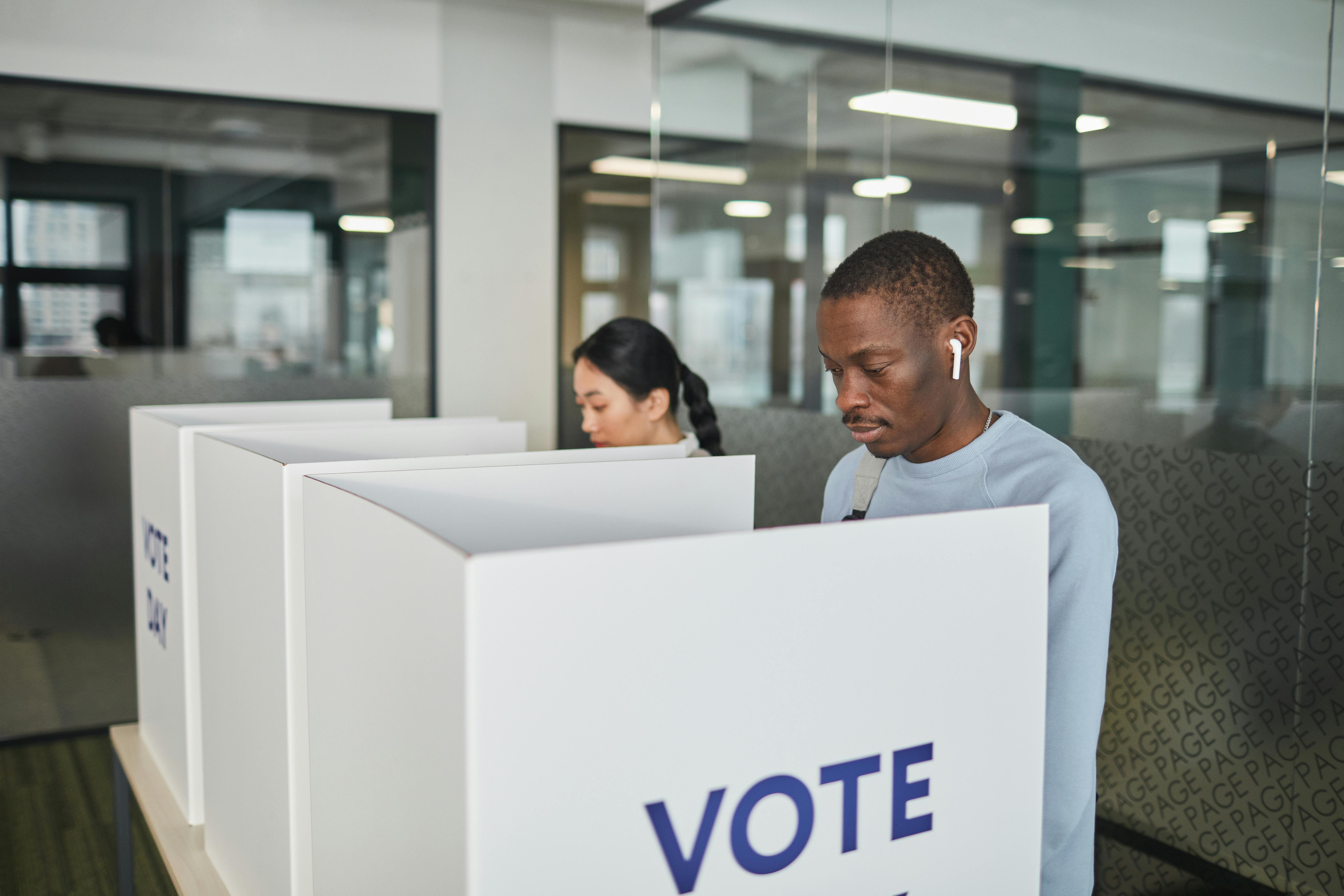
In the 1940’s, the greatest generation stormed the beaches of Normandy to stop fascism from spreading across Europe. This November, Gen Z Americans need to storm the polls in massive numbers to stop the spread of fascism here at home.
Gen Z voters are not facing machine gun fire, land minds, or snipers. Still, they are up against concerted voter suppression efforts, deep cynicism and apathy, and an information landscape of lies from far-right, anti-democratic, pro-Russian sources.
Voting this November to stop fascism here at home is far less dangerous and requires none of the bravery that young Americans faced on June 6th, 1944, on the beaches of Normandy – but it is no less critical in terms of what is at stake.
Kamala Harris did her job last night. She demonstrated a calm, cool, and collected understanding of the issues and exposed Donald Trump for the political and personal fraud that he is.
Now it’s up to the voters – it’s on us and (in large part the youth of America) to do their part on Election Day to keep Donald Trump from ending democracy and killing the great American experiment.
“Can you and the young lady step out of the car, please?”
The voice behind the mirrored shades was professional and pleasant, but the driver was reluctant to comply. The look of panic in his daughter’s eyes only hardened his hesitancy.
“I’m sorry, officer. Was I speeding?” the driver asks calmly, offering the officer his license and registration.
“Sir, I received a tip about your passenger’s medical condition. I need you and the young lady to exit the car NOW.”
“Daddy, please, don’t go,” the daughter implores her father, gripping her seatbelt tightly with both hands. Her knuckles are white, and her body visibly trembles.
“It’s OK, honey – just stay put.”
“Listen, officer. This girl is my daughter. She’s 13 years old. I’m her parent and legal guardian, and she is NOT getting out of this car.”
The officer takes a step back, draws his weapon, and points it at the father.
There’s a jarring change in tone as the officer’s jagged words erupt coarsely from his gravel-lined throat:
“Sir, this is your last warning—step out of the car NOW.”
“Jesus fucking Christ – what’s wrong with you?” the flinching father screams towards the officer, angrily throwing his license and registration out of the car window.
Worried and panicked, he turns to his daughter, who cannot speak – “Honey, you stay buckled – I’m going to talk with the officer.”
The father exits the car slowly – putting his hands above his head to show the officer he’s unarmed. The officer instructs him to turn and face the vehicle – before doing so, the father glances at the badge on the officer’s uniform – noticing the etching of four white crosses above and below the shield – the officer holsters his weapon, grabs the father by the back of the collar, and slams him onto the hood of the car before violently slapping handcuffs on him.
The father sees the horrified look on his daughter’s face; she wretches and vomits.
He is helpless.
“She was raped,” he growls at the officer who stands him up against the side of the car – “Six weeks ago, my baby girl was raped.”
“Not by the child in her womb,” the officer sneers callously.
“She’s a soul vessel now. Transporting her across state lines for reproductive care (the officer uses air quotes) is a crime.”
“You’re under arrest.”
Like a black and poisoned weed, the phrase “soul vessel” takes root in the father’s head. He had heard rumors about a network of like-minded Christian police officers across the United States working to enforce “God’s law,” especially as it pertained to unplanned pregnancies.
When he and his daughter worked out their visit to planned parenthood, they consciously mapped a backroads route, steering clear of major highways. “It’ll be safer this way,” he remembers assuring his daughter, whose biggest concern six weeks ago was getting the right cleats for soccer.
The officer places the defeated father in the back of the police cruiser and walks back to the car where the girl sits, still clutching her seatbelt. He opens the passenger door, reaches over her, and unbuckles the seatbelt, coldly instructing her to “exit the vehicle.”
The girl, expressionless, complies. When she gets out, he pushes her towards the back of the car, turns her harshly towards the trunk, and instructs her to place her hands on the vehicle.
The officer glances back at the father, wanting him to witness what comes next.
He takes out his Billy Club and tells the girl to spread her legs; while looking back towards her father, he gently taps the insides of her thighs, moving the club up towards her vagina. He leans into her, and she can feel the warmth of his breath on her neck. Through the stale scent of chewing tobacco and cheap cologne – he whispers, “We’ve got to keep that bun baking, little girl – that’s all that matters now.” – she turns her head in disgust.
She sees her father’s shadowy figure behind the cruiser’s tinted glass and imagines the steel edge of his restraints cutting into his wrists as he explodes in rage at the assault taking place before him. She looks past her father and notices the cruiser’s engine is still running. The tailpipe exhaust relentlessly pushes down on a patch of withering daisies—they bend and twist, but there’s no escape.
As the officer leans away to put the cuffs on the girl, she falls to the ground. He steps aside and smirks with disdain, staring momentarily at her before extending his hand. She looks up at him and sees her broken and crumpled self in the reflection of his sunglasses. She offers up her hand, her middle finger extended. The officer grabs her wrist and pulls her to her feet.
As she rises, she notices the gun in his holster, unsecured—she grabs it and is surprised at how easily it comes out. She takes one step back, points the gun at the officer, and (without hesitation) pulls the trigger.
The bullet shatters his sunglasses and tears through his left eye. Blood, shards of bone, and brain matter explode from the back of the officer’s head, spraying the soft beige dirt on the side of the road in red and pink.
The officer’s knees buckle, and he falls in a heap. The girl’s arm goes limp, and the gun falls loosely from her hand.
She walks purposefully and in silence towards the police cruiser. She passes by her father, who sits stunned, mouth agape, in the back seat—she never even glances at him. At the rear of the car, she squats down, gently pulls the daisies out of the ground, and holds them to her chest. She stands up, walks down an embankment on the side of the road to a running brook, places the flowers in the water, and watches them float away.
She retrieves the handcuff keys from the dead officer and walks to the cruiser to free her father. He hugs her immediately, but she’s unable to hug him back. Her arms hang heavy and motionless from her shoulders like slats of wood.
After a minute, she looks at him and says, “Take me away from here – there’s nothing here for me anymore. – there’s nothing.”
I listened to JD Vance this morning on Meet the Press state forcefully that Donald Trump believes abortion is a state’s rights issue – not a federal issue. Vance went on to say he understands that California’s abortion laws will be different than Ohio’s – “and that’s OK.”
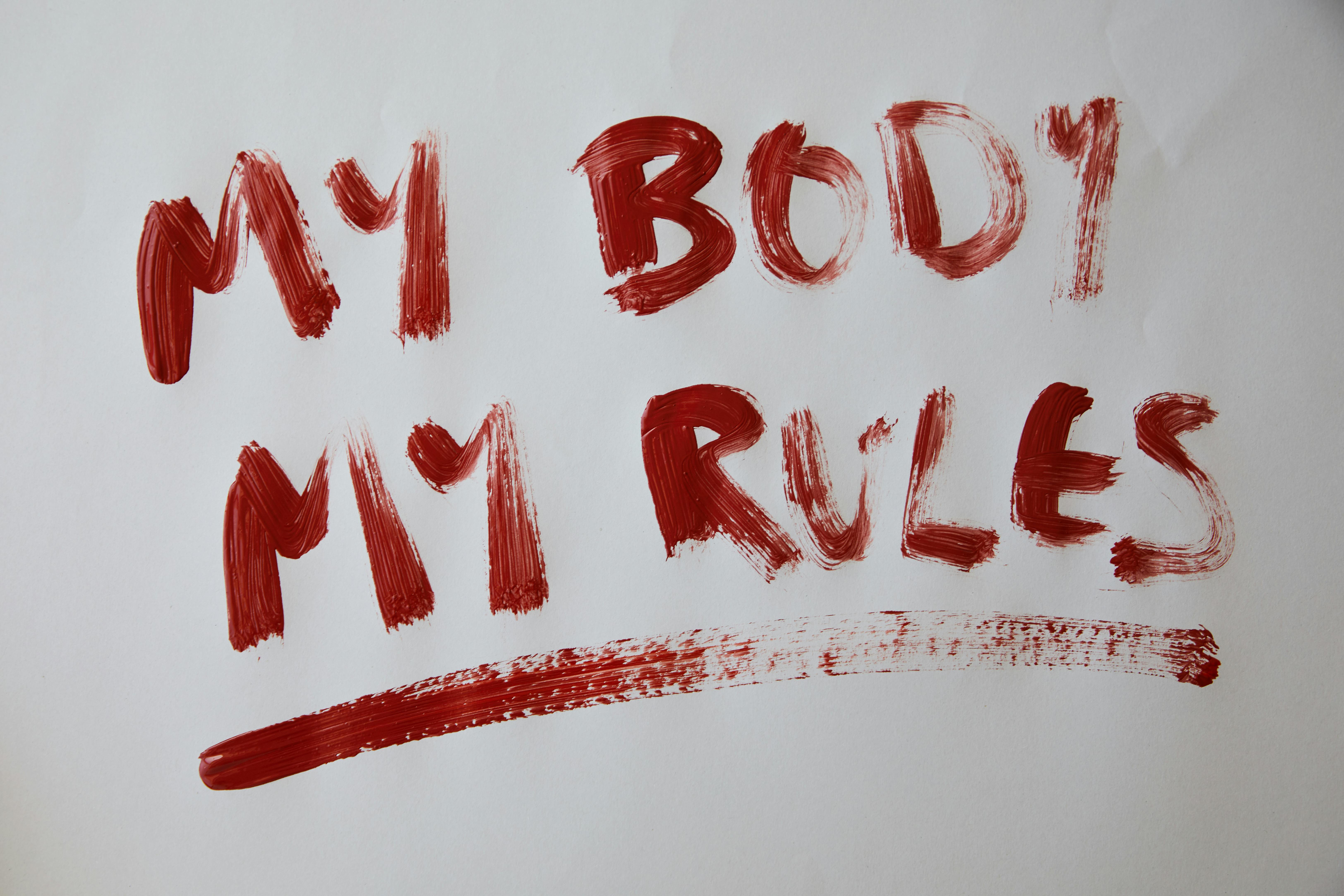
Either way, both Trump and Vance believe it’s appropriate for the state to decide what kinds of reproductive health options are available to women. So, suppose you’re a woman who happens to live in a state with a total abortion ban, and you’re a victim of rape. In that case, you have no right to terminate the pregnancy – and Republican lawmakers also want to criminalize crossing state lines to get an abortion.
In a Trump / Vance America, your geography determines whether or not you have rights around reproductive care.
The Republican party used to be the party of limited government and individual freedom. That changed when religious groups became players in American politics, wielding influence by promising votes and converting religious lecterns into political pulpits. As soon as Republicans saw votes in those church pews, they began crafting legislation and policies catering to religious groups (so much for individual freedom and limited government).
Harris and Walz and the democratic party believe reproductive health decisions should always be up to the woman, regardless of the fate of geography.
If you care about individual freedom and don’t want to live in a country that says your state determines what women can and cannot do in terms of abortion care, then vote blue in November.
In Donald Trump’s 2016 campaign against Hillary Clinton, he said:
“If she gets to pick her judges, nothing you can do, folks,” Mr. Trump said as the crowd began to boo. He quickly added: “Although the Second Amendment people — maybe there is, I don’t know” – queue July 13th, Butler, PA.
People who love Democracy and hate Donald Trump want him to just go away. They go to sleep at night hoping the twice impeached rapist and convicted felon would just die of a heart attack, stroke, or maybe a domestic “Clue-like” demise (Melania at Mara Lago with a My Pillow).
While millions let out a sigh of relief Saturday, just as many (if not more) were thinking, “A few inches to the left or right and problem solved.” – that’s where we are in this country, and we have Donald Trump to thank for it.
It’s hard to separate the attempt on Trump’s life from the divisive political discourse that coincides with the Trump / MAGA brand. Trump and his MAGA base have ushered in the idea that sometimes violence and retribution are theanswer.
In recent years, we’ve seen MAGA members of Congress posing with and filming campaign commercials with the AR-15. Marjorie Taylor Greene created campaign posters of herself posing with an AR-15 and threatening other members of Congress. We’ve seen angry citizens at town halls across America talking about taking up arms because they believe the Trump-based lie that the left stole the 2020 election.
Donald Trump has incited, condoned, and threatened violence throughout both of his candidacies and during his presidency. He has divided our country and pitted Americans against one another by lying and demonizing people along political, racial, and religious lines.
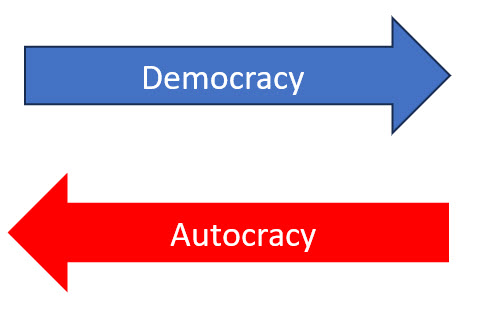
With the help of foreign adversaries, Trump has transformed the Republican party from a party that detested autocracies and dictatorships to a party that aligns with them. Trump continuously heaps accolades on dictators and authoritarians who use violence and retribution on political opponents and suppress dissent and freedom of speech. As we know from former members of Trump’s cabinet, President Trump wondered aloud, “Why not just shoot protestors in the legs?”
All of this is bound to alienate people on both the left and right. Is it any wonder that someone decided to take things into their own hands?
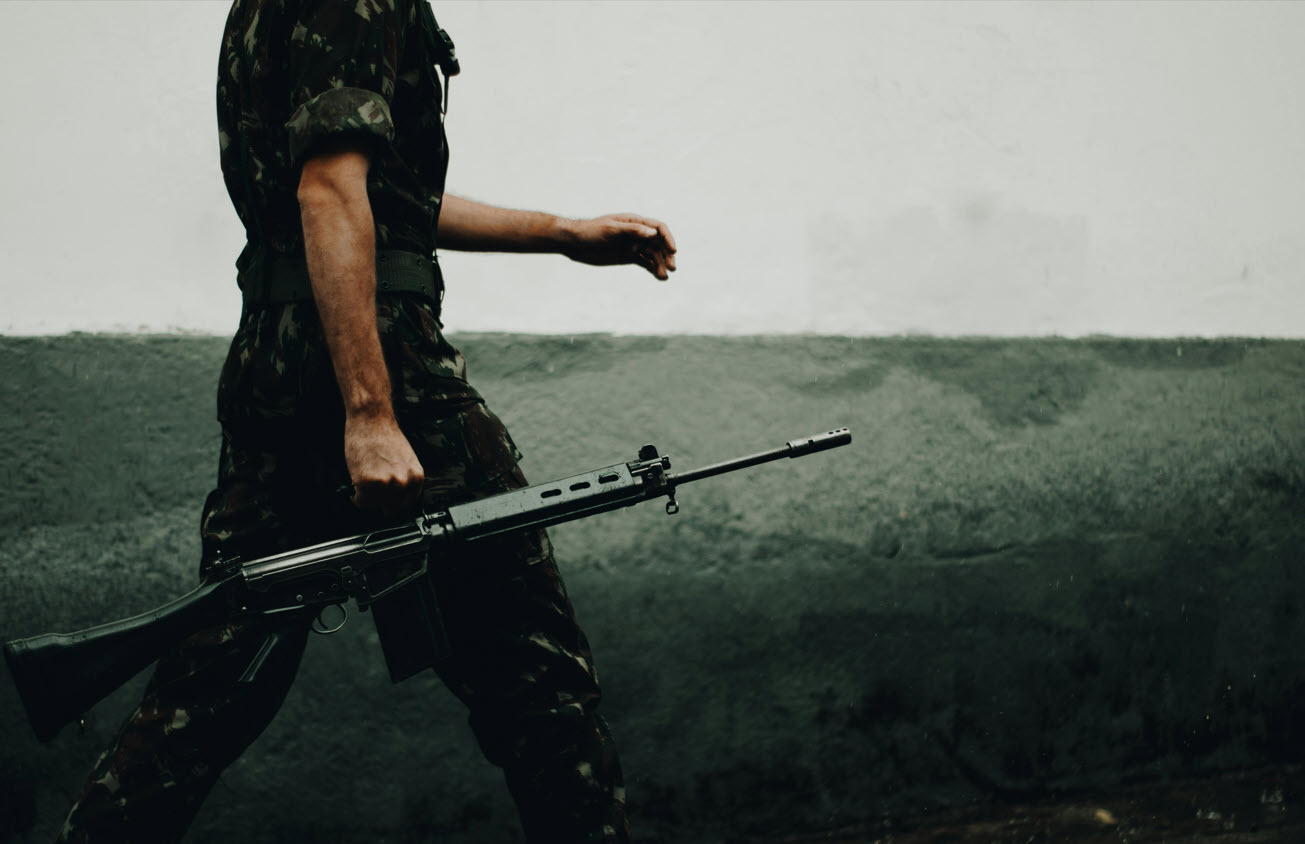
It’s also worth noting that a significant number of Americans connect the right to bear arms with the right to topple a tyrannical government. That message has been marketed and sold with great success – primarily by gun-loving Republicans. It’s a message that taps into our deeply held beliefs around freedom and independence. Combine that message with our lax gun laws and protected access to assault weapons, and you get what happened in Butler, Pennsylvania, on Saturday.
Whether it’s an 18-year-old incel, a deranged congresswoman from Georgia, or a registered Republican from Pennsylvania who saw Donald Trump as an existential threat to Democracy, each views guns and violence as an acceptable way to neutralize threats.
People who live by the sword die by the sword. Trump and his supporters are seeing that Trump’s loose and comfortable affiliation with violence can cut both ways – perhaps that’s what they want?
We’re approaching a tipping point in America, where we must choose between bullets or ballots.
At sixty-one, I’m not as mentally agile as I used to be, and I’m sure this natural decline will continue as I age.
I suppose what I’ve lost in mental acuity is somewhat offset by the wisdom I’ve gained through experience (personally and professionally) – but I’m not burdened by the need to prove this to anyone – Joe Biden is.
It doesn’t matter if Joe Biden believes he can be a successful President for the next four years.
In fact, it doesn’t matter if Joe Biden can objectively be a successful president—what matters is whether Democratic and independent voters believe he can—and most of them do not.
I’m one of many who think Joe Biden should bow out of the 2024 presidential race.
Does that mean I won’t vote for him?
HELL NO!
I’d vote for the moldy-unrecognizable-saran-wrapped mystery in the back of my refrigerator before I vote for that fat-orange-traitorous-fuck, Donald Trump.
That said, a second Trump Presidency is not something we should leave to chance (the stakes are too high). With Joe Biden as Trump’s opponent, there is a greater chance Trump will win than if the Democrats run a younger candidate with some vitality and vigor.
Joe Biden needs to put the country he professes to love above himself.
He needs to recognize that this race is not about whether his age is a disqualifier but whether he’s able to effectively, aggressively, and convincingly prosecute the case against a second Trump presidency. That should be a relatively easy task, given all the negatives Trump brings.
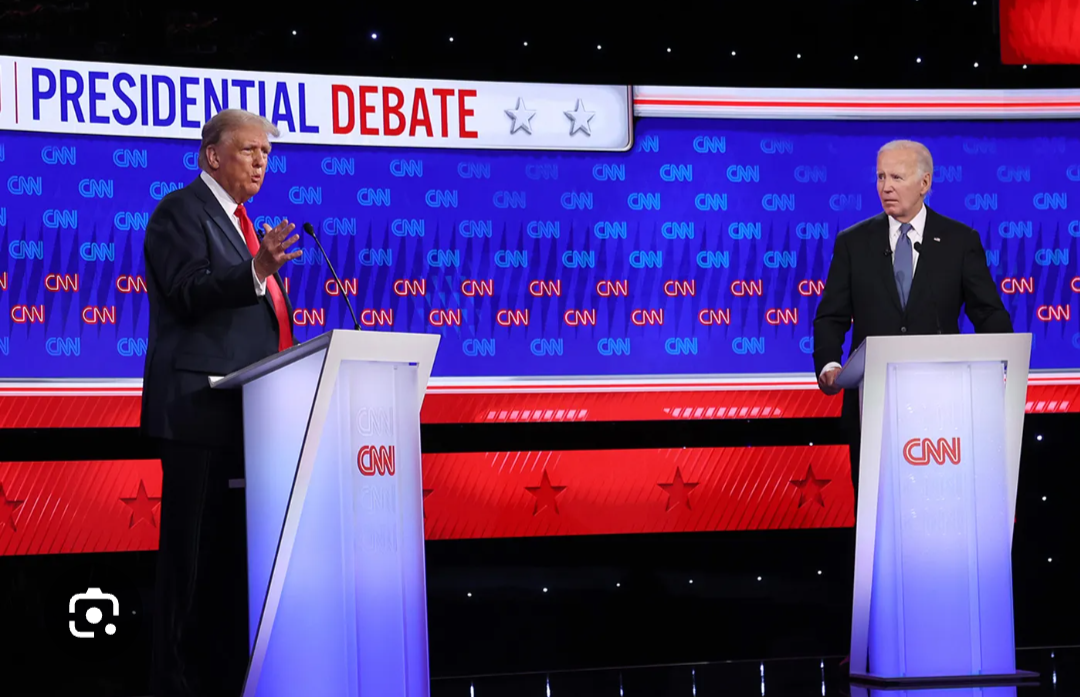
President Biden had the opportunity to prosecute the case against Trump in the debate, and he failed miserably.
There’s no shortage of capable Democrats (Kamala Harris, Gretchen Whitmer, Wes Moore, Amy Klobuchar, Pete Buttigieg) who can stand toe-to-toe with Trump and cut him down to size – but the longer Joe Biden dawdles, the more logistically challenging it becomes for the party to pivot to an alternative.
Those were my sentiments after watching President Biden mumble through the first (and possibly only) presidential debate.
It was the worst debate performance I’ve ever seen.
Trump was Trump. A firehose of lies and misinformation. A verbosity atrocity.
Even though on substance, you can argue that Biden was better (or at the very least, more honest) – presentation and optics matter, and Biden looked old, confused, and unprepared.
The candidates running for President are both unqualified but for radically different reasons.
Biden is unqualified because age has diminished his ability to be an effective leader who instills confidence. Old age and its consequences have caught up to Joe Biden, and those undeniable consequences were on display for all to see in the Presidential debate. Biden’s family, closest friends, and political confidantes should be imploring him to drop out of the race.
Trump is unqualifiedbecause of fundamental ineptitude and a dangerous malevolence towards truth, integrity, democracy, and the United States Constitution. He has no redeemable qualities as a politician or person. He is a knife at the throat of our republic.
I often criticize Trump supporters for turning a blind eye to Trump’s ineptitude and utter lack of character—I’d be a hypocrite if I turned a blind eye to Biden’s age issues.
President Biden should ask himself how he wants to be remembered – as the humble public servant who derailed Trump’s naked aggression and assault on truth and integrity in 2020 or as the feeble, discombobulated, old fogey blinded by ego and deaf to public opinion who opened the door and handed the keys of our republic to a convicted felon, traitor, and rapist in 2024?
If Biden digs in his heels and refuses to step aside (which is what he appears to be doing), Americans need to ask themselves which candidate will do more harm as President. What is worse for America (Biden’s age-related degeneration or Trump’s malevolence toward democracy)?
Since then, I’ve had many interviews and reached the final stages of several Technical Writing opportunities, but I’ve yet to receive any offers.
What I notice most about interviewing at sixty-one is how conscious I am of my fake enthusiasm. For every interview, I hear myself pitching my skills and capabilities to the interviewer, even though in my heart, I know I don’t want the job – it’s a strange dichotomy where heart and head travel on different planes.
I’m also getting the impression that most companies don’t want to hire people my age, and in my case, I can’t say I blame them. If the honest answer to “Where do you see yourself in 5 years?” is “3 years into my retirement,” then you’re probably not the right person for the job.
I’m no longer “hungry” professionally. I don’t have the eye of the tiger or the fire in the belly (unless you count indigestion). I’m not looking to grind, work my way up the ladder, or burn the midnight oil. Instead, I want to work for a few more years at something I enjoy and then retire.
While assessing my next move, I decided to compile some of the works from this blog, work with an editor to polish the content and publish them as a collection on Amazon.
If interested, you can purchase the paperback version of “My Paper, My Words” on Amazon.





 bendingtheneedle