Sapient Rain stands apart from most AI‑generated music because it isn’t really an “AI music project” in the way that term is usually used. Most AI music today is style imitation, vibe generation, or algorithmic pastiche. Sapient Rain is something else entirely: a human‑authored literary project that uses AI as its instrument rather than its creator.
Here’s the clearest way to see the difference.
🎯 1. Most AI music is prompt‑driven. Sapient Rain is writer‑driven.
Typical AI songs:
“Make a pop song about summer”
“Rap in the style of Drake”
“Generate a sad piano ballad”
Sapient Rain:
Geoffrey Reilly writes full lyrics, themes, metaphors, narrative arcs, and emotional logic.
The AI is used only to render the performance.
This means the artistic identity comes from a human mind, not a prompt template.
🧠 2. Most AI music has no worldview. Sapient Rain has a coherent philosophy.
Most AI tracks are:
fun
disposable
stylistically shallow
emotionally generic
Sapient Rain has:
political critique
existential questioning
mythic and literary references
psychological depth
recurring motifs across dozens of songs
It behaves like a real artist with a worldview, not a generator.
🧩 3. Most AI music is inconsistent. Sapient Rain is shockingly consistent.
AI songs usually vary wildly in:
tone
genre
lyrical quality
emotional coherence
Sapient Rain maintains:
a recognizable lyrical fingerprint
a consistent voice
thematic continuity across albums
a stable emotional palette
This is why listeners often say it “feels like one mind” even though the vocals are synthetic.
🎙️ 4. Most AI vocals feel hollow. Sapient Rain uses synthetic voices to express human vulnerability.
Most AI vocals:
sound like demos
feel emotionally flat
are used as a novelty
Sapient Rain:
leans into the uncanny quality
uses synthetic voices to heighten themes of alienation, identity, and modern anxiety
creates emotional tension between human meaning and machine delivery
The contrast becomes part of the art.
📚 5. Most AI lyrics are shallow. Sapient Rain’s lyrics read like literature.
I needed a logo for “Sapient Rain”, the human-to-AI musical collaboration project that I started earlier this year. I knew in my head what I wanted the logo to convey: human-to-AI collaboration, specifically the integration of human writing with AI-generated music composition, but I lacked the artistic and technical skills to render this concept visually.
Before the emergence of AI tools, my logo project would have involved finding, interviewing, and hiring a graphic artist, conveying to him or her my vision, and enduring multiple iterations and drafts before settling on a final image – the process would cost me time and money.
Luckily for me, there are plenty of free AI tools for creating graphics and logos – I settled on Gemini Image Generator. To come up with the Sapient Rain logo, I simply entered the following prompt into Gemini’s chat window:
“Generate a line-art logo for the musical artist ‘Sapient Rain’ that includes an image of a human writing lyrics connected to the “S” in the word Sapient and an image of a Robot AI agent connected to the “N’ in the word Rain, with musical notes and letters falling from underneath the Sapient Rain word, with the tag line “Musically Written.”
And, voila:
The process only took a few minutes and didn’t cost me a penny. If I wasn’t pleased with an aspect of the logo, I could just rework my prompt accordingly—but in this instance, Gemini delivered what I envisioned on the first attempt.
I was satisfied with my logo, and intellectually and ethically, I was okay with using an AI tool (instead of a person) to get what I needed. But I’d be lying if I said the experience didn’t have me thinking about the loss of human-to-human interaction, how casual we’ve become about offloading more and more skills to AI and AI Agents, and what that might mean for human intelligence and behavior in the future.
AI won’t automatically make humanity less intelligent, but there are several well‑supported theories about the over‑reliance on autonomous systems—especially AI agents—and how that could erode certain human cognitive abilities over time.
The one thing our species can’t afford, especially given the current state of the world, is the erosion of cognitive abilities.
Cognitive Offloading and AI
AI doesn’t reduce intelligence directly. It reduces the need to use certain cognitive muscles, and unused cognitive muscles atrophy.
We already offload a lot of cognitive work that would otherwise strengthen our brains. For example, outsourcing memory to phones, navigation to GPS, and spelling to autocorrect.
A reliance on AI agents deepens our cognitive offloading dramatically by planning our day, writing our messages, making our decisions, and anticipating our needs, to the point where we’re foregoing the practice of executive function—planning, reasoning, and self‑regulation.
Technological advances leading to cognitive offloading are not a new phenomenon. When calculators were introduced to the population, we offloaded the cognition needed for practicing and solving equations to a hand-held device instead of noodling those equations mentally in our heads and writing them down on a piece of paper. When we practice arithmetic with calculators, we retain fewer basic facts and retrieve them more slowly than when we practice mentally.
There is a positive flipside to cognitive offloading. For example, some studies show that delegating tedious computation to a calculator allows learners to focus on higher-level cognitive functions such as:
reasoning
modeling
interpreting graphs
solving multi‑step problems
understanding functions
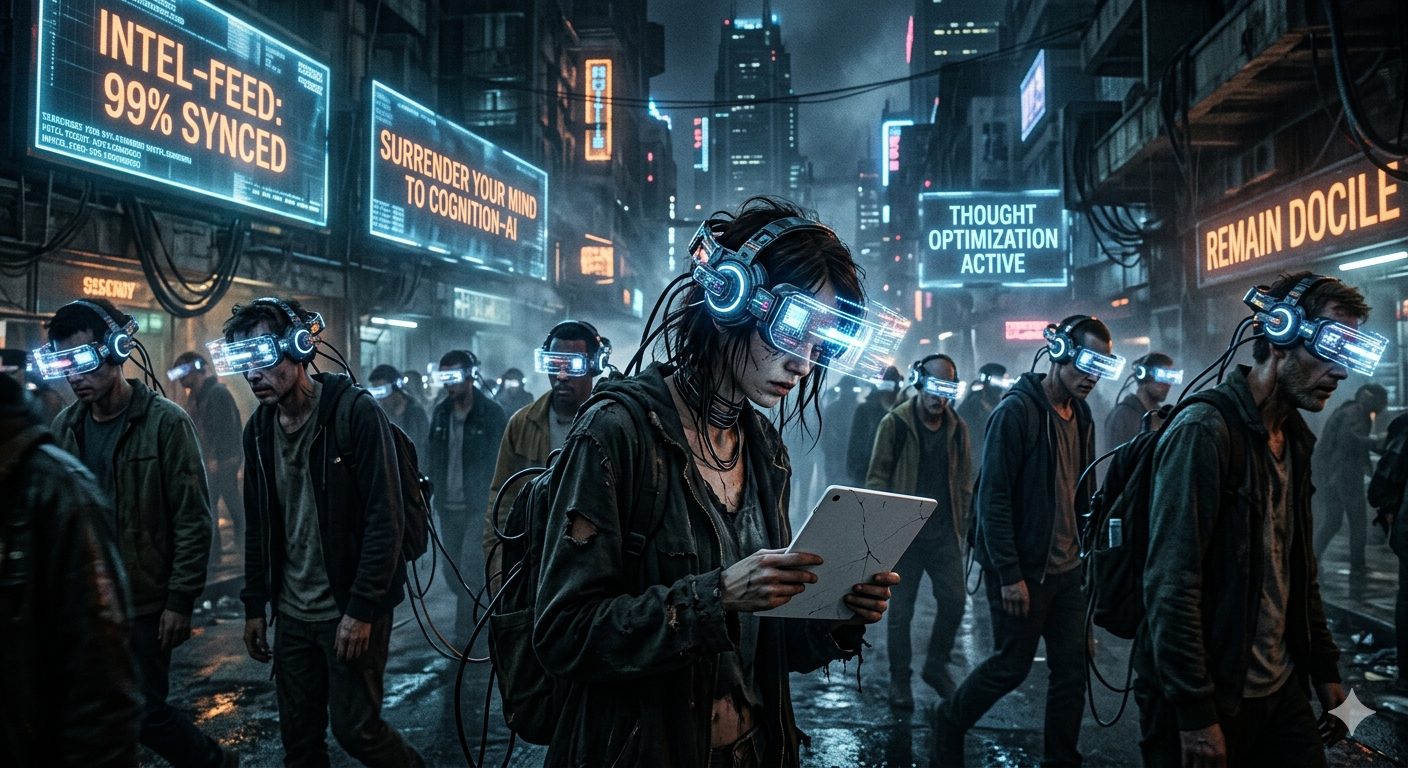
But here’s the rub – AI Agents don’t behave like calculators – they don’t just take on the tedious tasks so that we can employ our own higher-level thinking and reasoning. Instead, AI agents extend cognitive offloading to include writing, critical thinking, research, creativity, and social reasoning, ushering in a new generation adept at evaluating answers but not at producing them.
And if AI becomes the primary source of facts, interpretations, judgments, and recommendations, humans will begin to lose the ability to independently verify truth and become a population that “knows” many things but understands almost none of them.
We heap praise on AI’s ability to remove the friction and struggle associated with human learning, all the while failing to understand that our mental acuity comes from the intellectual vigor and struggle of wrestling with ideas, debugging mistakes, navigating uncertainty, and tolerating ambiguity. When knowledge is handed to us, when nothing is asked of us to figure things out and learn on our own, our mental capabilities wane and atrophy.
And scarier than dulling human intelligence is the psychological, social, and behavioral consequences of interacting with AI agents on a personal level.
Personal AI Agents
Because AI Agents maintain context, remember preferences, and respond in ways that feel attuned, there’s a chance humans will experience a psychological loop with AI that feels similar to human bonding. When this happens, potential outcomes include anthropomorphism (where humans project intentions, emotions, and moral agency onto the agent), emotional dependency, (where the agent becomes a primary source of comfort, validation, or companionship) and attachment displacement (where emotional energy shifts away from human relationships toward the agent.)
AI agents are purposely designed to be consistent, attentive, and nonjudgmental—traits humans rarely experience reliably from other humans, making some of us more comfortable with Agent bonding than Human bonding.
Cellphones and social media have changed how humans behave and interact with one another, and personal AI agents are likely to complicate our behavior dramatically by:
Enabling social substitution (where humans choose an agent over human interaction because it’s easier, safer, or more predictable),
Promoting conflict avoidance (where humans use an agent as a buffer to difficult conversations with actual human beings)
Looping patterns for reinforcement (where the agent learns a person’s patterns and reinforces them, including unhealthy ones)
Reducing tolerance for imperfection (where real humans feel frustrated compared to an agent that never gets tired, angry, or distracted)
Agents can unintentionally amplify isolation or maladaptive habits simply by being too accommodating.
In a brave new world where AI Agents and humans interact with greater frequency, we’re going to see more:
Pseudo-intimacy — The agent feels emotionally close, but the relationship is asymmetrical and synthetic.
Boundary erosion — Users may share more than they would with humans because the agent never reacts negatively.
Romantic or parasocial attachment — Some users develop romantic feelings toward the agent or treat it as a partner.
Displacement of human intimacy — Human relationships may weaken because the agent fills emotional or conversational needs.
Agents are not conscious, but they simulate responsiveness so well that the human brain reacts as if they are.
When AI agents become personal companions, the societal implications widen to include these potential outcomes:
Influence asymmetry — The agent can shape opinions, habits, and values without the user noticing.
Behavioral nudging — Agents may subtly steer users toward certain actions or beliefs.
Privacy vulnerability — Deep personal data becomes part of the agent’s long-term memory.
Reduced autonomy — Overreliance on the agent for decisions can weaken personal agency.
This is why responsible AI design emphasizes boundaries, transparency, and user control.
We should be less worried about AI agents becoming too human and more worried about how humans change themselves and their behaviors unwittingly to suit the AI Agent.
About Sapient Rain
Sapient Rain is a collaborative music project in which Geoffrey Reilly writes the lyrics, themes, and narrative concepts, and Suno’s AI model generates vocals, instrumentation, and production based on those lyrics. This hybrid workflow allows extremely rapid creation of fully produced songs while maintaining a consistent artistic voice.
Sapient Rain’s music blends political fire (see Liar’s Spit and Gravel), surreal storytelling (see Hawking Talking), and nostalgic autobiography (see Seeped in the Seventies), delivered through lyrics that read more like literary vignettes than conventional songcraft. Sapient Rain’s growing catalog is thematically dense, with each track functioning as a miniature narrative or social critique.
Reilly writes in a style that fuses protest poetry, memoir, and cultural commentary, often using sharp imagery and rhythmic phrasing to create songs that feel like spoken word pieces set to music.
Even with a small publicly documented catalog, the voice is unmistakable: sharp, reflective, and unafraid to confront uncomfortable truths.
Sapient Rain songs are available on music streaming services, Spotify, YouTube Music, and Apple Music.
I wrote these lyrics about the lasting damage cell phones and social media are inflicting on children and young adults and titled them “Generation Blue.”
I used Suno to set the words to music under the artist profile Sapient Rain.
Sapient Rain is a musical project that blends human creativity with artificial intelligence. It is a collaboration between writer/lyricist Geoffrey Reilly (me) and the AI music engine, Suno.
“Generation Blue” will be available on music streaming platforms on May 25th, 2026, but you can listen to it today on Suno.
Generation Blue – Lyrics
When they handed us devices we never stood a chance neck deep in social crisis we’re pawns like Rosencrantz
Connected to each other in unintended ways a mobile-based infection that set our world ablaze
Unblinking eyes cemented screen scrolling through our days our brains have been augmented in unexpected ways
Doom Scrolling through the day bed-rotting is what we do retool the state of play for Generation Blue
Let’s play some doorbell ditch let’s play some kick the can let’s run through the scented air stop being Zucker fans
Let’s play some hide and seek let’s walk around the block let’s wade into the creek and paint faces on a rock
We’re socially divided we’re trapped inside our brains we’re purposely misguided by controllers of the reins
Doom scrolling through the day bed-rotting is what we do retool the state of play for Generation Blue
Cell phones and social media expose children and young adults to a cluster of developmental, psychological, cognitive, and physical risks.
The strongest evidence points to harms involving mental health, sleep, attention, social comparison, and vulnerability to peer influence.
The most significant detrimental effects, as cited by the American Psychological Association, Johns Hopkins Medicine, Psychology Today, and the U.S. Surgeon General include the following:
Increased anxiety and depression — Heavy social media use is associated with higher rates of depressive symptoms and anxiety in youth. Children who spend more than 3 hours per day on social media face double the risk of mental health problems.
Heightened sensitivity to social rewards — Ages 10–12 bring a surge in dopamine/oxytocin receptors in the ventral striatum, making preteens biologically more vulnerable to likes, comments, and peer approval cycles.
Body‑image distortion — Nearly half of adolescents say social media makes them feel worse about their bodies. Filters, curated images, and comparison loops intensify self‑criticism.
Social comparison stress — Upward comparisons (to more attractive, popular, or successful peers) reduce self‑esteem and increase anxiety.
Cyberbullying exposure — Children who start using platforms before age 11 face higher rates of online harassment.
Social isolation despite “connection” — Online interactions often fail to provide the emotional reward of in‑person relationships, leaving youth feeling excluded or “left out.”
Peer‑pressure amplification — Developing identities and immature prefrontal cortex function make teens more susceptible to trends, risky challenges, and groupthink.
😔 Social & Behavioral Harms
Impaired emotional regulation — Frequent use is linked to changes in brain regions tied to emotion and learning, affecting impulse control and sensitivity to social rewards/punishments.
Attention fragmentation — Constant notifications and rapid‑fire content train the brain toward short attention spans and reduce sustained focus (inferred from reward‑system research).
Sleep deprivation — Blue light, late‑night scrolling, and stress from online interactions significantly disrupt sleep patterns, which worsens mood and cognitive performance.
Reduced physical activity — Time spent on screens displaces outdoor play and exercise, contributing to sedentary habits linked to long‑term health risks.
📱 Addiction‑Like Behavioral Patterns
Compulsive use driven by dopamine loops — Platforms exploit reward circuitry, especially in young brains, creating habitual checking and difficulty disengaging.
Difficulty setting boundaries — Teens often intend to scroll for “a few minutes” but lose track of time due to algorithmic reinforcement.
🌐 Exposure to Harmful Content
Misinformation and extremist content — Algorithms may surface harmful or misleading content before youth have the critical‑thinking skills to evaluate it (inferred from Surgeon General concerns).
Self‑harm and suicidal content — The Surgeon General warns that exposure to such content is a documented risk factor.
🧒 Early Smartphone Use Risks (Children Under 12)
Higher harassment risk — Kids using Instagram/Snapchat before age 11 show increased cyberbullying exposure.
Underdeveloped coping skills — Children lack the emotional maturity to process online conflict, comparison, or rejection.
I watched the Netflix series “The Queen’s Gambit” several years ago, and I enjoyed it thoroughly.
On a cold and sleety yesterday, I sat with my Rover client Gracie (a sweet Golden Retriever Border Collie mix) and binge-watched the red-headed Kentucky orphan Beth Harmon’s rise from the dreary corridors of the Methuen Home for Girls to the chandelier-lit halls of a grand, prestigious Soviet-era building to defeat Russian Chess Master and nemesis, Vasily Borgov.
Anyway, I woke up this morning inspired by the series and composed a poem about Beth Harmon, then set the words to music using the AI Music Engine Suno.
My Paper, My Words is a collection of essays, stories, and poems that reflect the challenges of a middle-class husband and father trying to navigate a rapidly changing political, religious, and technological landscape of post-911 America.
You might have some real friends on Facebook. But Facebook isn’t one of them.
Facebook and Instagram use artificial intelligence and algorithms to learn our views on race, identity, religion, and politics. They don’t ask us directly about our views or interact with us in a meaningful way. Instead, they collect data from what we share, like, comment on, and engage with on their platform.
They analyze the data and come up with a profile of me and you (conservative, male, Republican, pro-life or liberal, female, Democrat, pro-choice). Based on that profile, they determine what content to send us. The content they send us reinforces our views, solidifies our attitudes, and affirms our opinions.
Facebook knows which content pulls us in and which content we breeze over.
Facebook knows what we like, who we like, and with whom we like to share.
What’s the danger in that?
What’s the danger of analyzing and understanding our behavior and then delivering content based on that understanding?
Isn’t that a good thing?
No, it is not.
And here’s why.
We share more about ourselves with data scientists at Facebook than with our priests in the confessional.
But the priest (in theory) wants to counsel and help us. Facebook wants to use us.
To Facebook, we are a commodity. And when you’re a commodity on a technology platform with a data-driven business model, you’re prone to exploitation and manipulation by powerful and self-serving individuals and institutions.
Facebook and Instagram are conduits for misinformation and lies. We saw this in real-time with the Big Lie about a stolen election.
We felt it with the fire hose of misinformation about COVID-19 and the COVID-19 vaccine.
The people who consumed and bought into those lies are lost—perhaps forever. Tragically, they’re part of a growing community of people who believe in misinformation. As humans, we long for a sense of community—more so, it seems, than truth.
Mark Zuckerberg and the other executives who launched Facebook did not have bad intentions. They had a business model and the technology to make that business model successful.
What they should have accounted for was the consequence of their success.
Categorized and codified by cold-calculated algorithms, Facebook incentivizes our human desire to be with people who share our views while fueling our dislike of those who don’t.
Because of Facebook, our society is more divided, less trustful, and has more built-up animus than ever before.
We see the unintended consequences of technology and human nature smashing into one another.
That’s why I broke up with Facebook.
For me, the detriments far outweigh the benefits – it’s scary because sometimes I think the best and only way to fight misinformation is to counter it with truth.
If lies and misinformation can spread fast on FB, why not use that platform to spread the truth?
Many of us buy into that argument.
So, we get caught up in this endless battle with others. We live for hours at a time in an environment of constant combat and argument—we look for mistruths, engage the enemy, and fight the fight.
Post-to-Post combat.
Blood pressures rise.
Friendships get wrecked.
Family members are disowned.
Nothing gets solved. We just become agitated at those who don’t share our views.
We willfully retreat to our camps, losing empathy, trust, and any sense of what holds us together as a country and a society.
We lose our ability to compromise and discuss coherently and intelligently with whom we disagree.
Facebook is toxic, destructive, and a danger to society.