My Paper, My Words is a collection of essays, stories, and poems that reflect the challenges of a middle-class husband and father trying to navigate a rapidly changing political, religious, and technological landscape of post-911 America.
Most of us don’t get to choose the last thing we hear before dying. The grim reaper doesn’t give a shit about playlists or our affinity for the sound of waves crashing or birds singing.
The man in the blue blazer’s final breath came at 12:46 PM to the shitty sounds of stylized Jazz, and a Bluetooth-wearing mortgage lender yelling, “It’s 2008 all over again!”
With his elbows on the table and bowed head, he looked like any other Barnes and Noble Cafe customer – bewitched by books and coffee. Sure, his posture might have seemed “a little off” to the passersby, but not enough to alert the reference librarian or the pimply-faced adolescent behind the Cafe’s counter.
People don’t care about one another the way they used to. Most of us drift through our day in cell phone-induced trances, grossly unobservant of the world 3 feet beyond the nose on our faces. And so, the man in the blue blazer sat dead and unbothered for nearly eight hours (and one shift change) until a nudge from the Cafe’s manager caused him to fall and strike his head with a sickening biological splat, like a dropped bowling ball wrapped in salami.
Bill and Susie are wiping down the espresso machine when their pale, shell-shocked manager shuffles towards them.
“What’s up, boss? Are you OK?”
The question startles the manager from his stupor. He looks at Bill and says flatly, “He’s dead.”
“Who’s dead?” Bill and Susie chime in unison, causing Susie to laugh and blurt out, “Jinx on you!” while pointing and smiling at Bill demurely, “You owe me a coke, dude!” – Susie’s been crushing on Bill for months and can’t figure out why he hasn’t picked up on her willingness.
Their manager raises his arm slowly and points towards the Cafe’s seating area. Bill and Susie look wide-eyed at one another and dash from behind the counter. Susie sees the man lying on his back, turns immediately on her heel, and heads towards the front of the store, yelling, “Call 911, call 911!”
“Jesus Christ, boss, what happened?”
The manager’s voice is unsure and thready, “I told him we were closing, and that he needed to complete any purchases. When he didn’t respond, I touched him on the shoulder, and he fell.” His voice rattles with panic, “He must have been dead already; I mean, he never even tried to break his fall.”
The manager falls quiet before whispering, “His lips are so blue.” Bill looks at the lifeless body in front of them, turns toward his boss, and acknowledges softly, “So fucking blue.”
“You know, he looks familiar, boss. Not as a customer, but from out there,” Bill nods over his shoulder towards the storefront windows and the world beyond. He brushes by his manager and kneels next to the body. “He’s dead for sure,” and then shockingly reaches into the man’s blazer.
The manager directs a rage-filled whisper at Bill, “What the fuck are you doing? Are you crazy? The police are on their way!”
“I know – I just want to check his driver’s license. I know this guy, boss.”
“Who gives a fuck if you know him? Leave him alone! Wait for the police, for Christ’s sake.”
The manager’s head is on a swivel, his darting eyes surveying the store for straggling customers and police. The last thing he needs is for his manager to hear about a Barnes and Noble employee mugging a dead man.
Bill opens the wallet. A folded piece of paper falls out. Without thinking, he puts it in his pocket and rummages for the dead man’s driver’s license.
Susie comes running from the front of the store, out of breath, “Betty called 911. Bill, what are you doing?”
Bill holds up the license and smiles, “Ted Diamond. 22 Fairview Lane,” before slipping it back into the card slot and sliding the wallet into the breast pocket of the blazer.
A police cruiser glides quietly into the nearly empty parking lot, splashing the storefront in blue and red lights. Car doors slam, and a few seconds later, the reference librarian directs two officers toward the Cafe.
As the officer approaches, Bill looks at Susie and shoves his hands into his pockets nervously, only to discover the piece of paper that fell from the wallet. He looks up and realizes there’s no time to put it back. His fingers draw the paper into his sweaty palm, and he squeezes tightly, digging his fingernails into it.
“I’m Officer Jacobson, and this is Officer Tyler.” Can someone tell me what happened? Bill’s boss offers an outstretched hand to the officer, “Hi, I’m Jack Bellinger, the manager. I found the gentleman about 15 minutes ago. He was sitting at a table, and I nudged him when he didn’t respond to me — then he fell off his chair. I’m pretty sure he’s dead.”
There’s a commotion at the front of the store as the EMTs come rushing in. They begin chest compressions and CPR immediately, checking intermittently for breathing and a pulse. It’s not long before futility settles heavily on their shoulders.
The Cafe manager is off to the side, nodding and speaking with the officers in hushed tones. The EMTs wheel the man in the blue blazer slowly out the front of the store with no sense of urgency. His story ends officially in the parking lot of Barnes and Noble.
Bill pulls the folded and crumpled paper from his pocket.
“What’s that?” Susie whispers.
“A note. It fell out of the dead guy’s wallet when I was looking for his license – I didn’t have time to put it back.” A look of guilt and shame fell over Bill’s face.
“What’s in it?”
“I don’t know. I haven’t read it.”
Susie puts her arm around Bill’s waist and slow-walks him to the Cafe’s kitchen. Bill brushes aside poppy seeds and crumbs from the counter, unfolds the paper, and smooths it out with both hands.
Dear Mary,
I know what you’re doing and who you’re doing it with.
A barista?
How pathetically proletarian.
It’s over. We’re done. You’re DONE!
Ted
Susie steps back slowly from the counter and stares at the back of Bill’s head, his damp, thick curls resting on his shoulders. She watches him slowly take a cigarette lighter from his pocket. In a dream-like sequence, he walks to the sink, holds the note by the corner, and lights it on fire. Then he pulls a sandwich bag of little white pills from his other pocket, empties the bag into the sink, and washes them down the drain.
“I’ve washed this towel twice and still can’t remove the puke stain.”
His wife Mary stands at the top of the stairs, gently shaking the unfurled towel at her husband, who sits with his back to her, hunched over his “work-from-home desk,” even though he’s been out of work for 10 months.
The vet called it megaesophagus, a condition in which the esophagus is unable to move food into the stomach efficiently, causing their aging dog to vomit frequently. His wife displayed the artistic consequence of their dog’s medical condition for her husband to see.
Planting his bare feet on the protective matt under his office chair, he spins towards his wife, her pretty, puzzled face resting atop the puke-stained towel.
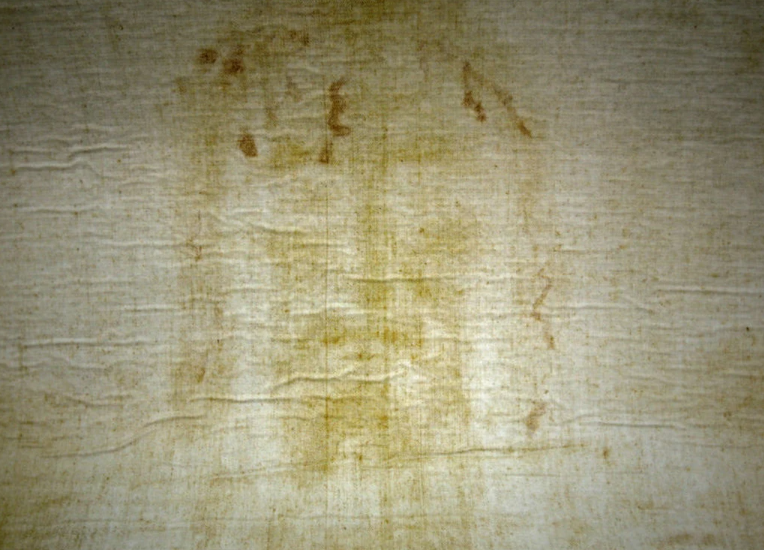
He studies the stain. “Let’s change Pepsi’s name to Pollock and sell her work online.” Then, in the next breath, he squints and quips, “Hold on a second… what the hell . . . I think I see Jesus’s face in that puke stain!”
“Ha-ha, very funny”, still, she turns the towel 180 degrees, tilts her head slightly, and studies the stain.
“Our lord savior, perpetually pictured in Pepsi’s puke! — or Pollock’s puke if we decide to move ahead with the name change,” her alliterative husband continues with a self-satisfying grin.
“This could be the financial windfall we’ve been waiting for!”
“It’s a laundry version of the miracle at Lourdes… the Tide Pod that Spied God!” He slips effortlessly into one of his riffs, wagging his finger enthusiastically above his head.
“I’ll call the Vatican and local paper; you work on logistics for backyard tours.”
She chuckles, turns on her heel, and heads down the stairs.
He’s unfazed by her absence.
Once he starts ranting, it’s got to run its course, “like diarrhea,” she would often say.
“We’ll need to erect a clothesline for the bath towel shroud of Jesus!”
“Maybe by the vegetable garden in the back, in front of the doubting toms and holy basil,” he shouts while spinning back to his work desk.
Halfway down the staircase, she responds sarcastically over her shoulder, “I’ll get on that right way,” tossing the rolled-up towel into the clothes hamper at the bottom of the stairs.
The morning sun finds its way through crowds of whispering pines and stoic oaks before crashing onto the skylight, splashing the inhabitants below in ghostly shadows of needles and oakleaf.
Peering over his coffee cup, he clears his throat – brushing aside the silence.
“We don’t fuck in the shower anymore.”
He takes a sip.
She raises an eyebrow, but not her eyes, working her butter knife methodically, like a skilled artisan, covering every nook and cranny of a slightly burnt English muffin.
A second passes.
“Fuck in the shower?” she scoffs incredulously, “Hell, I’d settle for a dry hump in the driveway.”
“Hmm. Interesting.” He takes another sip and studies his wife across the table. “Still pretty without makeup,” he thinks to himself.
Lifting her head, she takes a bite and shoots him a toothless smile, which he returns instantly (with a wink) before heading to the sink with his coffee cup.
“So,” he says, “What’s the plan today?”
She floats across the kitchen floor, meeting him at the sink, “I’m thinking of going to Mom’s to help in the yard.”
“After that, I’m free as a bird.”
“Maybe we can shower then?”
Standing directly behind him, she places her hand lightly on his lower back and slides her plate onto the kitchen counter before walking away.
He marvels at how she’s kept her figure. With his hand on his belly, he begins to second-guess his shower comment.
It’s their anniversary.
“By the way,” she says over her shoulder. “We’ve only done that like twice – maybe 3 times – in 30 years of marriage.”
He detects a hint of disappointment, and that famous quote from Cool Hand Luke, “What we’ve got here is failure to communicate,” plays on a loop in his head.
He wonders momentarily how many shower opportunities he’s missed out on.
The space between them has grown exponentially since the kids left, and lately, he wonders if it’s even navigable.
The kids were a bridge.
Now, the person he fell in love with is this spotty, blurry-edged figure on a distant shore, and he’s pretty sure that’s how he appears to her as well — spotty and distant, lost in his coffee, fantasizing about fucking in the shower.
In a strained and slightly desperate tone he pushes his words towards her “Strange how time clouds our perception of reality,” as if words can fix what feels irrevocably broken.
“Can you and the young lady step out of the car, please?”
The voice behind the mirrored shades was professional and pleasant, but the driver was reluctant to comply. The look of panic in his daughter’s eyes only hardened his hesitancy.
“I’m sorry, officer. Was I speeding?” the driver asks calmly, offering the officer his license and registration.
“Sir, I received a tip about your passenger’s medical condition. I need you and the young lady to exit the car NOW.”
“Daddy, please, don’t go,” the daughter implores her father, gripping her seatbelt tightly with both hands. Her knuckles are white, and her body visibly trembles.
“It’s OK, honey – just stay put.”
“Listen, officer. This girl is my daughter. She’s 13 years old. I’m her parent and legal guardian, and she is NOT getting out of this car.”
The officer takes a step back, draws his weapon, and points it at the father.
There’s a jarring change in tone as the officer’s jagged words erupt coarsely from his gravel-lined throat:
“Sir, this is your last warning—step out of the car NOW.”
“Jesus fucking Christ – what’s wrong with you?” the flinching father screams towards the officer, angrily throwing his license and registration out of the car window.
Worried and panicked, he turns to his daughter, who cannot speak – “Honey, you stay buckled – I’m going to talk with the officer.”
The father exits the car slowly – putting his hands above his head to show the officer he’s unarmed. The officer instructs him to turn and face the vehicle – before doing so, the father glances at the badge on the officer’s uniform – noticing the etching of four white crosses above and below the shield – the officer holsters his weapon, grabs the father by the back of the collar, and slams him onto the hood of the car before violently slapping handcuffs on him.
The father sees the horrified look on his daughter’s face; she wretches and vomits.
He is helpless.
“She was raped,” he growls at the officer who stands him up against the side of the car – “Six weeks ago, my baby girl was raped.”
“Not by the child in her womb,” the officer sneers callously.
“She’s a soul vessel now. Transporting her across state lines for reproductive care (the officer uses air quotes) is a crime.”
“You’re under arrest.”
Like a black and poisoned weed, the phrase “soul vessel” takes root in the father’s head. He had heard rumors about a network of like-minded Christian police officers across the United States working to enforce “God’s law,” especially as it pertained to unplanned pregnancies.
When he and his daughter worked out their visit to planned parenthood, they consciously mapped a backroads route, steering clear of major highways. “It’ll be safer this way,” he remembers assuring his daughter, whose biggest concern six weeks ago was getting the right cleats for soccer.
The officer places the defeated father in the back of the police cruiser and walks back to the car where the girl sits, still clutching her seatbelt. He opens the passenger door, reaches over her, and unbuckles the seatbelt, coldly instructing her to “exit the vehicle.”
The girl, expressionless, complies. When she gets out, he pushes her towards the back of the car, turns her harshly towards the trunk, and instructs her to place her hands on the vehicle.
The officer glances back at the father, wanting him to witness what comes next.
He takes out his Billy Club and tells the girl to spread her legs; while looking back towards her father, he gently taps the insides of her thighs, moving the club up towards her vagina. He leans into her, and she can feel the warmth of his breath on her neck. Through the stale scent of chewing tobacco and cheap cologne – he whispers, “We’ve got to keep that bun baking, little girl – that’s all that matters now.” – she turns her head in disgust.
She sees her father’s shadowy figure behind the cruiser’s tinted glass and imagines the steel edge of his restraints cutting into his wrists as he explodes in rage at the assault taking place before him. She looks past her father and notices the cruiser’s engine is still running. The tailpipe exhaust relentlessly pushes down on a patch of withering daisies—they bend and twist, but there’s no escape.
As the officer leans away to put the cuffs on the girl, she falls to the ground. He steps aside and smirks with disdain, staring momentarily at her before extending his hand. She looks up at him and sees her broken and crumpled self in the reflection of his sunglasses. She offers up her hand, her middle finger extended. The officer grabs her wrist and pulls her to her feet.
As she rises, she notices the gun in his holster, unsecured—she grabs it and is surprised at how easily it comes out. She takes one step back, points the gun at the officer, and (without hesitation) pulls the trigger.
The bullet shatters his sunglasses and tears through his left eye. Blood, shards of bone, and brain matter explode from the back of the officer’s head, spraying the soft beige dirt on the side of the road in red and pink.
The officer’s knees buckle, and he falls in a heap. The girl’s arm goes limp, and the gun falls loosely from her hand.
She walks purposefully and in silence towards the police cruiser. She passes by her father, who sits stunned, mouth agape, in the back seat—she never even glances at him. At the rear of the car, she squats down, gently pulls the daisies out of the ground, and holds them to her chest. She stands up, walks down an embankment on the side of the road to a running brook, places the flowers in the water, and watches them float away.
She retrieves the handcuff keys from the dead officer and walks to the cruiser to free her father. He hugs her immediately, but she’s unable to hug him back. Her arms hang heavy and motionless from her shoulders like slats of wood.
After a minute, she looks at him and says, “Take me away from here – there’s nothing here for me anymore. – there’s nothing.”






 bendingtheneedle