Dinner was different without the kids. Quieter, but also louder in its silence.
Jack watched his wife standing at the stove, one hand on her hip, the other dishing out steamed rice and saucy meat onto two dinner plates.
“May I have some more?” Jack said in his best Oliver Twist impersonation, which didn’t land at all – still, he chuckled to himself.
“Sorry, no vegetables tonight,” Judy said under wilted hair.
Jack quipped, “Never apologize for no vegetables – no-vegetables is my middle name.” Again, no response.
“Everything OK, hun?”
Judy turns on her heel, holding the two plates.
“I used fake chicken.”
“I can’t eat chickens or cows or pigs or anything with a face anymore.”
“I can’t do it.”
“I won’t do it.”
She blows a wisp of hair that’s fallen across her face.
“I have a face,” her husband says jokingly.
But she’s not smiling.
He goes on, “OK, Judy, what brought all this about?”
“Why the diatribe?”
She puts his plate down and quietly takes her seat across from him.
“And what in the world is fake chicken?” Jack asks.
She looks up at him. “It’s a combination of plant-based proteins, gluten, and seasoning.”
Jack stabs at his pile of fake chicken and rice, then gathers a forkful and raises it toward his wife. “Bon appétit.”
She flashes him a fake smile.
“And if you want to know, thinking is what brought this about.”
“And I’m not sure how I feel about your diatribe characterization”
Jack takes a bite, swallows, and flashes his own fake smile.
“Not bad. I mean, I don’t think Colonel Sanders is quaking in his boots, but honestly, it’s not bad. Can you pass the salt, please?”
Judy slides the Gromit salt shaker towards her husband, while peppering her own meal with Wallace.
“I drove by Simmons farm today on my way to the butcher. Saw a baby calf following her mamma cow in the field.”
Jack responds, “Uh huh.” he sees where this is heading.
With his head down, he keeps poking around the pile of fake chicken and rice. “See any chickens?”
Judy looks up from her plate, quietly exasperated.
“Don’t you ever wonder what they feel, emotionally?”
“Do they enjoy lying on the cool grass or bathing in the warm sun?
“Does that calf experience joy as he follows his mom across the field, or as he sleeps against her in the barn at night?” Her voice quaking.
Judy stiffens in her chair and clears her throat. “Lately, when I go to the meat department at Stop and Shop, I struggle to dissociate the cellophane packages of meat from the bucolic life these animals have on the farm.”
“I don’t want to be part of the chain of events that ends at my kitchen table.”
Jack looks up from his plate. He sees the tears running down his wife’s face.
“Honestly, hun, this fake chicken is fine. I’m totally OK with fake chicken from now on. Fake cows and pigs? Sure, why not?”
Judy smiles and slides Jack the Wallace pepper shaker.
My Paper, My Words is a collection of essays, stories, and poems that reflect the challenges of a middle-class husband and father trying to navigate a rapidly changing political, religious, and technological landscape of post-911 America.
Also, check out my AI music project, Sapient Rain, a human–AI musical collaboration. Sapient Rain’s music blends political fire, surreal storytelling, and nostalgic autobiography, delivered through lyrics that read more like literary vignettes than conventional songcraft.
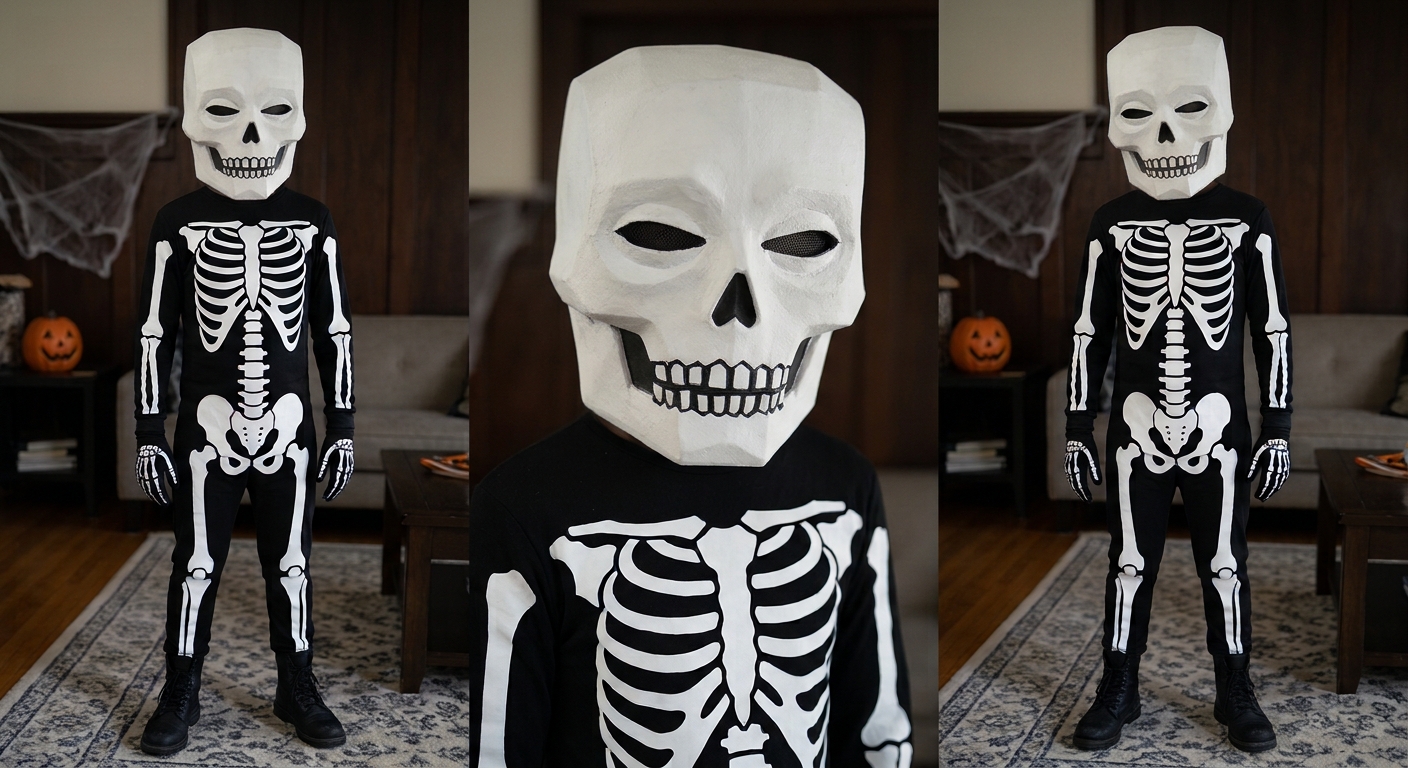
“What am I looking at”? The bewildered president of sales stares at a costume display mounted on an easel.
“Well, sir, it’s a skeleton.”
The president’s relaxed fingers form a fist. “I’m not a moron – I see it’s a skeleton – I know what white bones on black nylon represent – but there’s something a little off, and I can’t quite put my finger on it.”
“It’s a Down syndrome skeleton, sir,” the sales rep responds with a misplaced confidence that momentarily stuns the room to silence.
“A what?”
“A Down syndrome skeleton, sir.”
The rep continues, “We had our design team flatten the face, adjust the eye shape, the whole thing. We wanted customers to know immediately that it’s a Down syndrome skeleton.”
“Please stop saying the words ‘Down syndrome skeleton,'” the president says, stiffening his back. He looks at his secretary, whose eyes remain glued to her legal pad, then scans the room for hidden cameras before slowly redirecting his gaze to the sales rep.
“Are you fucking with me, son?”
“No, sir, I’m not.”
In between a sneer and a laugh, the president asks, “What in God’s name makes you think this is sellable? Seriously, who convinced you to pitch this?”
“My son, actually,” the sales rep replies, reaching into the breast pocket of his blazer.
He takes a few steps towards the president’s desk and hands him a photo.
The president gazes at the picture, then looks back at the man, then back at the picture, like he’s verifying a passport.
“Listen, I’m sorry for your situation and all, but this is not a good idea.”
“Why not?” For the first time since commanding the room, the salesman sounds indecisive.
“Because the shitstorm created by your little skeleton costume would put me out of business – that’s why.”
“Listen, I’ve occupied this chair for over two decades.” The president pats both armrests firmly. “I’ve learned a few things, and I’m telling you right now, ain’t nobody gonna buy what you’re trying to sell.”
“Parents of kids with Down syndrome might.”
There’s a slight pause before the president says matter-of-factly, “Sorry, I just don’t see a market for your skeleton.”
The salesman smiles warmly, “Respectfully, sir, I doubt you’ve ever considered such a market.”
Before allowing the president to respond, the salesman continues, “There are over six million people in the United States with an intellectual disability. There are thousands of schools, support organizations, and families.”
“I don’t have any reason to dispute your numbers, but the fact of the matter is, some people will accuse us of exploiting disabilities, and we can’t risk the fallout from that.”
“Or, the salesman raises his finger, “They’ll praise you for finally acknowledging they exist.”
“I know this is a tough sell, but hear me out.” The salesman relaxes his posture.
“Last Halloween my son wanted to be a skeleton. He looked at the costume package and asked me why none of the faces looked like his.”
The president allows him space to continue.
“My son knows he’s different. I can see it in his interaction with others, and he can feel that difference in his bones (the salesman and the president chuckle at the phrasing).”
The sales rep continues, “This simple idea humanizes him and others like him.”
The secretary reaches for a tissue and wipes a tear from her eye.
“Oh, for Christ’s sake, Margaret!”
“Here’s what I’m gonna do,” the president turns from his secretary to the sales rep, “I’ll talk to our marketing team and have them put together some concept testing. If they see a market, I’ll get back to you. OK?”
The president stands, gives the photo back to the salesman, and extends his hand.
“Fair enough.” He takes the photo, shakes the president’s hand, and walks out.
On the street, the salesman crumples the photo and drops it into the first trash can he passes. He’s got eleven more just like it in his briefcase.
He smiles, takes out his phone, dials, and waits.
“Yeah, it’s me. He bought it. He’s gonna push concept testing. One down, eleven manufacturers to go!”
“Meet me at Barney’s for Drinks?”
Barney’s afternoon crowd hums, fueled by ambition and booze.
The salesman turns to his colleague, “We need to strike while the DEI iron’s hot, because once the country’s new president takes office, retards are back to being retards – that mutha-fucker is stone cold.”
His colleague winces at the language; the salesman finishes his scotch with a gulp and sets the glass down on the bar, loud enough for the bartender to know he wants another.
The colleague chimes in, “I don’t know, Bill; I’m starting to get a bad feeling about your skeleton.”
“What the fuck are you talking about, Hal?”
“This is a win-win. We’re doing the right thing societally (that’s still a thing, right?) – we’re padding our bank accounts, AND we’re helping downsies feel better about themselves. So, actually, it’s a win-win-win – 3 Ws! – When’s the last time you had 3 Ws on any fucking thing, Hal? Never, that’s when! Have another on me,” he motions to the bartender.
Bill was known company-wide for burying people verbally to get them to agree or simply wave the white flag – it didn’t matter which.
Having a conscience and drinks with Bill was always exhausting. But Hal was close enough professionally and personally to push back. He emerges from Bill’s verbal assault: “But why the fake Down Syndrome son story? Why not pitch the skeleton costume without the pictures?”
Bill stares at Hal like a village elder about to dispense pearls of wisdom. “The pictures are the hook, Hal. Without a hook, we’re just hungry fishermen.” He gets up and heads out of the bar, leaving Hal staring at his bourbon.
Bill studies his whiteboard calendar while kneading a stress ball labeled “Squeeze me Bitch”. Three months had passed since concept testing his Skeleton costume, which exceeded all expectations. Three manufacturers had signed licensing agreements. Two more were negotiating.
Bill checks his watch, spins towards his office door, and springs out of his seat. He walks down the hall to the conference room, several minutes ahead of his meeting with another major retailer. Through the glass wall, he watches a focus group wind down.
The moderator thanked everyone for participating.
Smiling parents gathered their notepads and personal items. Children ran toward the snack table.
One boy lingered. He couldn’t have been more than ten.
He was holding one of the prototype costume packages.
Bill had sat in on several of these focus groups, and he just wanted to get into the room and prep for his meeting. He barely noticed the boy until he heard the moderator ask, “So what did you think?”
The boy looked down at the package and shrugged.
Then he smiled.
“He looks like me. Just a little.”
The room went quiet.
“I never knew a skeleton that could look like me.”
The moderator smiled warmly and quietly scribbled on his clipboard.
Bill couldn’t stop staring.
Some data points hit harder than others.
Inclusion wasn’t something this boy woke up thinking about, and he certainly wasn’t tuned into any “movement” or “cause.” He didn’t care about representation, DEI politics, or market opportunities for multinational retailers.
In that moment, he was happy because, for the first time in his life, something in the world mirrored him.
A simple thing.
A silly thing.
A skeleton.
With a hand on his shoulder, the boy’s misty-eyed mom guides him toward the exit. She looks over her shoulder and mouths “thank you” to the moderator.
As they pass, the boy waves at Bill through the glass.
Bill lifts his hand instinctively, still holding the “Squeeze Me Bitch” ball, which he drops immediately as he smiles back at the boy.
Then they were gone.
Bill enters the conference room quietly, feeling a little untethered. The room suddenly feels more vital than before.
For his entire professional life, Bill swam in the transactional waters of sales and marketing, where “moral” causes were rarely the prime objective, but more often than not, a matter of happenstance. His money-first philosophy made him rich.
Alone in that fishbowl of a conference room, Bill found himself thinking about the months spent calculating the value of his Down Syndrome skeleton, without ever considering its worth.
The distinction agitated him.
He thought about the crumpled photographs.
The fake son.
The fabricated story.
All those expressions of false sincerity rehearsed late in the evenings in front of his bathroom mirror.
Bill struggles to reconcile the countless hours spent building the machinery around a meticulously calculated lie with a boy’s genuine, achingly real smile.
He catches his barely visible reflection in the glass wall and almost doesn’t recognize himself.
As his company’s top salesman, he starts to wonder if everything that goes into selling something successfully hasn’t somehow blinded him to what truly matters.
His phone buzzes.
A text from Hal.
Three more manufacturers interested! Drinks at Barney’s tonight?
Bill looks at the message.
Then at the empty hallway.
Then back at the phone.
After a long moment, he types:
Not tonight, I got a thing.
He sets his phone face down and sits in silence until he hears the muffled voices of his meeting approaching the conference room.
The clients amble in, and for the first time in his career, Bill is at a loss for words.
My Paper, My Words is a collection of essays, stories, and poems that reflect the challenges of a middle-class husband and father trying to navigate a rapidly changing political, religious, and technological landscape of post-911 America.
Also, check out my AI music project, Sapient Rain, a human–AI musical collaboration. Sapient Rain’s music blends political fire, surreal storytelling, and nostalgic autobiography, delivered through lyrics that read more like literary vignettes than conventional songcraft.
My Paper, My Words is a collection of essays, stories, and poems that reflect the challenges of a middle-class husband and father trying to navigate a rapidly changing political, religious, and technological landscape of post-911 America.
I throw up a little in my mouth every time I watch Pete Hegseth and Donald “Biff Tannen” Trump pumping their fists and boasting (like teenage boys bathed in testosterone) about America’s war with Iran.
I’m infuriated by a Congress of mostly male members sitting on their hands and refusing to hold the Trump administration accountable for continually violating the Constitution and throwing our country and the world into chaos.
More than any time in our history, we need strong and ethical women leaders in government, industry, and education to help turn the tables on the toxic masculinity hurtling humanity towards a dark void of unending violence and oppression.
For the last several months, I’ve been using Suno, an AI Music Engine, to showcase lyrics and poems I’ve written and published to my personal blog, Bending the Needle – Truth Hurts.
I’m releasing several singles next week on Spotify, iTunes, and YouTube Music. The singles share a theme of women struggling against the unrelenting pressure of a patriarchal society.
I’m including public links to these new songs on Suno as a preview of their upcoming releases on streaming services.
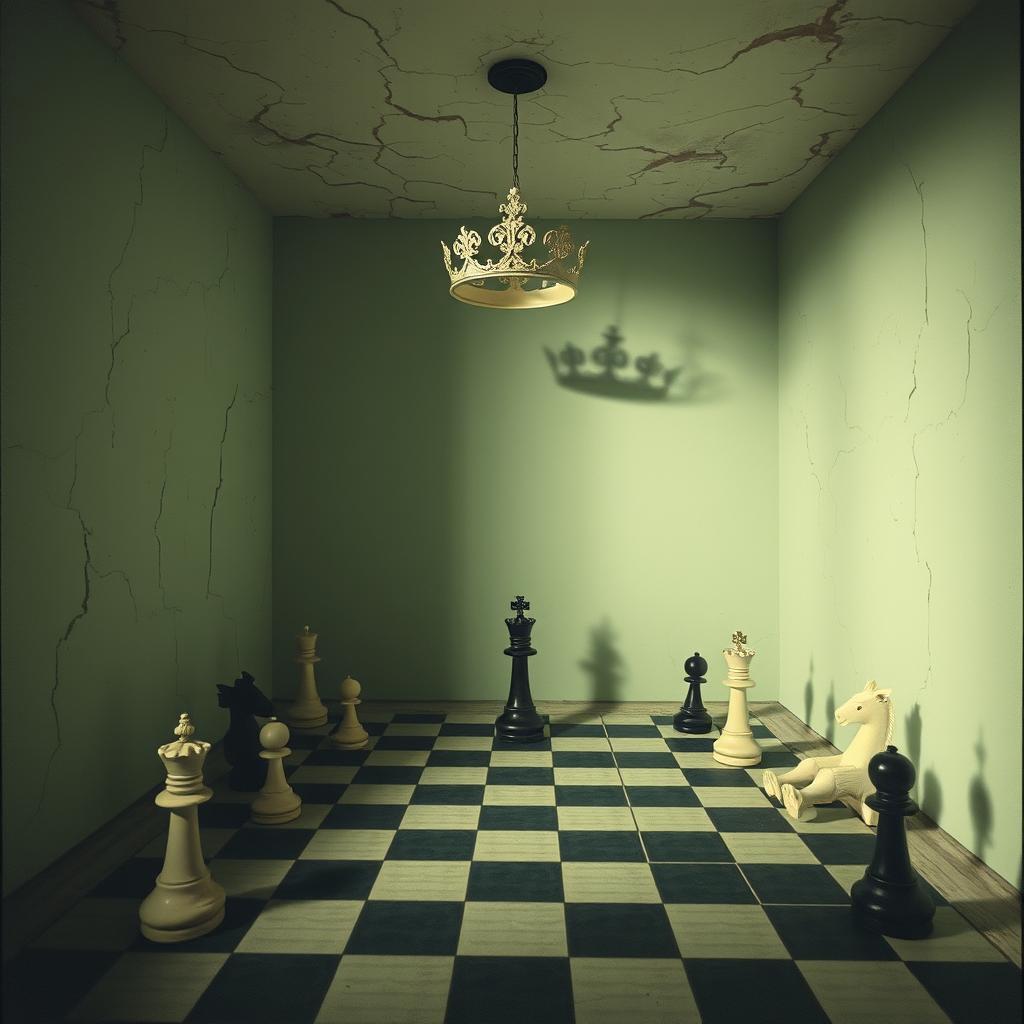
The Queen’s Gambit
I wrote the lyrics to this song after re-watching “The Queen’s Gambit”, a limited series on Netflix about a troubled female chess prodigy fighting her way to the pinnacle of a profession dominated by men – finding redemption on sixty-four squares of sanctuary.
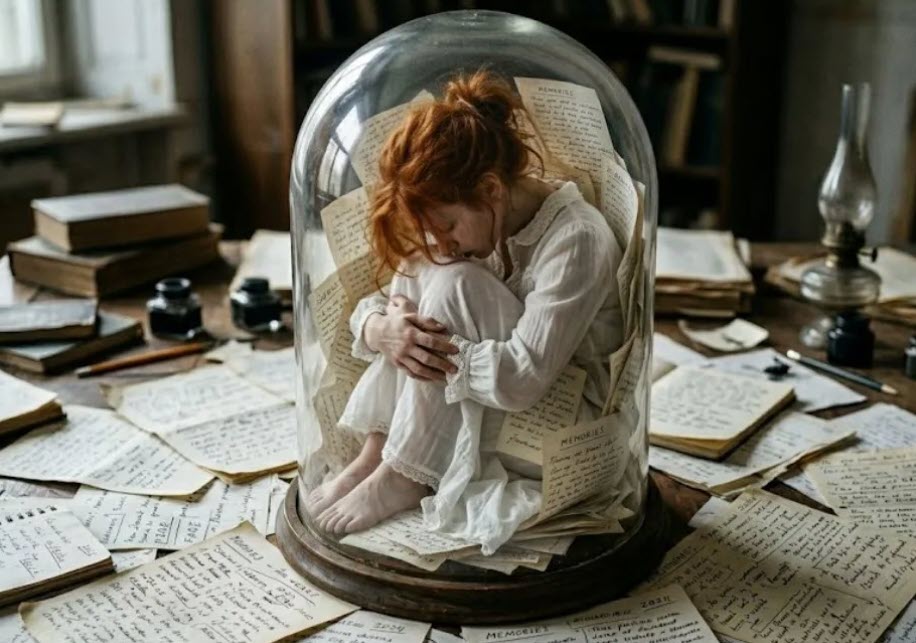
Trapped Inside the Bell Jar is about the poet Sylvia Plath’s struggle with mental illness, patriarchy, and a cheating husband, and how she used emotional pain and public shame to fuel a posthumous rise to literary greatness.
Originally, I used Suno to select a New Wave musical framework to showcase my poem, The Ballad of New Bobby and Joan.
This rap version tells the story of two fed-up musicians at the top of their game, protesting the greed, authoritarianism, and corruption in American politics today.
A Message from Michelle is both a tribute and a plea to the former first lady to continue to speak out strongly against the hateful and dangerously authoritarian Trump regime. I know it’s a lot to ask of Michelle Obama, who was crystal clear on what America would become under a Trump presidency.
Fury and Flow is a fun take on the adventures of Dorothy from The Wizard of Oz as she tries to overcome the obstacles that keep her from getting back to her Kansas Kin.
My Paper, My Words is a collection of essays, stories, and poems that reflect the challenges of a middle-class husband and father trying to navigate a rapidly changing political, religious, and technological landscape of post-911 America.
For me, the biggest perk of retirement by far is time. Time to spend as you see fit, doling it out for reading, learning, creating, or just being available to my kids.
Lately, I’ve been reading essays and biographical pieces about Sylvia Plath, the brilliant and emotionally troubled American poet and author who took her own life in February of 1963.
Plath’s confessional poetry and prose unpacked gender constraints, patriarchy, and mental health with a raw and emotional acuity that made her a feminist icon. Her passionate and tumultuous marriage and very public divorce from poet Ted Hughes was emotionally distressful and humiliating, but also a catalyst for the most creative period of Plath’s career as a writer.
I haven’t read Plath’s most seminal works, “The Bell Jar” and “Ariel”, but with retirement, I have the opportunity to do so.
I wrote the following poem about Sylvia Plath and used the AI music engine Suno to put my words to song. Here is the link to the song, Trapped Inside the Bell Jar.
Trapped Inside the Bell Jar
Sylvie and Ted lie in a bed of false hope and betrayal in poems and prose where no one knows veracity from portrayal
A suffocating madness let’s the dullness settle in a manic wit, the perfect fit of grit inside her grin
Trapped inside the Bell Jar skinned knees pulled to her chest Cracked, she cried and fell far too far to be addressed
Her pain becomes obsession A catalyst of sorts Words explode in expressions of poisonous retorts
She digs her knife into the headboard etching hearts into the wood shavings fall like paper dolls of misspent womanhood
Trapped inside the Bell Jar skinned knees pulled to her chest Cracked, she cried and fell far Too far to be addressed
With tape and wet tea towels sealing windows and locked doors the sad girl that things happen to dies on the kitchen floor
“Please call Doctor Horder “ Her note said nothing more Nick and Frieda safe and sound Behind their bedroom door
Trapped inside the Bell Jar skinned knees pulled to her chest Cracked, she cried and fell far Too far to be addressed
My Paper, My Words is a collection of essays, stories, and poems that reflect the challenges of a middle-class husband and father trying to navigate a rapidly changing political, religious, and technological landscape of post-911 America.
I watched the Netflix series “The Queen’s Gambit” several years ago, and I enjoyed it thoroughly.
On a cold and sleety yesterday, I sat with my Rover client Gracie (a sweet Golden Retriever Border Collie mix) and binge-watched the red-headed Kentucky orphan Beth Harmon’s rise from the dreary corridors of the Methuen Home for Girls to the chandelier-lit halls of a grand, prestigious Soviet-era building to defeat Russian Chess Master and nemesis, Vasily Borgov.
Anyway, I woke up this morning inspired by the series and composed a poem about Beth Harmon, then set the words to music using the AI Music Engine Suno.
My Paper, My Words is a collection of essays, stories, and poems that reflect the challenges of a middle-class husband and father trying to navigate a rapidly changing political, religious, and technological landscape of post-911 America.
Most of us don’t get to choose the last thing we hear before dying. The grim reaper doesn’t give a shit about playlists or our affinity for the sound of waves crashing or birds singing.
The man in the blue blazer’s final breath came at 12:46 PM to the shitty sounds of stylized Jazz, and a Bluetooth-wearing mortgage lender yelling, “It’s 2008 all over again!”
With his elbows on the table and bowed head, he looked like any other Barnes and Noble Cafe customer – bewitched by books and coffee. Sure, his posture might have seemed “a little off” to the passersby, but not enough to alert the reference librarian or the pimply-faced adolescent behind the Cafe’s counter.
People don’t care about one another the way they used to. Most of us drift through our day in cell phone-induced trances, grossly unobservant of the world 3 feet beyond the nose on our faces. And so, the man in the blue blazer sat dead and unbothered for nearly eight hours (and one shift change) until a nudge from the Cafe’s manager caused him to fall and strike his head with a sickening biological splat, like a dropped bowling ball wrapped in salami.
Bill and Susie are wiping down the espresso machine when their pale, shell-shocked manager shuffles towards them.
“What’s up, boss? Are you OK?”
The question startles the manager from his stupor. He looks at Bill and says flatly, “He’s dead.”
“Who’s dead?” Bill and Susie chime in unison, causing Susie to laugh and blurt out, “Jinx on you!” while pointing and smiling at Bill demurely, “You owe me a coke, dude!” – Susie’s been crushing on Bill for months and can’t figure out why he hasn’t picked up on her willingness.
Their manager raises his arm slowly and points towards the Cafe’s seating area. Bill and Susie look wide-eyed at one another and dash from behind the counter. Susie sees the man lying on his back, turns immediately on her heel, and heads towards the front of the store, yelling, “Call 911, call 911!”
“Jesus Christ, boss, what happened?”
The manager’s voice is unsure and thready, “I told him we were closing, and that he needed to complete any purchases. When he didn’t respond, I touched him on the shoulder, and he fell.” His voice rattles with panic, “He must have been dead already; I mean, he never even tried to break his fall.”
The manager falls quiet before whispering, “His lips are so blue.” Bill looks at the lifeless body in front of them, turns toward his boss, and acknowledges softly, “So fucking blue.”
“You know, he looks familiar, boss. Not as a customer, but from out there,” Bill nods over his shoulder towards the storefront windows and the world beyond. He brushes by his manager and kneels next to the body. “He’s dead for sure,” and then shockingly reaches into the man’s blazer.
The manager directs a rage-filled whisper at Bill, “What the fuck are you doing? Are you crazy? The police are on their way!”
“I know – I just want to check his driver’s license. I know this guy, boss.”
“Who gives a fuck if you know him? Leave him alone! Wait for the police, for Christ’s sake.”
The manager’s head is on a swivel, his darting eyes surveying the store for straggling customers and police. The last thing he needs is for his manager to hear about a Barnes and Noble employee mugging a dead man.
Bill opens the wallet. A folded piece of paper falls out. Without thinking, he puts it in his pocket and rummages for the dead man’s driver’s license.
Susie comes running from the front of the store, out of breath, “Betty called 911. Bill, what are you doing?”
Bill holds up the license and smiles, “Ted Diamond. 22 Fairview Lane,” before slipping it back into the card slot and sliding the wallet into the breast pocket of the blazer.
A police cruiser glides quietly into the nearly empty parking lot, splashing the storefront in blue and red lights. Car doors slam, and a few seconds later, the reference librarian directs two officers toward the Cafe.
As the officer approaches, Bill looks at Susie and shoves his hands into his pockets nervously, only to discover the piece of paper that fell from the wallet. He looks up and realizes there’s no time to put it back. His fingers draw the paper into his sweaty palm, and he squeezes tightly, digging his fingernails into it.
“I’m Officer Jacobson, and this is Officer Tyler.” Can someone tell me what happened? Bill’s boss offers an outstretched hand to the officer, “Hi, I’m Jack Bellinger, the manager. I found the gentleman about 15 minutes ago. He was sitting at a table, and I nudged him when he didn’t respond to me — then he fell off his chair. I’m pretty sure he’s dead.”
There’s a commotion at the front of the store as the EMTs come rushing in. They begin chest compressions and CPR immediately, checking intermittently for breathing and a pulse. It’s not long before futility settles heavily on their shoulders.
The Cafe manager is off to the side, nodding and speaking with the officers in hushed tones. The EMTs wheel the man in the blue blazer slowly out the front of the store with no sense of urgency. His story ends officially in the parking lot of Barnes and Noble.
Bill pulls the folded and crumpled paper from his pocket.
“What’s that?” Susie whispers.
“A note. It fell out of the dead guy’s wallet when I was looking for his license – I didn’t have time to put it back.” A look of guilt and shame fell over Bill’s face.
“What’s in it?”
“I don’t know. I haven’t read it.”
Susie puts her arm around Bill’s waist and slow-walks him to the Cafe’s kitchen. Bill brushes aside poppy seeds and crumbs from the counter, unfolds the paper, and smooths it out with both hands.
Dear Mary,
I know what you’re doing and who you’re doing it with.
A barista?
How pathetically proletarian.
It’s over. We’re done. You’re DONE!
Ted
Susie steps back slowly from the counter and stares at the back of Bill’s head, his damp, thick curls resting on his shoulders. She watches him slowly take a cigarette lighter from his pocket. In a dream-like sequence, he walks to the sink, holds the note by the corner, and lights it on fire. Then he pulls a sandwich bag of little white pills from his other pocket, empties the bag into the sink, and washes them down the drain.