We’re living in a world where the rules of decorum from the office of the president have gone out the window. Decorum won’t return until Trump is pushing up daisies.
Donald Trump said he was glad that Robert Mueller, a decorated soldier and respected public servant, was dead. In true Trump fashion, he went to his Truth Social platform and posted:
Robert Mueller just died. Good, I’m glad he’s dead. He can no longer hurt innocent people! President DONALD J. TRUMP
Of course, there was an immediate backlash to the president’s comment from decent people and public servants, which was in stark contrast to the all-too-familiar silence from the testicle-free, scared-shitless Republican representatives in Congress.
After Trump’s post, I got to thinking, if I’m lucky enough to be around when Donald Trump dies, will I celebrate? Will I dance in the streets with the millions of like-minded Americans? If I do, does that make me a hypocrite for chastising the President for celebrating the death of Robert Mueller?
No, it does not.
In the same way, I would have celebrated Hitler’s death and been saddened by President Roosevelt’s death. In the same way, I would be heartened by the death of Vladimir Putin and crestfallen at the death of Volodymyr Zelenskyy. In the same way, I would have celebrated with my Munchkin brothers-in-arms at the death of the Wicked Witch of the East.
It’s natural to celebrate the death of vicious people.
Vladimir Putin attacked a sovereign nation without provocation, murdered civilians, kidnapped children, and committed war crimes. I’ll be glad when he’s dead.
In America, we celebrated the life and actions of Claus von Stauffenberg cinematically in the movie Valkyrie. Claus von Stauffenberg attempted to kill Adolf Hitler. If he had succeeded, would we have mourned Hitler’s death, or would there have been a global three cheers to Claus?
I did not feel glad or elated when Mueller, a decorated soldier and public servant, died. Robert Mueller was a decent man who served his country with honor.
Under Donald Trump, America has become the kind of nation we used to despise and oppose on the world stage — a loud-mouthed aggressor nation that denies the sovereignty of other countries and the rights of citizens and immigrants in its own, a nation that shows a blatant disregard international law, attacks the free press, bastardizes and uses religion as a tool of the state and cozy’s-up to other leaders of other authoritarian states. That is the America we’ve become, and it’s not even debatable.
To put it in a simpler context that Trump supporters might understand, Trump’s America is the Biff to Marty McFly, the Darth Vader to Luke Skywalker, the slimy Nazi general in Raiders of the Lost Ark to Indian Jones. We are officially the bad guys, and no amount of “USA! USA! USA!” chanting can cover up that fact.
And the main reason we have become the bad guy is pretty fucking simple to understand – it’s because we’re being led by a morally decrepit criminal, a convicted felon, a credibly accused pedophile and rapist, a seditionist who gave a blanket pardon to violent convicted felons who attacked our democracy. So yeah, when that guy dies, I might raise a glass.
Unfortunately for us, after Trump passes, there’s a fresh bumper-crop of the morally crazy waiting in the wings and they’ve got a blueprint in hand.
My Paper, My Words is a collection of essays, stories, and poems that reflect the challenges of a middle-class husband and father trying to navigate a rapidly changing political, religious, and technological landscape of post-911 America.
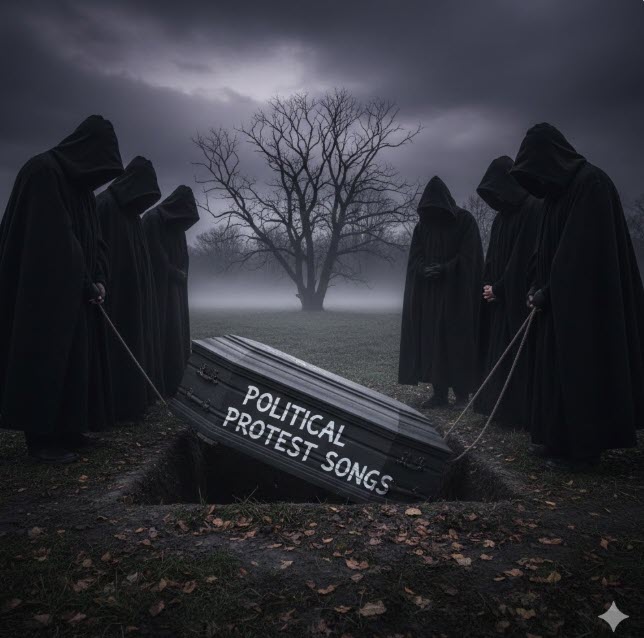
In these turbulent times, why don’t we have protest songs like we used to?
What cultural or sociological changes have made the protest song less popular?
Why Protest Songs Once Thrived
During the 1960s-70s, the economics and centralized nature of the music industry, combined with a shared identity amongst America’s youth (cemented by America’s role in the Vietnam War), provided fertile ground for protest songs to gain popularity.
In the America of the 1960s-70s, young, college-educated, middle-class Americans (a significant demographic) aligned with the counterculture, civil rights, and anti-war movements. This alignment allowed protest songs to find a home in the collective conscience of a generation of young Americans.
The conditions that led to the popularity of protest songs in the 1960s-70s included:
Mass movements: Civil rights and anti-war protests created collective spaces where songs unified crowds.
Limited media outlets: Radio and television amplified protest songs as rallying cries, giving them cultural dominance.
Shared identity: Songs like Bob Dylan’s “Blowin’ in the Wind” or Marvin Gaye’s “What’s Going On” became shorthand for generational values.
Why Protest Songs Declined
Protest songs haven’t disappeared, but their cultural role has shifted due to the following conditions:
Fragmented music culture: Streaming platforms and niche genres mean fewer “universal” hits that everyone hears.
Commercial pressures: Record labels often avoid overtly political content to maximize global market appeal.
Social media activism: Twitter, TikTok, and Instagram now serve as protest tools, reducing reliance on music as the primary vehicle for dissent.
Individualized expression: Protest today often emphasizes personal identity and micro-activism rather than collective anthems.
Cultural fatigue: In turbulent times, audiences may feel overwhelmed, turning to escapism rather than politicized art.
Today, activism often happens through digital platforms, fragmented music genres, and individualized expression rather than mass sing-alongs. Changes have made protest songs less central to political movements.
So, while video killed the radio star in the 1980s, changes in the music industry, commercialization, and the rise of social media may have killed the political protest song today — and that’s a fucking shame, because if there was ever a time for unifying the power of music against political corruption and maleficence, it’s today.
Here are some political protest songs’ that I’ve been working on (my lyrics, Suno’s music). Feel free to share or comment on them!
Donald Trump won’t be around forever (thank God) – but his impact will linger like a fart in a closet. Trump provides a blueprint for other candidates who might possess similar autocratic tendencies. This song is a “heads-up” about the barbarians who will gather at the gates of our democracy once Trump is dead and gone.
These lyrics are from a poem I wrote after the Charlie Kirk assassination. It’s about how dangerously divided America is and the potential for spiraling political violence that seems increasingly likely in the second Trump term.
I wrote the poem “Get a Load of Elon” after seeing the sickening footage of that smiling dirtbag laughing it up and swinging a chainsaw around like some fake-ass efficiency hero. Fuck that guy and everything he represents. I think Suno captured the tone I was looking for on this one.
Donald Trump is my fat, ugly muse. There, I said it. Shame on everyone who voted for this criminal, and fuck all the cowards in Congress who are failing to stand up to this two-bit thug. And that’s all I have to say about this song.
I came up with these lyrics based on a poem I wrote in 2017 called “Resist”, which was about pushing back against Donald Trump and his policies, which I saw as an existential threat to America’s democracy. I added several new verses for the song and reworked the verse that would become the chorus. I can see the Dixie Chicks or Dolly Parton belting this out. I’m not a big fan of country or rockabilly music, but I think that musical style works well with the words here.
Suno and I, channeling our best Pat Benatar impression. I wrote the poem “Oligarchic Kings” recently and published it on my blog. I changed it quite a bit for the song version.
When I wrote this poem originally, I wrote it to the cadence of Supercalifragilisticexpialidocious from “Mary Poppins” and included it in my book “Imagine There’s No Donald” (available on Amazon😉 ). I asked Suno to create a power-pop song from the poem. It’s the only poem I used as is (not changing any of the words). It’s a campy/poppy version of a Disney classic.
My Paper, My Words is a collection of essays, stories, and poems that reflect the challenges of a middle-class husband and father trying to navigate a rapidly changing political, religious, and technological landscape of post-911 America.
The collision of technology, conservative ideology, and the incel movement in American culture is resulting in a volatile mix of online radicalization, misogyny, and political extremism.
By amplifying exclusionary beliefs, digital platforms normalize violence and connect isolated individuals into communities that can spill over into real-world harm.
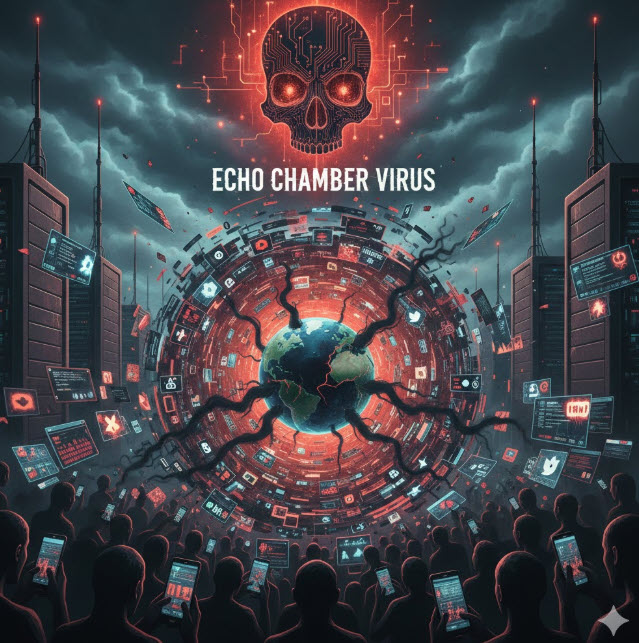
Online platforms, social media, and dedicated incel sites provide a fertile breeding ground and powerful echo chamber for individuals with extremist and misogynistic views. It is in these intellectually dank digital hangouts that we encounter the danger of algorithmic amplification and the recommendation systems, which push members of these online communities deeper into radical content, normalizing hostility toward women and liberal values.
There is also a porn-component to this toxic, digital culture. Studies show links between incel misogyny and online pornography, which reinforces distorted views of women and sexuality.
What’s even more concerning is the acceptance of misogynistic beliefs and behaviors as “boys will be boys” by the Trump administration, which is tapping into the aggrieved community of non-college-educated males, not for the purpose of assisting them, but rather to turn their growing sense of isolation and anger towards college-educated women into votes.
There is an overlap between MAGA conservatism and ideology and the INCEL movement in America, specifically around the anti-feminist narrative, where both groups tend to frame feminism as a threat to traditional gender roles.
INECELS adopt a worldview of being “dispossessed men,” which resonates with broader conservative rhetoric about cultural decline and loss of male authority.
It’s at our own peril that we turn a blind eye to the alignment of incels and far-right groups around exclusionary, anti-democratic, and xenophobic tendencies. Isolated and digitally immersed young men in America are susceptible to being drawn to extremist online communities that distort masculinity and normalize misogyny.
The blending of conservative ideology with incel dogma and rhetoric widens the divide over gender, sexuality, and democracy, fueling broader culture wars in a country that is more culturally polarized than ever.
I wrote a poem a while back about the radicalization of young non-college-educated males through far-right groups around exclusionary, anti-democratic, and misogynistic views. I used the AI music platform Suno to put my poem to music.
My Paper, My Words is a collection of essays, stories, and poems that reflect the challenges of a middle-class husband and father trying to navigate a rapidly changing political, religious, and technological landscape of post-911 America.
Let’s Ask Arty uses existing Artificial Intelligence (AI) technology to query LLMs about politics in these troubled times.
What is Democratic Socialism?
Democratic socialism is a political and economic philosophy that advocates for a democratic political system alongside a socially owned or regulated economy. It emphasizes both political democracy and economic fairness, aiming to reduce inequality through collective decision-making and public control over key sectors.
How does Democratic Socialism differ from “Traditional” Socialism?
Democratic socialism differs from traditional socialism primarily in its commitment to political democracy and its approach to economic reform. While both advocate for social ownership and reducing inequality, democratic socialism insists on maintaining democratic institutions and civil liberties.
Key Differences Between Democratic Socialism and Socialism
Feature
Democratic Socialism
Traditional Socialism
Political System
Emphasizes democracy, free elections, and civil liberties
May support centralized or authoritarian governance
Economic Ownership
Advocates social ownership of key industries, not all
Seeks complete public ownership of the means of production
Implementation Method
Uses gradual reforms through democratic processes
Often involves revolutionary change or centralized planning
Individual Freedoms
Strong focus on protecting rights and liberties
May subordinate individual rights to collective goals
Examples
Nordic countries (in practice), Bernie Sanders (in rhetoric)
Historical models like USSR, Maoist China
🧠 Philosophical Distinctions
Democratic socialism is a subset of socialism that integrates democratic governance with socialist economics. It aims to balance individual freedom with collective welfare.
Socialism, broadly defined, focuses on economic equality and communal ownership, but doesn’t always specify how political power should be structured.
🔍 Why the Confusion?
In the U.S., the term “socialism” has often been used pejoratively, leading to misunderstandings. Democratic socialism is sometimes conflated with authoritarian socialism or communism, despite its emphasis on democracy and civil rights.
Core Principles of Democratic Socialism
Political democracy: Free elections, civil liberties, and rule of law are essential. Democratic socialists reject authoritarianism in all forms.
Economic democracy: Major industries and services—like healthcare, education, and energy—should be publicly owned or heavily regulated to serve the public good rather than private profit.
Social justice: Policies aim to reduce inequality, protect workers’ rights, and ensure universal access to basic needs like housing, healthcare, and education.
Environmental sustainability: Many democratic socialists advocate for green policies and sustainable development as part of their platform.
🏛️ How It Differs from Other Systems
System
Ownership Model
Political System
Economic Focus
Democratic Socialism
Public/social ownership of key sectors
Democratic (multi-party)
Equity, welfare, and public good
Social Democracy
Capitalist economy with strong welfare state
Democratic
Redistribution through taxation
Communism
Full state ownership of all property
Often authoritarian
Classless, stateless society
Capitalism
Private ownership of most industries
Democratic or authoritarian
Profit-driven, market-based
Sources: Wikipedia, Britannica, Democratic Socialists of America
🧠 Key Takeaways
Democratic socialism is not communism—it supports democracy and civil liberties.
It seeks to balance individual freedoms with collective responsibility.
It’s gaining traction in the U.S. through figures like Bernie Sanders and organizations like the Democratic Socialists of America.
What Countries have implemented Democratic Socialism most effectively? How can one measure the success of Democratic Socialism?
Nordic countries like Sweden, Norway, Denmark, and Finland are widely considered the most effective examples of democratic socialism. Success is typically measured through metrics like economic equality, universal access to services, democratic stability, and overall well-being.
🌍 Countries with Effective Democratic Socialism
These nations blend market economies with strong welfare states and democratic institutions:
Sweden: Known for universal healthcare, tuition-free education, and strong labor protections.
Norway: Combines oil wealth with public ownership and generous social programs.
Denmark: Offers robust unemployment benefits, free education, and high civic trust.
Finland: Ranked as the world’s happiest country, with strong public services and low corruption.
Iceland and Netherlands also integrate democratic socialist principles, though with more market liberalism.
These countries maintain multi-party democracies, free markets, and civil liberties, while ensuring universal access to healthcare, education, and housing.
📏 How to Measure Success in Democratic Socialism
Success isn’t judged solely by GDP—it’s about how well a society meets collective needs.
Key metrics include:
🧮 Economic and Social Indicators
Income equality: Measured by the Gini coefficient—Nordic countries consistently rank among the most equal.
Universal access: Availability of healthcare, education, housing, and childcare regardless of income.
Labor rights: Strong unions, collective bargaining, and worker protections.
Social mobility: Opportunities for upward movement across generations.
😊 Quality of Life Metrics
Happiness and well-being: Finland, Denmark, and Sweden top global happiness rankings.
Life expectancy and health outcomes: Universal healthcare contributes to better public health.
Education outcomes: Free and high-quality education systems promote equity and innovation.
🗳️ Democratic Health
Political participation: High voter turnout and trust in institutions.
Freedom of press and speech: Strong protections for civil liberties.
Low corruption: Transparent governance and accountability.
My Take
Language resonates, and misinformation denigrates.
Americans have a Pavlovian response to the word “socialism.” If Socialism is in the name, most Americans want nothing to do with it. When they hear it, they blanch and recoil reflexively, never taking the time to differentiate Socialism from democratic Socialism.
Many citizens view Socialism as anti-American, even if it has the word “democratic” attached to it.
For years, politicians in both parties have successfully leveraged America’s innate fear and disgust of Socialism to denigrate and lie about Democratic Socialism. For example, as Arty stated, it falsely equates it to traditional Socialism or even communism.
But voters in New York City are on the verge of shaking things up in American politics by electing a Democratic Socialist to lead the most strategic, culturally and financially influential city on Earth.
Zohran Mamdani is a young, charismatic, and savvy candidate, but for most Americans (even New Yorkers), youth, charisma, and political chops have never been enough to clear the hurdle of being a Socialist.
So, why is Mamdani on the verge of becoming New York City’s mayor?
What’s changed?
I’d argue that the most significant change driving America’s willingness to look at Democratic Socialism with a more critical and unbiased eye is the policies of Donald J Trump, which are turbo-charging the rise in economic inequality across the country.
Middle- and lower-income New Yorkers are feeling the impact of unfair economic policies and the very real consequences of those policies — and on this election day, New Yorkers are a microcosm of Americans across the country.
And I believe that in America today, the conceptual and philosophically based fear of Democratic Socialism is less than the very real fear of not being able to afford housing, groceries, healthcare, and education.
Americans are looking for a government that balances economic fairness and personal freedom. Most Americans don’t want to abolish capitalism entirely, but rather tame its excesses, which have exploded over the last several decades and worsened further under Donald Trump.
The gap between the wealthiest Americans and the rest of the population has widened, with income and wealth increasingly concentrated at the top. According to Arty, economic inequality has been trending upward for decades:
Post-WWII to 1970s: This era saw broadly shared economic growth. Incomes across all levels rose at similar rates, and the middle class expanded.
Since the 1970s, Income growth has slowed for most Americans, while the top 1% has captured a disproportionate share of income and wealth gains.
By the 2010s and 2020s: The top 5% of households saw their share of total income rise significantly, while the bottom 60% experienced stagnation or modest gains.
And by comparison, income inequality pales to the extreme wealth inequality in America, where the top 1% of households now hold more wealth than the bottom 90% combined.
But it’s what lurks behind the wealth and income numbers that truly matters and should keep average Americans up at night.
Rising inequality affects:
Social mobility: It’s harder for people to move up the economic ladder.
Political power: Wealth concentration can distort democratic processes.
Economic stability: Inequality can lead to reduced consumer spending and greater financial volatility.
Democratic Socialism isn’t just a policy shift—it’s a philosophical challenge to the idea that markets should dominate society. By prioritizing human needs over profit, it exposes the limitations and inequalities of unfettered capitalism. That’s why it’s seen as a threat—not because it seeks chaos, but because it seeks a different kind of order.
We’re about to see just how fed-up New Yorkers are with our current system of government. Today’s mayoral election may be a harbinger of change and political revolution in America.
My Paper, My Words is a collection of essays, stories, and poems that reflect the challenges of a middle-class husband and father trying to navigate a rapidly changing political, religious, and technological landscape of post-911 America.
Let’s Ask Arty uses existing Artificial Intelligence (AI) technology to query LLMs about politics in these troubled times.
Query 1: Donald Trump stated that Ronald Reagan “Loved tariffs for our country and its national security.” Does Donald Trump’s statement accurately reflect President’ Reagan’s views on tariffs?
No, Donald Trump’s statement that Ronald Reagan loved tariffs for our country and its national security does not accurately reflect President Reagan’s views on tariffs.
Reagan was a strong advocate for free trade and often spoke against tariffs, viewing them as harmful to economic prosperity.
In fact, in a 1987 national radio address, Reagan explicitly criticized tariffs, stating they “hurt every American” and arguing that protectionist policies like tariffs lead to “shrinking markets, collapsing businesses, and widespread job losses”. He believed that while tariffs might seem patriotic or protective in the short term, they ultimately stifle innovation, provoke retaliatory trade measures, and damage the broader economy.
Query 2: Donald Trump stated that an Ad created by the Government of Ontario of Ronald Regan criticizing tariffs was “fake.” Is Donald Trump telling the truth? Was the ad fake?
No, Donald Trump was not telling the truth.
A recent controversy arose when the Ontario government aired an ad using clips from Reagan’s 1987 speech to highlight his anti-tariff stance. Donald Trump responded by calling the ad “fake” and claimed it misrepresented Reagan’s views. However, fact-checks and the full context of Reagan’s speech confirm that he genuinely opposed tariffs and championed open markets.
While Reagan did occasionally use targeted trade measures for strategic purposes, his overall philosophy was rooted in free and fair trade, not broad protectionism or nationalistic tariff policies.
So, while Trump may frame tariffs as essential for national security, invoking Reagan as a supporter of such policies misrepresents the former president’s well-documented economic views.
My Take
Anyone with a cell phone or computer can do a quick Google search and know definitively that Trump was lying about the Ontario government’s Ad being fake and lying about Ronald Reagan “loving tariffs.”
It took me less than 5 minutes to debunk President Trump’s statements.
The more prescient issue is how fluidly this administration weaponizes lying.
Most politicians (and non-politicians for that matter) lie to get out of a jam. The Trump administration’s repetitive lying is part of a strategy to manipulate public opinion.
This administration is taking a page from the 1930s Nazi party playbook, where writings and speeches consistently emphasized emotional appeal, repetition, and the subordination of truth to political strategy.
More from Arty
According to Arty, Joseph Goebbels, the Nazi Minister of Propaganda, believed:
Propaganda as Emotional Weaponry: Goebbels believed propaganda should appeal to emotions, not intellect. He once wrote that the goal was to make people “succumb to it utterly and can never again escape from it”.
The “Big Lie” Technique: While the phrase “big lie” is often attributed to Hitler, Goebbels is frequently associated with the idea that a lie, if colossal and repeated often enough, becomes accepted as truth. He accused others—like Winston Churchill—of using this method, even as he employed it himself.
Truth as a Tool, Not a Principle: Goebbels preferred to use partial truths or truths that served his agenda, but he was not above outright lies when necessary. He believed that the effectiveness of propaganda lay in its ability to shape perception, not in its factual accuracy.
Propaganda as Art and Power: In a 1936 commentary, Goebbels described propaganda as “a political power of the highest magnitude,” emphasizing its role in shaping national spirit and identity.
Creating a False Reality: His propaganda efforts aimed to construct an alternate reality in which the Nazi regime appeared righteous and justified, even as it committed atrocities. This manipulation of truth was central to his strategy.
The Trump administration has been widely criticized for employing repeated falsehoods as a political strategy, often aligning with the idea that repetition can foster belief.
Here are several notable examples of falsehoods repeated by Donald Trump and his administration:
1. Election Fraud Claims
Claim: The 2020 election was stolen or rigged.
Reality: These claims were repeatedly debunked by courts, election officials, and independent audits.
Strategy: Trump and allies repeated this claim hundreds of times across rallies, social media, and interviews, leading many supporters to believe it despite a lack of evidence. This lie continues to this day.
2. COVID-19 Misinformation
Claim: COVID-19 would “disappear” or be “under control.”
Reality: These statements contradicted public health data and expert warnings.
Strategy: Trump repeated these claims to downplay the crisis and maintain public confidence, even as cases surged.
3. Tariff Economics
Claim: China was paying the tariffs imposed by the U.S.
Reality: Importers, usually American businesses and consumers, pay tariffs.
Strategy: Trump repeated this economic falsehood to frame the trade war as a win for the U.S., despite its domestic costs.
4. Climate Change Denial
Claim: Climate change is a hoax or exaggerated.
Reality: Scientific consensus affirms climate change as real and human-driven.
Strategy: Trump used repetition to cast doubt on climate science and justify environmental deregulation.
5. George Soros Conspiracies
Claim: Soros funded protests and radical left movements.
Reality: No credible evidence supports these accusations.
Strategy: Trump repeatedly invoked Soros as a villain to energize his base and delegitimize opposition.
A 2023 study published in Public Opinion Quarterly found that repeated falsehoods from Trump’s presidency significantly influenced public misperceptions, especially among partisan audiences. The more often Trump or officials from his administration repeated lies, the more likely people were to believe them, even after the falsehoods had been publicly debunked.
Let’s Ask Arty uses existing Artificial Intelligence (AI) technology to query LLMs about politics in these troubled times.
Query 1: Is Vice President JD Vance’s claim that democrats are demanding billions of dollars in taxpayer-funded healthcare for illegal immigrants true?
What the Vice President Said:
Vance stated that Democrats are “threatening to shut down the entire government because they want to give hundreds of billions of dollars of health care benefits to illegal aliens”.
He cited two Biden-era programs that he claims provided emergency healthcare and Affordable Care Act (ACA) subsidies to undocumented immigrants
What the Facts Show
Federal law prohibits undocumented immigrants from receiving federally funded healthcare programs like Medicare, Medicaid, and ACA subsidies.
The Democratic budget proposal aims to:
Extend ACA subsidies for legal residents and citizens.
Reverse Medicaid cuts from the Trump administration’s “One Big Beautiful Bill” that would affect lawfully present immigrants, such as refugees and those with Temporary Protected Status.
There is no provision in the Democratic proposal that offers free healthcare to undocumented immigrants.
What Democrats Say:
House Minority Leader Hakeem Jeffries stated: “Federal law prohibits the expenditure of taxpayer dollars on providing healthcare to undocumented immigrants. Nowhere have Democrats suggested that we are interested in changing federal law”.
Senate Minority Leader Chuck Schumer called the Republican claims “utter bull,” emphasizing that the dispute is about healthcare for American citizens, not undocumented immigrants
The claim that Democrats are shutting down the government to fund healthcare for illegal immigrants is FALSE. The dispute centers around extending healthcare subsidies for legal residents and reversing Medicaid cuts—not providing benefits to undocumented immigrants.
Here’s a detailed breakdown of how healthcare access works for different immigrant groups in the U.S., based on federal law and recent policy developments:
U.S. Citizens and Naturalized Citizens
Full access to federally funded healthcare programs like:
Medicaid
Medicare
Affordable Care Act (ACA) marketplace subsidies
Eligibility based on income, age, and other standard criteria.
This includes green card holders, refugees, asylees, and those with humanitarian parole or Temporary Protected Status (TPS).
Medicaid & CHIP (Children’s Health Insurance Prhogram):
Eligible after a 5-year waiting period, unless exempt (e.g., refugees, asylees, veterans).
ACA Marketplace Subsidies:
Eligible immediately if lawfully present.
State Variations:
Some states offer Medicaid/CHIP to lawfully present children and pregnant women regardless of entry date.
🔵 DACA Recipients (Deferred Action for Childhood Arrivals)
Not eligible for Medicaid, CHIP, or ACA subsidies under federal law.
May access state-funded programs in select states.
Undocumented Immigrants
Not eligible for:
Medicaid
Medicare
ACA marketplace coverage or subsidies
Emergency Medicaid:
Covers urgent medical conditions (e.g., ER visits, childbirth) regardless of status.
Community Clinics & Safety-Net Providers:
Often serve undocumented individuals, especially in mixed-status families.
⚪ Mixed-Status Families
Households with members of different immigration statuses (e.g., U.S.-citizen children and undocumented parents).
Citizen children may qualify for Medicaid or CHIP.
Parents may avoid seeking care due to fear, confusion, or legal uncertainty.
🏛️ Recent Policy Changes & Debates
The Trump administration’s “One Big Beautiful Bill” restricted Medicaid eligibility for many lawfully present immigrants.
Democrats are seeking to restore pre-2025 rules, allowing broader access for refugees, asylees, and parolees.
Query 2: What changes to ACA subsidies are in Republican’s Big Beautiful Bill and how will that affect healthcare costs for American citizens who get their health insurance from the ACA?
The Republican-backed One Big Beautiful Bill Act makes significant changes to the Affordable Care Act (ACA) subsidies, and the consequences for Americans relying on ACA marketplace insurance could be severe.
🧾 What Changed in the Bill
No extension of enhanced ACA subsidies: The bill omits renewal of the expanded premium tax credits that were introduced during the pandemic and extended through 2025.
Cuts to Medicaid and ACA eligibility:
Stricter eligibility rules for Medicaid.
ACA subsidies will no longer be available to many lawfully present immigrants, including refugees and asylum seekers.
Codifies Trump-era ACA rules: These rules increase cost-sharing and reduce affordability for middle-income enrollees.
Impact on Healthcare Costs
Premiums could double: Without the enhanced subsidies, average monthly premiums may rise from $888 to $1,904—a 114% increase.
Out-of-pocket costs will spike: Families could face $900 higher deductibles and $313 more in monthly premiums.
Millions may lose coverage:
The Congressional Budget Office estimates 4.2 million people will lose ACA coverage by 2034 due to subsidy expiration.
Another 3.1 million could lose coverage due to ACA marketplace changes in the bill.
Uninsured rate will rise: The U.S. uninsured population could grow by 16 million over the next decade.
🧠 Who’s Most Affected
Working- and middle-class Americans who don’t qualify for Medicaid but rely on ACA plans.
Residents of Republican-controlled states that haven’t expanded Medicaid.
Self-employed individuals and gig workers who buy insurance on the marketplace.
This policy shift is at the heart of the current government shutdown, as Democrats are refusing to pass a funding bill that doesn’t include a renewal of these subsidies
Query 3: Where do the savings from cuts to the ACA in the Big Beautiful Bill go? Who benefits from getting rid of ACA subsidies?
The savings from cuts to the Affordable Care Act (ACA) in the One Big Beautiful Bill Act are largely redirected toward tax relief and deficit reduction, with the biggest beneficiaries being high-income earners, corporations, and defense spending priorities. Here’s how it breaks down:
💰 Where the Savings Go
Estimated $1.1 trillion in cuts to Medicaid and ACA subsidies over 10 years.
These savings are used to:
Fund tax cuts for individuals and corporations.
Offset increases in defense and border security spending.
Reduce the federal deficit, though critics argue the impact is minimal compared to the human cost.
🏦 Who Benefits Most
Group
How They Benefit
High-income earners
Receive larger tax breaks due to reduced progressive taxation and capital gains reforms.
Corporations
Benefit from lower corporate tax rates and relaxed healthcare mandates for employees.
Defense contractors
Gain from increased military and border security allocations funded by healthcare cuts.
Private insurers
May profit from reduced competition and fewer subsidized plans on ACA marketplaces.
🚫 Who Loses Out
Middle-class and working Americans who rely on ACA subsidies to afford insurance.
Rural hospitals and clinics, which face reduced Medicaid reimbursements and may close.
Lawfully present immigrants, including refugees and asylum seekers, who lose access to subsidized coverage.
The bill’s supporters argue it reduces “wasteful spending,” but critics say it shifts costs from the wealthy to vulnerable populations and destabilizes the healthcare system
My Take
JD Vance was lying when he said, “Democrats are threatening to shut down the entire government because they want to give hundreds of billions of dollars of health care benefits to illegal aliens.”
The Republican Speaker of the House, Mike Johnson, was lying when he said, “The Democrats said instead that they wanted to give healthcare to illegal aliens instead of keeping critical services provided for the American citizens.”
Both these men, along with the President and Republicans in Congress, want to feather the pockets of the wealthiest Americans and fill the coffers of corporations at the expense of the poor and middle class.
I hope Democrats stick to their guns in the Government funding debate and fight republican cuts to ACA subsidies, which will hurt middle-class Americans by doubling monthly healthcare premiums, increasing out-of-pocket costs for families, and resulting in a loss of healthcare coverage for millions of Americans.
My Paper, My Words is a collection of essays, stories, and poems that reflect the challenges of a middle-class husband and father trying to navigate a rapidly changing political, religious, and technological landscape of post-911 America.
Let’s Ask Arty uses existing Artificial Intelligence (AI) technology to query LLMs about politics in these troubled times.
Query: Can you please fact check the speech and statements that President Trump gave at the United Nations on 09/23/2025?
President Donald Trump’s speech to the United Nations General Assembly on September 23, 2025, included several claims that have been widely fact-checked and found to be misleading or false across multiple topics. Here’s a breakdown of the most notable inaccuracies:
🌍 Claims About Ending Wars
Trump stated:
“I ended seven wars… Cambodia and Thailand, Kosovo and Serbia, the Congo and Rwanda, Pakistan and India, Israel and Iran, Egypt and Ethiopia, and Armenia and Azerbaijan.”
Fact Check:
Cambodia and Thailand: A truce was reached, but it involved mediation from other leaders and was not solely brokered by Trump.
Kosovo and Serbia: No war was actively occurring; Trump’s administration previously brokered an economic agreement, not a peace treaty.
Congo and Rwanda: Fighting continues despite a peace agreement; rebel groups were not part of the deal.
Egypt and Ethiopia: No war existed—only a dispute over a dam project.
Pakistan and India: India denies Trump’s involvement in the May ceasefire.
Israel and Iran: A ceasefire followed U.S. airstrikes on Iranian nuclear facilities, but the situation remains volatile.
Armenia and Azerbaijan: A peace declaration was signed, but its long-term impact is uncertain.
🌡️ Climate Change and Renewable Energy
Trump called climate change “the greatest con job ever perpetrated on the world” and claimed renewable energy sources “don’t work” and are “too expensive.”
Fact Check:
In 2024, renewables and nuclear accounted for 40% of global electricity generation, with solar and wind surpassing coal in the U.S..
Over 90% of new renewable projects are now cheaper than fossil fuel alternatives.
Solar PV and onshore wind were 41% and 53% cheaper, respectively, than the lowest-cost fossil fuels.
📉 Economy and Poll Numbers
Trump claimed:
“I have the highest poll numbers I’ve ever had.”
Fact Check:
Public polling averages show his approval rating around 42–44%, down from 51–52% earlier in the year.
No public data supports the claim of record-high approval.
🛂 Immigration
Trump described U.S. immigration laws as “suicidal” and blamed them for economic and social decline.
Fact Check:
These statements are opinion-based and not supported by data presented in the speech. Experts widely dispute the characterization of immigration laws as inherently destructive.
🕊️ Criticism of the United Nations
Trump said:
“All they seem to do is write a really strongly worded letter and then never follow that letter up.”
Fact Check:
While the U.N. has been criticized for slow responses, it continues to play active roles in peacekeeping, humanitarian aid, and global coordination. Trump’s portrayal oversimplifies its functions
My Take
I’ve given up on President Trump ever speaking truthfully about anything. Whenever he opens his mouth, lies spill out. Lying is his default setting.
I can’t see how anyone with even an ounce of intelligence could watch that speech and not be embarrassed and ashamed of who we put in office.
We all knew the speech (like all of Donald Trump’s speeches) would be littered with lies and misinformation, so no surprise there. But the boorish and self-congratulatory tone was off the charts, even for Trump. If the delegations had any courage at all, they would have stood up and walked out.
Through his organization Turning Point USA (TPUSA), Charlie Kirk became a significant force in conservative youth politics by tapping into a feeling of cultural displacement among young white men—especially those outside elite institutions—by validating their frustrations and offering a political identity that felt empowering.
He successfully rebranded conservatism for youth by leaning into cultural grievances, opposing progressive ideas (like DEI, CRT, gender fluidity), which resonated with young men who felt blamed or sidelined in mainstream discourse.
In many ways, Charlie Kirk’s meteoric rise embodies the quintessential American success story, where money, power, and fame are all that matter and where kindness, empathy, and service to others are for suckers.
On the surface, some of what Charlie Kirk did and achieved seems almost noble. He reached out to a segment of society that felt politically voiceless and culturally alienated, and he gave them a voice. He recognized the underrepresentation and an utter lack of organized advocacy for non-college-educated white males in America and championed their needs.
The problem was how Charlie Kirk framed their economic disenfranchisement.
Kirk sold young white non-college-educated males on the simplistic notion that the source of their economic disenfranchisement were immigrants, women, minorities, and wokeism, when in reality, their alienation from mainstream American society and its institutions and their feeling of lost purpose and status stems from economic and social shifts that have eroded the traditional path of a stable, middle-class life for those without a bachelor’s degree.
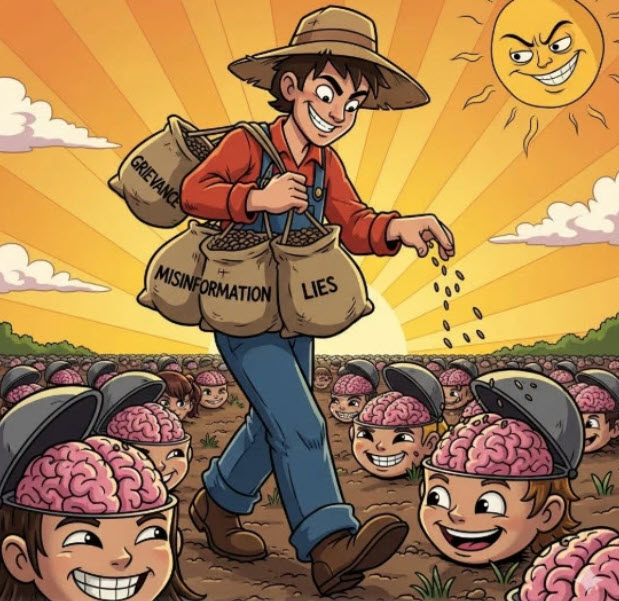
When a large segment of the population feels economically useless and politically invisible, it creates fertile ground for resentment, polarization, and instability. Discontentment is low-hanging fruit for the opportunistic and power-hungry, and Trump and Kirk cultivated and harvested that low-hanging fruit with great success, while continuing to spread the seeds of grievance, misinformation, and lies across the fertile minds of disaffected American youth for fame, fortune, and power.
Charlie Kirk and Donald Trump are emblematic of the deep rot in America’s political system, where politicians and influencers exploit the disaffected for their own personal gain, indoctrinating followers with cultural hot-button issues and identity politics to the point where the cultivated group doesn’t even care that they’re not being helped.
Like Trump, Kirk was never interested in helping his followers; he was only interested in exploiting them. To Charlie Kirk, America’s disaffected youth were a cash crop.
Genuine solutions to political disempowerment and economic disenfranchisement are complicated, expensive, and require systemic intervention from empathetic, pragmatic, and intelligent leaders who are genuinely interested in helping others. Amplifying polarization, promoting misinformation, and framing politics as a zero-sum cultural war are not solutions; those actions ensure the status quo.
We must connect the disaffected to hope and aspiration, rather than hatred and anger. It’s one thing to say, I feel your pain, quite another to do the hard work of alleviating the pain – and as we see with Trump and saw with Charlie Kirk, it’s a lot easier and more lucrative to point a finger and say, “them, they, those people, they’re the reason you are not flourishing.“
Doing the hard work to bring the disaffected back into the fold means investing in government-sponsored programs, training, and empathy, and those things are a tough sell in today’s political environment.
My Paper, My Words is a collection of essays, stories, and poems that reflect the challenges of a middle-class husband and father trying to navigate a rapidly changing political, religious, and technological landscape of post-911 America.
Let’s Ask Arty uses existing Artificial Intelligence (AI) technology to query LLMs about politics in these troubled times.
Query 1: What is gerrymandering?
Gerrymandering is the practice of manipulating the boundaries of electoral districts to favor a particular political party, group, or incumbent. It’s a way of shaping the political landscape—literally—by drawing district lines in a way that influences election outcomes.
Query 2: How does gerrymandering work?
There are two main tactics used in gerrymandering:
Cracking: Splitting up a group of voters (usually of the opposing party) across multiple districts so they don’t form a majority in any of them.
Packing: Concentrating a group of voters into one district to reduce their influence in other districts.
Query 3: Why is gerrymandering (which seems like cheating) allowed?
Great question—and you’re absolutely right to call it out as feeling like “cheating.”
So why is gerrymandering allowed?
Constitutional Loophole
The U.S. Constitution requires redistricting every 10 years after the census to reflect population changes, but it doesn’t specify how districts must be drawn.
That power is left to the states, and in most cases, state legislatures control the process—which means the party in power can draw maps to its advantage
Supreme Court Decisions
In Rucho v. Common Cause (2019), the Supreme Court ruled that partisan gerrymandering is a “political question” and not something federal courts can regulate. This gave states a green light to continue the practice without federal oversight.
Earlier rulings had chipped away at protections in the Voting Rights Act, making it harder to challenge racial gerrymandering as well.
Query 4: Why does gerrymandering persist even though the public views it as an unfair practice?
Gerrymandering persists due to:
Entrenched Interests: Politicians benefit from drawing safe districts, so there’s little incentive to change the system.
Lack of Transparency: Redistricting often happens behind closed doors, with minimal public input.
Single-Party Control: When one party controls both the legislature and the governor’s office, they can gerrymander with few checks.
Query 5: Have there been efforts to reform gerrymandering at the state and federal level?
Some states have adopted independent redistricting commissions to reduce bias, but these reforms are uneven across the country. Congress has tried to pass national legislation to ban gerrymandering, but those efforts have stalled due to partisan gridlock.
Query 6: Which political party gerrymanders more aggressively?
Although both major political parties in the U.S. have used gerrymandering to gain electoral advantage, recent data suggests that Republicans have been more aggressive and systematic in their use of the tactic, especially in key battleground states.
Query 7: Is it true that when put to a congressional vote to end gerrymandering, the vast majority of Democrats voted Yes, and all Republicans voted No?
Yes, in recent congressional efforts to ban gerrymandering—particularly through the Freedom to Vote Act and the earlier For the People Act—Democrats overwhelmingly voted in favor, while Republicans uniformly opposed the measures.
This stark divide reflects broader tensions over voting rights, election integrity, and partisan control of the redistricting process.
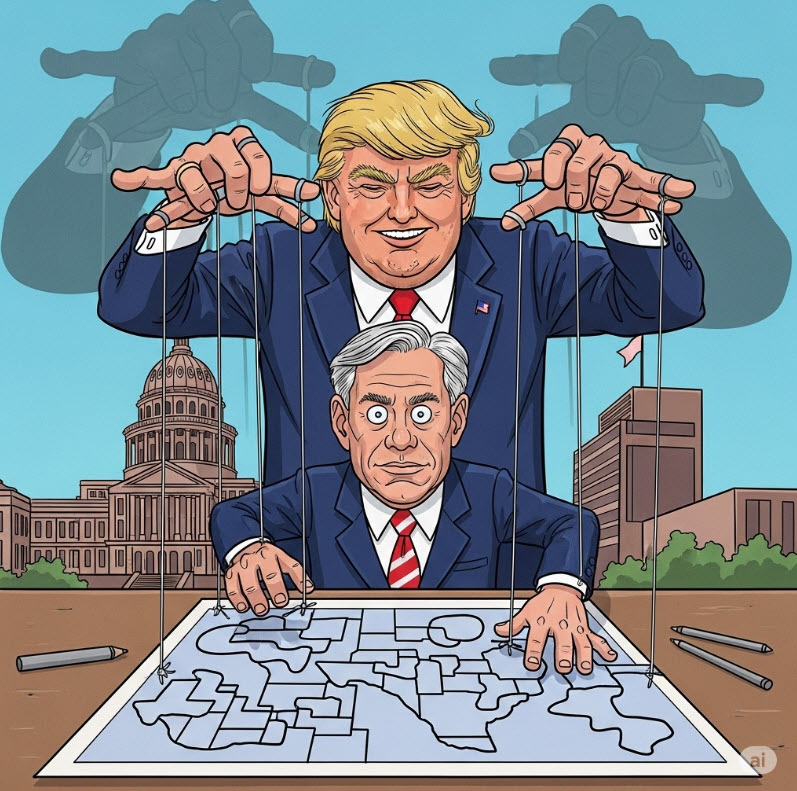
Query 8: In 2025, Did President Trump request that Governor Abbot of Texas to gerrymander districts in Texas?
Yes, according to multiple reports, former President Donald Trump has actively encouraged Texas Governor Greg Abbott and Republican lawmakers to redraw congressional districts in Texas to favor the Republican Party.
What Trump Requested
Trump reportedly asked Abbott to call a special legislative session to redraw Texas’s congressional map in a way that could flip up to five seats from Democrats to Republicans.
In a CNBC interview on August 5, 2025, Trump stated, “We are entitled to five more seats” in Texas, signaling his belief that redistricting should be used to secure partisan advantage.
Query 8a: What has been the political fallout of President Trump’s request to redraw districting maps in Texas?
Political fallout from Trump’s request includes the following:
Governor Abbott added redistricting to the special session agenda, citing a controversial memo from the U.S. Department of Justice that questioned the legality of certain districts based on racial composition.
Democratic lawmakers fled the state to prevent a quorum and block the vote, triggering a constitutional standoff and threats of arrest from Abbott.
The redistricting plan is widely seen as part of a broader strategy to entrench Republican control ahead of the 2026 midterms and potentially influence future presidential elections.
Critics argue this effort undermines democratic norms and disproportionately targets districts with large Black and Latino populations.
The term “Trumpmandering” has emerged to describe this aggressive form of partisan redistricting.
My Input
Gerrymandering is a form of cheating and should be illegal, regardless of which party practices it.
Suppose a political party can’t win an election based on the policies it champions and implements. In that case, they shouldn’t be allowed to rig the outcome in their favor with the stroke of a redistricting pen – that’s ludicrous and unethical.
Recent polling in Texas shows thatmost Texans oppose gerrymandering.Texans aren’t stupid. They understand Governor Abbot’s motivation. They see the unquestioning loyalty, knee-bending, and ring kissing as a blatantly partisan power-grab that serves Trump and Governor Abbot but does nothing for the citizens of Texas.
The backlash in Texas to a corrupt process where politicians pick their voters instead of the other way around has been swift and decisive, particularly among Democrats and independents.
The sentiments nationally are similar, with voters across party lines supporting independent redistricting commissions and opposing partisan manipulation of district maps. For example, a recent poll in Ohio showed 57% of voters supported a neutral redistricting commission when asked in unbiased language—even though the measure was ultimately defeated due to misleading ballot wording.
If Texas succeeds in its efforts to gerrymander districts, it will be another nail in the coffin of American democracy.
My Paper, My Words is a collection of essays, stories, and poems reflect the challenges of a middle-class husband and father trying to navigate a rapidly changing political, religious, and technological landscape of post-911 America.
Emoluments are a salary, fee, or profit from employment or office.
The Emoluments Clause of the US Constitution aims to prevent corruption and foreign influence on government officials.
The Qatari Jet Controversy
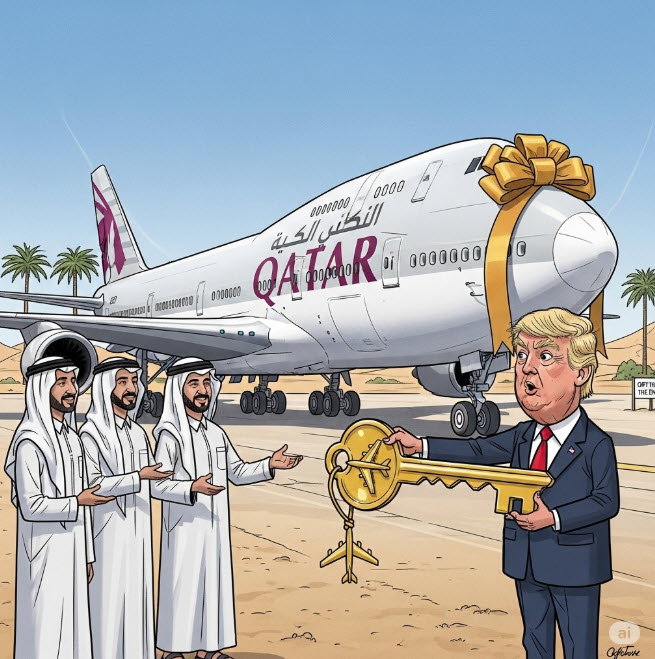
When Donald Trump accepted a 747-8 luxury jetliner from the Qatari government, it raised concerns of a potential violation of the Foreign Emoluments Clause of the US Constitution, which prohibits federal officeholders from accepting gifts, payments, or titles from foreign governments or the US government without the consent of Congress.
I doubt Donald Trump, who demonstrates ignorance and disdain for our Constitution on a regular basis, give’s a flying fuck about the Emoluments Clause. According to Donald Trump, “It would be stupid not to take the gift.”
Here are the tids and the bits:
Qatar reportedly gifted a luxury Boeing 747-8 to President Trump, intended for use as Air Force One and later transfer to his presidential library.
Critics argue this is a clear violation of the Emoluments Clause, especially since the jet is valued at $400 million or more.
Legal experts and former ethics officials say the gift appears to benefit Trump personally, even if routed through the U.S. military.
A DOJ memo reportedly justified the acceptance, but its contents haven’t been publicly released and are now the subject of a lawsuit
And although Trump claims the plane is a “GIFT, FREE OF CHARGE,” the American taxpayer will foot the bill for retrofitting the plane, just so our American Dumbo can fly his Qatari Jumbo.
The cost estimate for retrofitting the gifted jet liner for presidential use is between $400 million and $1 billion or more, the latter amount taking into consideration advanced security systems, encrypted communications, anti-missile defenses, and a full sweep for espionage threats.
The Qatari Jet Controversy isn’t the only potential violation of the Emoluments clause. Here’s a look at other Trump political initiatives and actions that have enriched him personally during his presidency.
Political Initiatives that Enriched Trump Personally
Retention of Business Empire
Trump refused to divest from his businesses while in office, maintaining ownership and control of the Trump Organization.
His properties—including hotels, golf courses, and real estate—continued to operate and profit during his presidency.
Foreign Government Patronage
Over 150 foreign officials from 77 countries stayed at or hosted events at Trump properties.
The Chinese government alone reportedly spent at least $5.5 million at Trump-owned venues.
Domestic Government Spending
U.S. government agencies spent taxpayer money at Trump properties, including Secret Service lodging and event hosting.
State governments also used Trump venues for official functions, raising concerns under the Domestic Emoluments Clause.
Promotion of Trump-Branded Products
Trump promoted personal products like branded Bibles, cologne, and even guitars during his presidency.
His media ventures, including Truth Social and Trump Media & Technology Group, gained visibility and investment while he was in office.
International Real Estate Deals
Trump’s business pursued or maintained real estate developments in Saudi Arabia, Oman, and the UAE, some allegedly funded by foreign entities.
These ventures continued without congressional approval, despite constitutional requirements.
Emoluments Clause Violations? You Be the Judge!
The U.S. Constitution contains two key provisions:
Clause
Description
Alleged Violation
Foreign Emoluments Clause
Prohibits federal officials from receiving gifts, payments, or benefits from foreign governments without congressional consent (Article I, Section 9, Clause 8)
Trump received millions from foreign governments via business transactions without congressional approval
Domestic Emoluments Clause
Prohibits the president from receiving any benefit from the federal or state governments beyond salary (Article II, Section 1, Clause 7)
Trump profited from federal and state spending at his properties
Should a sitting president be allowed to retain ownership of private businesses that receive payments from foreign or domestic governments?This question strikes at the heart of the Emoluments Clause debate. Trump’s refusal to divest created a direct conflict of interest and undermined the Constitution’s anti-corruption safeguards.
My Paper, My Words is a collection of essays, stories, and poems reflect the challenges of a middle-class husband and father trying to navigate a rapidly changing political, religious, and technological landscape of post-911 America.



 bendingtheneedle