Tag Archives: Israel
Let’s Ask Arty About the Lead-Up to the War with Iran

Let’s Ask Arty uses existing Artificial Intelligence (AI) technology to query LLMs about politics in these troubled times.
Q1 – What did US intelligence reporting suggest about Iran’s threat to the United States before the US joined Israel in their bombing campaign against Iran?
US intelligence reporting, as reflected in publicly available accounts and statements cited in news coverage, suggested there was no clear imminent threat to the United States from Iran in the period immediately before the U.S. joined Israel in striking Iranian targets.
The most explicit articulation of this came from Joe Kent, Director of the National Counterterrorism Center, who resigned on March 17, 2026, stating that “Iran posed no imminent threat to our nation.”
Q2 – Can you break down America’s core intelligence assessment before the strikes?
No imminent threat to the U.S. homeland: Joe Kent’s resignation post directly challenged the administration’s justification for military action, asserting that intelligence did not show an immediate danger to the United States.
Critics argued the U.S. acted without a triggering intelligence warning: Analysts at institutions like Brookings and media outlets such as The Guardian described the strikes as a “war of choice,” implying that intelligence did not support claims of an urgent threat.
Q3 – What Did the US intelligence reporting say about the long-term threat that Iran posed to the United States?
While not indicating an imminent threat, reporting emphasized a persistent, long-term pattern of hostile Iranian activity, including:
- Iran’s IRGC and proxy network had killed more than 1,000 Americans since 1979.
- Over 180 attacks on U.S. military bases in 2023–2024 by Iranian-backed groups. These were cited by some analysts as part of a broader argument that Iran represented a continuous threat, even if not an immediate one.
Before the U.S. joined Israel in bombing Iran, intelligence reporting—at least as described by senior officials and public sources—did not indicate an imminent threat to the United States. Instead, the intelligence picture pointed to a chronic, long-term pattern of Iranian hostility, not an immediate trigger requiring urgent military action.
Q4 – If the Intelligence reporting did not indicate that Iran posed an imminent threat to the US, why did Donald Trump commit to join Israel in attacking Iran?
The Trump administration justified striking Iran by publicly framing the attack as an act of self‑defense against “imminent threats,” even though intelligence briefings to Congress and internal assessments did not support the existence of such an imminent threat.
The justifications shifted repeatedly in the days surrounding the strikes, creating a patchwork of sometimes contradictory explanations.
Q5 – Arty, can you provide a breakdown of the various reasons the Trump Administration gave for attacking Iran?
Sure!
Claim: Iran was close to nuclear breakout: President Trump argued that Iran was rebuilding its nuclear program and was “probably a week away” from bomb‑making material or would have a “very powerful nuclear weapon within a month.”
However, reporting noted that these claims contradicted U.S. intelligence assessments, which said Iran was years away from such capabilities.
Claim: Iran was developing long‑range missiles that could soon reach the U.S.: Trump said Iran was developing missiles that could “soon” reach the American homeland. A 2025 Defense Intelligence Agency assessment, however, projected that Iran might be able to develop an intercontinental missile by 2035, if it chose to pursue one.
Claim: The U.S. needed to preempt an Iranian attack: Secretary of State Marco Rubio initially claimed Iran posed an imminent threat because it would retaliate against U.S. forces once Israel struck Iran. The next day, Trump shifted the explanation, saying Iran was going to attack first, independently of Israel’s actions.
This shift created confusion because it contradicted both earlier statements and intelligence briefings.
Q6 – Arty, can you help us understand what the intelligence actually indicated about the Iranian threat?
Private briefings to Congress: No imminent Iranian attack: According to ABC News reporting, Trump administration officials told congressional staff that U.S. intelligence did not indicate Iran was preparing a preemptive strike on U.S. forces or the homeland. They described only a general regional threat, not an imminent one.
This directly conflicted with the administration’s public messaging.
Q7 – What was the messaging about Iranian threats from the Trump Administration after initiating strikes against Iran?
Claim: Iran refused to halt uranium enrichment: Some officials later said the strikes were ordered because Iran would not agree to stop enrichment altogether. This justification was offered after the operation had already begun, which reporters noted was unusual for a major military action.
Claim: The U.S. was acting in collective self‑defense with Israel: In its Article 51 letter to the U.N., the U.S. framed the strikes as lawful self‑defense. Legal analysts argued the justification was weak because Article 51 requires an armed attack, and the administration had not demonstrated one.
Q8 – Arty, can you help us separate the Shit-from-Shinola regarding the Trump Administration’s threat assessment leading up to the war with Iran and after the war began?
The Trump administration justified the strikes by invoking imminent threats, nuclear danger, missile development, and preemptive self‑defense. But intelligence reporting shared with Congress did not support the existence of an imminent threat, and several of the administration’s public claims contradicted both intelligence assessments and earlier statements by its own officials.
My Take
Good god, the toxic mix of incompetence and callousness from the Commander in Chief has painted the United States into a corner so completely that the only way the President feels he can get us out of said corner is to threaten bombing an entire civilization into extinction.
The President’s attention deficit to reading, assessing, and understanding intelligence reports is eclipsed only by a morality deficit fed by greed, the lust for power, and the President’s narcissistic personality disorder.
At a recent White House Event, President Trump said that he “automatically loves people who are nice to [him], even if they’re bad people.” Knowing this about our President, all Benjamin Netanyahu (or any other leader for that matter) has to do to curry favor with President Trump is blow a little sunshine up his boxer shorts.
So, we have an American President on the public record saying that a person’s character or behavior does not influence his support for them; it’s their loyalty that wins him over. It’s why our President fawns grotesquely over Viktor Orban, Vladimir Putin, and Benjamin Netanyahu, a known anti-democracy authoritarian and two war criminals, each of them showering Trump with favorable press.
So, when Benjamin Netanyahu sits at the head of the table in the situation room at the white house, he understands that all the loyalty showered on President Trump over the years is about to pay dividends (regardless of what our US intelligence reporting says). He makes his pitch to Donald Trump for launching a joint US–Israeli war against Iran, a pitch that included the following assessments as reported publicly:
- Iran’s ballistic missile program could be destroyed within weeks.
- The Iranian regime would be too weakened to close the Strait of Hormuz.
- Regime change was achievable, with street protests resuming and Mossad operations helping topple the government.
- He presented a video montage of potential post‑theocratic Iranian leaders, including exiled crown prince Reza Pahlavi.
What was the reaction of US Intelligence officials to Benjamin Netanyahu’s pitch? A whole lot of push-back:
- CIA Director Ratcliffe called the regime‑change scenarios “farcical.”
- Secretary of State Rubio summarized the assessment as “In other words, it’s bullshit.”
- Gen. Caine warned that Israel routinely oversells its plans and that the proposals were not well‑developed.
The US Intelligence assessment was that:
- Iran could be struck militarily,
- But regime change was unlikely,
- And Iran could still close the Strait of Hormuz or retaliate in a significant way.
A true leader would have huddled with experts on his team and with officials from the intelligence community and would have done a deep dive into all the data and reporting. Instead, immediately after Benjamin Netanyahu’s presentation, and with total disregard for the gravity of the situation, Donald Trump said: “Sounds good to me.”
According to reports from people in the room, Trump appeared focused primarily on killing Iran’s Supreme Leader and destroying Iran’s military capacity, rather than on regime change. He dismissed concerns about the feasibility of replacing the Iranian government.
Of course, we now know that many of Netanyahu’s predictions have proved to be incorrect, including the assumption that Iran would be unable to close the Strait of Hormuz or mount significant retaliation.
And so, here we are, in a terrible mess that we could have avoided if we had an ethical, moral, and competent President.
If you haven’t had a chance yet, please check out my book, My Paper, My Words: Rantings from a Progressive Boomer and Peeved Parent, from Amazon. And if you feel moved to write a review of the book, on Amazon, or anywhere else, I’d be honored.
My Paper, My Words is a collection of essays, stories, and poems that reflect the challenges of a middle-class husband and father trying to navigate a rapidly changing political, religious, and technological landscape of post-911 America.
On the Other End of Rockets

Music by Suno, Lyrics by Me, Song for You
On the Other End of Rockets
On the other end of rockets,
the receiving end of fear
grieving mothers clutch their lockets
cry alone in their despair
Through a thin white haze of wonder
on a wanton sky of blue
we hear the angry hiss of missiles
and the dropping of the shoe
We’re living in a danger
that gets darker by the day
drifting further from forgiveness
alone inside our passion play
On the other end of rockets,
more than a thousand miles away
I see death and devastation
a broken world in disarray
Through a thin white haze of wonder
we sail a sailors sky of red
we hear the stony praise of martyrs
marching through the streets of dread
We’re living in a danger
that gets darker by the day
drifting further from forgiveness
alone inside our passion play
On the other end of rockets,
through the smell of burning flesh
where revenge is forged in fire
and fierce hatred is professed
Through a thin white haze of wonder
our screen slowly fades to black
we see the folly and the blunder
of a full-blown sneak attack
We’re living in a danger
that gets darker by the day
drifting further from forgiveness
alone inside our passion play
If you haven’t had a chance yet, please check out my book, My Paper, My Words: Rantings from a Progressive Boomer and Peeved Parent, from Amazon. And if you feel moved to write a review of the book, on Amazon, or anywhere else, I’d be honored.
My Paper, My Words is a collection of essays, stories, and poems that reflect the challenges of a middle-class husband and father trying to navigate a rapidly changing political, religious, and technological landscape of post-911 America.
Let’s Ask Arty About President Trump’s UN Speech
Let’s Ask Arty uses existing Artificial Intelligence (AI) technology to query LLMs about politics in these troubled times.
Query: Can you please fact check the speech and statements that President Trump gave at the United Nations on 09/23/2025?
President Donald Trump’s speech to the United Nations General Assembly on September 23, 2025, included several claims that have been widely fact-checked and found to be misleading or false across multiple topics. Here’s a breakdown of the most notable inaccuracies:
🌍 Claims About Ending Wars
Trump stated:
“I ended seven wars… Cambodia and Thailand, Kosovo and Serbia, the Congo and Rwanda, Pakistan and India, Israel and Iran, Egypt and Ethiopia, and Armenia and Azerbaijan.”
Fact Check:
- Cambodia and Thailand: A truce was reached, but it involved mediation from other leaders and was not solely brokered by Trump.
- Kosovo and Serbia: No war was actively occurring; Trump’s administration previously brokered an economic agreement, not a peace treaty.
- Congo and Rwanda: Fighting continues despite a peace agreement; rebel groups were not part of the deal.
- Egypt and Ethiopia: No war existed—only a dispute over a dam project.
- Pakistan and India: India denies Trump’s involvement in the May ceasefire.
- Israel and Iran: A ceasefire followed U.S. airstrikes on Iranian nuclear facilities, but the situation remains volatile.
- Armenia and Azerbaijan: A peace declaration was signed, but its long-term impact is uncertain.
🌡️ Climate Change and Renewable Energy
Trump called climate change “the greatest con job ever perpetrated on the world” and claimed renewable energy sources “don’t work” and are “too expensive.”
Fact Check:
- In 2024, renewables and nuclear accounted for 40% of global electricity generation, with solar and wind surpassing coal in the U.S..
- Over 90% of new renewable projects are now cheaper than fossil fuel alternatives.
- Solar PV and onshore wind were 41% and 53% cheaper, respectively, than the lowest-cost fossil fuels.
📉 Economy and Poll Numbers
Trump claimed:
“I have the highest poll numbers I’ve ever had.”
Fact Check:
- Public polling averages show his approval rating around 42–44%, down from 51–52% earlier in the year.
- No public data supports the claim of record-high approval.
🛂 Immigration
Trump described U.S. immigration laws as “suicidal” and blamed them for economic and social decline.
Fact Check:
- These statements are opinion-based and not supported by data presented in the speech. Experts widely dispute the characterization of immigration laws as inherently destructive.
🕊️ Criticism of the United Nations
Trump said:
“All they seem to do is write a really strongly worded letter and then never follow that letter up.”
Fact Check:
- While the U.N. has been criticized for slow responses, it continues to play active roles in peacekeeping, humanitarian aid, and global coordination. Trump’s portrayal oversimplifies its functions
My Take
I’ve given up on President Trump ever speaking truthfully about anything. Whenever he opens his mouth, lies spill out. Lying is his default setting.
I can’t see how anyone with even an ounce of intelligence could watch that speech and not be embarrassed and ashamed of who we put in office.
We all knew the speech (like all of Donald Trump’s speeches) would be littered with lies and misinformation, so no surprise there. But the boorish and self-congratulatory tone was off the charts, even for Trump. If the delegations had any courage at all, they would have stood up and walked out.
I Want to Bomb Iran
Read to the cadence of “I Want to Hold Your Hand,” by The Beatles.
Oh, yeah, I’ll tell you somethin’
I think you’ll understand
When I say that somethin’
I want to bomb Iran
I want to bomb Iran
I want to bomb Iran
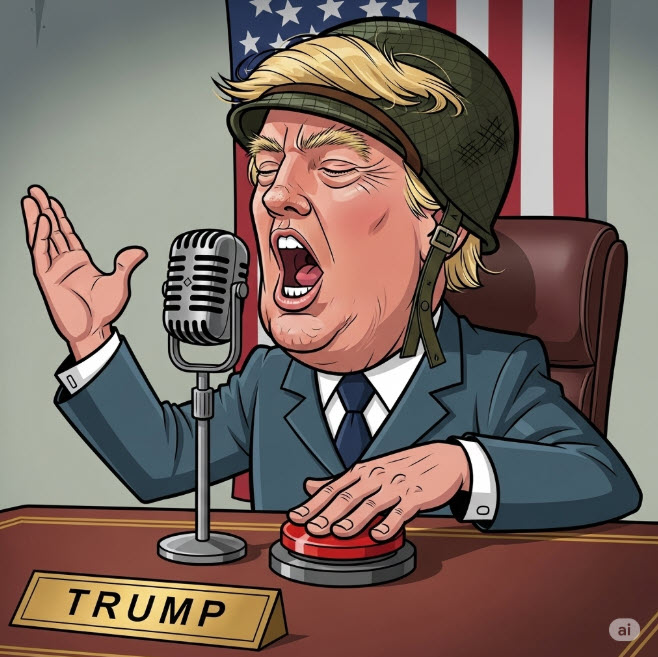
Some, Jews, say to me
that I’m their kind of man
church pews are the key
to get the promised land
they want to bomb Iran
they want to bomb Iran

When Bibi hugs me
I feel happy inside
It’s such a feeling that I scream
genocide!
genocide!
genocide!

Yeah, ole Bibi said to me
Let’s take the Gaza Strip
Trump casinos by the sea
I say we let her rip
I want to bomb Iran
I want to bomb Iran
I want to bomb Iran
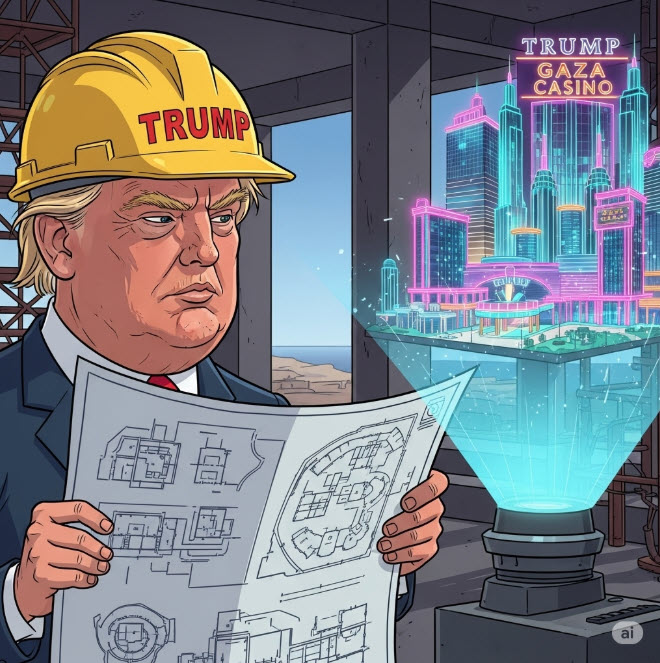
When Bibi hugs me
I feel happy inside
It’s such a feeling that I scream
genocide!
genocide!
genocide!
Hamas has that somethin’
they’ve got a shitty brand
But I’ll say the dumb thing
I want to bomb Iran
I want to bomb Iran
I want to bomb Iran
I want to bomb Iran
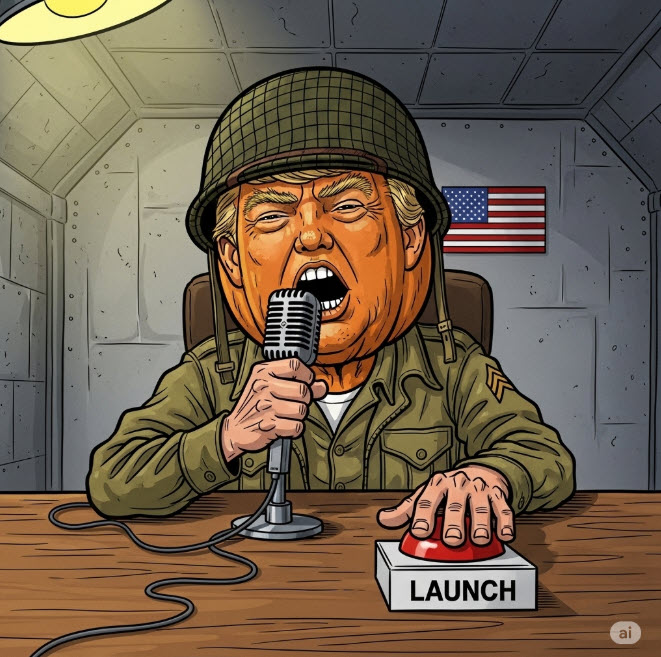
Tipping Point
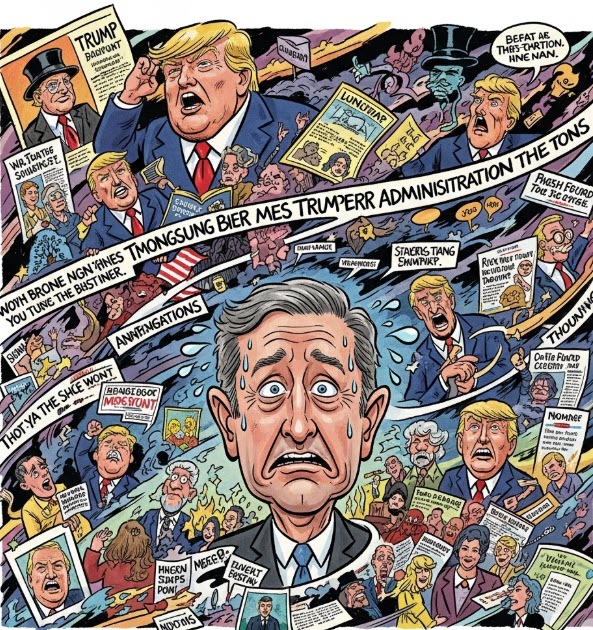
A squeaky tank rolling
embarrasses Donny
Israeli aggression
all flexy and brawny

Assassin in Sota
a lawmaker dead
Handcuffs and facemasks
and ICE in our bed

Elon says Donny
and Epstein
were besties
Donny says Elon
is overly testy

Tucker warns Donny
about going to war
While Benny and Donny
keep settling scores

Tulsi tells Donny
The nuke story’s bullshit
Donny tells Gabbard
to get off her pulpit

Padilla gets bullied
and pushed to the floor
Cosplaying Himmler,
Noem shows him the door

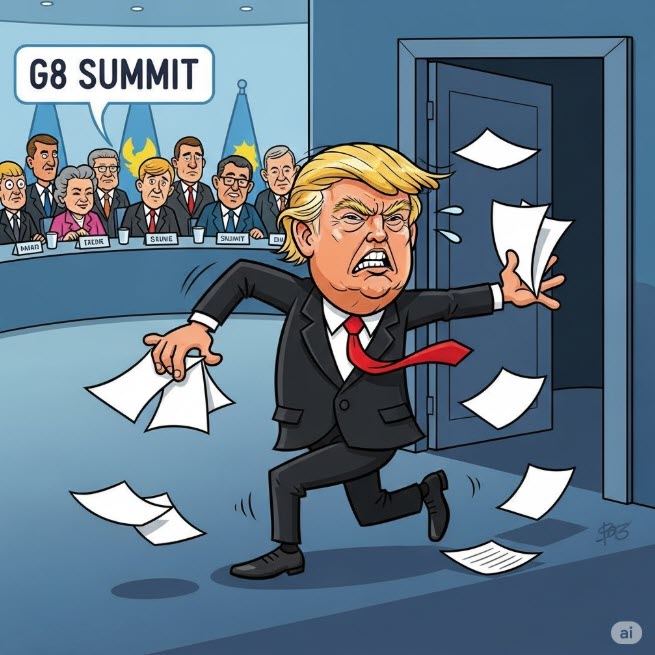
Don asks the G8
why Putin is missing
The G8 tells Donny
to stop the ass kissing
Donny gets angry
and leaves in a huff
When will we say that
Enough is Enough?
War, Religion, and other Ramblings from an Atheist on a Sunday Morning

The majority of Muslims are peaceful.
We hear this whenever Muslim extremists go on a rampage.
And though I agree the majority of Muslims are peaceful, if the average Muslim had to choose between living with a peaceful atheist like me or a fanatical Islamist, I think they’d choose the latter, because with the latter they share a religion.
Religion holds people together, while also dividing us from one another.
It lumps people into like-minded groups, where each group believes their God, their beliefs, their scripture, and their golden ticket to the afterlife is the one and only. It fosters an “us versus them” mentality, and when religion controls the narrative of who we are, we lose sight of our shared humanity.
When infused with fanaticism, religion celebrates flying planes into buildings and forcing families from their bulldozed homes as righteous acts.
When we view people through the prism of religion, we don’t see them as individuals. Instead, we see Jews, Muslims, or Christians and the preconceived notions those labels have to us. Categorization leads to dehumanization and dehumanization softens up the conditions for war and hate.
Fanatical groups like Hamas, ISIS, al-Qaeda, MAGA Republicans, and the ultra-orthodox Jews living in the West Bank see religion and scripture as a final arbiter or cure-all to all their woes and view those who don’t adhere to their beliefs as “less than” themselves.
Religion doesn’t only affect the religious. For example, religious-borne fear affects the moral compass of the religiously-agnostic when it comes to the war in Gaza. The fear of religious extremism is why we give a wide berth to Israeli vengeance. Our fear of Hamas and what they represent runs so deep that we give the IDF leeway in terms of their tactics and rationalize civilian casualties.
Religious extremism never serves the greater good. Clearly, Gazans in Palestine would be better off if they could get out from under the thumb of Hamas.
I want Hamas to be swept into the dustbin of history.
But at what cost? I guess that’s the question.
At what cost?
Last week, I saw a video post on LinkedIn that showed ghastly footage of bloody Palestinian children writhing in pain on a hospital floor in Gaza. It was horrific and sickening (and has since been removed). Many of the comments to that post referenced Allah and retribution, which filled me with despair. Those comments reinforce my belief that humans are slaves to what they’re taught in churches, synagogues, and mosques.
Don’t get me wrong, I know that people find peace, comfort, and a sense of community in religion — I understand the positive aspects of religion.
But I also see the negative.
Religious people get agitated at atheists like me who rail against the dangers of religion. In contrast, we atheists get frustrated that religious people can’t seem to separate the bliss they achieve from religion individually from the negative shit that comes out of a religious group dynamic.
Freedom from religion – the right of a person to have no religion in their life, opens the door to humanistic identity.
I was raised a catholic. For years, growing up, I went to church and catechism every Sunday, where I was lectured to by priests and nuns. Thankfully, I lived in a country that supports freedom from religion and free thought — where, over time, I could compare (without fear of retribution) what the priest and nuns were telling me to what I saw and observed in the world and what I learned of my own volition. This led to a sense of self not based on religious dogma and doctrine but rather on my personal experience interacting with the world and the people in it.
If I had been born and raised in Iran or Iraq, my experience would have been radically different. I would have been forced to adhere to the religious rules of the state or suffer the consequences of disobedience.
As an atheist, I could walk the streets of Telavi freely without having to look over my shoulder in fear for my safety. I’m not sure I can say the same about walking streets controlled by Islamist fundamentalists – who, if I made an off-color remark about their prophet, would separate me from my head without batting an eye – and feel justified in doing so.
America’s greatest gift to its citizens is freedom from religion. But lately, I fear we’re in danger of losing that gift and becoming an authoritarian theocratic state ourselves.
Just look at the speech that Elise Stephanic gave when nominating Mike Johnson as Speaker of the House. That speech included multiple references to God and scripture. And Johnson himself has informed American’s the way to learn how he feels about any issue is to read the Bible. ‘That’s my worldview, that’s what I believe.‘
Since Mike Johnson’s nomination to the speakership, we’ve seen gross outward expressions of religiosity on the house floor – a clear slap in the face to the separation of church and state.
Imagine the outcry if a Muslim speaker or representative busted out a prayer rug on the house floor to pray.
The increase of religiosity in the Republican party should be a huge red flag to Americans who cherish living in a secular and pluralistic society.
The GOP’s embrace of Christianity as a national religion is a genuine threat to the American way of life.
I’m not naive. I know religion isn’t going anywhere, though I am heartened that among American adults, secular humanism and postmodernism are growing in influence in our culture.
Let’s judge religions by their ideas.
The notion that criticizing a religion is unacceptable because it might “offend people” is what allows dangerous movements within generally peaceful religions to spread and radicalize individuals.
We need to voice our objections loudly against any religion that promotes divisiveness, intolerance, or hate, because these are bad ideas for humanity.
I’m stepping down from my soap box now.
Tipping Points

Israel says there is a safe zone for civilians in the south of Gaza.
Israel suggests that Hamas is preventing civilians from going to that safe zone because separating Gazan civilians from Hamas means fewer civilian casualties, which is terrible for Hamas because (according to Israel) Hamas relies on civilian casualties as fodder for their propaganda machine.
So, who do we believe?
How do we, the ones watching this conflict from the outside, get to the truth to form an opinion?
It is hard to trust the controlling parties on either end of this conflict, and in that scenario, everyone in the middle gets obliterated.
And let’s not forget that our struggle for truthfulness is nothing compared to what Gazan civilians are facing hourly. Gazans are struggling to live and breathe just long enough to bury their dead.
Americans understand the raw rage that Israel holds towards Hamas. It mirrors what we felt towards Al-Qaida on September 12th, 2001. We understand a desire for payback that originates from the gut – it’s what drives our support of Israeli efforts to uproot and destroy Hamas.
But I’m guessing there’ll come a point where support for Israel tips in the other direction – when our gut reaction to the sheer number of civilian casualties forces us to say, “Enough!”
Who will be the last Israeli soldier, Hamas terrorist, or Gazan civilian to die before we reach that point, and will it matter?
How can civilians in the “political middle” of this conflict affect change now when they couldn’t affect change before the conflict? – Isn’t the task of effecting change way more difficult today?
Gaza is in ruins. Survivors filled with rage and hopelessness will be looking for payback, and the peace and security that many Israelis seek has become less of a possibility.
It’s hard to find hope in any of this.
Hamas Needs to Go
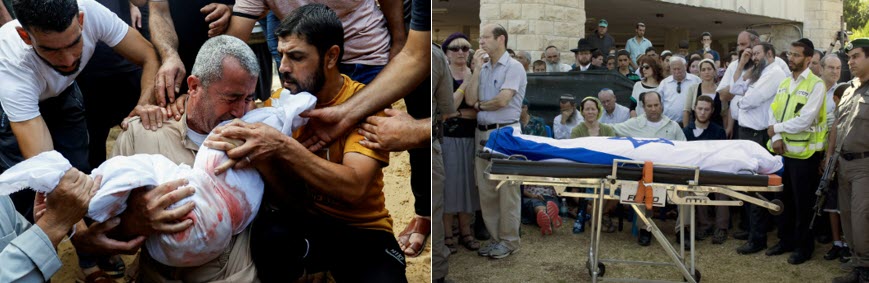
Hamas has been at the helm of the Government in Gaza since 2007.
What have they done for the Palestinian people?
The Hamas Charter explicitly calls for the obliteration of Israel. Hamas is not interested in negotiating or coexisting with Israel. Any talks with Israel that might result in a better life for Gazans would be detrimental to Hamas’s hold on power — because peaceful coexistence with Israel negates Hamas’s primary objective, which is to kill Jews.
Hamas militants are fueled by religious hatred, laid bare in the brutal and vicious nature of their attacks on Israeli citizens. When you believe God commands you to slaughter your enemies, you do so with zeal. The greater the depravity by which they murder, the more glory to their God, or so it seems.
Even if you blame Israel entirely for the plight of the Palestinians in Gaza, how can anyone justify the terroristic and vicious nature of the Hamas attack on October 7th, 2023?
I understand that Israeli policies that expand settlements and displace Palestinians exacerbate the hardships felt in Gaza.
I understand the Israeli government has contributed to Palestinians’ indignity for generations.
I understand that Israel has killed many innocent Palestinians in military operations over the years.
Does all that understanding about the indignity, the generational hopelessness, and the death and destruction at the hands of the Israeli military – justify Hamas’s attack on innocent civilians?
No, it does not – because Hamas has done nothing on behalf of Palestinians to move the needle toward peace.
They offer no hope. They are the enemy of hope.
There’s a palpable dread for what’s about to go down in Gaza.
Palestinian citizens and the hostages taken by Hamas are pawns in a never-ending religious, ethnic, and geopolitical dispute that Hamas has no interest in resolving.
That’s why they need to go.
On the other end of rockets

I woke up at 2:30 AM to the thin blue haze of my television, news footage of multiple rockets being launched in succession from flat barren lands somewhere in Gaza.
Set against a peaceful pinkish-blue sky, the angry hiss of missile-fire – followed by a few seconds of pre-dawn serenity was eerily beautiful, as witnessed from a darkened bedroom thousands of miles away.
On the other end of the rockets, Israeli citizens huddle in bomb shelters, enveloped and cradled by rock and earth, they wait and listen to muffled explosions. Warning sirens blare in the distance, they sit in dimly-lit rooms stocked with gas masks and crackers.
In Gaza, Palestinians scramble and crawl over a pile of dusty rubble, twisted steel, and flesh, courtesy of a reflexive trigger finger and weapon system designed to target individual terrorists and minimize civilian casualties. They dig and scream, dig and scream. I begin to wonder if over time (generations actually), that the repetitive dig and scream might somehow become part of Palestinian people’s make-up, branded into their psyche, to the point where it becomes as natural an act as waving goodbye to their children as they go off to school.
It’s all too big to absorb at 230 AM, my head comfortably cushioned by 3 large pillows, my snoring yellow lab warmly wedged between my wife and I, as the thoughts of my own pending day begin to seep into my consciousness, steadfastly pushing aside and supplanting my thoughts about the other end of rockets, I reach for the remote and turn the TV off, the blue haze dissipates quickly, surrendering to the darkness I close my eyes. It is 2:36 AM.

