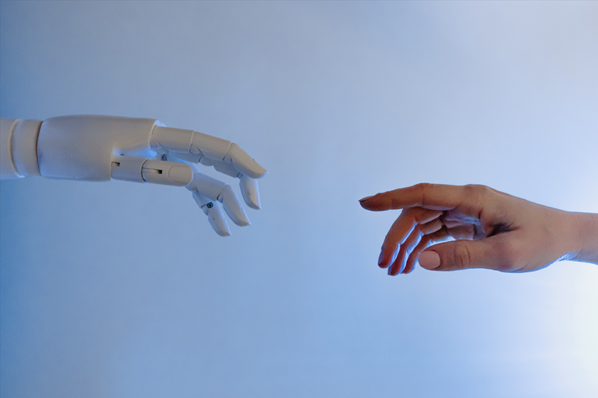
Here today, gone….

pexels-skitterphoto-782

Embrace your temporariness.

All of us are about 2.5 generations away from true non-existence.

As the final memory of us fades to black and we transition from the warmth of humanity to the cold breathless inanimate, our existence gets relegated to the flat and dimensionless world of dusty photos, handwritten notes, and password-protected social media pages. Such is our fate.

We will not be reunited with loved ones on puffy white clouds — that’s a Peter Pan-level fantasy, and the sooner we let it go, the truer to ourselves we can be.

We are all short-timers, so lets seize that realization and use it as fuel for making a positive impact in the NOW — for caring and making the world a better place TODAY, so those who come after us, can have a happy and peaceful existence. Is there a more noble endeavor?

Free Play Gone

pexels-lukas-296302

Some 48 years ago, my parents (perhaps over a glass of wine and bottle of scotch) decided to move the family to Aquidneck Island — where I was raised, not far from the ocean, in a neighborhood of shabbily constructed raised ranches — where on warm summer days, squinty-eyed kids staggered zombie-like from their garages or front doors, pop-tarted, sugar-smacked, and ready to roll.

We played ball (whiffle, base, foot, basket, and stick) in our backyards or in the street — we rode bikes everywhere, we “red rovered, red rovered,” and kicked the can against a near-perfect backdrop of New England sunsets and warm summer breezes, to a generous and harmonious soundtrack of crickets, peepers, and nightingales.

We hunted salamanders in the woods and flash-lighted our way to collecting night crawlers for fishing expeditions at the town reservoir, to which we walked unattended by adults, poles over our shoulders, the sun warm on our backs, our conversations held together with lite laughter and kinship.

The entire summer, we hardly interacted with Mom or Dad except at dinner time, which was had around the dining room table without exception.

And so it was on Aquidneck Island I stayed, met my wife, and raised 2 good boys and 4 dogs — the latest, a pocket-sized pit bull, full of spittle and spunk, who envelops me in rhythmic doggy snores as I write this piece.

What strikes me most on this stroll down memory lane is the magnitude of change in parenting over a single generation. Our generation, handicapped by socioeconomic conditions requiring two working parents, and a feeling of fear and mistrust (largely unwarranted), the flames of which were fanned by continuous exposure to 24-hour cable news, which made us believe we could never leave our kids alone, that they had to be within earshot or eyesight 24 hours a day, less someone steals them away forever — and so it was by these phenomena, that free play, that priceless gift and ever-important ingredient in child development, was killed.

Gone are the days when kids gathered at a park or in someone’s backyard to organize on their own and “get a game going” — sadly, this has been replaced by regularly scheduled league games on sun-splashed well-manicured fields with perfectly chalked sidelines and clipboard-carrying, whistle-blowing, score book-keeping adults shouting out instructions while pacing in front of tight-jawed fathers in sunglasses and Bermuda shorts (newspapers tucked firmly under their arms), while antsy, floppy-hatted moms in folding chairs with cup holders, try to capture every moment of play on their iPads or cell phones.

We’ve forgotten the value of neighborhood free play on uneven surfaces where the end zones were marked by a rock and a tree. The sidelines were guesstimated according to natural or not-so-natural boundaries and, most importantly, where kids worked out the teams and the rules and addressed issues that arose without “expert” interference by adults.

As my children enter adulthood, I wonder about the absence of free play and the implications of an overly-scheduled, overly-structured, and, quite frankly, overly-parented childhood.

The boulevard of the unsuspecting

pexels-derwin-edwards-4001530

A mentally disturbed and delusional kid – spurned by others – sitting behind the wheel of a BMW – firing a legally purchased 9 mm semi-automatic pistol into a crowded café and deli – killing and maiming – just as he promised.

On any given day in America, any one of us can get cast for the role of the unintended victim in the twisted wreckage of someone else’s tragic life– like we are all just a trigger finger away from a becoming a profile on CNN’s website.

The only thing that stops a bad guy with a gun – is a good guy with a gun, except that almost never ever happens – even though Americans are armed to the teeth – we still wake up (on average) to a mass murder every two weeks – and in most of these cases, the only thing that stops the bad guy with a gun, is that very same bad guy, when after killing a slew of people, he decides to eat a bullet.

Unfortunately, many American’s are as delusional as some of these shooters – as they continue to tell themselves that more guns make for a safer society, when the data tells us the exact opposite is true.

We are immersed a culture that glorifies violence, where too many believe that violence and aggression are the solution to problems – we have inadequate and often ineffective mental healthcare and way too many people who should not have access to guns – –  have access to guns.

I am sick and fucking tired of the NRA denying the role guns play in mass murder – there is clearly a gun component to this problem – but any time anyone even mentions, considers, whispers that maybe we should look at gun regulation along with other components of the problem, the NRA ratchets up a campaign of lies and fear.

We need to wake up.

Dogs and Grief

pexels-gotta-be-worth-it-1431557

We’re a dog family.

I had dogs growing up as a kid. My wife and I got our first dog soon after buying our first house. His name was Wayne, but we changed it to Kane because who names their dog WAYNE?

Your first dog is the dog by which all others are measured, and Kane set the bar high. We adopted him from the Potter League for Animals in Middletown, RI, where Meg and I worked before we started dating.

Kane was about a year old when we adopted him as a full-grown shepherd mix. I remember approaching him in his cage – he crouched slightly and turned his head quickly towards my hand as I tried to clip the leash to his collar. He intended to inform, not injure – a way of stating we’re not acquainted well enough for you to approach so casually. His eyes said, “I’ve seen others leave on a leash and never come back.”

Kane’s reaction would have been a deal-breaker for some people – an excuse to walk away or visit the friendly Beagle-mix two cages down. But I was not willing to give up so easily. So, I backed up slowly and sat down at the opposite corner of the cage. Kane and I regarded one another like potential enemies who might one day become best friends – a future to be determined in the next few minutes.

I maintained an un-threatening posture, relaxed, head down, making eye contact only occasionally. Kane seemed skeptical but open to negotiation. Finally, after several minutes of détente, I patted my hand gently on the cold concrete floor, gesturing for Kane to make the journey across the cell. He wagged his tail slowly, still unsure what to make of me. Then, Kane stood, lowered his head somewhat submissively, and approached slow and steady. 

When he sat, he regarded me in a friendly manner, dissipated skepticism replaced with a cautious trust.

This time when I went to put the leash on, Kane lowered his head and gently leaned in – and that was it. The deal was sealed. I knew that instant that Kane would be coming home with me.

Of all the dogs we have had, Kane was the most loyal. We would let him out the front door, and he would sit or lie down on the steps – if he ever wanted to run off, he never let on. So for about 2 years, it was just Meg, Me, and Kane. We took him to Colt state park for long walks and many high school baseball fields to play fetch – he bonded quickly and totally with us.

Even though he was our first, Kane knew (instinctively, it seemed) that when baby number one arrived, he would be relegated to a lower rung on the ladder. He accepted his demotion gracefully – if such a thing is possible for a dog.

He was a constant companion to Jake and Liam growing up. When our boys ventured across the street, Kane would always tag along, trotting slowly behind them, setting up watch on a corner of the neighbor’s lot – he would never intrude on the kickball or whiffle ball or basketball or football or Pokémon card trading activities. Instead, he would stay close and observe – with an air of guardianship and responsibility.

At around 12, Kane began suffering from congestive heart failure. I remember driving him to Ocean State Veterinary Clinic several times that year, where a vet would work a needle into Kane’s chest to draw fluid from his lungs. It was miraculous how well he responded – before falling ill again. The vet informed us the procedure would eventually stop working because scar tissue forms sand prevents them from being able to draw fluid. 

Futility and the inevitable snuggled up to one another. We knew we were running out of time with Kane. We knew we would have to put him down. 

When that time came, I was 42, old enough to have experienced some loss in life – loved ones, a parent, relatives, friends, and colleagues.

The longer you stick around, the better acquainted you get with death. Each time death pays a visit to someone you know, you gain perspective, begrudgingly accepting that death is part of the equation. 

I’ve never felt more bereft with grief than when we had to put Kane down. A profound grief that wrecked me – left me in a heap for weeks.

We’ve had to part with two other dogs since Kane – and the grief was no less – not one scintilla. The begrudging acceptance that death is part of the equation didn’t soften the blow.

It was still like being hit in the heart with a hammer.

So why does the family dog’s death hurt so much? What about our relationships with our dogs make their death so poignantly and consistently painful?

I think it has to do with the dynamics – the one-sidedness of the relationship. This is not to say that we don’t love our dogs – we do – but they love us more (or at least that’s what registers in our brains), and they love us “regardless” – regardless of our faults, foibles, and frailties.

Over that 10 to 12-year span, we experience (over and over and over again) unconditional love and non-judgmental friendship, which (let’s face it) is so unlike the relationships we have with the people in our lives (even the ones we love the most – especially the ones we love the most).

Our experiences (the good, bad, and indifferent) are processed and stored as memories. Our brain never sleeps, so all this processing and storing is happening 24 7. This means that every time we’re greeted by our dog, tail wagging, eyes smiling, regardless of how shitty our day was or whether we ignored him — all those “I’m so happy to see you” moments are stored in memory. 

And when it comes time to put our dogs down, the packaging containing every one of those experiences unravels, the memories spill out, and we’re forced to face the loss of the one relationship in our lives that seemed pure to us.

How could this not wreck you?

Son pierced, dad OK, mom a little concerned

pexels-gift-habeshaw-3339117

The first request was for a small pair of sterling silver studs. After my wife and I discussed it, she took him to Providence Place mall – he picked out a pair that had a brushed metal look. They pierced the lobe and put them in.

Done.

Honestly, they were so small they were barely noticeable.

Three weeks later, on a Saturday afternoon came the second request. It went something like this:

“Dad, can I get a new pair of earrings?” 

“What’s wrong with the ones that you have?

“Nothing. I just want another pair.”

OK, I guess. Nothing too drastic, OK?

“Thanks, Dad. Can I borrow a few bucks?”

And then off he went – this time on his own – to a small smoke shop on Broadway.

About an hour later, he walked through the door, sporting a pair of silver hoops and a pleased look on his face. Still understated but definitely more noticeable than the silver studs.

At the time of this writing, there have been no requests for additional piercings, but I can say with a high degree of confidence that he wants more. I know this because he spoke so spiritedly about the ear-wear and one design specifically. I listened as Jake described an elaborate gauge earring that burrowed through the soft tissue of the lobe, hugged the back of the ear, shiny, scaly, and serpentine-like before punching its way through the cartilage of the upper ear. “It was pretty cool” – “Ah-ha,” I said, one eye on him, the other over his shoulder where I saw his mom, lips pursed, head shaking sharp and short left to right.

The earring thing is a relatively new development with our 17-year-old. Until recently, the only time the subject of earrings came up was in hushed tones around the kitchen table about what to get mom for mother’s day or her birthday or for Christmas. I remember the proud smiles he and his younger brother would share when mom opened her lovely froggy or dragonfly or starfish earrings.

Those were simpler times when earrings were just jewelry. Now I’m forced to think about earrings through the dark and edgy prism of teenage self-discovery.

I’m not too worried about this latest development, to be perfectly truthful. I see it as a relatively common and benign step towards self-expression – It’s all good, in my view.

My wife, on the other hand, is a little more hesitant. She worries about the potential snowball effect – might ear piercing be a gateway to nipple rings and a torso of tattoos? Might we wake up one morning to a Dennis Rodman situation across our kitchen table? Although I doubt this will happen, we have an obligation to our son to put some healthy boundaries in place – mainly because teenagers can’t see life beyond the front door.

I don’t want my son setting off metal detectors at the airport or having to explain to an angry and hard-of-hearing beachcomber why his MineLab Excalibur II keeps beeping whenever he approaches Jake’s blanket.

So, a few guidelines:

  • A face should always have fewer safety pins than a cloth diaper. Better yet, no safety pins are allowed.
  • For every piercing under consideration, your child must ask himself whether or not the same piercing would look OK on mom or dad. If the answer is no, he should not proceed – Jake, you won’t be a teenager forever.
  • Always consider how your face will look when you remove the piercings – if you envision a crater-filled landscape created courtesy of a madman with a hole puncher and staple gun – then think about scaling back a bit.

I suppose that’s it for now, Jake.

Please keep these guidelines in mind next time you venture out. By the way, I like the hoops – they suit you.

🙂

Triple Jumps and parenting bumps

pexels-tatiana-syrikova-3932692

I took a nice long walk last night.

It was cool outside, a noticeable contrast from earlier in the day, when the weather was summer-like, hot and humid; one of those days when you actually feel the weight of the heat pressing down on you.

I spent most of my day at Brown Stadium in Providence, trying (unsuccessfully) to escape the sun while watching my oldest boy compete in the RI track and field state championships.

He had high hopes going into yesterday’s event, but ended up not performing to his own high standards.

He jumped 40 feet in the triple jump, just one half inch short of making the finals.  He leaned back just as he landed on his final attempt, instinctively putting his hand down, which is where the scorer is required to mark the jump.

After the meet I could see the disappointment in his eyes – I could feel it in my heart; a weighty and palpable sorrow.

I told him how proud I was of him and that he had a lot of good things to build on for next year.  And though no truer words have ever been spoken, the actual act of speaking them felt somewhat forced, as if the words themselves had been shoved out of my mouth by a reflex for parental decorum. And no sooner had the final syllable left my lips did I find myself wondering what effect, if any, a father’s words have on his 17 year old son – no matter how pure and heartfelt the sentiment.

At 17 my son is clearly working through his own shit. I can see it on a daily basis. And my second go-around at 17 (I will call it P17 for Parent of a 17 year old) has been almost as challenging as my first go-around (when I was actually being 17).

As a P17 there is an almost constant “contents-under pressure” need  to impart wisdom – like I am itching to step up to the plate, to be the rudder, the sail and the beacon of light all at the same time.

The P17 phase of parenting is kind of like the Olympics – it’s the triple sow cow moment with all the high stakes (your child’s future) hanging in the balance. Sure it’s stressful, but you feel pretty confident that you can nail it. You feel more than ready to dispense advice that will shed the light, ease the burdens, clear the paths and lighten the load.

But here’s the rub. That 17 year old, the one you think stands to gain the most from your knowledge, experience and wisdom, that person who you love so much it hurts, seems (quite recently so) to barely be able to stomach the sight or sound of you.  And if ever a moment existed where we actually feel “deflation” as a human emotion, it is when we as parents come to realize this.

Sharing a kind thought or dispensing advice to someone who does not even want to hear the sound of your voice is emotionally draining. I suspect this is why that moment after the track meet felt so forced and unnatural. My son hardly ever rebuffs me in a disrespectful manner (he is too good a kid to do this); – it’s more like he is tolerating me.

The parenting paradigm shifts at 17.

In general, with regard to experience, we rely on what has worked for us in the past to formulate strategies for the present. Like everything else, memories of our parenting successes are stored and hardwired in our brains.

We have memories of spoon-feeding advice to our 5 year old or our 10 year old child, and them gobbling it up, to generally positive results.  So this is what we continue to do – we continue to advise our 17 year old as if he were still that 5 year old child (because our brain is telling us this is what worked in the past).

To assume this will yield the same positive results is to assume that your 17 year old son’s brain has not evolved – that it remains in the “accept input and act on input” mode. But this is not the case at all, because that brain in your seventeen year olds skull is no longer just accepting input and applying it. Nope, that brain is trying to work a lot of shit out on its own.  In fact that 17 year old brain is busy mapping its own morality, using as input not only all that you have fed  it, but  an un-ending amount of experiences from a world that more often than not,  appears unjust and uncaring. That brain is trying to reconcile a lot of inconsistencies.  A lot of them.

Sometimes I find myself practicing what to say to my 17 year old son – rehearsing and choosing my words carefully – in hopes that this will increase the likelihood of him at least contemplating my words.  It’s like all of a sudden my son’s brain has morphed into the star wars defense system and my words are missiles to be shot down.  I am not sure when this parent child relationship turned into the cold war – but I remain hopeful that all the effort we as parents put in early-on also get stored into memory. And none of this will deter me from dispensing advice.

Sorry Jake, that’s how I roll. 🙂

Newtown CT, December 14, 2012

pexels-pixabay-207697

When I heard the news out of Newtown CT yesterday, I was of course saddened. I stopped working for a while and watched the news reports, worked a little bit more before heading to Providence to watch my son play basketball.

When not directly affected by such tragedies, we absorb the news of them, we process that news (fairly quickly it seems to me), and we move forward.

Next week, for the vast majority of us, life will go on. We’ll put our little ones on the school bus or shout a goodbye to our teenagers as the fly out the door in the morning, and we will do so with only the slightest bit of hesitancy.

I suppose our capacity to push through these types of events is a survival mechanism. Natural selection has weeded out the trait of extended emotional grief. Our ancestors saddled with that trait did not survive long enough to pass it along, and I suppose that is a good thing. I only wish we could find a place somewhere between “crawling into bed and pulling the covers over our head” and “life goes on”.

This week will have a familiar sickening feel to it. We’ll watch the news coverage and walk around a bit dazed. We’ll struggle with the feelings that come with resigning ourselves to the negative in life. We’llfeel it behind our eyes, on the back of our necks and shoulders, and in the pit of our stomachs.

System of a Downer

pexels-freestocksorg-987585

It was 9:00 PM and I needed to go for a walk. This is a relatively new thing for me. I have taken to night walking – it relaxes me – clears my head – puts my spirit at peace for 30 minutes. Sometimes I start out with my dog Walter in tow, then I swing back by the house to drop him off and continue on my own – alone with the night – and my iPod. Before heading out on this particular night I made a point of re-synching my iPod, because somehow I inherited 23 “System of a Down” songs from my son’s playlist.

Here’s a truism: There few things in life more abrasive than having System of a Down pumped into your head unexpectedly at full volume. It’s happened to me on several occasions and the experience has literally shaken my faith in humanity.

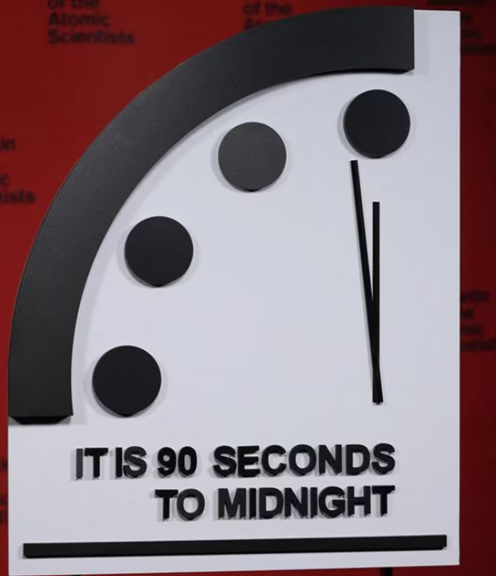
40 percent chance of rain, 95 percent chance of extinction

pexels-nick-bondarev-4326288

I was sitting on the couch – my son across the room with his smart phone in hand – head tilted downward.

Without lifting his head he flatly stated that there is a 95 percent chance that the human race will be extinct in 9000 years. I immediately thought this was an opening argument for why my wife and I should spring for his school field trip to France. But not a single syllable followed. Apparently he just wanted to share a little sunshine.