In December 2024, after more than 35 years, I stopped working as a technical writer.
I hesitated to call myself “retired” because I wasn’t sure that was true. I felt burned out but didn’t know whether the burnout would last. Maybe I just needed some time.
A month or so after I stopped working, I published a collection of essays, poems, and short stories I’d worked on for years in my spare time. That was fun. I worked with an editor, learned about self-publishing, and published my book on Amazon. The entire endeavor took a few months.
After that, I did a lot of sitting around—so much so that I considered reentering the workforce. I even took a few interviews.
Retirement taught me what I already knew: I’m not a “project guy.”
I don’t have a workshop in my basement, I don’t tinker with cars, I’m not a hobbyist in any sense, and I’m about as “handy” as Captain Hook. So, retirement became a bit of a vacuum for me – a lot of time with nothing to fill it with.
To make things worse, my wife retired shortly after me, and it turns out that she is a “project guy (or gal).”
Unlike me, my wife finds things to do every day. She’s in constant motion – organizing the basement, digging in the garden, putting up bird feeders. I’d be sitting on the couch, watching the news or Sports Center, and I’d look up and see my energetic wife in the yard, weeding, feeding, and seeding with purpose.
I felt like a lazy lump. She’d come in from the outside with a smile on her face and say, “It’s a beautiful day out there,” not necessarily wanting me to join her but wanting me to at least get off my ass.
Caring for our dog Pepsi kept us both busy during those early months of retirement. We spent a lot of time and energy helping Pepsi navigate illnesses and old age until that dreadful day when we had to put her down. It was a tough time for both of us. I’m thankful I was retired when all of that went down.
Though I miss Pepsi immensely and miss the joy of k9 companionship in general, it was freeing not to have that 24/7 responsibility for the first time in 12 years. But after a few months, I began to think it would be nice to have a dog again, leading me to Rover.
Rover is a pet-sitting, boarding, and walking service.
I thought to myself, “I love dogs, I know I’d be good at this, it’s going to get me off my butt, and we have a pretty good setup logistically (large, enclosed back yard with two dog-loving people who are home all the time).
I’ve been a Rover rep since January 2025, providing mainly boarding services, but I’ve also walked a few dogs.
Rover allows me to set my schedule, so I can block off weeks or months at a time in case I do suddenly become a project guy (unlikely) or if my wife and I decide to take a vacation, all while putting some spending money in my pocket.
Rover helped fill the hole Pepsi’s death left in my heart with an opportunity for K9 companionship while providing a service to pet owners looking for a warm, safe, and loving environment for their pets.
Honestly, it’s been a win-win.
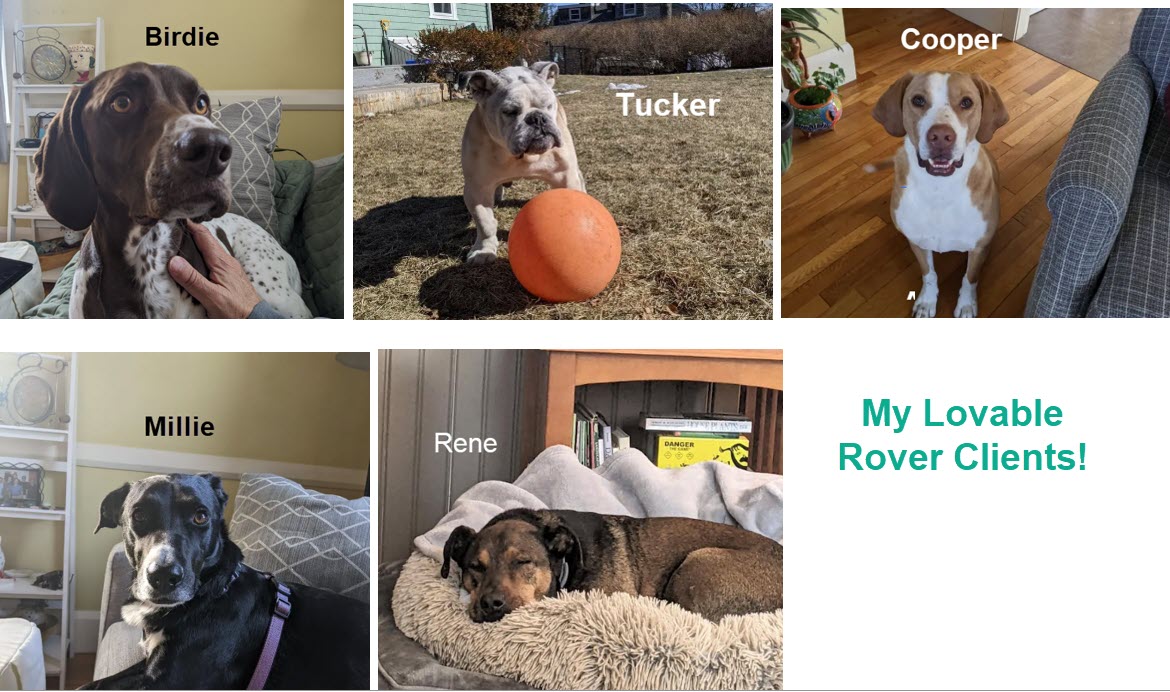
So far, my clients include a loveable and playful hound mix named Cooper, a quiet and reserved basset/shepherd mix named Rene, a timid lab mix named Millie, a gentle geriatric bulldog named Tucker, and an enthusiastic, boundlessly energetic, and inquisitive German Short Haired pointer named Birdie.
I’ve had several Meet and Greets that have resulted in bookings through the Summer.
Each dog has its own personality, and it’s been a joyful experience watching them adjust to me and learning how to adjust to them. All of the dogs I’ve boarded so far have acclimated fairly quickly—they become comfortable in a day or two.
Our house feels more like a home with a dog on the couch or sunning themselves on the back patio.
I’m sensitive to the fact that every dog that an owner drops off is probably feeling some anxiety, at least initially. My wife and I do our best to give the dogs the space to explore our house and become comfortable with new and unfamiliar surroundings. I try to keep the house quiet (maybe some soft music).
I’m discovering that when a dog is comfortable with where they are, they become comfortable with me, and that’s when I can begin building trust by going on walks, sitting together on the couch, or playing fetch in the backyard.
When it’s time for my K9 guests to leave, I feel a tinge of sadness, but mostly, I’m happy that I could provide them with a loving and welcoming place to stay while their owners are away.
Every pet owner I’ve dealt with has been great. I provide daily updates with videos and pictures and converse with them over the Rover app.
Being a Rover rep has been an emotionally uplifting experience while providing a much-needed distraction from the chaos in our country and the world.
Let’s Ask Arty uses existing Artificial Intelligence (AI) technology to query LLMs about politics in these troubled times.
Query 1: Do DOGE employees have access to classified information, and do they have access to the social security data of private citizens? Who oversees DOGE to make sure they are not breaking laws or violating privacy rights of US citizens?
DOGE (Department of Government Efficiency) employees have reportedly gained access to classified information and sensitive data, including Social Security records, through various federal systems. Concerns have been raised about the lack of transparency regarding how DOGE staff are vetted and monitored before being granted such access.
Regarding Social Security data, DOGE has been accused of accessing sensitive information, such as names, birth dates, and earnings, as part of an anti-fraud initiative. This has sparked legal challenges and privacy concerns, with unions and advocacy groups seeking court intervention to block DOGE’s access.
Oversight of DOGE appears to be limited, as it operates under the Trump administration’s directives to streamline government operations. However, lawsuits and congressional inquiries have been initiated to address potential violations of privacy rights and ensure compliance with laws like the Privacy Act of 1974.
The situation has prompted calls for greater transparency and accountability in DOGE’s operations.
Query 2: Please provide a detailed list of the erroneous information posted on the DOGE wall of receipts.
The “wall of receipts” from the Department of Government Efficiency (DOGE) has been criticized for containing numerous inaccuracies and misleading claims.
Here’s a detailed breakdown of some of the errors:
Overstated Contract Values:
A contract listed as an $8 billion savings for Immigration and Customs Enforcement (ICE) was actually worth only $8 million.
A $232 million savings claim for the Social Security Administration turned out to be a much smaller $560,000 project.
Duplicate Listings:
A $650 million USAID contract was listed three times, inflating the savings.
A single $25 million Department of Agriculture contract was quadruple-counted, resulting in a false claim of $100 million in savings.
Misrepresentation of Blanket Purchase Agreements (BPAs):
DOGE included BPAs, which are catalogs of potential purchases rather than actual spending, as canceled contracts. This exaggerated the savings by at least $1 billion.
Credit Lines Misrepresented as Savings:
Some contracts, like the ICE contract mentioned earlier, were credit lines that might never have been fully utilized.
Savings from Previous Administrations:
Certain cuts, such as a $1.9 billion reduction at the Treasury Department, occurred under President Biden’s administration but were claimed by DOGE.
Errors in Real Estate Savings:
DOGE attributed $144.6 million to real estate savings without providing supporting details, making independent verification difficult.
Deleted Claims:
After scrutiny, DOGE removed its top five savings claims, including the ICE and USAID contracts, but did not adjust the total savings figure, which continued to grow without explanation.
These errors have raised significant questions about the credibility of DOGE’s claims and the methodology behind their calculations.
Query 3: Please list the “mistake firings” that DOGE made and the potential impact those firings had on America’s national security.
DOGE (Department of Government Efficiency) has faced significant criticism for its mistake firings, which have had serious implications for America’s national security. Here are some notable examples:
Mistake Firings
National Nuclear Security Administration (NNSA):
DOGE mistakenly fired hundreds of employees working on nuclear weapons programs, including those responsible for reassembling warheads. These roles require the highest levels of clearance and expertise.
Many of these firings were later rescinded, but the disruption caused confusion and delays.
Cybersecurity and Infrastructure Security Agency (CISA):
DOGE laid off 130 employees from CISA, which plays a critical role in defending against cyber threats. This move weakened the agency’s ability to counter malicious cyber activities, particularly from adversaries like China.
Department of Agriculture:
Employees working on combating bird flu were mistakenly terminated. This error jeopardized efforts to control the outbreak and ensure food safety.
Veterans Affairs (VA):
DOGE planned to cut contracts and lay off workers essential for veterans’ healthcare, including those involved in sterility certification and air quality testing. These cuts risked compromising patient safety and care quality.
Potential Impact on National Security
Nuclear Security: The firings at NNSA undermined the systems securing the nation’s nuclear arsenal, raising concerns about the safety and readiness of these critical assets.
Cybersecurity: The loss of skilled personnel at CISA weakened the U.S.’s ability to defend against cyberattacks, leaving vulnerabilities that adversaries could exploit.
Public Health: The termination of experts working on bird flu and food safety posed risks to public health and the agricultural sector.
Veterans’ Care: Cuts at the VA threatened the well-being of veterans and the operational integrity of healthcare facilities.
Query 4: Compare the dollar amount of savings from the cuts made by DOGE to the deficit increase expected from the proposed budget from the Republican Congress.
The Department of Government Efficiency (DOGE) claims to have saved $105 billion through various measures like asset sales, contract cancellations, and fraud detection. Meanwhile, the proposed budget from the Republican Congress is expected to increase the deficit by $3 trillion over the next decade, primarily due to $4.5 trillion in tax cuts offset by $1.5 trillion in spending cuts.
In comparison, DOGE’s savings amount to just 3.5% of the projected deficit increase from the Republican budget. This stark contrast highlights the scale of the deficit challenge and the relatively modest impact of DOGE’s savings in addressing it.
My Input
Imagine the collective apoplectic outrage from MAGA morons had a democrat President hired a private citizen (like George Soros) with deep partisan ties to the democratic party and no expertise in government to go on a slash-and-burn operation, with no concern about the impact on individual privacy rights, national security, and the health and wellbeing of American citizens. That is happening today with Elon Musk’s inexperienced, incompetent, unaccountable, and callous DOGE team.
There is a right way to audit government agencies for waste, fraud, and abuse, and then there’s the DOGE way.
The right way is to rely on non-partisan Inspectors General (IGs), which serve as watchdogs investigating waste, fraud, and abuse within federal government agencies. Trump undermined the independence of IGs when he fired (without cause) 17 of them early in his presidency and replaced them with loyalists. Trump’s claim that it is standard practice for an incoming president to fire and replace IGs is a lie (shocking, I know).
IGs are meant to transcend political transitions.
DOGE is supposed to collaborate with IGs in their federal agency audits. The Treasury Department’s office of the IG has already raised concerns about the collaboration. It recently launched an audit to investigate DOGE’s access to federal systems and handling of sensitive data. This audit of DOGE by the Treasury Department IG was fueled by concerns about DOGE’s potential misuse of government resources and the lack of transparency in DOGE operations (as mentioned by Arty).
The anti-government sentiment that propels DOGE is so prevalent and infective with MAGA that millions of MAGA followers don’t seem to care about the truthfulness of DOGE claims, the damage to America’s national security, the human cost to our fellow citizens, or that DOGE has no oversight or accountability for their actions.
And finally, the cartoonish display from Elon Musk at CPAC with his chainsaw encapsulates the lack of empathy and the dangerous and Social Darwinistic direction America is heading.
When it comes to DOGE, let’s be courageous and call out the outrageous.
Let’s Ask Arty uses existing Artificial Intelligence (AI) technology to query LLMs about politics in these troubled times.
Query 1: What does it mean to “be an American”
The idea of “being an American” is deeply tied to the nation’s founding principles and values. While interpretations can vary, there are some core ideals that are often associated with the American identity:
Freedom and Liberty: The United States was founded on the belief in personal freedom, whether it’s freedom of speech, religion, or the press. The idea of individual liberty is enshrined in foundational documents like the Constitution and the Bill of Rights.
Equality: The notion that “all men are created equal,” as stated in the Declaration of Independence, is a key American value. While the country has faced challenges in fully realizing this ideal, the principle of striving toward equality remains central.
Democracy: The U.S. stands for the right of its people to have a voice in their governance through elections and civic participation.
Opportunity and the American Dream: The belief in the possibility of upward mobility, where hard work and determination can lead to success, has long been part of America’s narrative.
Innovation and Individualism: Americans often value creativity, entrepreneurship, and the pursuit of personal goals, reflecting a culture that celebrates independent thinking and innovation.
Diversity and Inclusion: Although the journey toward this ideal continues, the U.S. is seen as a melting pot of cultures and backgrounds, and many celebrate the richness of its diversity.
Query 2: What are American Values on a global stage – what has America stood for internationally?
On the global stage, American values have often been associated with ideals such as democracy, freedom, human rights, and economic opportunity. These principles have shaped the nation’s foreign policy and international actions over the years. Here are some key aspects of what America has stood for internationally:
Promotion of Democracy: The U.S. has historically supported democratic movements and institutions worldwide, advocating for free and fair elections, rule of law, and accountable governance.
Human Rights Advocacy: America has often positioned itself as a defender of human rights, speaking out against oppression and supporting initiatives to protect individual freedoms and dignity.
Economic Leadership: Through institutions like the World Bank and the International Monetary Fund, the U.S. has played a significant role in shaping global economic policies, promoting free markets, and fostering international trade.
Global Security: The U.S. has been a key player in maintaining international security, often leading efforts to combat terrorism, prevent nuclear proliferation, and address global conflicts.
Humanitarian Aid: America has provided substantial humanitarian assistance in response to natural disasters, health crises, and conflicts, reflecting its commitment to global welfare.
Cultural Influence: Through its media, technology, and cultural exports, the U.S. has shared its values and ideals, influencing global perceptions and fostering cross-cultural exchange.
Can you explain how America promotes democracy internationally?
America promotes democracy internationally through a combination of diplomacy, aid, advocacy, and partnerships. Here’s how it generally operates:
Diplomatic Support: The U.S. provides diplomatic backing to nations transitioning to democracy or facing challenges in maintaining democratic systems. This can include offering guidance on structuring constitutions, electoral processes, and governance.
Economic and Technical Aid: Through organizations like USAID, America provides funding and technical assistance to support democratic institutions, civil society organizations, and free press initiatives in developing democracies.
Education and Training: The U.S. funds programs that educate citizens, journalists, and political leaders about the principles of democracy, human rights, and accountable governance.
Election Monitoring: By working with international bodies and sending observers, the U.S. promotes transparency in electoral processes, ensuring that elections are free, fair, and credible.
Sanctions and Incentives: The U.S. can impose sanctions on governments that undermine democracy or provide incentives for reforms that align with democratic values.
Global Partnerships: America collaborates with international organizations like the United Nations, the Organization for Security and Cooperation in Europe (OSCE), and other allies to advocate for democracy on a global stage.
My Input
Arty articulates that “being American” transcends mere geography or ink on a birth certificate.
“Being American” comes with firmly formed and instilled principles and values crafted painstakingly by our forefathers – principles that we’ve fought for proudly at home and abroad, both individually and collectively – values that feel intrinsic to our identity.
Our forefathers didn’t conjure up the American system of government in a vacuum. They considered admonitions from two of the greatest thinkers in world history (Aristotle and Plato) who stated, “Inequality brings instability, and demagogues exploit free speech to install themselves as tyrants.”
Our forefathers were so concerned about the rise of tyranny that they devised a system of governmental checks and balances to prevent it from occurring on our shores. Today, we’re discovering that the system they devised is only as strong and viable as the humans who serve in it.
Donald Trump is the tyrant that our forefathers feared. He is “American” by birth and residence only. His actions, deeds, words, and values are ardently un-American and tyrannical.
With backing from his Russian BFF, Donald Trump is twisting our Democracy by the nuts into submission. He is hammering, bending, and malforming America into an ugly, extortionist, and oligarchic fiefdom.
Unless true Americans stand up to him and the congress of cowards who fear him (as well as the billionaire class that sustains him), the definition of what it means to be American will change forever.
We must not let that happen.
What makes America’s drift towards oligarchy and fascism so difficult for many to handle is that it involves the dissolution of our American identity.
Our parents and teachers taught us that America welcomes immigrants, detests fascism, and protects the vulnerable – and we were proud to be associated with these values – so much so that these values became our values – they defined who we were as individuals and as Americans.
I always viewed myself and most of my fellow citizens as kind, tolerant, and fair. My view changed almost overnight when America elected an unkind, intolerant, and unjust leader to represent our nation on the world stage.
The impact of the 2024 election felt seismic and personal all at once. And when I witness my fellow citizens support America’s shift towards fascism and authoritarianism enthusiastically, well, that’s been a fucking gut punch that I wasn’t ready for.
But I’ve absorbed it, and now I’m ready to move on.
I cannot love, respect, or maintain friendships with people who casually voted for a convicted felon and serial sexual abuser.
I cannot go back to the relationship I had with them before the election, knowing that they support the chaos, vindictiveness, cruelty, and anti-intellectualism going on around me.
What America do you want to live in?
That’s going to be decided in the next 2 to 3 years.
My Republican friends and family members seem unable (or unwilling) to contrast the Republican party of their past with what that party represents today. It’s a party that your father, mother, and younger self would never have supported years ago and it’s a party unworthy of your support today.
Let’s Ask Arty uses existing Artificial Intelligence (AI) technology to query LLMs about politics in these troubled times.
Query 1: Is the measles virus dangerous?
Yes, measles can be quite dangerous. It’s a highly contagious viral disease that can lead to serious complications, especially for young children, pregnant women, and individuals with weakened immune systems. Some of the complications include pneumonia, encephalitis (swelling of the brain), and even death.
In the U.S., measles was declared eliminated in 2000, but outbreaks still occur, often due to unvaccinated individuals. Vaccination is the best way to protect against measles and prevent its spread.
Query 2: Robert Kennedy Jr (the head of HHS) says that the measles outbreak in Texas is not unusual. Is that true?
Robert F. Kennedy Jr. did indeed say that the measles outbreak in Texas is “not unusual”. However, health experts disagree with his assessment. The outbreak has resulted in the first measles death in the U.S. since 2015, and the number of cases is significant, with 124 confirmed cases since late January.
The outbreak is primarily affecting unvaccinated individuals, particularly in the Mennonite community in Gaines County. While measles outbreaks do occur, the severity and spread of this particular outbreak make it more concerning than Kennedy’s statement suggests. Vaccination remains the best way to prevent measles and its complications.
Query 3: Is Robert F Kennedy Jr a doctor or scientist? Does he have expertise in the field of health and medicine?
Robert F. Kennedy Jr. is not a doctor or scientist. He has a background in law, with degrees from Harvard University, the University of Virginia School of Law, and Pace University. His expertise lies in environmental law and policy, and he has worked extensively as an environmental lawyer and activist.
While he has been a prominent voice in public health debates, particularly regarding vaccines, his educational background and professional experience are not in the medical or scientific fields.
Kennedy has been a controversial figure due to his promotion of vaccine misinformation and public-health conspiracy theories. Despite his lack of medical or scientific qualifications, he was confirmed as the U.S. Secretary of Health and Human Services in February 2025.
Query 4: Tell me about Robert Kennedy Junior’s involvement in the Soma Measles outbreak several years ago
Robert F. Kennedy Jr. played a controversial role during the measles outbreak in Samoa several years ago. In 2019, Samoa was facing a crisis due to a significant drop in vaccination rates after an improperly prepared vaccine led to the deaths of two infants. This incident caused widespread fear and skepticism about vaccines among parents, leaving many children unprotected against measles.
Kennedy, who was then the chairman of the anti-vaccine group Children’s Health Defense, visited Samoa in June 2019. He saw an opportunity to promote his anti-vaccine agenda and proposed a system to track the health outcomes of unvaccinated children. Despite the resumption of vaccinations, Kennedy’s influence and the spread of misinformation contributed to the hesitancy among parents.
Months after Kennedy’s visit, a deadly measles outbreak swept through Samoa, resulting in thousands of infections and 83 deaths, mostly among small children. Kennedy continued to stay connected with the island, providing medical guidance to local anti-vaccine activists and raising concerns about the vaccination campaign.
My Input
Robert F Kennedy Junior is just one example of the dangerous weaponization of ignorance and stupidity by the Trump administration.
In the past, Donald Trump has bragged about having “the best people” in his cabinet and administration. In the first Trump administration, there were some bright and accomplished people in cabinet positions and in the administration. They were experts in their fields. Many of those experts have since spoken out against their boss, warning Americans of his incompetence and fascist tendencies.
In the first administration, these experts provided guardrails for our democracy and government institutions by pushing back against an increasingly autocratic President who often drifted outside his extremely narrow lane of expertise.
This time around, Donald Trump is not concerned with appointing experts with deep experience to cabinet positions — instead, he appoints loyalists with little to no experience who will toe the line and disregard the rule of law, facts, and truth when Trump asks them to.
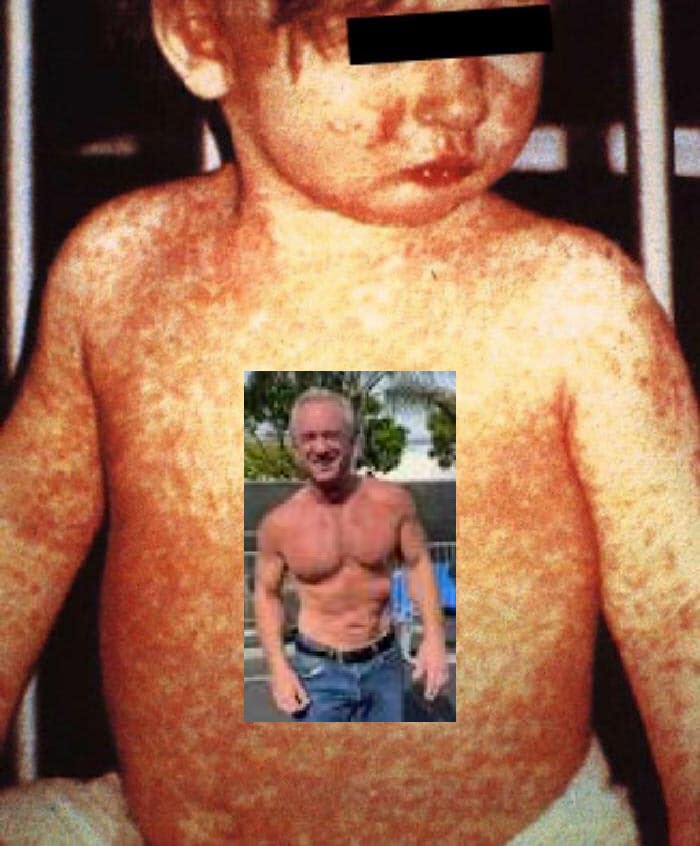
Trump’s disastrous pick for HHS will prove dangerous for the health and well-being of Americans, especially in cases of outbreaks like the Measles outbreak in Lubbock, Texas. His appointees to the FBI, Intelligence Service, and Justice Department will also prove dangerous to the health and well-being of our Democracy.
This time around, the purpose of Trump’s appointments is to appease the conspiratorial nature of his base voters – the anti-science, deep-state fearmongers, and Qanoon cultists, as well as Christian Nationalists and Trump’s Pro-Russian puppet handlers.
I make my way through a dimly lit hall of walkers, wheelchairs, and medical carts to find him where I always find him – in a threadbare recliner, lightly coated with dried skin cells and broken hair follicles – hunched over the New York Times crossword in his flannel robe, pee-stained underwear, and perfectly fitted Red Sox cap – his lips moving silently to the clues:
“1 Across – Act of saving or being saved – 1 down – Environmentally friendly material.”
Dad never used to move his lips – they were always tightly creased, well-mannered, and coolly detached from the finely humming machine in his head as he attacked the puzzle on all fronts.
To Dad, the Times crossword was a trusted friend, a worthy opponent, and an intellectual fencing partner who, for years, prepared him mentally for the start of his day. It felt grossly unfair that Dad was aging so inelegantly while his opponent remained unscathed by time.
I stand invisible at the entrance of his room, just staring, not wanting to disrupt his endeavor.
When he finally looks up, he shoots me a broad smile and tips his cap in my direction before returning to the puzzle.
I enter the room, clear my throat, and get to the point of my visit.
“Dad, do you have a will?”
Without lifting his eyes or halting the motion of his pencil, he responds, “You can have it all. Just burn me down to a fine ash, then bury me in the desert. There – that’s my will. Cross it off your list.”
I sigh heavily.
With his head still bowed, he holds up his mechanical pencil and points it sharply in my direction before continuing.
“But not too deep. A few inches below the topsoil will do just fine. I want the rain to be able to get to me — muddy me up a bit.”
He lifts his head. A thin dusting of skin cells and hair follicles fall – it’s wintertime in Flannel Ville. He gives me a wink and a smile before returning to the puzzle.
“What about the family plot where Mom is?”
“What about it?”
He goes on, “In the words of the best Beatle by far, Let. It. Be. When she was alive, your mother nagged me about hogging the bed and disturbing her sleep. Trust me, she’d be fine with my desert plan.”
He returns to the puzzle, mumbling under his breath.
“6 across – Breaking down organic matter” – 2 Down – To accept without protest”
“Is any of this written down, Dad?”
He slams the folded Times on his lap, and an unwelcome whiff of urine fills my nostrils.
“Why do I need to write it down? I just told you with actual words from my mouth – Put me in the goddamn desert, a few inches deep – Easy-Peasy. You want to bring nurse Jackie in as a witness?”
There’s no Nurse Jackie, but Dad loved that show so much that he referred to all his nurses as Nurse Jackie—even the males.
“Sorry, Dad.”
He softens immediately and smiles.
“It’s OK. No worries from the weary.”
“The Times is kicking my ass today.” He tosses the newspaper onto his bed – a school of dad-DNA swims in a stream of sunlight above the bedding.
“How are things at home? How are Emma and the boys?”
“They’re good – I’ve been wanting to get the boys in for a visit – -they’ve been busy with basketball and homework.”
“Don’t worry about visits. Honestly, I don’t want them to see me like this.”
A silence settles in the room. I can hear the paint peeling and a clock ticking.
“Can you do me a favor?”
“Sure, Dad, whatever you need.”
He points to the wall behind his bed.
“Get rid of that goddamn cross. It’s from the poor soul who was here before me.”
I lift the lacquered black Christless cross from its nail. The unfaded paint beneath it leaves a crucifix shroud of Turin.
In a deadpan voice, Dad stares at the wall and quotes Luke 24:6-7, “He is not there; he has risen,” and smiles sarcastically.
“Thanks, son.”
I stand Pope-like in the middle of his room, holding the crucifix, “What should I do with this?”
“Burn and bury it in the desert – he chuckles and starts to cough – a mosh pit of Dad-dust bounces enthusiastically on his shuddering shoulders. I can almost hear Cobain screaming.
Suddenly, there’s a discharge of electricity around Dad’s recliner. I look up to an intense blueish-white light pushing through the crevices on his forehead—a halo of electrified dandruff swirls above his head. A look of relief falls upon him. He winks and says warmly, “I’m just saving you the effort. Goodbye, son.”
There’s a loud pop—like a fluorescent light bulb dropped from a great height—as Dad bursts into flames like a human Hindenburg. Thin flakes of ash float in the air. Their fiery orange edges burn bright for a few seconds before self-extinguishing into dissipating wisps of smoke and settling all around me.
I drop the crucifix in stunned silence.
A nurse (followed by an elderly gentleman with a Dustbuster) enters the room. The nurse tilts her head towards her left shoulder and speaks into a small black microphone, “Mr. Smith in 103 has transitioned.” She nods sharply to the gentleman, who retrieves the crucifix and vacuums up every remnant of my father. He even vacuums Dad from my shoulders and shoes. When he finishes, the nurse checks her watch and makes a notation on her clipboard.
She hands me a piece of paper. “Your father left us these coordinates. We’re sorry for your loss. Please collect your father’s remains at the nurse’s station.” She and the orderly exit the room along the same path they entered.
I unfold the paper. Scrawled in my dad’s handwriting are the coordinates 40°40′N 117°40′W.
After a few minutes, I head to the Nurse’s Station. Dad’s been packaged neatly in a small cardboard box with the Crestwood Nursing Home logo. Someone thoughtfully taped the crucifix onto it. I pull it off and toss it in the trash on my way out the door.
I place Dad in the glove compartment and drive west to the desert.
My Paper, My Words is a collection of essays, stories, and poems that reflect the challenges of a middle-class husband and father trying to navigate a rapidly changing political, religious, and technological landscape of post-9/11 America.
Let’s Ask Arty uses existing Artificial Intelligence (AI) technology to query LLMs about politics in these troubled times.
Query 1: How did the war between Ukraine and Russia start?
The war between Ukraine and Russia began with Russia’s invasion of Ukraine on February 24, 2022. This invasion was preceded by years of tension and conflict, including Russia’s illegal annexation of Crimea in 2014 and support for pro-Russian separatists in eastern Ukraine2. The full-scale invasion in 2022 marked a significant escalation in the conflict
Query 2: Did Russian Forces commit war crimes against Ukraine citizens?
Yes, there have been numerous credible reports and investigations indicating that Russian forces have committed war crimes against Ukrainian citizens since the invasion began in 2022. These war crimes include deliberate attacks on civilian targets such as hospitals, schools, and residential areas, indiscriminate attacks on densely populated areas, abduction, torture, and murder of civilians, forced deportations, sexual violence, and destruction of cultural heritage.
Query 3: Is Vladimir Putin responsible for war crimes against Ukraine?
The International Criminal Court (ICC) has issued an arrest warrant for Russian President Vladimir Putin, accusing him of war crimes related to the unlawful deportation and transfer of children from occupied areas of Ukraine to Russia. This is part of broader allegations of war crimes committed by Russian forces, including deliberate attacks on civilian targets, abductions, torture, and murder of civilians, and destruction of cultural heritage.
Query 4: As an American citizen, how can I support Ukraine in its war with Russia even when my government seems now to be siding with Russia?
It’s commendable that you want to support Ukraine despite the complexities of international politics. Here are some ways you can help:
Donate to humanitarian organizations: Organizations like People in Need, the Ukrainian Red Cross, International Medical Corps, and CARE are actively providing aid to those affected by the conflict. Your donations can help provide food, shelter, medical aid, and other essential services1.
Support Ukrainian businesses: Purchase products made in Ukraine or from Ukrainian-owned businesses to help support their economy.
Advocate for Ukraine: Use your voice to raise awareness about the situation in Ukraine. Write to your representatives, participate in peaceful protests, and use social media to spread the word.
Volunteer: Look for local or international volunteer opportunities with organizations that support Ukraine. This could include anything from fundraising events to providing direct assistance to refugees.
Educate yourself and others: Stay informed about the situation in Ukraine and share accurate information with your community. Knowledge is power, and spreading awareness can lead to more support.
Support cultural initiatives: Attend events, concerts, and exhibitions that promote Ukrainian culture and raise funds for the cause.
Query 5: Was Donald Trump financially beholden to Russia?
The relationship between Donald Trump and Russia has been a topic of much discussion and investigation. While Trump has consistently denied having any financial ties to Russia, investigations and reports have revealed several connections.
Business Ventures: Trump has pursued business deals in Russia since the late 1980s. Although he never successfully concluded any real estate deals in Russia, Russian investors have heavily invested in Trump properties.
Financing: Following his bankruptcies in the 1990s, Trump borrowed money from Russian sources. His children have also acknowledged that Russia was an important source of money for the Trump businesses.
Associates: Several of Trump’s senior advisors and business partners have had financial and business ties to Russian financiers.
Despite these connections, Trump has maintained that he has no financial ties to Russia. The full extent and nature of these connections remain a subject of ongoing scrutiny and debate.
My Input
Before I get going, I need to jettison some of my anger about America’s shift regarding the war in Ukraine.
I’m angry that millions of Americans don’t seem to care their President is a fucking liar. They don’t seem to care that under Trump’s authority, America has flipped its position on Ukraine, signaling support for the nation that unlawfully invaded them while committing war crimes against Ukrainian civilians.
This past week, in America’s name, Trump stood on the world stage and knowingly lied about who started the war in Ukraine and then regurgitated Russian talking points about President Zelensky being a dictator.
Let’s get to the point. As Arty states clearly, there is no ambiguity about what happened on February 24, 2022.
After Putin unlawfully invaded Ukraine and committed war crimes against Ukrainian citizens, America stood shoulder-to-shoulder with law-abiding nations around the world in condemnation of Russia. America and our Western European allies offered humanitarian, military, and moral support to help Ukraine defend and fight against Russia.
Before Trump became President again, standing up for Ukraine wasn’t a sticky wicket politically. Ukraine was not threatening Russia. Ukraine was simply next to Russia—there for the taking. The “right and wrong” of Russia’s invasion of Ukraine was so clear that even our divided Congress came together almost immediately to support President Zelensky and the Ukrainian people.
I was proud of our government’s stance, but honestly, it was a no-brainer.
Right??
Now look at where we are today. Trump is working directly with Russia while excluding Ukraine from negotiations and labeling President Zelinsky a dictator.
What we need to remember about Donald Trump is that he’s purely transactional, has no moral compass, and has a penchant for revenge.
Why is this important regarding the war in Ukraine? Whether you curry favor or scorn Donald Trump, you can expect reciprocity—he’s a tit-for-tat president unfettered by morality or the rule of law.
Donald Trump dislikes President Zelensky because, in 2019, Zelensky didn’t agree to Trump’s request that he “do us a favor” and investigate Joe Biden, his political rival, and his son Hunter Biden.
Trump threatened to withhold military aid and a White House meeting as leverage to strong-arm Zelensky.
A House investigation found that Trump’s actions constituted an abuse of power (pressuring a foreign leader for personal political gain) and that he obstructed Congress by instructing his administration to ignore subpoenas for documents and testimony.
Donald Trump hates the fact that Zelensky would not be bullied and probably blames the Ukrainian President for his first impeachment.
Trump likes Vladimir Putin because Putin and Russia curried favor with Trump by interfering in the 2016 U.S. Presidential Election to undermine Hillary Clinton’s campaign and boost Donald Trump’s chances of winning. Russian interference included hacking and releasing emails from the Democratic National Committee and Clinton’s campaign chairman, as well as spreading disinformation through social media.
The U.S. intelligence community, the Republican-led Senate Intelligence Committee, and Special Counsel Robert Mueller’s investigation all concluded that Russia engaged in an extensive campaign to influence the election in favor of Donald Trump.
The people who know Trump best – the ones who served in his administration and the high-ranking officers in the military that he commanded, spoke clearly before the 2024 election, telling Americans in no uncertain terms that Donald Trump was a fascist and a threat to our democracy and democracies around the world. However, the price of eggs was through the roof, a handful of trans athletes competed in events, and the local library hosted Drag Show Readings. And so millions of Americans turned a deaf ear to the warnings and voted for a convicted felon and serial sexual abuser. Today, the consequences of that decision are unfolding before our eyes.
It’s clear that Congress, which has the constitutional authority to check the President’s powers, lacks the courage to do so. And we can forget about the Judicial branch, which granted Trump immunity from criminal prosecution.
American citizens will have to right the ship. The longer Trump’s actions go on without protest or dissent from citizens, the more momentum Trump and the MAGA movement gain, and the more dangerous and difficult our task becomes.
With each passing day, more executive orders come, and Elon Musk swings the DOGE wrecking ball at federal institutions and agencies to weaken the government and solidify executive power and authority.
It’s up to American citizens to demand a moral, competent, and just government that supports democracy and works for the people instead of an autocratic, oligarchic government that demands fealty from the people.
Neo-fascist-oligarchic-expialidocious Elon-Bezos-Zuckerberg are really quite atrocious We need to fight them in the streets and call them on their grossness Neo-fascist-oligarchic-expialidocious
We cannot be afraid to speak at what is being done Trump’s a bully and freak who wants to shock and stun with fascists in our government, this isn’t a dry run And so we have a song to sing, a song that must be sung
GO!
Neo-fascist-oligarchic-expialidocious Elon-Bezos-Zuckerberg are really quite atrocious We need to fight them in the streets and call them on their grossness Neo-fascist-oligarchic-expialidocious
It seems a lesson wasn’t learned from Hitler’s evil days when you lose democracy, your freedoms slip away when oligarchs and fascist pigs try to steal away everything you’ve worked hard for this is what to say
Hey!
Neo-fascist-oligarchic-expialidocious Elon-Bezos-Zuckerberg are really quite atrocious We need to fight them in the streets and call them on their grossness Neo-fascist-oligarchic-expialidocious
Now’s not the time for sitting back or fretting in dismay Be courageous in your deeds and learn to seize the day Don’t go hiding in the weeds or worse just weep and pray, take to the streets to fight misdeeds while singing all the way
Hey!
Neo-fascist-oligarchic-expialidocious Elon-Bezos-Zuckerberg are really quite atrocious We need to fight them in the streets and call them on their grossness Neo-fascist-oligarchic-expialidocious








 bendingtheneedle