
An AI music generator collides with a human lyricist, and the result is an intense and stirring song.
Have a listen at Suno.com
Truth Hurts
An AI music generator collides with a human lyricist, and the result is an intense and stirring song.
Have a listen at Suno.com

Democratic socialism is a political and economic philosophy that advocates for a democratic political system alongside a socially owned or regulated economy. It emphasizes both political democracy and economic fairness, aiming to reduce inequality through collective decision-making and public control over key sectors.
Democratic socialism differs from traditional socialism primarily in its commitment to political democracy and its approach to economic reform. While both advocate for social ownership and reducing inequality, democratic socialism insists on maintaining democratic institutions and civil liberties.
| Feature | Democratic Socialism | Traditional Socialism |
|---|---|---|
| Political System | Emphasizes democracy, free elections, and civil liberties | May support centralized or authoritarian governance |
| Economic Ownership | Advocates social ownership of key industries, not all | Seeks complete public ownership of the means of production |
| Implementation Method | Uses gradual reforms through democratic processes | Often involves revolutionary change or centralized planning |
| Individual Freedoms | Strong focus on protecting rights and liberties | May subordinate individual rights to collective goals |
| Examples | Nordic countries (in practice), Bernie Sanders (in rhetoric) | Historical models like USSR, Maoist China |
In the U.S., the term “socialism” has often been used pejoratively, leading to misunderstandings. Democratic socialism is sometimes conflated with authoritarian socialism or communism, despite its emphasis on democracy and civil rights.
| System | Ownership Model | Political System | Economic Focus |
|---|---|---|---|
| Democratic Socialism | Public/social ownership of key sectors | Democratic (multi-party) | Equity, welfare, and public good |
| Social Democracy | Capitalist economy with strong welfare state | Democratic | Redistribution through taxation |
| Communism | Full state ownership of all property | Often authoritarian | Classless, stateless society |
| Capitalism | Private ownership of most industries | Democratic or authoritarian | Profit-driven, market-based |
Sources: Wikipedia, Britannica, Democratic Socialists of America
Nordic countries like Sweden, Norway, Denmark, and Finland are widely considered the most effective examples of democratic socialism. Success is typically measured through metrics like economic equality, universal access to services, democratic stability, and overall well-being.
These nations blend market economies with strong welfare states and democratic institutions:
These countries maintain multi-party democracies, free markets, and civil liberties, while ensuring universal access to healthcare, education, and housing.
Success isn’t judged solely by GDP—it’s about how well a society meets collective needs.
Key metrics include:
Language resonates, and misinformation denigrates.
Americans have a Pavlovian response to the word “socialism.” If Socialism is in the name, most Americans want nothing to do with it. When they hear it, they blanch and recoil reflexively, never taking the time to differentiate Socialism from democratic Socialism.
Many citizens view Socialism as anti-American, even if it has the word “democratic” attached to it.
For years, politicians in both parties have successfully leveraged America’s innate fear and disgust of Socialism to denigrate and lie about Democratic Socialism. For example, as Arty stated, it falsely equates it to traditional Socialism or even communism.
But voters in New York City are on the verge of shaking things up in American politics by electing a Democratic Socialist to lead the most strategic, culturally and financially influential city on Earth.
Zohran Mamdani is a young, charismatic, and savvy candidate, but for most Americans (even New Yorkers), youth, charisma, and political chops have never been enough to clear the hurdle of being a Socialist.
So, why is Mamdani on the verge of becoming New York City’s mayor?
What’s changed?
I’d argue that the most significant change driving America’s willingness to look at Democratic Socialism with a more critical and unbiased eye is the policies of Donald J Trump, which are turbo-charging the rise in economic inequality across the country.
Middle- and lower-income New Yorkers are feeling the impact of unfair economic policies and the very real consequences of those policies — and on this election day, New Yorkers are a microcosm of Americans across the country.
And I believe that in America today, the conceptual and philosophically based fear of Democratic Socialism is less than the very real fear of not being able to afford housing, groceries, healthcare, and education.
Americans are looking for a government that balances economic fairness and personal freedom. Most Americans don’t want to abolish capitalism entirely, but rather tame its excesses, which have exploded over the last several decades and worsened further under Donald Trump.
The gap between the wealthiest Americans and the rest of the population has widened, with income and wealth increasingly concentrated at the top. According to Arty, economic inequality has been trending upward for decades:
And by comparison, income inequality pales to the extreme wealth inequality in America, where the top 1% of households now hold more wealth than the bottom 90% combined.
But it’s what lurks behind the wealth and income numbers that truly matters and should keep average Americans up at night.
Rising inequality affects:
Democratic Socialism isn’t just a policy shift—it’s a philosophical challenge to the idea that markets should dominate society. By prioritizing human needs over profit, it exposes the limitations and inequalities of unfettered capitalism. That’s why it’s seen as a threat—not because it seeks chaos, but because it seeks a different kind of order.
We’re about to see just how fed-up New Yorkers are with our current system of government. Today’s mayoral election may be a harbinger of change and political revolution in America.
If you haven’t had a chance yet, please check out my book, My Paper, My Words: Rantings from a Progressive Boomer and Peeved Parent, from Amazon. And if you feel moved to write a review of the book, on Amazon, or anywhere else, I’d be honored.
My Paper, My Words is a collection of essays, stories, and poems that reflect the challenges of a middle-class husband and father trying to navigate a rapidly changing political, religious, and technological landscape of post-911 America.
No, Donald Trump’s statement that Ronald Reagan loved tariffs for our country and its national security does not accurately reflect President Reagan’s views on tariffs.
Reagan was a strong advocate for free trade and often spoke against tariffs, viewing them as harmful to economic prosperity.
In fact, in a 1987 national radio address, Reagan explicitly criticized tariffs, stating they “hurt every American” and arguing that protectionist policies like tariffs lead to “shrinking markets, collapsing businesses, and widespread job losses”. He believed that while tariffs might seem patriotic or protective in the short term, they ultimately stifle innovation, provoke retaliatory trade measures, and damage the broader economy.
No, Donald Trump was not telling the truth.
A recent controversy arose when the Ontario government aired an ad using clips from Reagan’s 1987 speech to highlight his anti-tariff stance. Donald Trump responded by calling the ad “fake” and claimed it misrepresented Reagan’s views. However, fact-checks and the full context of Reagan’s speech confirm that he genuinely opposed tariffs and championed open markets.
While Reagan did occasionally use targeted trade measures for strategic purposes, his overall philosophy was rooted in free and fair trade, not broad protectionism or nationalistic tariff policies.
So, while Trump may frame tariffs as essential for national security, invoking Reagan as a supporter of such policies misrepresents the former president’s well-documented economic views.
Anyone with a cell phone or computer can do a quick Google search and know definitively that Trump was lying about the Ontario government’s Ad being fake and lying about Ronald Reagan “loving tariffs.”
It took me less than 5 minutes to debunk President Trump’s statements.
The more prescient issue is how fluidly this administration weaponizes lying.
Most politicians (and non-politicians for that matter) lie to get out of a jam. The Trump administration’s repetitive lying is part of a strategy to manipulate public opinion.
This administration is taking a page from the 1930s Nazi party playbook, where writings and speeches consistently emphasized emotional appeal, repetition, and the subordination of truth to political strategy.

According to Arty, Joseph Goebbels, the Nazi Minister of Propaganda, believed:
The Trump administration has been widely criticized for employing repeated falsehoods as a political strategy, often aligning with the idea that repetition can foster belief.
Here are several notable examples of falsehoods repeated by Donald Trump and his administration:
A 2023 study published in Public Opinion Quarterly found that repeated falsehoods from Trump’s presidency significantly influenced public misperceptions, especially among partisan audiences. The more often Trump or officials from his administration repeated lies, the more likely people were to believe them, even after the falsehoods had been publicly debunked.
What the Vice President Said:
What the Facts Show
There is no provision in the Democratic proposal that offers free healthcare to undocumented immigrants.
What Democrats Say:
The claim that Democrats are shutting down the government to fund healthcare for illegal immigrants is FALSE. The dispute centers around extending healthcare subsidies for legal residents and reversing Medicaid cuts—not providing benefits to undocumented immigrants.
Here’s a detailed breakdown of how healthcare access works for different immigrant groups in the U.S., based on federal law and recent policy developments:
U.S. Citizens and Naturalized Citizens
This includes green card holders, refugees, asylees, and those with humanitarian parole or Temporary Protected Status (TPS).
🔵 DACA Recipients (Deferred Action for Childhood Arrivals)
Undocumented Immigrants
⚪ Mixed-Status Families
🏛️ Recent Policy Changes & Debates
The Republican-backed One Big Beautiful Bill Act makes significant changes to the Affordable Care Act (ACA) subsidies, and the consequences for Americans relying on ACA marketplace insurance could be severe.
🧾 What Changed in the Bill
Impact on Healthcare Costs
🧠 Who’s Most Affected
This policy shift is at the heart of the current government shutdown, as Democrats are refusing to pass a funding bill that doesn’t include a renewal of these subsidies
The savings from cuts to the Affordable Care Act (ACA) in the One Big Beautiful Bill Act are largely redirected toward tax relief and deficit reduction, with the biggest beneficiaries being high-income earners, corporations, and defense spending priorities. Here’s how it breaks down:
💰 Where the Savings Go
🏦 Who Benefits Most
| Group | How They Benefit |
| High-income earners | Receive larger tax breaks due to reduced progressive taxation and capital gains reforms. |
| Corporations | Benefit from lower corporate tax rates and relaxed healthcare mandates for employees. |
| Defense contractors | Gain from increased military and border security allocations funded by healthcare cuts. |
| Private insurers | May profit from reduced competition and fewer subsidized plans on ACA marketplaces. |
🚫 Who Loses Out
The bill’s supporters argue it reduces “wasteful spending,” but critics say it shifts costs from the wealthy to vulnerable populations and destabilizes the healthcare system
JD Vance was lying when he said, “Democrats are threatening to shut down the entire government because they want to give hundreds of billions of dollars of health care benefits to illegal aliens.”
The Republican Speaker of the House, Mike Johnson, was lying when he said, “The Democrats said instead that they wanted to give healthcare to illegal aliens instead of keeping critical services provided for the American citizens.”
Both these men, along with the President and Republicans in Congress, want to feather the pockets of the wealthiest Americans and fill the coffers of corporations at the expense of the poor and middle class.
I hope Democrats stick to their guns in the Government funding debate and fight republican cuts to ACA subsidies, which will hurt middle-class Americans by doubling monthly healthcare premiums, increasing out-of-pocket costs for families, and resulting in a loss of healthcare coverage for millions of Americans.
If you haven’t had a chance yet, please check out my book, My Paper, My Words: Rantings from a Progressive Boomer and Peeved Parent, from Amazon. And if you feel moved to write a review of the book, on Amazon, or anywhere else, I’d be honored.
My Paper, My Words is a collection of essays, stories, and poems that reflect the challenges of a middle-class husband and father trying to navigate a rapidly changing political, religious, and technological landscape of post-911 America.
President Donald Trump’s speech to the United Nations General Assembly on September 23, 2025, included several claims that have been widely fact-checked and found to be misleading or false across multiple topics. Here’s a breakdown of the most notable inaccuracies:
Trump stated:
“I ended seven wars… Cambodia and Thailand, Kosovo and Serbia, the Congo and Rwanda, Pakistan and India, Israel and Iran, Egypt and Ethiopia, and Armenia and Azerbaijan.”
Fact Check:
Trump called climate change “the greatest con job ever perpetrated on the world” and claimed renewable energy sources “don’t work” and are “too expensive.”
Fact Check:
Trump claimed:
“I have the highest poll numbers I’ve ever had.”
Fact Check:
Trump described U.S. immigration laws as “suicidal” and blamed them for economic and social decline.
Fact Check:
Trump said:
“All they seem to do is write a really strongly worded letter and then never follow that letter up.”
Fact Check:
I’ve given up on President Trump ever speaking truthfully about anything. Whenever he opens his mouth, lies spill out. Lying is his default setting.
I can’t see how anyone with even an ounce of intelligence could watch that speech and not be embarrassed and ashamed of who we put in office.
We all knew the speech (like all of Donald Trump’s speeches) would be littered with lies and misinformation, so no surprise there. But the boorish and self-congratulatory tone was off the charts, even for Trump. If the delegations had any courage at all, they would have stood up and walked out.
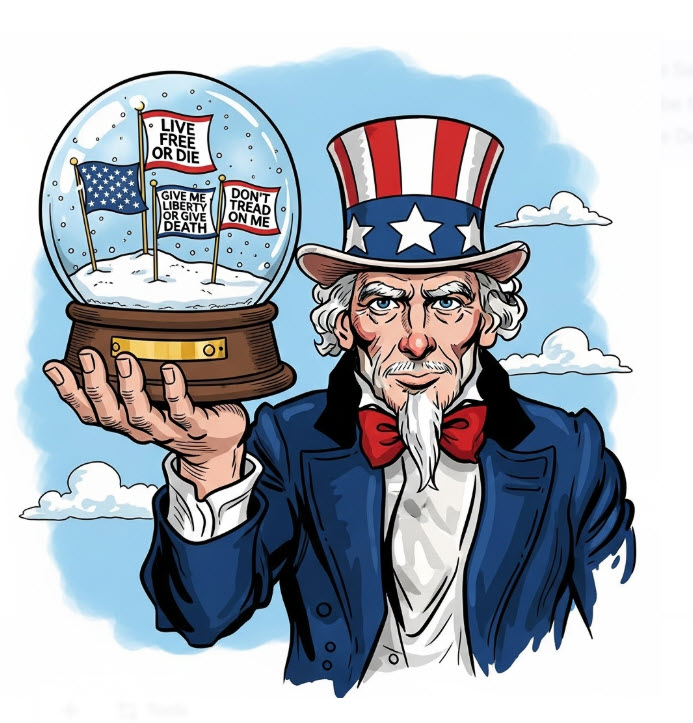
I abhor violence, but the “violence doesn’t solve anything” lament rings hollow in a country that was born out of violent revolution and resistance, and a country that fought violently to prevent fascism from spreading across Europe and the world. Opposing tyranny and a love of freedom are part and parcel of the American experience. When an individual or government threatens our right to speak and live freely, we resist, protest, and, if necessary, we fight.
The American Revolution did not explode spontaneously into violence – it grew over time from protests, pamphlets, and reasoned arguments. When all of that failed, the only thing left was to either submit to tyranny or to fight.
We celebrate the success and ultimate sacrifice of the American Revolution every Fourth of July and Victory Day every second Monday in August. We pump our fists and fly flags to the rallying cries of “Live Free or Die,” “Give me liberty, or give me death,” and “Don’t Tread on Me.” The activities associated with these sentiments are rarely free of violence.
We humans haven’t evolved as much as we pretend. We struggle to sustain a lasting peaceful coexistence with one another; we’re unable to live-and-let-live, often because of the ginned-up fear around political, religious, and cultural differences, which keep us divided and fighting amongst one another. And make no mistake, leaders like Donald Trump understand that if we are fighting one another, we’re not fighting them.
America is marching towards fascism, and many Americans seem okay with the path we’re on. Maybe it doesn’t feel like fascism when you share the political, social, and religious ideology of your fascist government? Regardless, most Americans (across the political spectrum) do not want conflict, yet we find ourselves on a dangerous precipice of violence with one another, fueled by the assassinations of Melissa and Mark Hortman and Charlie Kirk.
And what makes our current situation even more perilous is that our President is not calling for calm or trying to defuse things.
Why do you think that is?
It’s because the President sees anyone who does not share his authoritarian views as the “enemy within.”
We shouldn’t kid ourselves about the character and nature of the individuals who sit at the highest levels of our government. Our government is awash in fascists and Christian nationalists who have no intention or desire to sit down with secularists, progressives, or even moderate democrats because they view them as a direct threat to their authoritarian designs on America.
If you cherish freedom for everyone, now is the time to speak loudly and to push aggressively (and peacefully) against a government that is trying to strip freedom away from your fellow citizens.
If you haven’t had a chance yet, please check out my book, My Paper, My Words: Rantings from a Progressive Boomer and Peeved Parent, from Amazon. And if you feel moved to write a review of the book, on Amazon, or anywhere else, I’d be honored.
My Paper, My Words is a collection of essays, stories, and poems that reflect the challenges of a middle-class husband and father trying to navigate a rapidly changing political, religious, and technological landscape of post-911 America.
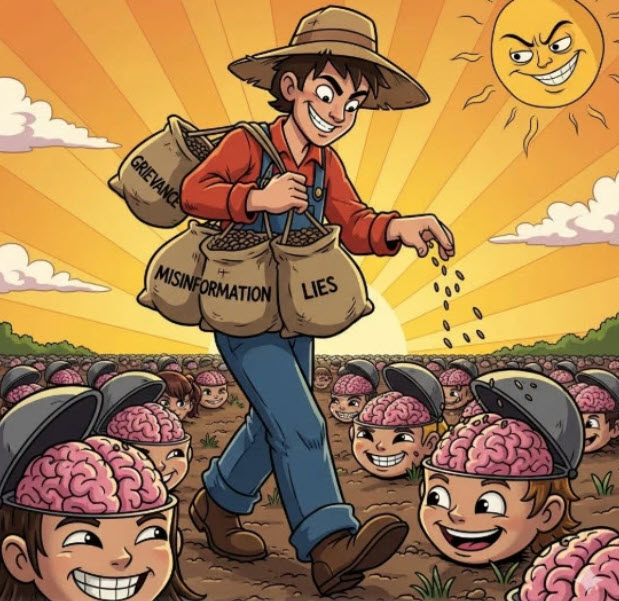
Through his organization Turning Point USA (TPUSA), Charlie Kirk became a significant force in conservative youth politics by tapping into a feeling of cultural displacement among young white men—especially those outside elite institutions—by validating their frustrations and offering a political identity that felt empowering.
He successfully rebranded conservatism for youth by leaning into cultural grievances, opposing progressive ideas (like DEI, CRT, gender fluidity), which resonated with young men who felt blamed or sidelined in mainstream discourse.
In many ways, Charlie Kirk’s meteoric rise embodies the quintessential American success story, where money, power, and fame are all that matter and where kindness, empathy, and service to others are for suckers.
On the surface, some of what Charlie Kirk did and achieved seems almost noble. He reached out to a segment of society that felt politically voiceless and culturally alienated, and he gave them a voice. He recognized the underrepresentation and an utter lack of organized advocacy for non-college-educated white males in America and championed their needs.
The problem was how Charlie Kirk framed their economic disenfranchisement.
Kirk sold young white non-college-educated males on the simplistic notion that the source of their economic disenfranchisement were immigrants, women, minorities, and wokeism, when in reality, their alienation from mainstream American society and its institutions and their feeling of lost purpose and status stems from economic and social shifts that have eroded the traditional path of a stable, middle-class life for those without a bachelor’s degree.
When a large segment of the population feels economically useless and politically invisible, it creates fertile ground for resentment, polarization, and instability. Discontentment is low-hanging fruit for the opportunistic and power-hungry, and Trump and Kirk cultivated and harvested that low-hanging fruit with great success, while continuing to spread the seeds of grievance, misinformation, and lies across the fertile minds of disaffected American youth for fame, fortune, and power.
Charlie Kirk and Donald Trump are emblematic of the deep rot in America’s political system, where politicians and influencers exploit the disaffected for their own personal gain, indoctrinating followers with cultural hot-button issues and identity politics to the point where the cultivated group doesn’t even care that they’re not being helped.
Like Trump, Kirk was never interested in helping his followers; he was only interested in exploiting them. To Charlie Kirk, America’s disaffected youth were a cash crop.
Genuine solutions to political disempowerment and economic disenfranchisement are complicated, expensive, and require systemic intervention from empathetic, pragmatic, and intelligent leaders who are genuinely interested in helping others. Amplifying polarization, promoting misinformation, and framing politics as a zero-sum cultural war are not solutions; those actions ensure the status quo.
We must connect the disaffected to hope and aspiration, rather than hatred and anger. It’s one thing to say, I feel your pain, quite another to do the hard work of alleviating the pain – and as we see with Trump and saw with Charlie Kirk, it’s a lot easier and more lucrative to point a finger and say, “them, they, those people, they’re the reason you are not flourishing.“
Doing the hard work to bring the disaffected back into the fold means investing in government-sponsored programs, training, and empathy, and those things are a tough sell in today’s political environment.
If you haven’t had a chance yet, please check out my book, My Paper, My Words: Rantings from a Progressive Boomer and Peeved Parent, from Amazon. And if you feel moved to write a review of the book, on Amazon, or anywhere else, I’d be honored.
My Paper, My Words is a collection of essays, stories, and poems that reflect the challenges of a middle-class husband and father trying to navigate a rapidly changing political, religious, and technological landscape of post-911 America.

Marble-toothed titans
with sneers caked in madness
greed-fed on blood bags
in sweatshops of sadness
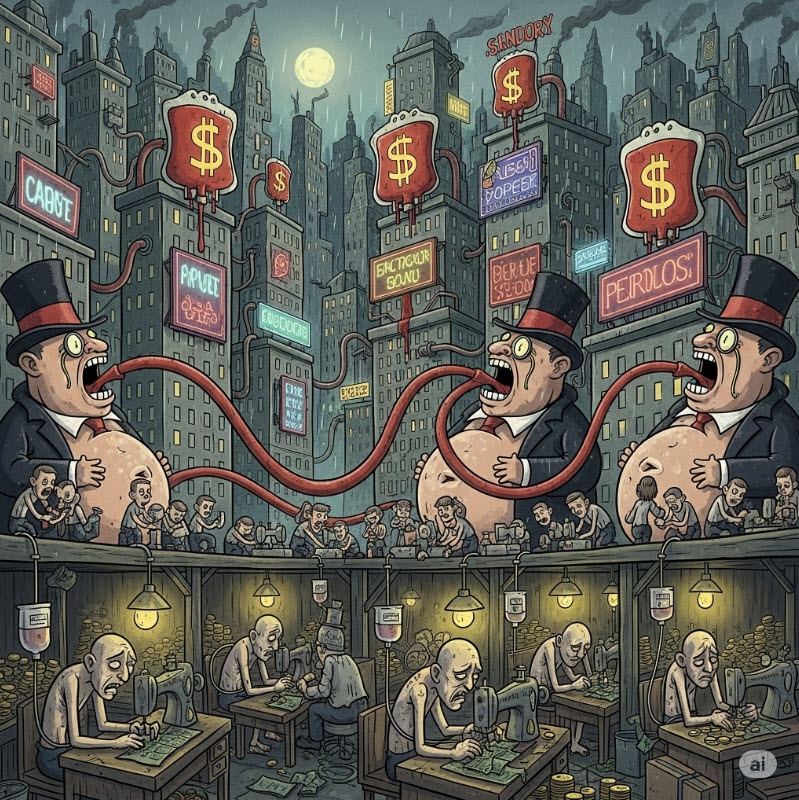
Kingpins with linchpins
thick carrots and sticks
deft robber barons
are up to their tricks
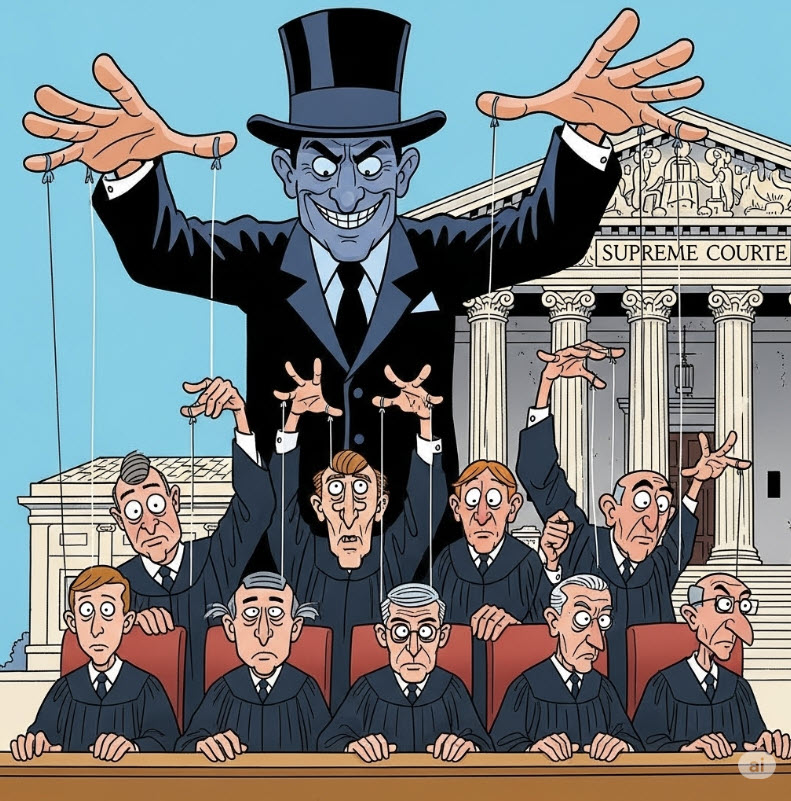
The morally crippled
gerrymander in Texas
felonious punk-thugs
that hate and perplex us

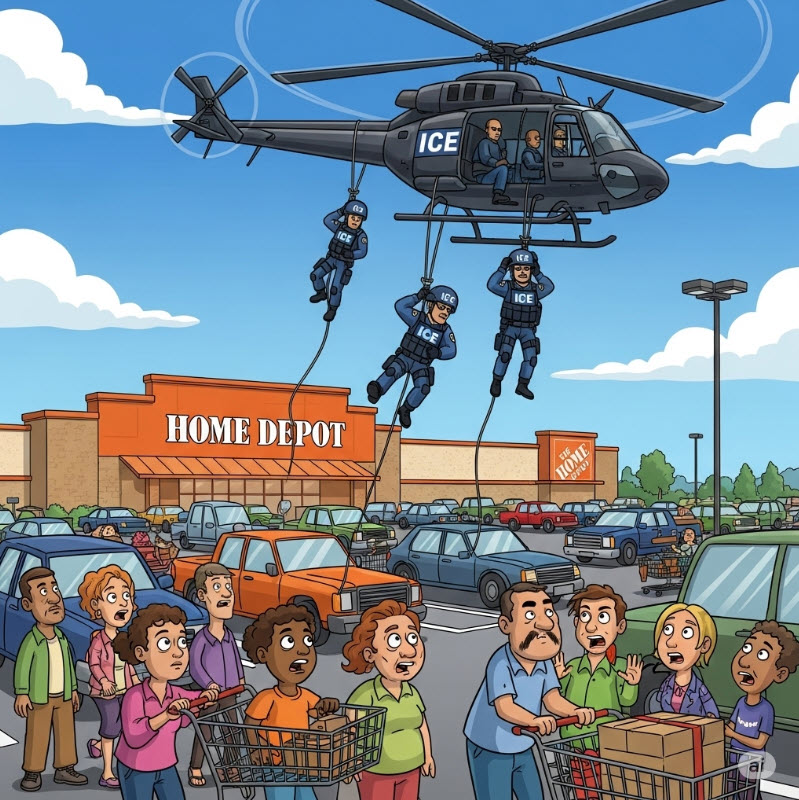
Gun toting douchebags
in Home Depot lots
promoting a fascist
while twisting the knot
The clown at the helm
of this powerful nation
is steeped in decline
and reverse escalation

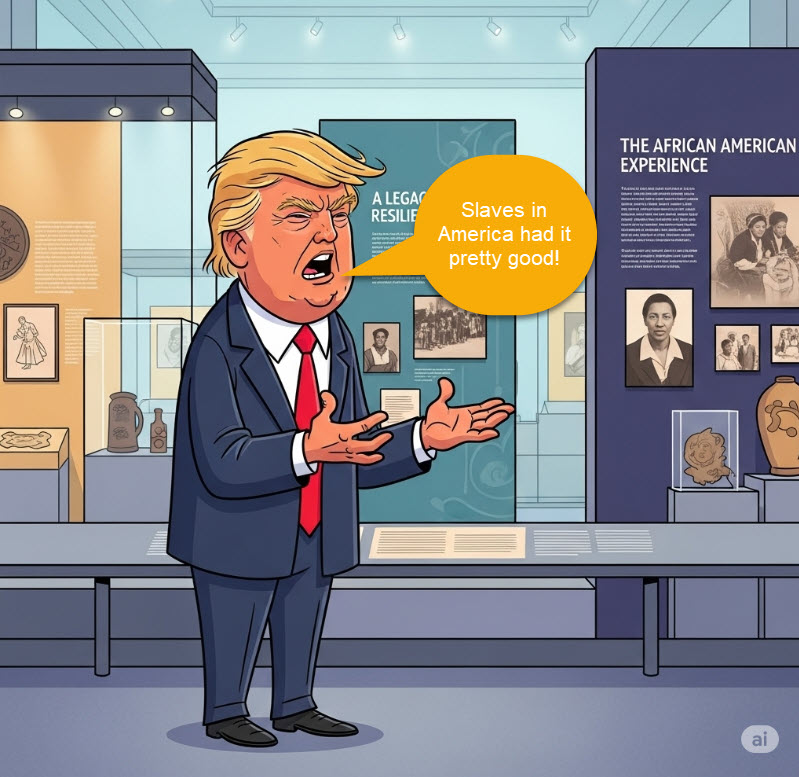
Whitewashing history
attacking the truth
a maniacal misfit
both rude and uncouth
He creates chaos
to hold onto power
commanding the guard
from his fake ivory tower

Targeting cities
that are mostly all blue
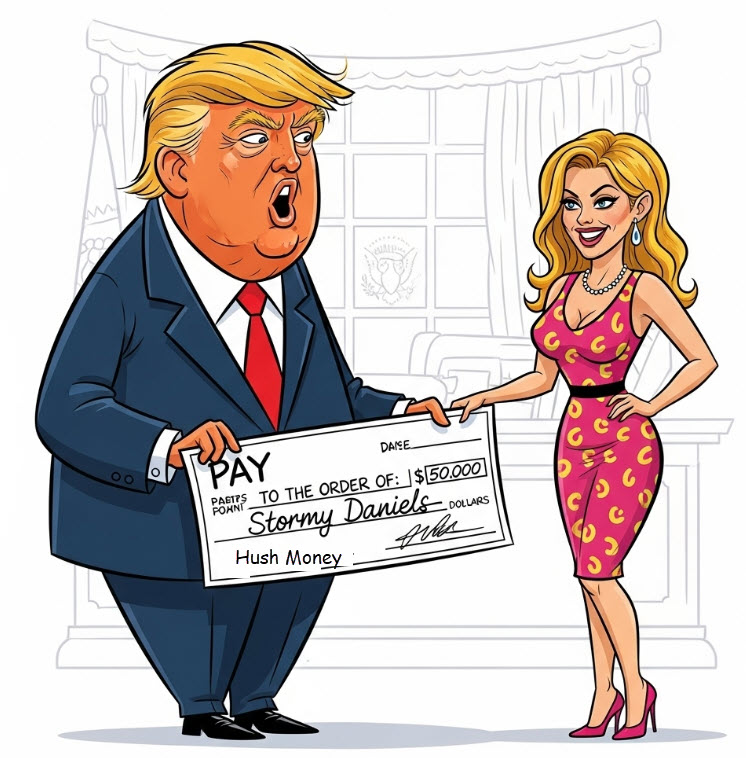
a pig who gropes kitties
and pays porn stars to screw
Visions of heaven
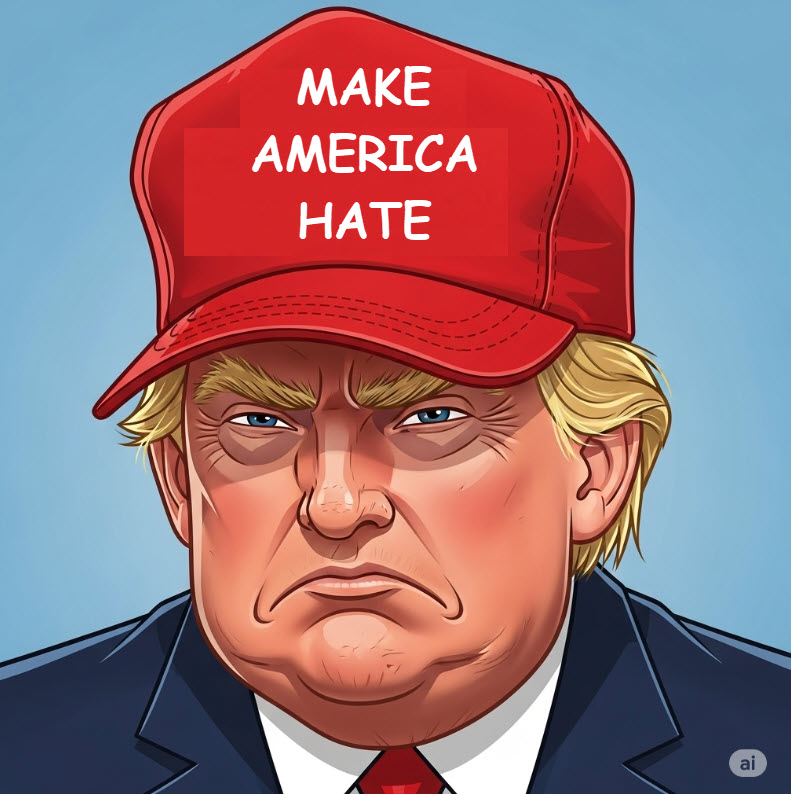
black heart full of hate
He’s never come close
to making us great
If you haven’t had a chance yet, please check out my first book, My Paper, My Words: Rantings from a Progressive Boomer and Peeved Parent, from Amazon. And if you feel moved to write a review of the book on Amazon or elsewhere, I’d be honored.
My Paper, My Words is a collection of essays, stories, and poems that reflect the challenges of a middle-class husband and father trying to navigate a rapidly changing political, religious, and technological landscape of post-9/11 America.
Read to the cadence of “Paint it, Black” by the Rolling Stones.
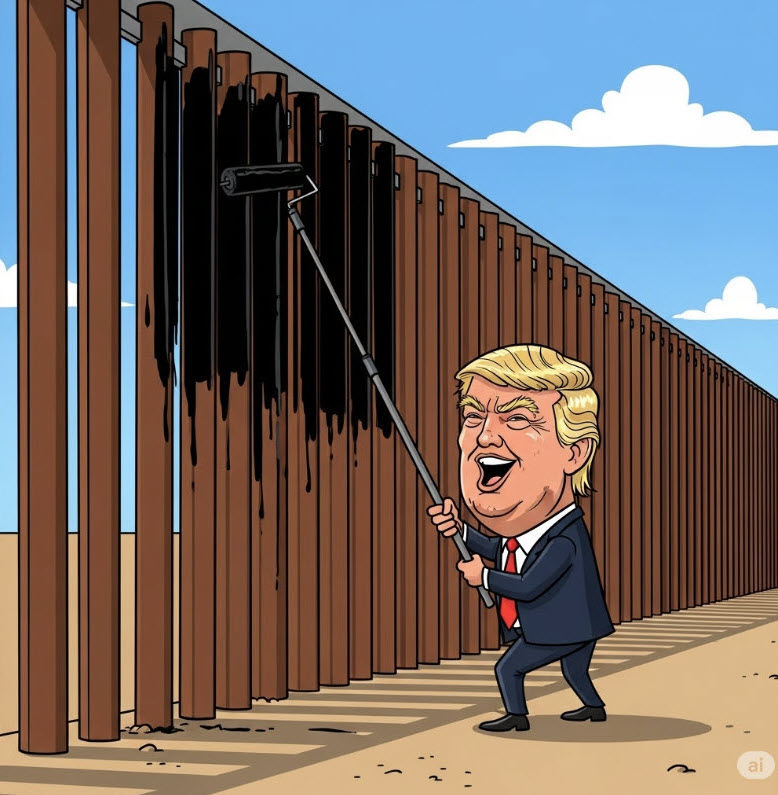
I see a brown wall
and I want it painted black
if you have brownish skin
I want to send you back
I see brown men walk by
dressed in their working clothes
I tell my ICE agents
It’s time to make them go
I see the Ukraine fry
in Russian drone attacks
the bombing raids and tanks
that turn their cities black
I see our democracy
begin to fade away
a thousand starving kids
in Palestine today
When I look inside myself
I see my heart is black
the orange spray-on tan
can’t cover up the fact
’till that day I fade away
you’re tied onto the track
I’ll make you suffer days
while turning this world black
I watch the climate change
from here to Timbuktu
I smile at the heat that’s
burning into you
If you look hard enough
into my soulless eyes
there’s only room enough
for all that I despise
I see a brown wall
and I want it painted black
just like my darkened heart
too hard to even frac
I see brown men walk by
dressed in their working clothes
I tell my ICE agents
It’s time to make them go
My feeble mind is tainted
tainted black
Black as night
Black as coal
I wanna see the hope
Blotted out from your eyes
I wanna see them painted, painted, painted
painted black, yeah
If you haven’t had a chance yet, please check out my first book, My Paper, My Words: Rantings from a Progressive Boomer and Peeved Parent, from Amazon. And if you feel moved to write a review of the book on Amazon or elsewhere, I’d be honored.
My Paper, My Words is a collection of essays, stories, and poems that reflect the challenges of a middle-class husband and father trying to navigate a rapidly changing political, religious, and technological landscape of post-9/11 America.

Hi folks,
I’ve just published “Imagine There’s No Donald” on Amazon.com.
Imagine There’s No Donald is a lyrical collection that channels the melodic cadence of (mostly) Beatles songs to deliver searing poetic indictments of Donald Trump, the MAGA movement, and their corrosive impact on American democracy.
Each poem echoes the structure and emotional resonance of iconic musical tracks—think “Rocky Racoon” reimagined as the tale of Donald Trump’s destructive path to the presidency, or Terry Jacks’ “Seasons in the Sun” transformed into a lament on Republican cowardice and lost democratic norms.
Through this fusion of pop nostalgia and political critique, the collection:
Whether riffing on “She Came in Through the Bathroom Window” to expose the sycophantic rot of the Trump administration or twisting “When I Saw Her Standing There!” into an elegy against oligarchs and authoritarianism, this book is a poetic rebellion—an artistic act of defiance that refuses to be silent in the face of democratic decay.
Most free thinkers, poets, and essayists are but a thorn in the side of the authoritarian regime that is running roughshod over America’s democracy. Writing and speaking truth to power sometimes feels like screaming into the void. But with critical mass and momentum, art can influence public sentiment and mobilize opposition to repressive policies and tactics, making it a powerful adversary to regimes that rely on propaganda and control.
Verbal resistance alone won’t revive our democracy. If we’re going to right the ship in America, we’re going to have to do more than sing and complain. We’re going to have to take to the streets and, as the honorable Georgia Congressman John Lewis famously said, “get in good trouble, necessary trouble” by the millions.
Get your copy of Imagine There’s No Donald on Amazon. Please feel free to share the link with others on your social media or simply by giving the book to a loved one as a gift.
Peace (and FUDT).
If you haven’t had a chance yet, please check out my first book, My Paper, My Words: Rantings from a Progressive Boomer and Peeved Parent, from Amazon. And if you feel moved to write a review of the book on Amazon or elsewhere, I’d be honored.
My Paper, My Words is a collection of essays, stories, and poems that reflect the challenges of a middle-class husband and father trying to navigate a rapidly changing political, religious, and technological landscape of post-9/11 America.

 bendingtheneedle