My Paper, My Words is a collection of essays, stories, and poems that reflect the challenges of a middle-class husband and father trying to navigate a rapidly changing political, religious, and technological landscape of post-9/11 America.
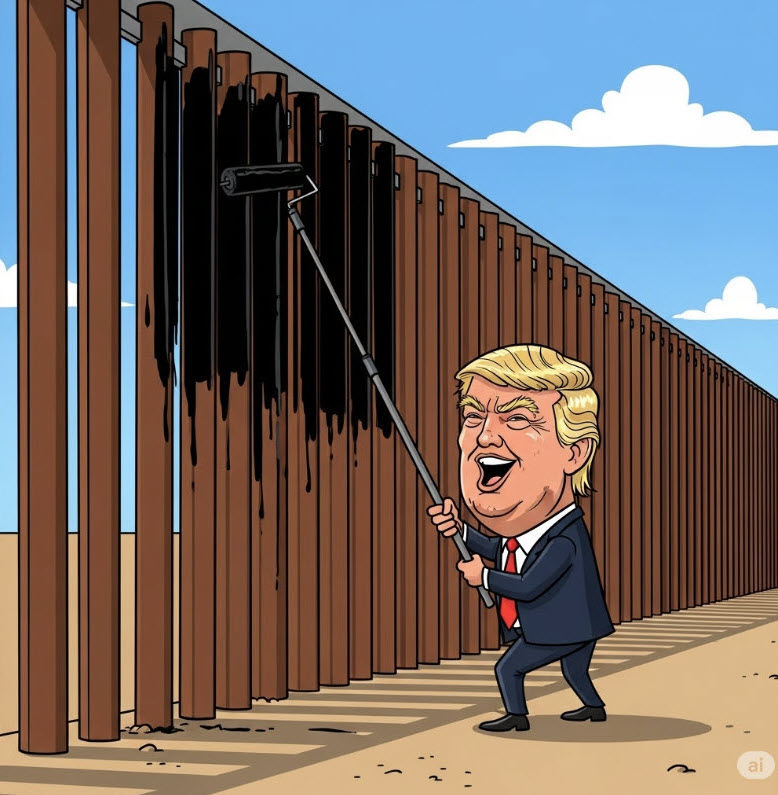
I see a brown wall and I want it painted black if you have brownish skin I want to send you back
I see brown men walk by dressed in their working clothes I tell my ICE agents It’s time to make them go
I see the Ukraine fry in Russian drone attacks the bombing raids and tanks that turn their cities black
I see our democracy begin to fade away a thousand starving kids in Palestine today
When I look inside myself I see my heart is black the orange spray-on tan can’t cover up the fact
’till that day I fade away you’re tied onto the track I’ll make you suffer days while turning this world black
I watch the climate change from here to Timbuktu I smile at the heat that’s burning into you
If you look hard enough into my soulless eyes there’s only room enough for all that I despise
I see a brown wall and I want it painted black just like my darkened heart too hard to even frac
I see brown men walk by dressed in their working clothes I tell my ICE agents It’s time to make them go
My feeble mind is tainted tainted black Black as night Black as coal I wanna see the hope Blotted out from your eyes I wanna see them painted, painted, painted painted black, yeah
My Paper, My Words is a collection of essays, stories, and poems that reflect the challenges of a middle-class husband and father trying to navigate a rapidly changing political, religious, and technological landscape of post-9/11 America.
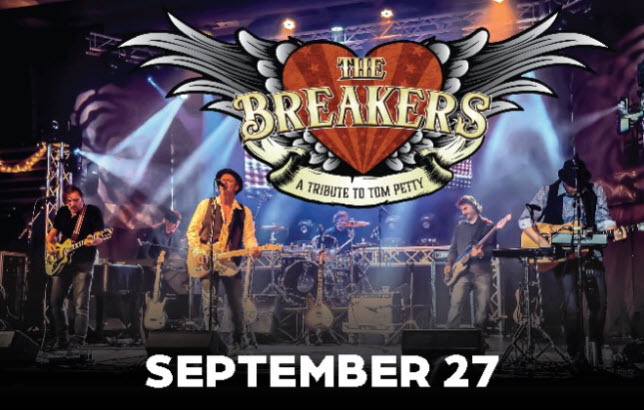
I’m not talking about the Gilded Age Mansion located on the posh Bellevue Avenue, but the fantastic Tom Petty and the Heartbreakers tribute band, which has built a reputation as one of the most authentic live tributes to Tom Petty & the Heartbreakers—no wigs, no gimmicks, just pure rock ‘n’ roll energy and sound.
My younger son and I are true fans of Tom Petty and the Heartbreakers. We drove from RI to Philadelphia to see the band on their final tour in 2017. We were utterly devastated at Tom’s untimely passing.
When we took our seats for “The Breakers” tribute band at The Park Theatre in Cranston, RI, a few months back, my son and I were both a little apprehensive: “God, I hope these guys don’t do a disservice to Tom and the band.”
Most true music fans are suspicious of Tribute bands. The potential for vaudevillian schmaltz to descend upon the stage is real. But I’m here to tell you there’s nothing schmaltzy or vaudevillian about The Breakers. This band does more than pay tribute to a legendary rock and roll band; they embody the spirit of the band they pay homage to – you can feel it in their performance. The Heartbreaker vibe is palpable.
If you’re a fan of Tom Petty and the Heartbreakers or appreciate rock-solid musicianship, check out this band.
I’ve just published “Imagine There’s No Donald” on Amazon.com.
Imagine There’s No Donald is a lyrical collection that channels the melodic cadence of (mostly) Beatles songs to deliver searing poetic indictments of Donald Trump, the MAGA movement, and their corrosive impact on American democracy.
Each poem echoes the structure and emotional resonance of iconic musical tracks—think “Rocky Racoon” reimagined as the tale of Donald Trump’s destructive path to the presidency, or Terry Jacks’ “Seasons in the Sun” transformed into a lament on Republican cowardice and lost democratic norms.
Through this fusion of pop nostalgia and political critique, the collection:
🎶 Harnesses Familiar Rhythms: The song structures serve as scaffolding for verses that are both accessible and subversive, drawing readers in with rhythm before confronting them with truth.
🔥 Excoriates Authoritarianism: Trump and MAGA are portrayed not just as political figures but as symbols of a broader erosion of truth, decency, and constitutional integrity.
🕊️ Defends Democratic Ideals: The poems mourn the fragility of American institutions while fiercely advocating for civic engagement, accountability, and moral clarity.
🎤 Amplifies Dissent: With a voice that is at once satirical and sincere, the book invites readers to sing along in protest, turning melody into a megaphone for resistance.
Whether riffing on “She Came in Through the Bathroom Window” to expose the sycophantic rot of the Trump administration or twisting “When I Saw Her Standing There!” into an elegy against oligarchs and authoritarianism, this book is a poetic rebellion—an artistic act of defiance that refuses to be silent in the face of democratic decay.
Most free thinkers, poets, and essayists are but a thorn in the side of the authoritarian regime that is running roughshod over America’s democracy. Writing and speaking truth to power sometimes feels like screaming into the void. But with critical mass and momentum, art can influence public sentiment and mobilize opposition to repressive policies and tactics, making it a powerful adversary to regimes that rely on propaganda and control.
Verbal resistance alone won’t revive our democracy. If we’re going to right the ship in America, we’re going to have to do more than sing and complain. We’re going to have to take to the streets and, as the honorable Georgia Congressman John Lewis famously said, “get in good trouble, necessary trouble” by the millions.
Get your copy of Imagine There’s No Donaldon Amazon. Please feel free to share the link with others on your social media or simply by giving the book to a loved one as a gift.
My Paper, My Words is a collection of essays, stories, and poems that reflect the challenges of a middle-class husband and father trying to navigate a rapidly changing political, religious, and technological landscape of post-9/11 America.
Let’s Ask Arty uses existing Artificial Intelligence (AI) technology to query LLMs about politics in these troubled times.
Query 1: What is gerrymandering?
Gerrymandering is the practice of manipulating the boundaries of electoral districts to favor a particular political party, group, or incumbent. It’s a way of shaping the political landscape—literally—by drawing district lines in a way that influences election outcomes.
Query 2: How does gerrymandering work?
There are two main tactics used in gerrymandering:
Cracking: Splitting up a group of voters (usually of the opposing party) across multiple districts so they don’t form a majority in any of them.
Packing: Concentrating a group of voters into one district to reduce their influence in other districts.
Query 3: Why is gerrymandering (which seems like cheating) allowed?
Great question—and you’re absolutely right to call it out as feeling like “cheating.”
So why is gerrymandering allowed?
Constitutional Loophole
The U.S. Constitution requires redistricting every 10 years after the census to reflect population changes, but it doesn’t specify how districts must be drawn.
That power is left to the states, and in most cases, state legislatures control the process—which means the party in power can draw maps to its advantage
Supreme Court Decisions
In Rucho v. Common Cause (2019), the Supreme Court ruled that partisan gerrymandering is a “political question” and not something federal courts can regulate. This gave states a green light to continue the practice without federal oversight.
Earlier rulings had chipped away at protections in the Voting Rights Act, making it harder to challenge racial gerrymandering as well.
Query 4: Why does gerrymandering persist even though the public views it as an unfair practice?
Gerrymandering persists due to:
Entrenched Interests: Politicians benefit from drawing safe districts, so there’s little incentive to change the system.
Lack of Transparency: Redistricting often happens behind closed doors, with minimal public input.
Single-Party Control: When one party controls both the legislature and the governor’s office, they can gerrymander with few checks.
Query 5: Have there been efforts to reform gerrymandering at the state and federal level?
Some states have adopted independent redistricting commissions to reduce bias, but these reforms are uneven across the country. Congress has tried to pass national legislation to ban gerrymandering, but those efforts have stalled due to partisan gridlock.
Query 6: Which political party gerrymanders more aggressively?
Although both major political parties in the U.S. have used gerrymandering to gain electoral advantage, recent data suggests that Republicans have been more aggressive and systematic in their use of the tactic, especially in key battleground states.
Query 7: Is it true that when put to a congressional vote to end gerrymandering, the vast majority of Democrats voted Yes, and all Republicans voted No?
Yes, in recent congressional efforts to ban gerrymandering—particularly through the Freedom to Vote Act and the earlier For the People Act—Democrats overwhelmingly voted in favor, while Republicans uniformly opposed the measures.
This stark divide reflects broader tensions over voting rights, election integrity, and partisan control of the redistricting process.
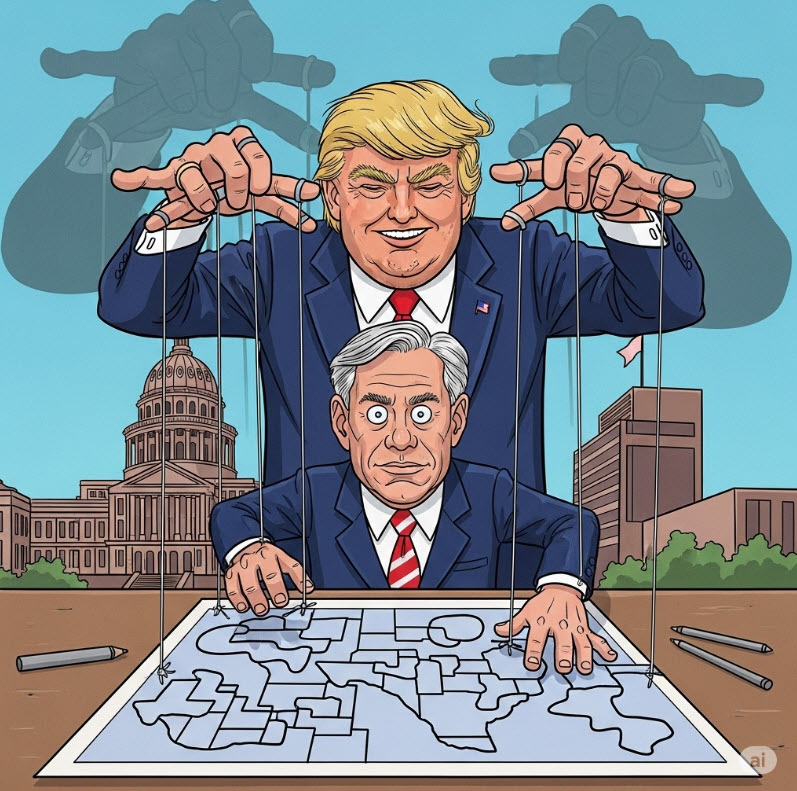
Query 8: In 2025, Did President Trump request that Governor Abbot of Texas to gerrymander districts in Texas?
Yes, according to multiple reports, former President Donald Trump has actively encouraged Texas Governor Greg Abbott and Republican lawmakers to redraw congressional districts in Texas to favor the Republican Party.
What Trump Requested
Trump reportedly asked Abbott to call a special legislative session to redraw Texas’s congressional map in a way that could flip up to five seats from Democrats to Republicans.
In a CNBC interview on August 5, 2025, Trump stated, “We are entitled to five more seats” in Texas, signaling his belief that redistricting should be used to secure partisan advantage.
Query 8a: What has been the political fallout of President Trump’s request to redraw districting maps in Texas?
Political fallout from Trump’s request includes the following:
Governor Abbott added redistricting to the special session agenda, citing a controversial memo from the U.S. Department of Justice that questioned the legality of certain districts based on racial composition.
Democratic lawmakers fled the state to prevent a quorum and block the vote, triggering a constitutional standoff and threats of arrest from Abbott.
The redistricting plan is widely seen as part of a broader strategy to entrench Republican control ahead of the 2026 midterms and potentially influence future presidential elections.
Critics argue this effort undermines democratic norms and disproportionately targets districts with large Black and Latino populations.
The term “Trumpmandering” has emerged to describe this aggressive form of partisan redistricting.
My Input
Gerrymandering is a form of cheating and should be illegal, regardless of which party practices it.
Suppose a political party can’t win an election based on the policies it champions and implements. In that case, they shouldn’t be allowed to rig the outcome in their favor with the stroke of a redistricting pen – that’s ludicrous and unethical.
Recent polling in Texas shows thatmost Texans oppose gerrymandering.Texans aren’t stupid. They understand Governor Abbot’s motivation. They see the unquestioning loyalty, knee-bending, and ring kissing as a blatantly partisan power-grab that serves Trump and Governor Abbot but does nothing for the citizens of Texas.
The backlash in Texas to a corrupt process where politicians pick their voters instead of the other way around has been swift and decisive, particularly among Democrats and independents.
The sentiments nationally are similar, with voters across party lines supporting independent redistricting commissions and opposing partisan manipulation of district maps. For example, a recent poll in Ohio showed 57% of voters supported a neutral redistricting commission when asked in unbiased language—even though the measure was ultimately defeated due to misleading ballot wording.
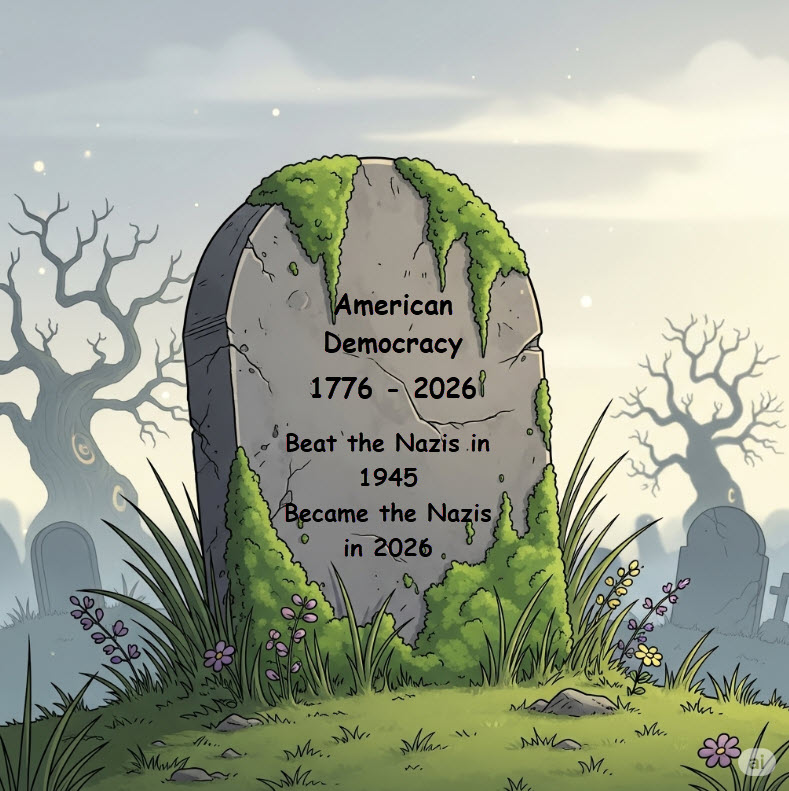
If Texas succeeds in its efforts to gerrymander districts, it will be another nail in the coffin of American democracy.
My Paper, My Words is a collection of essays, stories, and poems reflect the challenges of a middle-class husband and father trying to navigate a rapidly changing political, religious, and technological landscape of post-911 America.
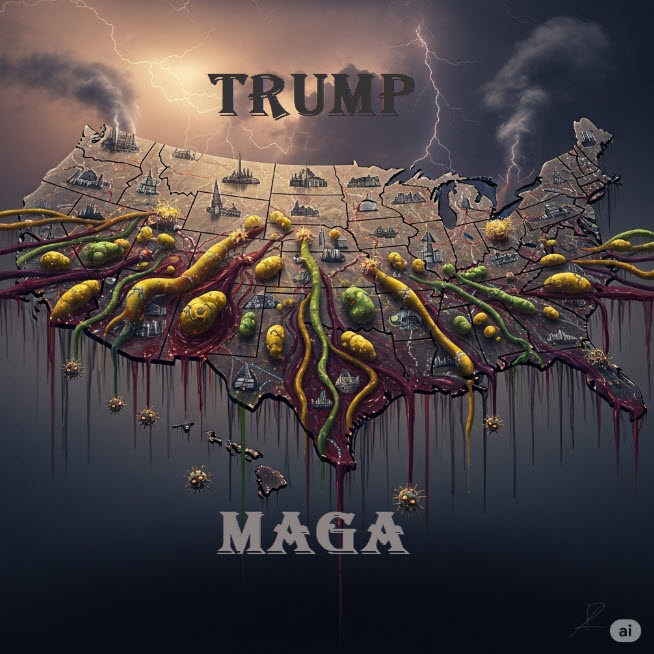
The wreckage that Donald Trump is inflicting on American democracy is analogous to the widespread inflammation, leaky blood vessels, reduced blood flow to organs, and ultimately, organ failure caused by Sepsis in the human body.
Trumpism is a sepsis-like response to a massive infection of aggrieved, uneducated, bigoted, greedy, and hate-filled Americans – it engenders fear, anger, misinformation, and Christo fascist ideology that surges through the bloodstream of American politics and culture, poisoning democratic institutions, values, and traditions, stressing the entire body politic to the point of systemic failure.
The only chance of America surviving metaphoric organ failure and a complete collapse from political and cultural Sepsis is to prevent further infection — the best (and perhaps only) chance of doing that is a blue wave in the midterm elections (which Republicans are trying to gerrymander the fuck out of).
Suppose the Democrats don’t regain control of the House in 2026. In that case, we can pucker our collective lips, plant a fat kiss on the cold, colorless cheek of American democracy, and usher in an era of darkness, corruption, and repression unseen in our history.
Will voters see Trump for the lying, cheating, sociopathic thug he is and wake-the-fuck-up in 2026?
My Paper, My Words is a collection of essays, stories, and poems reflect the challenges of a middle-class husband and father trying to navigate a rapidly changing political, religious, and technological landscape of post-911 America.
Emoluments are a salary, fee, or profit from employment or office.
The Emoluments Clause of the US Constitution aims to prevent corruption and foreign influence on government officials.
The Qatari Jet Controversy
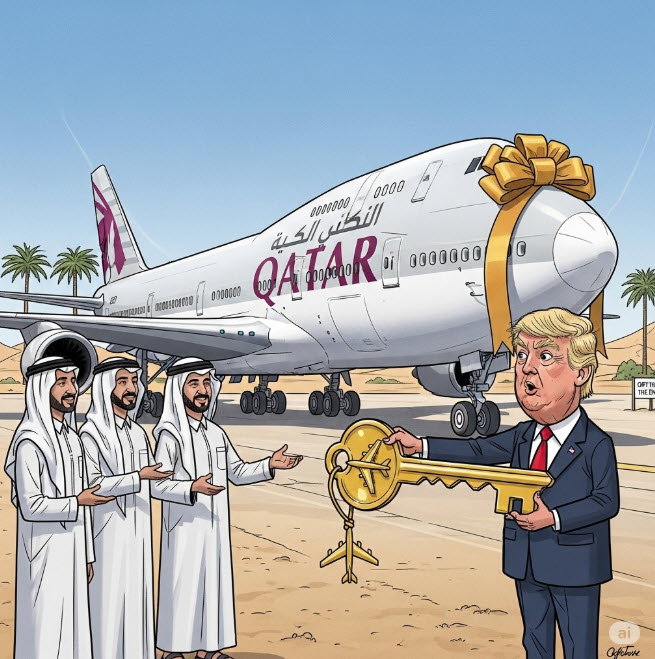
When Donald Trump accepted a 747-8 luxury jetliner from the Qatari government, it raised concerns of a potential violation of the Foreign Emoluments Clause of the US Constitution, which prohibits federal officeholders from accepting gifts, payments, or titles from foreign governments or the US government without the consent of Congress.
I doubt Donald Trump, who demonstrates ignorance and disdain for our Constitution on a regular basis, give’s a flying fuck about the Emoluments Clause. According to Donald Trump, “It would be stupid not to take the gift.”
Here are the tids and the bits:
Qatar reportedly gifted a luxury Boeing 747-8 to President Trump, intended for use as Air Force One and later transfer to his presidential library.
Critics argue this is a clear violation of the Emoluments Clause, especially since the jet is valued at $400 million or more.
Legal experts and former ethics officials say the gift appears to benefit Trump personally, even if routed through the U.S. military.
A DOJ memo reportedly justified the acceptance, but its contents haven’t been publicly released and are now the subject of a lawsuit
And although Trump claims the plane is a “GIFT, FREE OF CHARGE,” the American taxpayer will foot the bill for retrofitting the plane, just so our American Dumbo can fly his Qatari Jumbo.
The cost estimate for retrofitting the gifted jet liner for presidential use is between $400 million and $1 billion or more, the latter amount taking into consideration advanced security systems, encrypted communications, anti-missile defenses, and a full sweep for espionage threats.
The Qatari Jet Controversy isn’t the only potential violation of the Emoluments clause. Here’s a look at other Trump political initiatives and actions that have enriched him personally during his presidency.
Political Initiatives that Enriched Trump Personally
Retention of Business Empire
Trump refused to divest from his businesses while in office, maintaining ownership and control of the Trump Organization.
His properties—including hotels, golf courses, and real estate—continued to operate and profit during his presidency.
Foreign Government Patronage
Over 150 foreign officials from 77 countries stayed at or hosted events at Trump properties.
The Chinese government alone reportedly spent at least $5.5 million at Trump-owned venues.
Domestic Government Spending
U.S. government agencies spent taxpayer money at Trump properties, including Secret Service lodging and event hosting.
State governments also used Trump venues for official functions, raising concerns under the Domestic Emoluments Clause.
Promotion of Trump-Branded Products
Trump promoted personal products like branded Bibles, cologne, and even guitars during his presidency.
His media ventures, including Truth Social and Trump Media & Technology Group, gained visibility and investment while he was in office.
International Real Estate Deals
Trump’s business pursued or maintained real estate developments in Saudi Arabia, Oman, and the UAE, some allegedly funded by foreign entities.
These ventures continued without congressional approval, despite constitutional requirements.
Emoluments Clause Violations? You Be the Judge!
The U.S. Constitution contains two key provisions:
Clause
Description
Alleged Violation
Foreign Emoluments Clause
Prohibits federal officials from receiving gifts, payments, or benefits from foreign governments without congressional consent (Article I, Section 9, Clause 8)
Trump received millions from foreign governments via business transactions without congressional approval
Domestic Emoluments Clause
Prohibits the president from receiving any benefit from the federal or state governments beyond salary (Article II, Section 1, Clause 7)
Trump profited from federal and state spending at his properties
Should a sitting president be allowed to retain ownership of private businesses that receive payments from foreign or domestic governments?This question strikes at the heart of the Emoluments Clause debate. Trump’s refusal to divest created a direct conflict of interest and undermined the Constitution’s anti-corruption safeguards.
My Paper, My Words is a collection of essays, stories, and poems reflect the challenges of a middle-class husband and father trying to navigate a rapidly changing political, religious, and technological landscape of post-911 America.
A few days ago, I had dinner with an acquaintance from China. He is an engaging and inquisitive young man, interested in America and American culture.
From our conversation, I learned that to the Chinese citizens, America is still that shining city on the hill. Well-off Chinese parents send their children to American prep schools, colleges, and universities because they believe doing so gives their children an advantage they can’t get in China.
I learned that in China, breaking free of the class you are born into is nearly impossible and that even white-collar professionals struggle to buy homes and save money, often relying on parents for support.
We discussed the many differences between our two countries before sitting down to dinner. Even though our countries couldn’t be more different, we connected on a human level. We loved our families and wanted a better world for them.
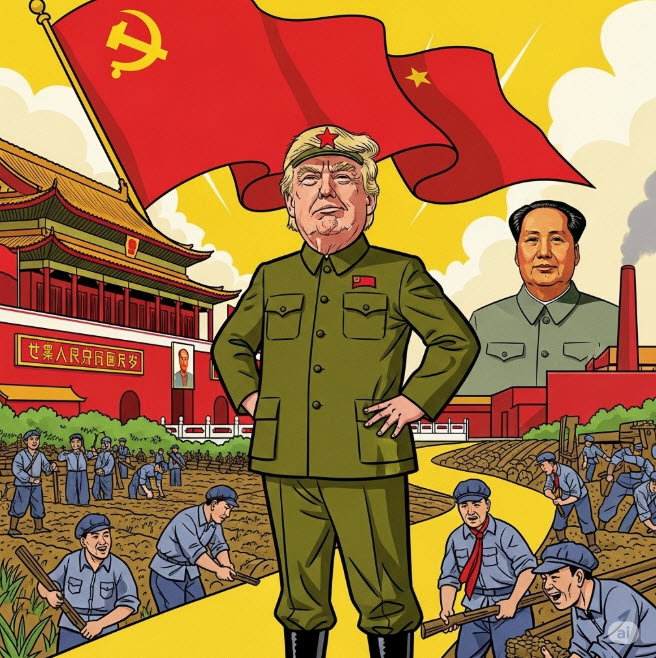
After dinner, I broached the subject of our President, asking my acquaintance how people in China view President Trump. He smiled politely and chuckled. “We refer to him as Comrade Trump – a member of the Chinese Communist Party.”
“We think he is insane, but ultimately helpful to China.”
Orange is the new Red
The unpredictability of Trump’s aggressive tariff policies, shifting trade strategies, and draconian immigration tactics presents an opportunity for China.
Here’s how China is taking advantage of President Trump’s ham-fisted and chaotic approach to global trade and why some Chinese refer to him as “Comrade Trump.”
Perception Shift
A global analysis reveals that while the U.S. has experienced a decline in favorability due to Trump’s tariffs and immigration policies, China’s image has improved in many countries.
China now enjoys a net favorability rating of +8.8, compared to the U.S.’s -1.5, marking a significant gain in soft power.
Trade Diversification and Realignment
China has responded to U.S. tariffs by intensifying trade with other partners, including the EU, ASEAN nations, and Belt and Road countries.
Trump’s tit-for-tat tariff war prompted China to reduce its reliance on U.S. imports and strengthen its domestic supply chains.
Boost to Domestic Industries
U.S. tariffs on Chinese goods have led to price hikes in the U.S., making Chinese alternatives more attractive in other markets.
China has used the opportunity to promote its own tech, energy, and manufacturing sectors, especially in regions where U.S. influence has waned.
Diplomatic Leverage
The Trump administration’s erratic trade policies have alienated traditional allies, giving China room to present itself as a more stable and predictable partner.
China has capitalized on this by deepening ties with countries affected by U.S. tariffs, including those in Africa, Latin America, and Southeast Asia.
Economic Resilience and Adaptation
Despite high tariffs (some reaching 145% on Chinese goods), China has adapted by shifting exports, investing in domestic innovation, and retaliating strategically.
The disruption has accelerated China’s push for self-reliance in key sectors like semiconductors, green energy, and AI.
Despite what he says, Donald Trump is not making America great or putting America first. Instead, his inability to read the “global” room, his misunderstanding of how tariffs work, combined with a noxious personality, inflated self-image, insatiable greed, and an unquenchable desire to be the center of attention, is causing irreparable harm to America while creating unprecedented opportunity for China.
Let’s Ask Arty uses existing Artificial Intelligence (AI) technology to query LLMs about politics in these troubled times.
Query 1: Arty, please fact check recent comments Donald Trump made from the oval office about windmills as a source of energy.
Donald Trump has made several recent comments criticizing wind turbines as a source of energy, but many of his claims are either misleading or factually incorrect.
In press conferences and meetings—including one with European Commission President Ursula von der Leyen—Trump referred to wind turbines as:
“Ugly monsters” that ruin landscapes
A “con job” that harms whales and birds
The “most expensive and inefficient energy” source
Prone to “rust and rot in eight years,” with blades that “can’t be buried”
He also claimed he would not allow any new windmills to be built in the U.S. and signed an executive order halting federal wind energy permits.
Let’s break down the accuracy of President Trump’s claims about wind turbines:
Claim
Reality
Wind turbines are the most expensive energy source
❌ False. Wind is one of the cheapest forms of electricity today, especially onshore. Offshore turbines cost more to build but still compete economically with fossil fuels.
Wind turbines rust and rot in 8 years
❌ Misleading. Most turbines are designed to last 20–25 years, and many components are recyclable.
Turbine blades can’t be buried
✅ Partially true. Blades are made of fiberglass, which is non-biodegradable, but they’re often repurposed (e.g., as highway noise barriers).
Wind turbines kill whales
❌ No evidence. The NOAA and U.S. Department of Energy have found no scientific link between turbine noise and whale deaths.
Wind turbines kill birds
✅ True, but context matters. Turbines do kill birds, but far fewer than buildings, cats, or fossil fuel plants.
Trump’s opposition to wind energy appears rooted in personal grievances—especially regarding turbines near his golf course in Scotland. While wind power isn’t perfect, it’s a proven, cost-effective, and increasingly vital part of the global energy mix.
My Input
Every time Donald Trump opens his mouth (on any subject), the result is a firehose of falsehoods. And because Trump lies with impunity, fact-checking him has become a Sisyphean task if ever there was one.
President Trump’s lies about wind turbines are a component of his bigger lie that climate change is “a hoax.”
News Alert: Climate change is not a hoax.
Over 97% of climate scientists agree that Earth’s climate is warming and that human activity is the leading cause.
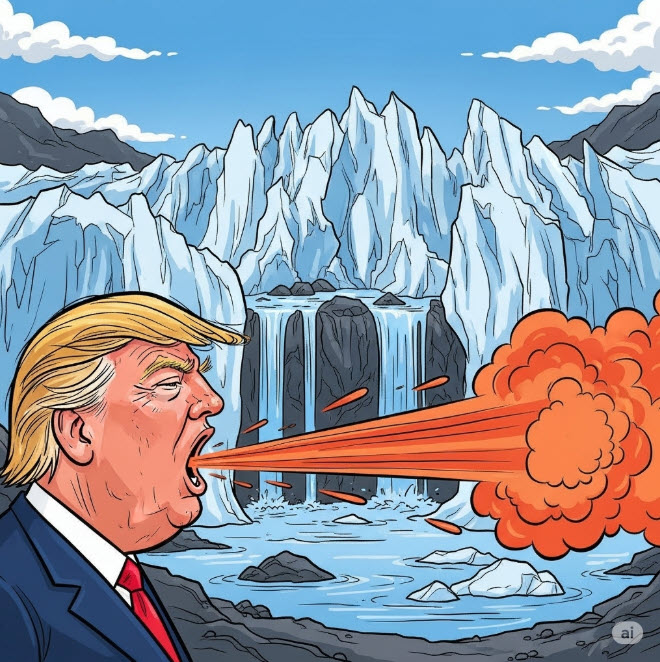
The hot air that Trump produces every time he opens his pie hole is arguably enough to melt a glacier.
At this point, human inactivity is just as significant a factor in the climate crisis. Rather than be proactive in the fight against climate change, we’ve chosen to sit on our hands.
The evidence of a changing climate is clear:
Global temperatures have risen by about 2°F (1°C) since the late 19th century.
Ice sheets in Greenland and Antarctica are shrinking rapidly.
Sea levels are rising, and extreme weather events are becoming more frequen
And though we haven’t passed a universal “point of no return” for climate change, we are getting dangerously close to triggering multiple tipping points, as Arty informs us below.
What Is the “Point of No Return” in Climate Science?
It’s not a single moment or threshold. Instead, scientists talk about climate tipping points—critical thresholds where ecosystems or Earth systems (like ice sheets or ocean currents) begin to change irreversibly.
Once crossed, these changes can accelerate global warming and become self-reinforcing, making it harder or impossible to reverse.
Scientific Evidence of Approaching or Crossing Tipping Points
Here’s what recent research and global observations show:
Global Temperatures: In 2024, Earth’s average temperature hit 1.52°C above pre-industrial levels, breaching the Paris Agreement’s 1.5°C target.
Melting Ice Caps: Antarctic and Arctic sea ice have hit record lows for multiple years. Scientists warn we may see an ice-free Arctic summer by the late 2020s, which would drastically alter climate feedback loops.
Ocean Heat: Oceans are absorbing 90% of the excess heat. In 2025, marine heatwaves led to widespread coral bleaching in the Great Barrier Reef and Caribbean reefs.
Wildfires & Extreme Weather:Mega-fires and extreme weather events are becoming increasingly frequent and severe. These release more CO₂, creating a vicious cycle.
Carbon Emissions: Global emissions hit an all-time high in 2025, making it harder to stay below critical warming thresholds
What Scientists Say About “No Return”
Some experts argue that we’ve already crossed local tipping points, such as irreversible warming in parts of the ocean.
Others emphasize that while some damage is locked in, we still have time to prevent cascading global tipping events—but only if we act fast.
A 2024 study found that overshooting the 1.5°C target significantly increases the risk of destabilizing major Earth systems, such as ice sheets and ocean currents.
Putting aside Fat Donny’s lies about Wind Turbines, here are some ways we can harness the wind to fight climate change (with some help from Arty):
Wind energy is one of the most effective tools we have to combat climate change:
Massive Impact: Wind and solar combined could deliver over one-third of the emissions reductions needed by 2030 to stay on track for the 1.5°C goal.
Zero Emissions: Wind turbines generate electricity without releasing greenhouse gases.
Scalable & Affordable: Wind is now among the cheapest sources of electricity globally, often cheaper than fossil fuels.
Rapid Deployment: Wind farms can be built quickly and scaled to meet growing energy demands.
The climate change threat to humanity is existential and urgent.
Wind energy is a difference maker. It is a powerful, proven, and implementable solution, and it is clean, cost-effective, and scalable.
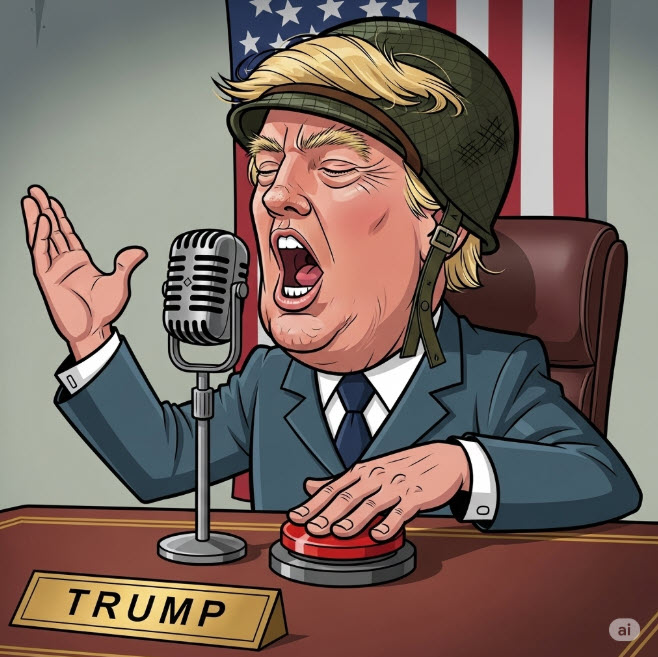
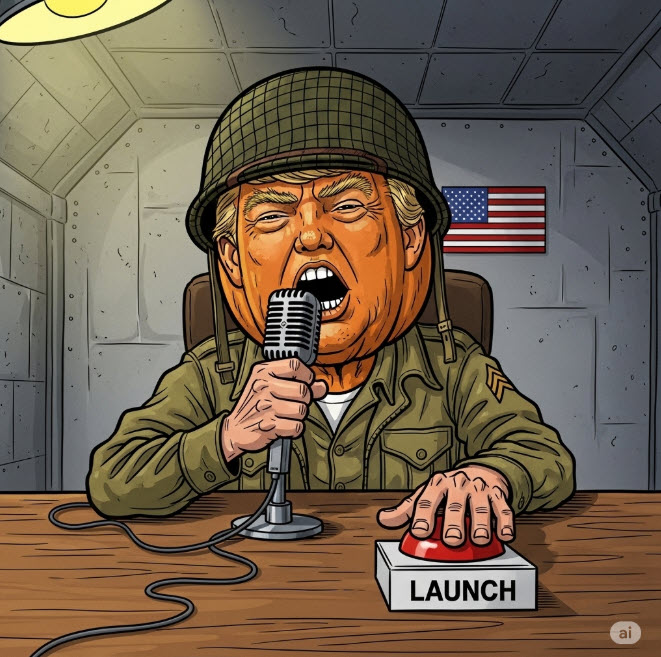
Oh, yeah, I’ll tell you somethin’ I think you’ll understand When I say that somethin’ I want to bomb Iran I want to bomb Iran I want to bomb Iran
Some, Jews, say to me that I’m their kind of man church pews are the key to get the promised land they want to bomb Iran they want to bomb Iran
When Bibi hugs me I feel happy inside It’s such a feeling that I scream genocide! genocide! genocide!
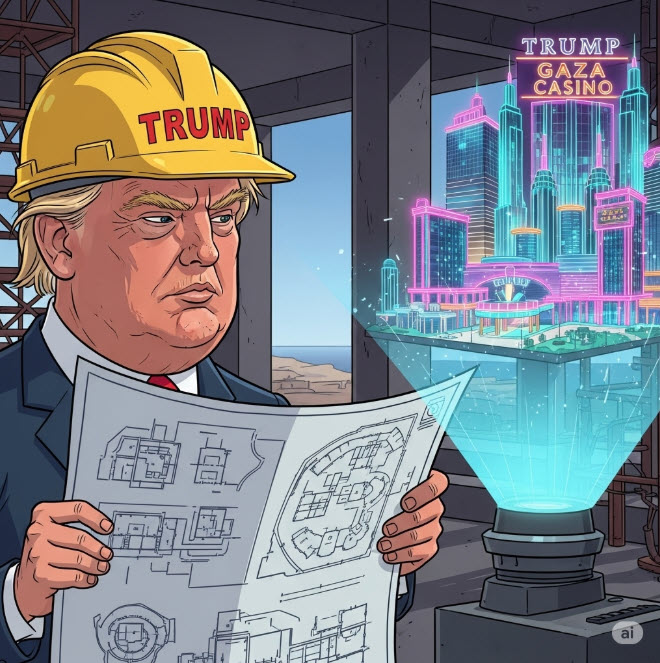
Yeah, ole Bibi said to me Let’s take the Gaza Strip Trump casinos by the sea I say we let her rip I want to bomb Iran I want to bomb Iran I want to bomb Iran
When Bibi hugs me I feel happy inside It’s such a feeling that I scream genocide! genocide! genocide!
Hamas has that somethin’ they’ve got a shitty brand But I’ll say the dumb thing I want to bomb Iran I want to bomb Iran I want to bomb Iran I want to bomb Iran








 bendingtheneedle