Sapient Rain is a human–AI musical collaboration created by writer/lyricist Geoffrey Reilly working together with the AI music engine Suno.
Sapient Rain’s music blends political fire, surreal storytelling, and nostalgic autobiography, delivered through lyrics that read more like literary vignettes than conventional songcraft. Sapient Rain’s growing catalog is thematically dense, with each track functioning as a miniature narrative or social critique.
Reilly’s writing gives the project its identity; Suno gives it sonic form.
Sapient Rain is not “AI music” in the generic sense. It’s a human-authored worldview rendered through an AI engine that can produce consistent vocal and musical identity on demand.
Reilly writes in a style that fuses protest poetry, memoir, and cultural commentary, often using sharp imagery and rhythmic phrasing to create songs that feel like spoken‑word pieces set to music.
My Paper, My Words is a collection of essays, stories, and poems that reflect the challenges of a middle-class husband and father trying to navigate a rapidly changing political, religious, and technological landscape of post-911 America.
Christian Nationalism poses structural, democratic, and cultural dangers to America’s secular, pluralistic society, primarily because it seeks to fuse a single religious worldview with civic identity and governmental authority.
Across multiple independent analyses, researchers consistently show that Christian Nationalism correlates with anti‑democratic attitudes, exclusion of religious minorities, authoritarian governance, and erosion of constitutional protections.
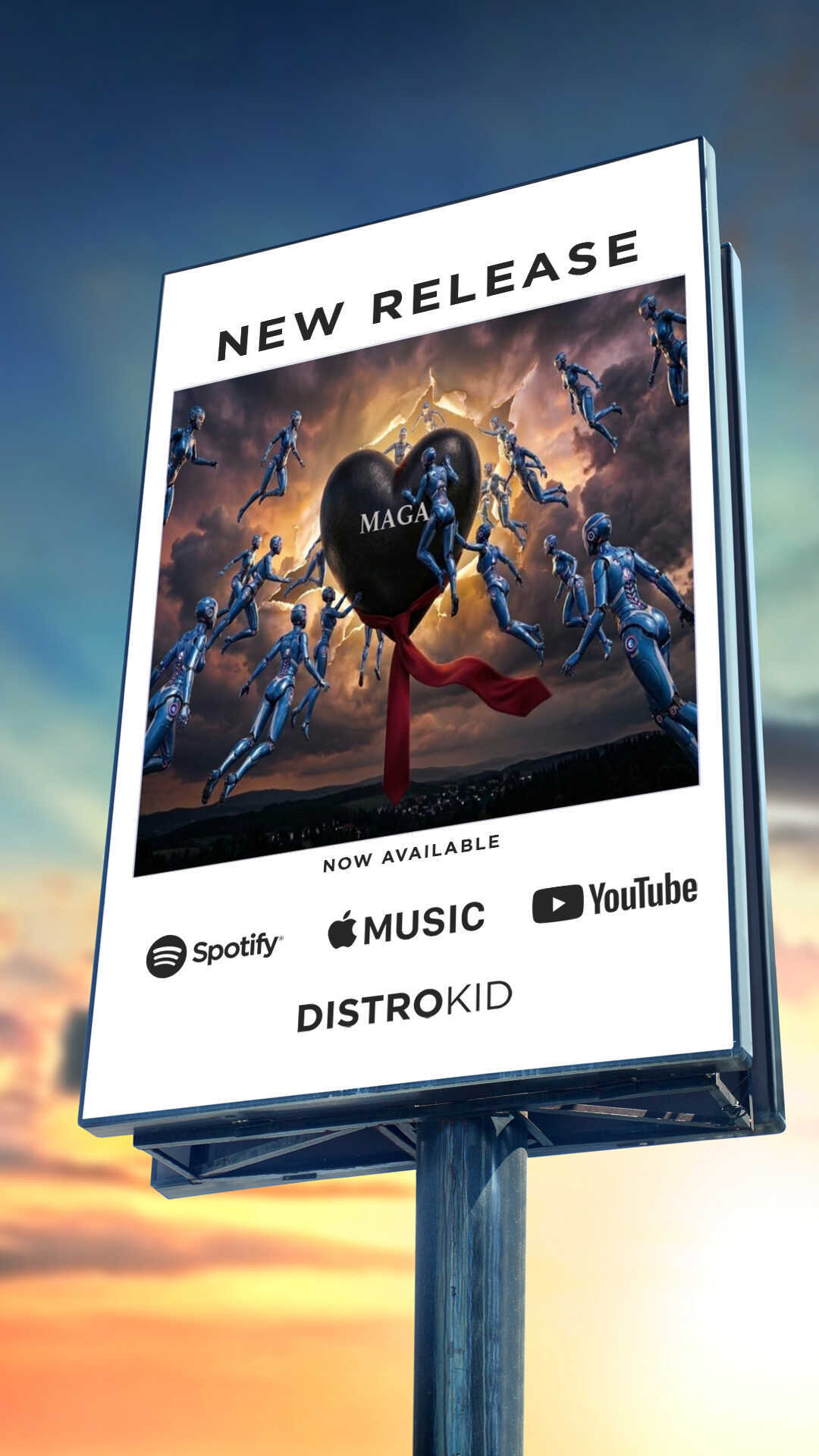
I wrote the lyrics for “Usurpers in the Pulpit” to highlight America’s dangerous drift towards Christian Nationalism.
I used Suno to set the lyrics to music under the artist profile Sapient Rain.
Sapient Rain is a musical project that blends human creativity with artificial intelligence. It is a collaboration between writer/lyricist Geoffrey Reilly (me) and the AI music engine, Suno.
“Usurpers in the Pulpit” will be available on music streaming platforms on June 1st, 2026, but you can listen to it today on Suno.
Usurpers in the Pulpit
They pray in Megachurches In the heartland on a hill With Mic’d-up MAGA pastors Pushing lies and poison pills
The preachers fret to scare you but tell you God is on your side The trap they set ensnares you And takes your lost soul for a ride
After wine and half-truths whispered And communion wafer snacks The paid-for-MAGA pastor Launches fascist-fueled attacks
In alliance with the devil In accordance with their greed Usurpers in the pulpit Twisting sermons into screeds
Pals in persecution The grievance-driven crowd Bathed in absolution And a bigotry allowed
The violence that awaits us Is sectarian in its hate Gun toting bible thumpers To make the US Great
They’ll legislate their creed And burn the rest in smoke and ash Put their ten upon the wall Tossing yours into the trash
In alliance with the devil In accordance with their greed Usurpers in the pulpit Twisting sermons into screeds
They’d rather force you to your knees, Than let you worship as you wish Live your life by their decrees And Donny T as your commish
It’s not about the Magi Or the Christ child in the manger but how Jesus loves America and beware the stranger danger
Look at who they’ve chosen to be the leader of their flock an impetuous empty vessel who has never taken stock
In alliance with the devil In accordance with their greed Usurpers in the pulpit Twisting sermons into screeds
Protest songs don’t pack the societal punch they once did.
In an increasingly fragmented music culture, political activism has moved away from the record studio onto social media platforms. Factor in growing corporate cowardice and social cultural fatigue, and you’ve got an inhospitable landscape for protest songs to take hold and flourish – and that’s a fucking shame, because if there was ever a time for unifying the power of music against political corruption and maleficence, it’s today.
People who follow me on Instagram or subscribe to this blog might know about my musical project “Sapient Rain,” where I use the AI Music Engine Suno to showcase my poetry as song lyrics. They also likely know my deep displeasure with America’s turn towards fascism under the criminal Donald Trump.
For the Sapient Rain project, I’ve dropped two albums and multiple singles on Spotify, Apple Music, and YouTube Music, and nearly half of the songs protest the intellectual, emotional, and physical carnage that Donald Trump, his poisonous MAGA minions, and the feckless cowards in Congress have visited upon America and the world.
For me, Donald Trump is the unwanted muse who creeps into my thoughts whenever I hear him babble incoherently about subjects of monumental importance to humanity, forcing me to put my pen to paper.
Believe me, I’d rather be writing about other things.
In the next phase of my Sapient Rain project, which I am calling “Sapient Rain – Humanized,” I’ll be looking to work with actual musicians and singers on these songs, inviting them to take my lyrics and create their own renditions.
Until then, and for the upcoming 2026 midterm election, check out these protest songs (my lyrics, Suno’s music).
Feel free to share them with friends or comment on them here.
A post-punk-new-wave ditty about the cognitive decline of our commander in chief and the need to invoke the 25th amendment to remove his sorry ass from office.
A hard rocking song about the need for fresh blood and ethical leaders to counter the explosion of crass grifters and incompetent know-nothings ruining our country and putting the rest of the world in grave danger.
We’re appalled at what he’s normalized the hatred he’s unfurled
Embarrassed by the crassness that he vomits on the world
We truly feel abandonedLike our voices are not heard
As the beatings and harassment strip us from our words
Inspired by the violence that ICE agents perpetrated on communities in Maine and Minnesota and the need to stand up against the fascist tactics of ICE.
Full mags and clips they carry chips of grievance on their shoulder
The hateful raids of ICE brigades turn citizens to soldiers
Inspired by the murders of Renee Good and Alex Pretti, this song laments the cowardice of republicans in congress, while preaching on the value and importance of peaceful protest.
It’s remarkable how neatly this all falls apart
In a congress full of cowards with hate inside their hearts
A warning about what happens after Trump exits the earth for good – because lets face it, he’s provided a blueprint for autocracy in America and there are plenty of crooked politicians waiting in the wings to take over the brand.
The despot is deadhe’s pushing up daisies
but there’s a fresh bumper-crop of the morally hazy
With a blueprint for hate tightly clenched in their hand
I wrote these lyrics originally to be sung to the tune, “I wanna Hold Your Hand” by The Beatles well before Trump launched his illegal war against Iran.
When Bibi hugs me I feel happy inside
It’s such a feeling that I scream genocide! genocide! genocide!
If only there were a couple of angry folk-inspired musicians crisscrossing the country, spreading the word about a corrupt administration at small concert halls and clubs where Americans gather – if only.
This is the ballad of new Bobby and JoanFender guitar-lords with truth microphones
This is the ballad of new Bobby and Joanbending their chords to the story they own
The lyrics are from a poem I wrote after the Charlie Kirk assassination. It’s about how dangerously divided America is and the potential for spiraling political violence that seems increasingly likely in the second Trump term.
We ought to run from martyrdomnot pin it to our chestnot canonize the hateful guys who scream that they know best
I wrote the poem “Get a Load of Elon” after seeing the sickening footage of that smiling dirtbag laughing it up and swinging a chainsaw around like some fake-ass efficiency hero.
Fuck that guy and everything he represents.
Killing all the agencies that assist the weak and poor
Indiscriminate firings Pushing veterans out the door
“Hey this what we sold you no need to be so sore”
and he smiled a shitty grin at the blood that’s on the floor
My Paper, My Words is a collection of essays, stories, and poems that reflect the challenges of a middle-class husband and father trying to navigate a rapidly changing political, religious, and technological landscape of post-911 America.
Sapient Rain is a musical project that blends human creativity with artificial intelligence. It is a collaboration between lyricist / writer Geoffrey Reilly and the AI music engine Suno
You can listen to “Donny on Dementia” on the Suno App or Website here.
Donny on Dementia
I’m living with dementia Life’s a grandiose summer cruise Higher prices at the gas pumps Let’s take an oval office snooze
I’m making up equations A percentage paradigm I got yes men all around me To cover up the crime
I don’t know what I’m doing I’m lost and all alone With me in charge, the world is stewing CAN’T TURN THE CAPS OFF ON MY PHONE
I’m Donny on Dementia I don’t know where I am A Commander in Absentia My mind is on the lamb Please invoke the 25th Amendment To end this tragic scam
We’re trapped in his dementia Like the tankers in Hormuz Kash Patel has lost his marbles Pete Hegseth wants some booze
They call me doctor Jesus I think that’s kind of cool The resolute desk Is my safe place Where I scribble and I drool
I have no idea what I’m doing You’re all paying a steep price I miss the days when I was screwing Instead of being Jesus Christ
I’m Donny on Dementia I don’t know where I am A Commander in Absentia My mind is on the lamb Please invoke the 25th Amendment To end this tragic scam
People try to shoot me I’m in the Epstein files Normal thoughts don’t suit me I dream of glory and Sieg Heils
Phonemic paraphasia I don’t know what that is I hate shit holes like Nambia I aced my IQ quiz
I’m sleeping till eleven I pace around all night I often think of heaven And flying purple kites
I’m Donny on Dementia I don’t know where I am A Commander in Absentia My mind is on the lamb Please invoke the 25th Amendment To end this tragic scam
My Paper, My Words is a collection of essays, stories, and poems that reflect the challenges of a middle-class husband and father trying to navigate a rapidly changing political, religious, and technological landscape of post-911 America.
Let’s Ask Arty uses existing Artificial Intelligence (AI) technology to query LLMs about politics in these troubled times.
Q1 – What did US intelligence reporting suggest about Iran’s threat to the United States before the US joined Israel in their bombing campaign against Iran?
US intelligence reporting, as reflected in publicly available accounts and statements cited in news coverage, suggested there was no clear imminent threat to the United States from Iran in the period immediately before the U.S. joined Israel in striking Iranian targets.
The most explicit articulation of this came from Joe Kent, Director of the National Counterterrorism Center, who resigned on March 17, 2026, stating that “Iran posed no imminent threat to our nation.”
Q2 – Can you break down America’s core intelligence assessment before the strikes?
No imminent threat to the U.S. homeland: Joe Kent’s resignation post directly challenged the administration’s justification for military action, asserting that intelligence did not show an immediate danger to the United States.
Critics argued the U.S. acted without a triggering intelligence warning: Analysts at institutions like Brookings and media outlets such as The Guardian described the strikes as a “war of choice,” implying that intelligence did not support claims of an urgent threat.
Q3 – What Did the US intelligence reporting say about the long-term threat that Iran posed to the United States?
While not indicating an imminent threat, reporting emphasized a persistent, long-term pattern of hostile Iranian activity, including:
Iran’s IRGC and proxy network had killed more than 1,000 Americans since 1979.
Over 180 attacks on U.S. military bases in 2023–2024 by Iranian-backed groups. These were cited by some analysts as part of a broader argument that Iran represented a continuous threat, even if not an immediate one.
Before the U.S. joined Israel in bombing Iran, intelligence reporting—at least as described by senior officials and public sources—did not indicate an imminent threat to the United States. Instead, the intelligence picture pointed to a chronic, long-term pattern of Iranian hostility, not an immediate trigger requiring urgent military action.
Q4 – If the Intelligence reporting did not indicate that Iran posed an imminent threat to the US, why did Donald Trump commit to join Israel in attacking Iran?
The Trump administration justified striking Iran by publicly framing the attack as an act of self‑defense against “imminent threats,” even though intelligence briefings to Congress and internal assessments did not support the existence of such an imminent threat.
The justifications shifted repeatedly in the days surrounding the strikes, creating a patchwork of sometimes contradictory explanations.
Q5 – Arty, can you provide a breakdown of the various reasons the Trump Administration gave for attacking Iran?
Sure!
Claim: Iran was close to nuclear breakout: President Trump argued that Iran was rebuilding its nuclear program and was “probably a week away” from bomb‑making material or would have a “very powerful nuclear weapon within a month.”
However, reporting noted that these claims contradicted U.S. intelligence assessments, which said Iran was years away from such capabilities.
Claim: Iran was developing long‑range missiles that could soon reach the U.S.: Trump said Iran was developing missiles that could “soon” reach the American homeland. A 2025 Defense Intelligence Agency assessment, however, projected that Iran might be able to develop an intercontinental missile by 2035, if it chose to pursue one.
Claim: The U.S. needed to preempt an Iranian attack: Secretary of State Marco Rubio initially claimed Iran posed an imminent threat because it would retaliate against U.S. forces once Israel struck Iran. The next day, Trump shifted the explanation, saying Iran was going to attack first, independently of Israel’s actions.
This shift created confusion because it contradicted both earlier statements and intelligence briefings.
Q6 – Arty, can you help us understand what the intelligence actually indicated about the Iranian threat?
Private briefings to Congress: No imminent Iranian attack: According to ABC News reporting, Trump administration officials told congressional staff that U.S. intelligence did not indicate Iran was preparing a preemptive strike on U.S. forces or the homeland. They described only a general regional threat, not an imminent one.
This directly conflicted with the administration’s public messaging.
Q7 – What was the messaging about Iranian threats from the Trump Administration after initiating strikes against Iran?
Claim: Iran refused to halt uranium enrichment: Some officials later said the strikes were ordered because Iran would not agree to stop enrichment altogether. This justification was offered after the operation had already begun, which reporters noted was unusual for a major military action.
Claim: The U.S. was acting in collective self‑defense with Israel: In its Article 51 letter to the U.N., the U.S. framed the strikes as lawful self‑defense. Legal analysts argued the justification was weak because Article 51 requires an armed attack, and the administration had not demonstrated one.
Q8 – Arty, can you help us separate the Shit-from-Shinola regarding the Trump Administration’s threat assessment leading up to the war with Iran and after the war began?
The Trump administration justified the strikes by invoking imminent threats, nuclear danger, missile development, and preemptive self‑defense. But intelligence reporting shared with Congress did not support the existence of an imminent threat, and several of the administration’s public claims contradicted both intelligence assessments and earlier statements by its own officials.
My Take
Good god, the toxic mix of incompetence and callousness from the Commander in Chief has painted the United States into a corner so completely that the only way the President feels he can get us out of said corner is to threaten bombing an entire civilization into extinction.
The President’s attention deficit to reading, assessing, and understanding intelligence reports is eclipsed only by a morality deficit fed by greed, the lust for power, and the President’s narcissistic personality disorder.
At a recent White House Event, President Trump said that he “automatically loves people who are nice to [him], even if they’re bad people.” Knowing this about our President, all Benjamin Netanyahu (or any other leader for that matter) has to do to curry favor with President Trump is blow a little sunshine up his boxer shorts.
So, we have an American President on the public record saying that a person’s character or behavior does not influence his support for them; it’s their loyalty that wins him over. It’s why our President fawns grotesquely over Viktor Orban, Vladimir Putin, and Benjamin Netanyahu, a known anti-democracy authoritarian and two war criminals, each of them showering Trump with favorable press.
So, when Benjamin Netanyahu sits at the head of the table in the situation room at the white house, he understands that all the loyalty showered on President Trump over the years is about to pay dividends (regardless of what our US intelligence reporting says). He makes his pitch to Donald Trump for launching a joint US–Israeli war against Iran, a pitch that included the following assessments as reported publicly:
Iran’s ballistic missile program could be destroyed within weeks.
The Iranian regime would be too weakened to close the Strait of Hormuz.
Regime change was achievable, with street protests resuming and Mossad operations helping topple the government.
He presented a video montage of potential post‑theocratic Iranian leaders, including exiled crown prince Reza Pahlavi.
What was the reaction of US Intelligence officials to Benjamin Netanyahu’s pitch? A whole lot of push-back:
CIA Director Ratcliffe called the regime‑change scenarios “farcical.”
Secretary of State Rubio summarized the assessment as “In other words, it’s bullshit.”
Gen. Caine warned that Israel routinely oversells its plans and that the proposals were not well‑developed.
The US Intelligence assessment was that:
Iran could be struck militarily,
But regime change was unlikely,
And Iran could still close the Strait of Hormuz or retaliate in a significant way.
A true leader would have huddled with experts on his team and with officials from the intelligence community and would have done a deep dive into all the data and reporting. Instead, immediately after Benjamin Netanyahu’s presentation, and with total disregard for the gravity of the situation, Donald Trump said: “Sounds good to me.”
According to reports from people in the room, Trump appeared focused primarily on killing Iran’s Supreme Leader and destroying Iran’s military capacity, rather than on regime change. He dismissed concerns about the feasibility of replacing the Iranian government.
Of course, we now know that many of Netanyahu’s predictions have proved to be incorrect, including the assumption that Iran would be unable to close the Strait of Hormuz or mount significant retaliation.
And so, here we are, in a terrible mess that we could have avoided if we had an ethical, moral, and competent President.
My Paper, My Words is a collection of essays, stories, and poems that reflect the challenges of a middle-class husband and father trying to navigate a rapidly changing political, religious, and technological landscape of post-911 America.
I took a poem I wrote several months ago, titled Spit and Gravel, tweaked the wording, added a chorus, and used Suno to set my words to music under the artist profile Sapient Rain.
Sapient Rain is a collaborative musical project that pairs me, the lyricist, with the AI music platform Suno.
Liar’s Spit and Gravel is available on music streaming platforms on April 12th, 2026, but you can listen to it today on Suno.
Liar’s Spit and Gravel, by Sapient Rain
Carpet bombing Pedophile The trashy king Of tacky tiles Pushing sneakers Selling bibles Names all over Epstein’s files
Hawking watches Hats and tees What’s the price Of dignity?
It seems that what We value most Is the loud and proud Who like to boast About dropping bombs And making ghosts
When all that matters Is what we’ve grossed When hate and greed Are double-dosed Our nation’s veins Become thrombosed
We need a Dylan Of our own A collective moss Around the stone We need a Martin For the day To gather us To make some hey We need a Bobby To inspire To fight injustice To light a fire Where are the leaders Of today As dead as Caesar and JonBenét
Autocratic In his tone His swelled-up ego Overblown A head that’s crammed With nothing known Cuts lady justice To the bone
He snaps her picture With his phone He loves how she’s Become so prone To misogyny and Testosterone
Bibi, Don, And Vlady P Selling war To you and me Killing, stealing, And getting rich Double-dealing, Bait and switch
End-time preppin Sneak attacks Their Jesus Christ Ain’t comin back They drop his name While talking smack And stab our allies In the back
We need a Dylan Of our own A collective moss Around the stone We need a Martin For the day To gather us To make some hey We need a Bobby To inspire To fight injustice To light a fire Where are the leaders Of today As dead as Caesar And JonBenét
Hegseth, Miller, RFK, On the news To fuck my day Lindsey, Marco, And Pammy Bee Spewing lies For all to see
See JD’s Maybelline Eyeliner Trump on the hunt For vagina Wraps himself In stars and stripes Pretends he’s cool Like Wesley Snipes
Cocky, brass In midnight rants Surrounds himself With sycophants Marco, Graham, And JD Vance
As lies unfurl And we unravel As truth Gets bashed By Johnson’s Gavel The blood-soaked Trail on which Truth travels Gets paved with Liar’s spit And gravel
Fuck the Prez And his crew Screwing over Me and you He’s full of shit A fucking liar Making us The world’s pariah
We need a Dylan Of our own A collective moss Around the stone We need a Martin For the day To gather us To make some hey We need a Bobby To inspire To fight injustice To light a fire Where are the leaders Of today As dead as Caesar And JonBenét
My Paper, My Words is a collection of essays, stories, and poems that reflect the challenges of a middle-class husband and father trying to navigate a rapidly changing political, religious, and technological landscape of post-911 America.
“What Would Jesus Do?” by Sapient Rain is available on music streaming services.
Sapient Rain is a human / machine collaboration between lyricist Geoffrey Reilly and the AI Music Engine, Suno.
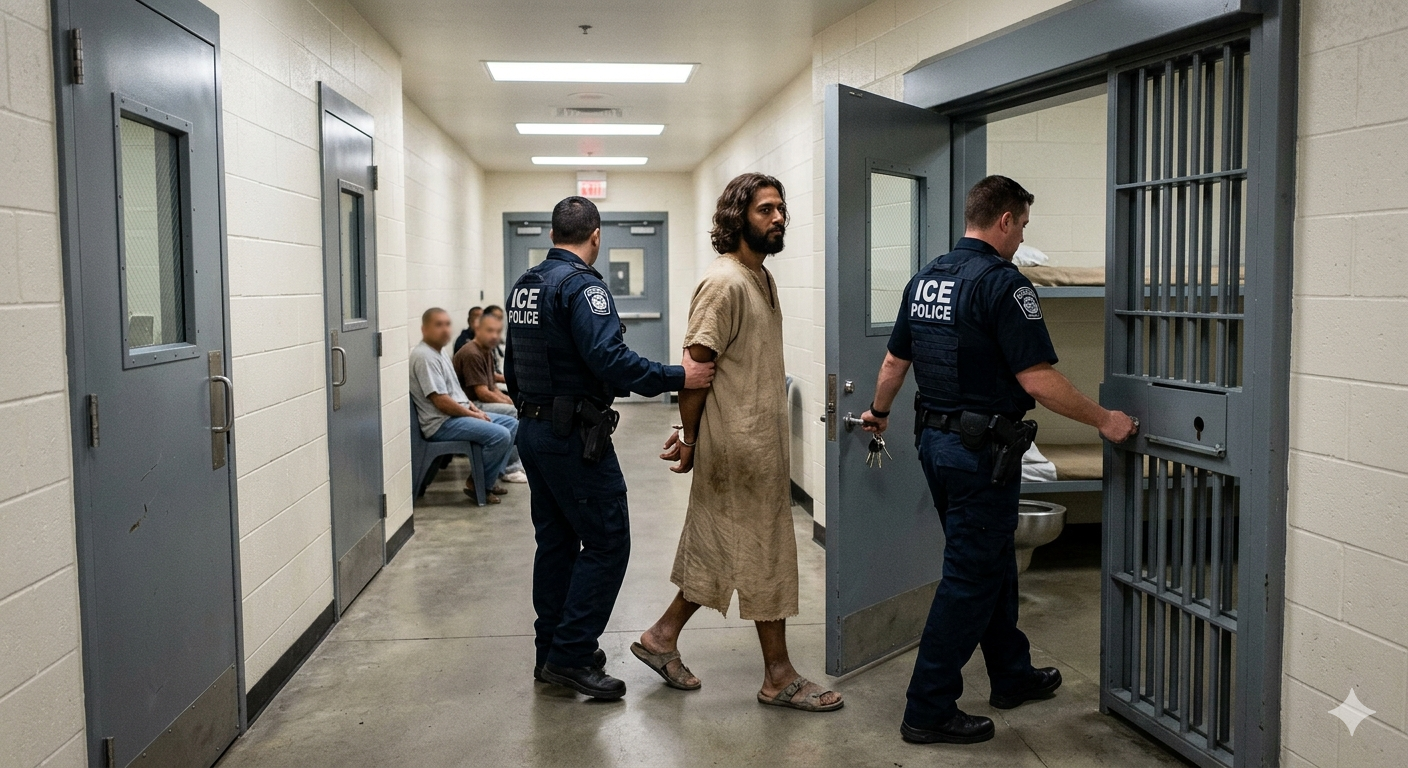
On a week when we watched a “pastor” grotesquely compare a convicted felon and suspected pedophile to Jesus Christ, I think this song rings particularly true, especially heading into Easter weekend.
What Would Jesus Do? Lyrics
What would Jesus do to a brownish me and you would he throw us in a cage and attack us with his rage
what would Jesus say when we choose to look away not turn the other cheek and make mincemeat of the weak
In the cold and brackish waters of America’s not great we’re drowning in hypocrisy and the riptide of our hate We’re bastardizing Jesus ignoring what he said not welcoming the stranger terrorizing them instead
If Jesus Christ came back today what would MAGA do? they’d label him a liberal and re-crucify the jew
MAGA’s blue-eyed Jesus is muscle-bound and blonde armed and deadly dangerous from heaven and beyond
In the cold and brackish waters of America’s not great we’re drowning in hypocrisy and the riptide of our hate We’re bastardizing Jesus ignoring what he said not welcoming the stranger terrorizing them instead
What would Jesus say about how we treat the poor of how open we’ve become to the slamming of the door
I think Jesus would be sick at what America’s become fanatically intolerant and lovers of the gun
In the cold and brackish waters of America’s not great we’re drowning in hypocrisy and the riptide of our hate We’re bastardizing Jesus ignoring what he said not welcoming the stranger terrorizing them instead
My Paper, My Words is a collection of essays, stories, and poems that reflect the challenges of a middle-class husband and father trying to navigate a rapidly changing political, religious, and technological landscape of post-911 America.
We’re living in a world where the rules of decorum from the office of the president have gone out the window. Decorum won’t return until Trump is pushing up daisies.
Donald Trump said he was glad that Robert Mueller, a decorated soldier and respected public servant, was dead. In true Trump fashion, he went to his Truth Social platform and posted:
Robert Mueller just died. Good, I’m glad he’s dead. He can no longer hurt innocent people! President DONALD J. TRUMP
Of course, there was an immediate backlash to the president’s comment from decent people and public servants, which was in stark contrast to the all-too-familiar silence from the testicle-free, scared-shitless Republican representatives in Congress.
After Trump’s post, I got to thinking, if I’m lucky enough to be around when Donald Trump dies, will I celebrate? Will I dance in the streets with the millions of like-minded Americans? If I do, does that make me a hypocrite for chastising the President for celebrating the death of Robert Mueller?
No, it does not.
In the same way, I would have celebrated Hitler’s death and been saddened by President Roosevelt’s death. In the same way, I would be heartened by the death of Vladimir Putin and crestfallen at the death of Volodymyr Zelenskyy. In the same way, I would have celebrated with my Munchkin brothers-in-arms at the death of the Wicked Witch of the East.
It’s natural to celebrate the death of vicious people.
Vladimir Putin attacked a sovereign nation without provocation, murdered civilians, kidnapped children, and committed war crimes. I’ll be glad when he’s dead.
In America, we celebrated the life and actions of Claus von Stauffenberg cinematically in the movie Valkyrie. Claus von Stauffenberg attempted to kill Adolf Hitler. If he had succeeded, would we have mourned Hitler’s death, or would there have been a global three cheers to Claus?
I did not feel glad or elated when Mueller, a decorated soldier and public servant, died. Robert Mueller was a decent man who served his country with honor.
Under Donald Trump, America has become the kind of nation we used to despise and oppose on the world stage — a loud-mouthed aggressor nation that denies the sovereignty of other countries and the rights of citizens and immigrants in its own, a nation that shows a blatant disregard international law, attacks the free press, bastardizes and uses religion as a tool of the state and cozy’s-up to other leaders of other authoritarian states. That is the America we’ve become, and it’s not even debatable.
To put it in a simpler context that Trump supporters might understand, Trump’s America is the Biff to Marty McFly, the Darth Vader to Luke Skywalker, the slimy Nazi general in Raiders of the Lost Ark to Indian Jones. We are officially the bad guys, and no amount of “USA! USA! USA!” chanting can cover up that fact.
And the main reason we have become the bad guy is pretty fucking simple to understand – it’s because we’re being led by a morally decrepit criminal, a convicted felon, a credibly accused pedophile and rapist, a seditionist who gave a blanket pardon to violent convicted felons who attacked our democracy. So yeah, when that guy dies, I might raise a glass.
Unfortunately for us, after Trump passes, there’s a fresh bumper-crop of the morally crazy waiting in the wings and they’ve got a blueprint in hand.
My Paper, My Words is a collection of essays, stories, and poems that reflect the challenges of a middle-class husband and father trying to navigate a rapidly changing political, religious, and technological landscape of post-911 America.
My Paper, My Words is a collection of essays, stories, and poems that reflect the challenges of a middle-class husband and father trying to navigate a rapidly changing political, religious, and technological landscape of post-911 America.
My Paper, My Words is a collection of essays, stories, and poems that reflect the challenges of a middle-class husband and father trying to navigate a rapidly changing political, religious, and technological landscape of post-911 America.