My Paper, My Words is a collection of essays, stories, and poems that reflect the challenges of a middle-class husband and father trying to navigate a rapidly changing political, religious, and technological landscape of post-911 America.
We cannot be afraid to speak at what is being done Trump’s a bully and freak who wants to shock and stun With fascists in our government, this isn’t a dry run And so, we have a song to sing, a song that must be sung
GO!
Neo-fascist-oligarchic-expialidocious Elon-Bezos-Zuckerberg are really quite atrocious We need to fight them in the streets and call them on their grossness Neo-fascist-oligarchic-expialidocious
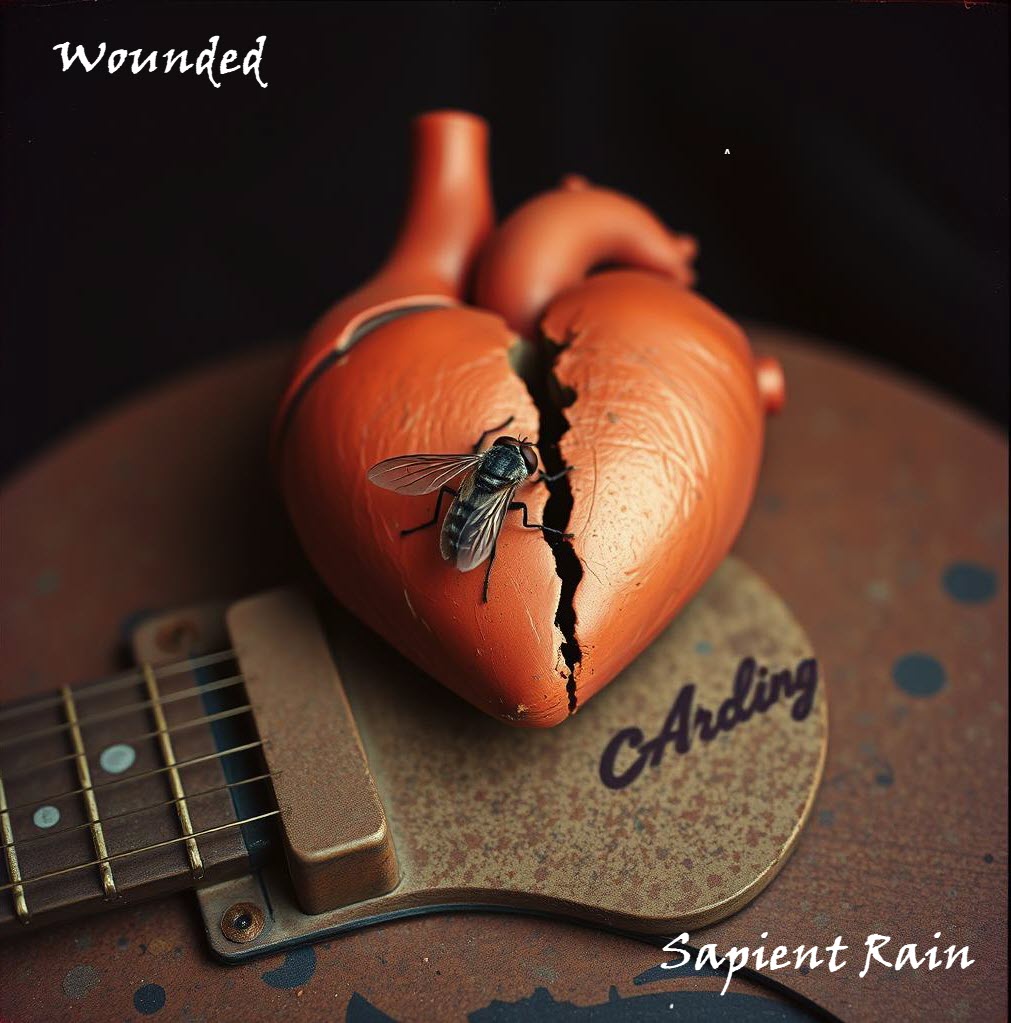
On 02/26/26, the single “Neo-fascist-oligarchic-expialidocious” from the album “Wounded” comes out on Spotify, Apple Music, YouTube Music, and iTunes under the artist profile “Sapient Rain.”
Sapient Rain is the artistic collaboration of writer/lyricist Geoffrey Reilly and the AI music engine Suno.
My Paper, My Words is a collection of essays, stories, and poems that reflect the challenges of a middle-class husband and father trying to navigate a rapidly changing political, religious, and technological landscape of post-911 America.
Sapient Rain is a human-AI partnership between lyricist Geoffrey Reilly and the AI music platform Suno.
“Wounded,” the follow-up to Sapient Rain’s debut release, “Wisdom’s Water,” presents an eclectic collection of songs spanning musical genres, from rockabilly and grunge-inflected bangers to melodic country western ballads.
Reilly’s lyrics focus on individuals wounded by love, depression, and the whims of demented, power-hungry authoritarians. Suno’s AI-generated music (thoughtfully procured by Reilly) amplifies and transforms the lyric imagery into immersive soundscapes that feel firmly rooted in the times we are living.
My Paper, My Words is a collection of essays, stories, and poems that reflect the challenges of a middle-class husband and father trying to navigate a rapidly changing political, religious, and technological landscape of post-911 America.
My Paper, My Words is a collection of essays, stories, and poems that reflect the challenges of a middle-class husband and father trying to navigate a rapidly changing political, religious, and technological landscape of post-911 America.
If not for witness cell phone videos, the Trump administration would be categorizing the execution-style murder of Alex Pretti as a domestic terrorist attack by the victim.
How do we know this? Because before those videos went public, before any investigation into the shooting, that’s what Kristi Noem, Donald Trump, Greg Bovino, and Karoline Leavitt suggested. All of them are fucking liars protecting murderers.
I keep waiting for the lightbulb to flicker and ignite above the heads of decent Americans who voted for this piece of garbage and for them to say, “Enough is enough.” No one is asking you to become progressive, or liberal, or socialist, just fucking human, just fucking decent.
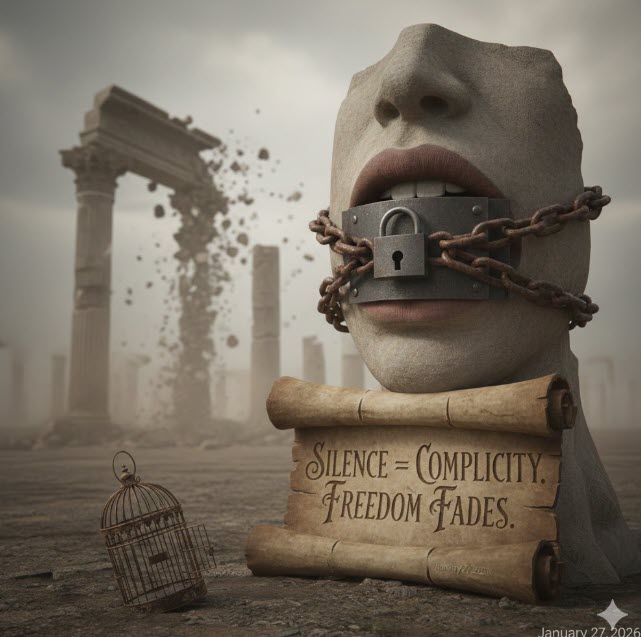
Our government is murdering citizens in the street, and all we hear from many of our fellow citizens is the deafening sound of their silence.
I am not surprised that people like Donald Trump exist and can lie their way to the most powerful office in the world. I’m not surprised that there are hateful, bigoted people who get off on the vicious treatment by this administration of American citizens and undocumented people. None of that surprises me.
What surprises and distresses me is the silence from those who know better. My Republican friends who know what our constitution says, who see it being violated regularly by Trump and his administration, and still remain silent.
Truth, integrity, and character have not simply been relegated to the backseat of our democracy – it’s worse than that – they’ve been thrown out of the car altogether, and now that vehicle travels recklessly as a putrid vessel of Presidential self-interest and self-preservation.
When an unrestrained and morally decrepit leader of a powerful nation flaunts the rule of law, the rest of us, the citizens of that nation, get splattered and stained by the consequences of his messy and lawless decisions.
We are muddied and sullied by association, and our ability to disassociate ourselves from his sick, twisted, and purely transactional worldview is hampered by the chokehold he and his supporters have put on the systems of checks and balances designed by our founders to prevent such a person from rising to power.
My Paper, My Words is a collection of essays, stories, and poems that reflect the challenges of a middle-class husband and father trying to navigate a rapidly changing political, religious, and technological landscape of post-911 America.
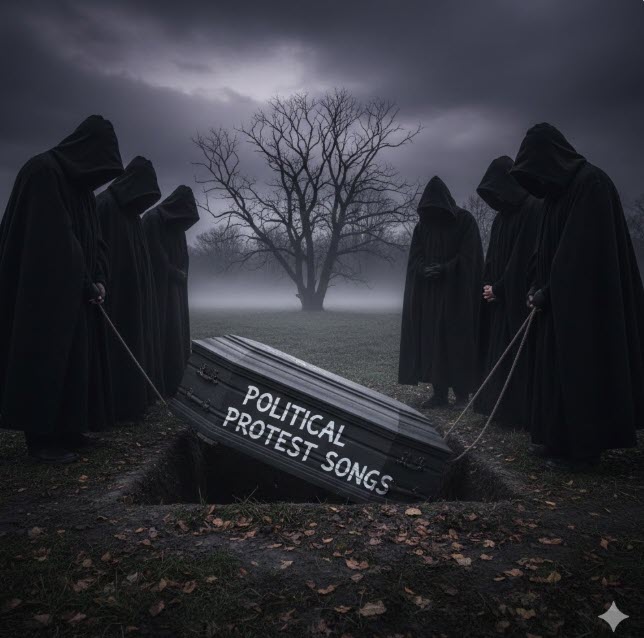
In these turbulent times, why don’t we have protest songs like we used to?
What cultural or sociological changes have made the protest song less popular?
Why Protest Songs Once Thrived
During the 1960s-70s, the economics and centralized nature of the music industry, combined with a shared identity amongst America’s youth (cemented by America’s role in the Vietnam War), provided fertile ground for protest songs to gain popularity.
In the America of the 1960s-70s, young, college-educated, middle-class Americans (a significant demographic) aligned with the counterculture, civil rights, and anti-war movements. This alignment allowed protest songs to find a home in the collective conscience of a generation of young Americans.
The conditions that led to the popularity of protest songs in the 1960s-70s included:
Mass movements: Civil rights and anti-war protests created collective spaces where songs unified crowds.
Limited media outlets: Radio and television amplified protest songs as rallying cries, giving them cultural dominance.
Shared identity: Songs like Bob Dylan’s “Blowin’ in the Wind” or Marvin Gaye’s “What’s Going On” became shorthand for generational values.
Why Protest Songs Declined
Protest songs haven’t disappeared, but their cultural role has shifted due to the following conditions:
Fragmented music culture: Streaming platforms and niche genres mean fewer “universal” hits that everyone hears.
Commercial pressures: Record labels often avoid overtly political content to maximize global market appeal.
Social media activism: Twitter, TikTok, and Instagram now serve as protest tools, reducing reliance on music as the primary vehicle for dissent.
Individualized expression: Protest today often emphasizes personal identity and micro-activism rather than collective anthems.
Cultural fatigue: In turbulent times, audiences may feel overwhelmed, turning to escapism rather than politicized art.
Today, activism often happens through digital platforms, fragmented music genres, and individualized expression rather than mass sing-alongs. Changes have made protest songs less central to political movements.
So, while video killed the radio star in the 1980s, changes in the music industry, commercialization, and the rise of social media may have killed the political protest song today — and that’s a fucking shame, because if there was ever a time for unifying the power of music against political corruption and maleficence, it’s today.
Here are some political protest songs’ that I’ve been working on (my lyrics, Suno’s music). Feel free to share or comment on them!
Donald Trump won’t be around forever (thank God) – but his impact will linger like a fart in a closet. Trump provides a blueprint for other candidates who might possess similar autocratic tendencies. This song is a “heads-up” about the barbarians who will gather at the gates of our democracy once Trump is dead and gone.
These lyrics are from a poem I wrote after the Charlie Kirk assassination. It’s about how dangerously divided America is and the potential for spiraling political violence that seems increasingly likely in the second Trump term.
I wrote the poem “Get a Load of Elon” after seeing the sickening footage of that smiling dirtbag laughing it up and swinging a chainsaw around like some fake-ass efficiency hero. Fuck that guy and everything he represents. I think Suno captured the tone I was looking for on this one.
Donald Trump is my fat, ugly muse. There, I said it. Shame on everyone who voted for this criminal, and fuck all the cowards in Congress who are failing to stand up to this two-bit thug. And that’s all I have to say about this song.
I came up with these lyrics based on a poem I wrote in 2017 called “Resist”, which was about pushing back against Donald Trump and his policies, which I saw as an existential threat to America’s democracy. I added several new verses for the song and reworked the verse that would become the chorus. I can see the Dixie Chicks or Dolly Parton belting this out. I’m not a big fan of country or rockabilly music, but I think that musical style works well with the words here.
Suno and I, channeling our best Pat Benatar impression. I wrote the poem “Oligarchic Kings” recently and published it on my blog. I changed it quite a bit for the song version.
When I wrote this poem originally, I wrote it to the cadence of Supercalifragilisticexpialidocious from “Mary Poppins” and included it in my book “Imagine There’s No Donald” (available on Amazon😉 ). I asked Suno to create a power-pop song from the poem. It’s the only poem I used as is (not changing any of the words). It’s a campy/poppy version of a Disney classic.
My Paper, My Words is a collection of essays, stories, and poems that reflect the challenges of a middle-class husband and father trying to navigate a rapidly changing political, religious, and technological landscape of post-911 America.
For the last several weeks, I’ve been pushing my poems through the Suno AI music generator to see how they work as song lyrics.
I’m no Suno expert. In fact, I’m sure that I’m barely scratching the surface of its capabilities.
My process is simple (bordering on rudimentary).
I copy and paste a poem from my blog into the “Lyrics” window in the Suno song generator.
I enter a free-form description of the music style to use for the poem. For example: “Rap, Hip Hop, with Grunge Guitar licks, Female Vocals“.
I add a title for the song and click Create.
Suno generates two songs based on the criteria I entered. Next, I listen to the songs. I can tell right away whether I like what I hear, and often, I delete the song only after the first few bars. Other times, I find that some of my lyrics “work” nicely, while others don’t flow with the music and need tweaking.
I usually have the lyrics open in a text document as I listen to the song, pausing to rework my phrasing to better match the song’s cadence and rhythm. I add or delete verses, move chunks of text around, then have Suno create a new version of the song (with the same criteria). When I have the new songs with my lyrical updates, I go through the same listening and editing exercise.
It’s a very iterative process—and probably not the best way to use the tool. I haven’t managed to fiddle with the remixing and song editing features.
Poems don’t always have a verse-chorus structure commonly found in songs, so reworking these poems into lyrics often involves coming up with a memorable/catchy chorus. That has been the most fun and challenging part of this project.
Some poems that I envisioned as rap or hip-hop songs end up sounding better as rockabilly/country western songs. Switching the vocals from male to female can give a song an entirely new feel.
With Suno, I’ve repurposed my poems into thoughtful, memorable, and singable songs, even though I have no musical skills (I’m not sure if that is a good thing or a bad thing, but it’s definitely a thing). The following table summarizes my “collaborations” with Suno that are publicly available for listening.
I’d love to hear what folks think of these songs or of AI music in general. Post your comments here or on Suno. And please follow me on either platform.
These lyrics are from a poem I wrote years ago after a spate of school shootings. I really like how Suno split the lyrics between male and female vocalists without me specifically directing it. I always heard this poem musically in my head, even when I was writing it. And, I always envisioned a female vocalist singing the “I see angels” part – it was like Suno was reading my mind on how to turn this poem into a song. Favorite Verse:I’m the isolated IncelThe bullet in the gunThe angry white AmericanWho’s blaming everyoneI’m the cryptic manifestoThe video onlineThe AR-15 lover-boyWho grew-up Columbine
I wrote the poem “Pierced Hearts and Sorrow” after the mass shooting in Uvalde, Texas. I also wrote a short story titled “That Final Hug” inspired by that horrible day. I’d gladly give up this type of inspiration if it meant fewer mass shootings where children are murdered in their classrooms. I hate that I feel compelled to write these types of poems. I think Suno captured the mood and tone of what I was trying to convey with my words. Favorite Lyric:We live in a landof pierced hearts and sorrowno shooting today?just wait till tomorrowIn a fog of futilityexplicably numbwe reach for our heartstringsbut there’s nothing to strum
These lyrics are from a poem I wrote after the Charlie Kirk assassination. It’s about how dangerously divided America is and the potential for spiraling political violence that seems increasingly likely in the second Trump term. Favorite Verse:We ought to runfrom martyrdomnot pin it to our chestnot canonizethe hateful guyswho scream that they know best
I wrote a poem called “Ashes to Ashes” ten or more years ago. I fiddled with it and published it on my blog about 5 years ago. With some significant edits and a revamped chorus, here it is with Suno’s light touch. Favorite Verse:We stretch our souls tight on a drumWe beat it bare till it goes numbWe feel the eyes of everyone
Bored one afternoon, I challenged myself to write a poem about Dorothy from The Wizard of Oz. With Suno’s assistance, here is the musical version of that poem. Favorite Verse:Tracing the stitch on her pillowshe imagines the blood in her veinsshe chases the witch up a willowtill the beat of her heart starts to wane
I wrote the poem this song is based on about a month or so ago. It takes a familiar place for Portsmouth, RI, residents (The Glen) and builds a song about the realities of relationships around that place. I trimmed the poem quite a bit for the song and changed some wording. In fact, the verse about chasing fireflies does not appear in the poem at all. That verse came to me as I was listening to the rhythm of the music, and it turned out to be my favorite lyric in the song. I chose a country-western style, which I think works nicely. Favorite Verse:The fireflies we used to chasewent dark forever without a traceand we chose to leave love’s warm embrace
I wrote the poem “Get a Load of Elon” after seeing the sickening footage of that smiling dirtbag laughing it up and swinging a chainsaw around like some fake-ass efficiency hero. Fuck that guy and everything he represents. I think Suno captured the tone I was looking for on this one. Favorite Verse:He pulled into WashingtonBlack MAGA cap on his headHe spent a ton of cashput a felon in our bed
Donald Trump is my fat, ugly muse. There, I said it. Shame on everyone who voted for this criminal, and fuck all the cowards in Congress who are failing to stand up to this two-bit thug. And that’s all I have to say about this song. Favorite Lyric:My heart is full of penniesthere’s no light inside my eyesthere’s only room for Donnyand all that I despiseMy mind is fully taintedI can’t connect the dotsI’m more and more acquaintedwith Russian drones and bots
I wrote a poem in May of 2024 titled “Bonjour, Borg”, which was about the headlong way we are embracing AI, without fully understanding the consequences. I reworked that poem, added a chorus, and handed it to Suno. I include two versions (a power pop version and a blues version). Favorite Lyric: We’re messing with knowledgewe don’t understandplaying our cardswithout knowing our handA sprint to the finishBut where are we going?Dimmed and diminishedWe’ve no way of knowing
I wrote a poem in May of 2024 called “Boys in Distress”. I took bits and pieces from that poem and wrote the lyrics “New Boy Paranormal”. It’s about young adult men in America not being able to find their footing socially to the point where they retreat into a digital world of grievance, anger, and misogyny. This is an example of a previously written poem serving as a concept for new lyrics for a song. I wrote this specifically for Suno. The chorus: Fiber-optic geldings alone inside their heads they bathe in Incel chatrooms masturbate beside their bedsthey’re the new-boy paranormal walking ghosts and talking shit the no-screw-boy semi-formal stalking post sand keeping fit is new and does not appear in “Boys in Distress” – I came up with it on the fly and added it after listening to Suno’s first attempt at creating the song from my poem. This song went through several renditions before I settled on a “Surf rock-influenced” beat. I smiled broadly when I heard the finished product for the first time. Favorite Verse:Fiber-optic geldingsalone inside their headsthey bathe in Incel chatroomsmasturbate beside their beds
I wrote this poem about the climate crisis about 4 years ago. I kept the words pretty much the same for the musical version – just adding a second verse to the chorus. I can see Greta Thunberg belting this out on the bow of the Greenpeace Rainbow Warrior, with a hard-rocking band of Norwegian’s backing her. Greta, if you’re interested, text me. 😊 Favorite Verse: The dangers in Pittsburgthe dangers in Norwaywherever we liveit’s outside our doorwayThe science is speakingthe numbers aren’t lyingThe danger is globalWith temperatures rising
I came up with these lyrics based on a poem I wrote in 2017 called “Resist”, which was about pushing back against Donald Trump and his policies, which I saw as an existential threat to America’s democracy. I added several new verses for the song and reworked the verse that would become the chorus. I can see the Dixie Chicks or Dolly Parton belting this out. I’m not a big fan of country or rockabilly music, but I think that musical style works well with the words here. Favorite Verse:He belittles and threatensthose who oppose himHe stomps up and downscreams America chose him!
The phrase “love grenade” came into my head when I was noodling around a text file. I created this song entirely around that one phrase. No previous poem for this rocker – it just came to me very quickly, all of it from that one phrase “love grenade” – I like the vibe of the music that Suno generated – it’s got a female punk energy that’s fun to listen to (at least to me it is). Favorite Verse:You’re the drunken saintof unrestraintthe banger at the balla bourbon shotwithout a plota fist inside the brawl
Suno and I, channeling our best Pat Benatar impression. I wrote the poem “Oligarchic Kings” recently and published it on my blog. I changed it quite a bit for the song version. Favorite Verse:Oligarchic Kingsare here to clip your wingsto wrap a rope around your throatto cast dark shadows over hopeto crush your dreams of better daysto dress your colors in shades of greys
When I wrote this poem originally, I wrote it to the cadence of Supercalifragilisticexpialidocious from “Mary Poppins” and included it in my book “Imagine There’s No Donald” (available on Amazon😉 ). I asked Suno to create a power-pop song from the poem. It’s the only poem I used as is (not changing any of the words). It’s a campy/poppy version of a Disney classic. Favorite Verse:Neo-fascist-oligarchic-expialidociousElon-Bezos-Zuckerberg are really quite atrociousWe need to fight them in the streetsand call them on their grossnessNeo-fascist-oligarchic-expialidocious
When I was a youngster (I’m talking elementary school age), I remember “feeling” the news of the times – Watergate and Vietnam were in the news all the time. And though I was just a child and could not comprehend the realities swirling around me, I could sense a tension in the air – parents and other adults in heated conversations, the constant coverage of Watergate and Vietnam seeping into our subconscious among all the wonderful distractions of childhood at that time. That’s what inspired me to write the poem that this song’s about. Favorite Verse:Watergate was all aroundin our sight and in our soundon the news and in the paperthe Viet Cong and foiled caperIt lurked and hovered overheadPages written and words were saidit wormed its way into our headthat innocence was finally dead
I wrote a poem titled “Too Small to See” some 20 years ago after reading Robert Frost’s poem “Fire and Ice,” which is about “the destructive power of human emotions, suggesting the world could end through either fiery desire or icy hate, with both leading to the same annihilation, equating intense passion (fire) with destructive greed/lust and cold indifference (ice)” – I remember taking more literal slant on the subject of human mortality against the backdrop of an e-bola outbreak, which made me think that the way humanity ends is less likely to be from nuclear annihilation or climate-related disaster and more likely to be something “too small to see” – like a virus – When COVID came along it only reinforced my belief that our angel of death will be too small to see, killing us all, infectiously. I used to Suno to create two versions of this song with different styles (I’m not sure which one I like better). Favorite Verse:We’ll end with a whimperviral, tiny, and smallfrom something we caughton our trip to the mall
This song combines verses from two separate poems I wrote a few years back – one about regret and the other about a post-apocalyptic world. The result here is both bleak and sweet. Favorite Verse:Some people start to gathershake their fists and curse the sunwhile others mumble silentlyquoting Nietzsche and Carl Jung
This song is based on a poem I wrote, which was published in Beyond Words Literary Magazine a few years back. I did not change any words in the poem. I just added a chorus, and Suno did the rest. Favorite Verse:With a never-ending stipendof more than you can bearan abundant over-ripenedsoftened fruit of deep despair
The collision of technology, conservative ideology, and the incel movement in American culture is resulting in a volatile mix of online radicalization, misogyny, and political extremism.
By amplifying exclusionary beliefs, digital platforms normalize violence and connect isolated individuals into communities that can spill over into real-world harm.
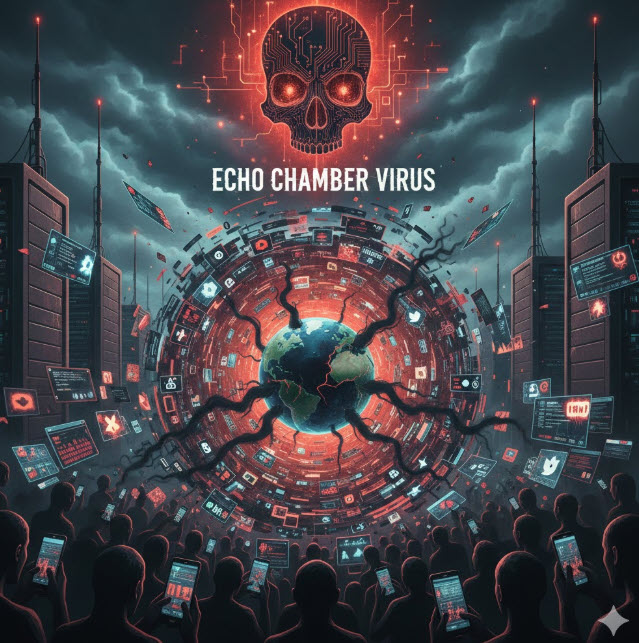
Online platforms, social media, and dedicated incel sites provide a fertile breeding ground and powerful echo chamber for individuals with extremist and misogynistic views. It is in these intellectually dank digital hangouts that we encounter the danger of algorithmic amplification and the recommendation systems, which push members of these online communities deeper into radical content, normalizing hostility toward women and liberal values.
There is also a porn-component to this toxic, digital culture. Studies show links between incel misogyny and online pornography, which reinforces distorted views of women and sexuality.
What’s even more concerning is the acceptance of misogynistic beliefs and behaviors as “boys will be boys” by the Trump administration, which is tapping into the aggrieved community of non-college-educated males, not for the purpose of assisting them, but rather to turn their growing sense of isolation and anger towards college-educated women into votes.
There is an overlap between MAGA conservatism and ideology and the INCEL movement in America, specifically around the anti-feminist narrative, where both groups tend to frame feminism as a threat to traditional gender roles.
INECELS adopt a worldview of being “dispossessed men,” which resonates with broader conservative rhetoric about cultural decline and loss of male authority.
It’s at our own peril that we turn a blind eye to the alignment of incels and far-right groups around exclusionary, anti-democratic, and xenophobic tendencies. Isolated and digitally immersed young men in America are susceptible to being drawn to extremist online communities that distort masculinity and normalize misogyny.
The blending of conservative ideology with incel dogma and rhetoric widens the divide over gender, sexuality, and democracy, fueling broader culture wars in a country that is more culturally polarized than ever.
I wrote a poem a while back about the radicalization of young non-college-educated males through far-right groups around exclusionary, anti-democratic, and misogynistic views. I used the AI music platform Suno to put my poem to music.
My Paper, My Words is a collection of essays, stories, and poems that reflect the challenges of a middle-class husband and father trying to navigate a rapidly changing political, religious, and technological landscape of post-911 America.



 bendingtheneedle