What Happened to Political Protest Songs?

In these turbulent times, why don’t we have protest songs like we used to?

What cultural or sociological changes have made the protest song less popular?

Why Protest Songs Once Thrived

During the 1960s-70s, the economics and centralized nature of the music industry, combined with a shared identity amongst America’s youth (cemented by America’s role in the Vietnam War), provided fertile ground for protest songs to gain popularity.

In the America of the 1960s-70s, young, college-educated, middle-class Americans (a significant demographic) aligned with the counterculture, civil rights, and anti-war movements. This alignment allowed protest songs to find a home in the collective conscience of a generation of young Americans.

The conditions that led to the popularity of protest songs in the 1960s-70s included:

  • Mass movements: Civil rights and anti-war protests created collective spaces where songs unified crowds.
  • Limited media outlets: Radio and television amplified protest songs as rallying cries, giving them cultural dominance.
  • Shared identity: Songs like Bob Dylan’s “Blowin’ in the Wind” or Marvin Gaye’s “What’s Going On” became shorthand for generational values.

Why Protest Songs Declined

Protest songs haven’t disappeared, but their cultural role has shifted due to the following conditions:

  • Fragmented music culture: Streaming platforms and niche genres mean fewer “universal” hits that everyone hears.
  • Commercial pressures: Record labels often avoid overtly political content to maximize global market appeal.
  • Social media activism: Twitter, TikTok, and Instagram now serve as protest tools, reducing reliance on music as the primary vehicle for dissent.
  • Individualized expression: Protest today often emphasizes personal identity and micro-activism rather than collective anthems.
  • Cultural fatigue: In turbulent times, audiences may feel overwhelmed, turning to escapism rather than politicized art.

Today, activism often happens through digital platforms, fragmented music genres, and individualized expression rather than mass sing-alongs. Changes have made protest songs less central to political movements.

So, while video killed the radio star in the 1980s, changes in the music industry, commercialization, and the rise of social media may have killed the political protest song today — and that’s a fucking shame, because if there was ever a time for unifying the power of music against political corruption and maleficence, it’s today.

Here are some political protest songs’ that I’ve been working on (my lyrics, Suno’s music). Feel free to share or comment on them!

SongAbout the Lyrics
Barbarians at the Gate (Version 1)   Barbarians at the Gate (Version 2)Donald Trump won’t be around forever (thank God) – but his impact will linger like a fart in a closet. Trump provides a blueprint for other candidates who might possess similar autocratic tendencies. This song is a “heads-up” about the barbarians who will gather at the gates of our democracy once Trump is dead and gone.
Hey Fascist, Catch  These lyrics are from a poem I wrote after the Charlie Kirk assassination. It’s about how dangerously divided America is and the potential for spiraling political violence that seems increasingly likely in the second Trump term.
Get a Load of ElonI wrote the poem “Get a Load of Elon” after seeing the sickening footage of that smiling dirtbag laughing it up and swinging a chainsaw around like some fake-ass efficiency hero. Fuck that guy and everything he represents. I think Suno captured the tone I was looking for on this one.
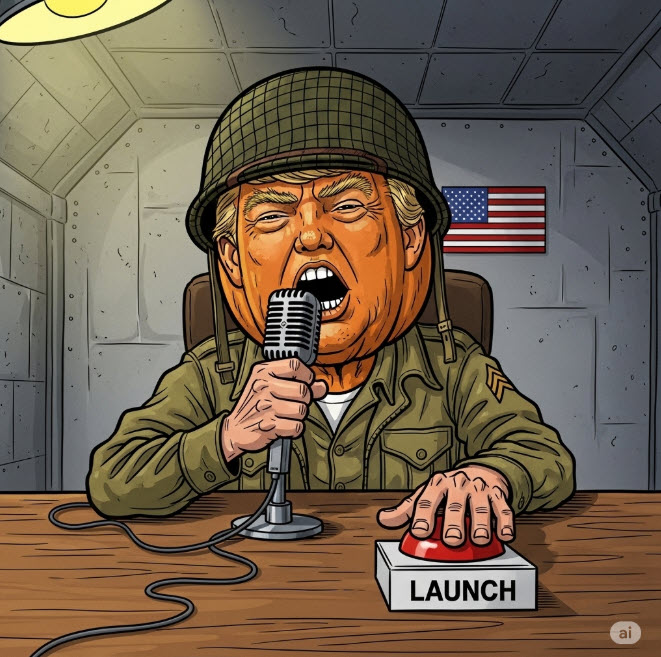
The Orange KingDonald Trump is my fat, ugly muse. There, I said it. Shame on everyone who voted for this criminal, and fuck all the cowards in Congress who are failing to stand up to this two-bit thug. And that’s all I have to say about this song.  
The Orange MorassI came up with these lyrics based on a poem I wrote in 2017 called “Resist”, which was about pushing back against Donald Trump and his policies, which I saw as an existential threat to America’s democracy. I added several new verses for the song and reworked the verse that would become the chorus. I can see the Dixie Chicks or Dolly Parton belting this out. I’m not a big fan of country or rockabilly music, but I think that musical style works well with the words here.
Oligarchic KingsSuno and I, channeling our best Pat Benatar impression. I wrote the poem “Oligarchic Kings” recently and published it on my blog. I changed it quite a bit for the song version.  
Neo-Fascist-Oligarchic-ExpialidociousWhen I wrote this poem originally, I wrote it to the cadence of Supercalifragilisticexpialidocious from “Mary Poppins” and included it in my book “Imagine There’s No Donald” (available on Amazon😉 ). I asked Suno to create a power-pop song from the poem. It’s the only poem I used as is (not changing any of the words). It’s a campy/poppy version of a Disney classic.


If you haven’t had a chance yet, please check out my book, My Paper, My Words: Rantings from a Progressive Boomer and Peeved Parent, from Amazon. And if you feel moved to write a review of the book, on Amazon, or anywhere else, I’d be honored.

My Paper, My Words is a collection of essays, stories, and poems that reflect the challenges of a middle-class husband and father trying to navigate a rapidly changing political, religious, and technological landscape of post-911 America.

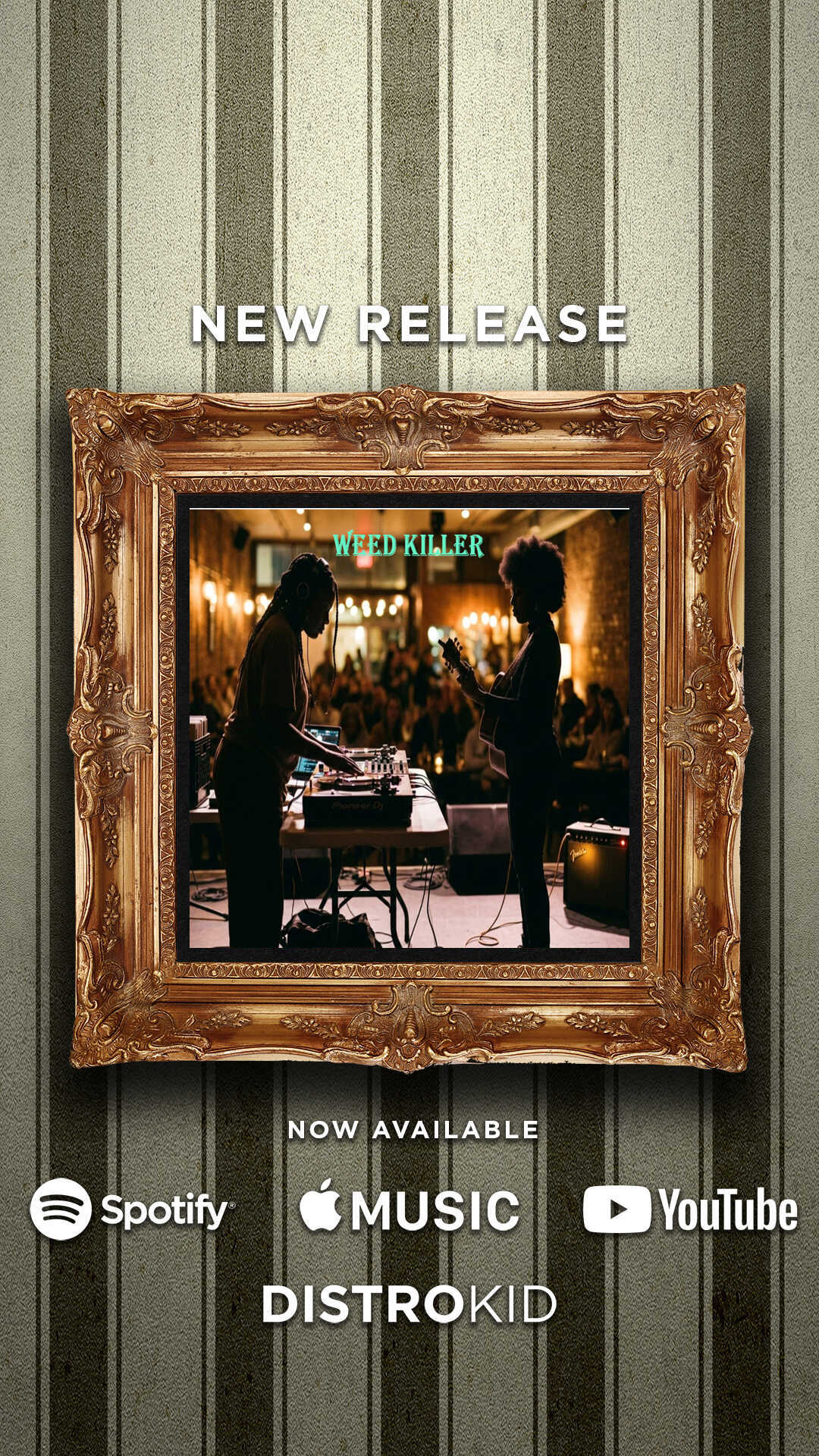
My AI Music Project

For the last several weeks, I’ve been pushing my poems through the Suno AI music generator to see how they work as song lyrics.

I’m no Suno expert. In fact, I’m sure that I’m barely scratching the surface of its capabilities.

My process is simple (bordering on rudimentary).

  • I copy and paste a poem from my blog into the “Lyrics” window in the Suno song generator.
  • I enter a free-form description of the music style to use for the poem. For example: “Rap, Hip Hop, with Grunge Guitar licks, Female Vocals“.
  • I add a title for the song and click Create.

Suno generates two songs based on the criteria I entered. Next, I listen to the songs. I can tell right away whether I like what I hear, and often, I delete the song only after the first few bars. Other times, I find that some of my lyrics “work” nicely, while others don’t flow with the music and need tweaking.

I usually have the lyrics open in a text document as I listen to the song, pausing to rework my phrasing to better match the song’s cadence and rhythm. I add or delete verses, move chunks of text around, then have Suno create a new version of the song (with the same criteria). When I have the new songs with my lyrical updates, I go through the same listening and editing exercise.

It’s a very iterative process—and probably not the best way to use the tool. I haven’t managed to fiddle with the remixing and song editing features.

Poems don’t always have a verse-chorus structure commonly found in songs, so reworking these poems into lyrics often involves coming up with a memorable/catchy chorus. That has been the most fun and challenging part of this project.

Some poems that I envisioned as rap or hip-hop songs end up sounding better as rockabilly/country western songs. Switching the vocals from male to female can give a song an entirely new feel.

With Suno, I’ve repurposed my poems into thoughtful, memorable, and singable songs, even though I have no musical skills (I’m not sure if that is a good thing or a bad thing, but it’s definitely a thing). The following table summarizes my “collaborations” with Suno that are publicly available for listening.

I’d love to hear what folks think of these songs or of AI music in general. Post your comments here or on Suno. And please follow me on either platform.

SongAbout the Lyrics
Baby Teeth and BulletsThese lyrics are from a poem I wrote years ago after a spate of school shootings. I really like how Suno split the lyrics between male and female vocalists without me specifically directing it. I always heard this poem musically in my head, even when I was writing it. And, I always envisioned a female vocalist singing the “I see angels” part – it was like Suno was reading my mind on how to turn this poem into a song. Favorite Verse: I’m the isolated Incel The bullet in the gun The angry white American Who’s blaming everyone I’m the cryptic manifesto The video online The AR-15 lover-boy Who grew-up Columbine
Pierced Hearts and SorrowI wrote the poem “Pierced Hearts and Sorrow” after the mass shooting in Uvalde, Texas. I also wrote a short story titled “That Final Hug” inspired by that horrible day. I’d gladly give up this type of inspiration if it meant fewer mass shootings where children are murdered in their classrooms. I hate that I feel compelled to write these types of poems. I think Suno captured the mood and tone of what I was trying to convey with my words. Favorite Lyric: We live in a land of pierced hearts and sorrow no shooting today? just wait till tomorrow In a fog of futility explicably numb we reach for our heartstrings but there’s nothing to strum
Hey Fascist, Catch  These lyrics are from a poem I wrote after the Charlie Kirk assassination. It’s about how dangerously divided America is and the potential for spiraling political violence that seems increasingly likely in the second Trump term.   Favorite Verse: We ought to run from martyrdom not pin it to our chest not canonize the hateful guys who scream that they know best
Ashes to AshesI wrote a poem called “Ashes to Ashes” ten or more years ago. I fiddled with it and published it on my blog about 5 years ago. With some significant edits and a revamped chorus, here it is with Suno’s light touch. Favorite Verse: We stretch our souls tight on a drum We beat it bare till it goes numb We feel the eyes of everyone
Fury and FlowBored one afternoon, I challenged myself to write a poem about Dorothy from The Wizard of Oz. With Suno’s assistance, here is the musical version of that poem.   Favorite Verse: Tracing the stitch on her pillow she imagines the blood in her veins she chases the witch up a willow till the beat of her heart starts to wane  
The GlenI wrote the poem this song is based on about a month or so ago. It takes a familiar place for Portsmouth, RI, residents (The Glen) and builds a song about the realities of relationships around that place. I trimmed the poem quite a bit for the song and changed some wording. In fact, the verse about chasing fireflies does not appear in the poem at all. That verse came to me as I was listening to the rhythm of the music, and it turned out to be my favorite lyric in the song. I chose a country-western style, which I think works nicely. Favorite Verse: The fireflies we used to chase went dark forever without a trace and we chose to leave love’s warm embrace
Get a Load of ElonI wrote the poem “Get a Load of Elon” after seeing the sickening footage of that smiling dirtbag laughing it up and swinging a chainsaw around like some fake-ass efficiency hero. Fuck that guy and everything he represents. I think Suno captured the tone I was looking for on this one. Favorite Verse: He pulled into Washington Black MAGA cap on his head He spent a ton of cash put a felon in our bed
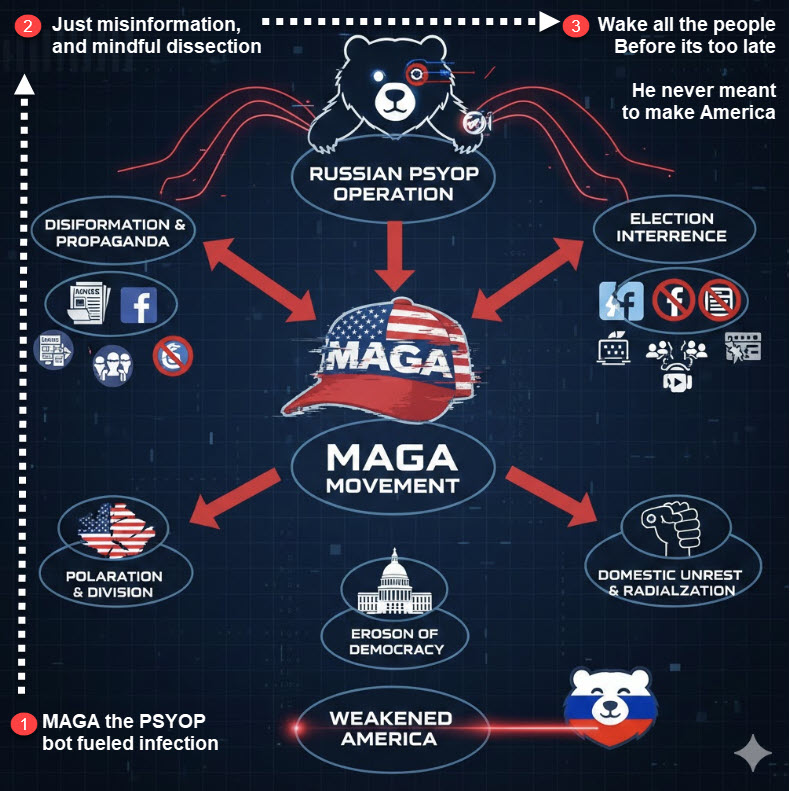
The Orange KingDonald Trump is my fat, ugly muse. There, I said it. Shame on everyone who voted for this criminal, and fuck all the cowards in Congress who are failing to stand up to this two-bit thug. And that’s all I have to say about this song. Favorite Lyric: My heart is full of pennies there’s no light inside my eyes there’s only room for Donny and all that I despise My mind is fully tainted I can’t connect the dots I’m more and more acquainted with Russian drones and bots  
Pandora’s Vox   Pandora’s Vox (Blues Version)I wrote a poem in May of 2024 titled “Bonjour, Borg”, which was about the headlong way we are embracing AI, without fully understanding the consequences. I reworked that poem, added a chorus, and handed it to Suno. I include two versions (a power pop version and a blues version). Favorite Lyric:   We’re messing with knowledge we don’t understand playing our cards without knowing our hand A sprint to the finish But where are we going? Dimmed and diminished We’ve no way of knowing  
New Boy ParanormalI wrote a poem in May of 2024 called “Boys in Distress”. I took bits and pieces from that poem and wrote the lyrics “New Boy Paranormal”. It’s about young adult men in America not being able to find their footing socially to the point where they retreat into a digital world of grievance, anger, and misogyny. This is an example of a previously written poem serving as a concept for new lyrics for a song. I wrote this specifically for Suno. The chorus:   Fiber-optic geldings alone inside their heads they bathe in Incel chatrooms masturbate beside their beds they’re the new-boy paranormal walking ghosts and talking shit the no-screw-boy semi-formal stalking post sand keeping fit is new and does not appear in “Boys in Distress” – I came up with it on the fly and added it after listening to Suno’s first attempt at creating the song from my poem. This song went through several renditions before I settled on a “Surf rock-influenced” beat. I smiled broadly when I heard the finished product for the first time. Favorite Verse: Fiber-optic geldings alone inside their heads they bathe in Incel chatrooms masturbate beside their beds
The Danger’s in PittsburghI wrote this poem about the climate crisis about 4 years ago. I kept the words pretty much the same for the musical version – just adding a second verse to the chorus. I can see Greta Thunberg belting this out on the bow of the Greenpeace Rainbow Warrior, with a hard-rocking band of Norwegian’s backing her. Greta, if you’re interested, text me. 😊 Favorite Verse: The dangers in Pittsburg the dangers in Norway wherever we live it’s outside our doorway The science is speaking the numbers aren’t lying The danger is global With temperatures rising  
The Orange MorassI came up with these lyrics based on a poem I wrote in 2017 called “Resist”, which was about pushing back against Donald Trump and his policies, which I saw as an existential threat to America’s democracy. I added several new verses for the song and reworked the verse that would become the chorus. I can see the Dixie Chicks or Dolly Parton belting this out. I’m not a big fan of country or rockabilly music, but I think that musical style works well with the words here. Favorite Verse: He belittles and threatens those who oppose him He stomps up and down screams America chose him!
Love GrenadeThe phrase “love grenade” came into my head when I was noodling around a text file. I created this song entirely around that one phrase. No previous poem for this rocker – it just came to me very quickly, all of it from that one phrase “love grenade” – I like the vibe of the music that Suno generated – it’s got a female punk energy that’s fun to listen to (at least to me it is). Favorite Verse: You’re the drunken saint of unrestraint the banger at the ball a bourbon shot without a plot a fist inside the brawl
Oligarchic KingsSuno and I, channeling our best Pat Benatar impression. I wrote the poem “Oligarchic Kings” recently and published it on my blog. I changed it quite a bit for the song version. Favorite Verse: Oligarchic Kings are here to clip your wings to wrap a rope around your throat to cast dark shadows over hope to crush your dreams of better days to dress your colors in shades of greys  
Neo-Fascist-Oligarchic-ExpialidociousWhen I wrote this poem originally, I wrote it to the cadence of Supercalifragilisticexpialidocious from “Mary Poppins” and included it in my book “Imagine There’s No Donald” (available on Amazon😉 ). I asked Suno to create a power-pop song from the poem. It’s the only poem I used as is (not changing any of the words). It’s a campy/poppy version of a Disney classic. Favorite Verse: Neo-fascist-oligarchic-expialidocious Elon-Bezos-Zuckerberg are really quite atrocious We need to fight them in the streets and call them on their grossness Neo-fascist-oligarchic-expialidocious
Seeped in the 70sWhen I was a youngster (I’m talking elementary school age), I remember “feeling” the news of the times – Watergate and Vietnam were in the news all the time. And though I was just a child and could not comprehend the realities swirling around me, I could sense a tension in the air – parents and other adults in heated conversations, the constant coverage of Watergate and Vietnam seeping into our subconscious among all the wonderful distractions of childhood at that time. That’s what inspired me to write the poem that this song’s about.   Favorite Verse: Watergate was all around in our sight and in our sound on the news and in the paper the Viet Cong and foiled caper It lurked and hovered overhead Pages written and words were said it wormed its way into our head that innocence was finally dead  
Too Small to See Too Small to See (Surf-Rock) versionI wrote a poem titled “Too Small to See” some 20 years ago after reading Robert Frost’s poem “Fire and Ice,” which is about “the destructive power of human emotions, suggesting the world could end through either fiery desire or icy hate, with both leading to the same annihilation, equating intense passion (fire) with destructive greed/lust and cold indifference (ice)” – I remember taking more literal slant on the subject of human mortality against the backdrop of an e-bola outbreak, which made me think that the way humanity ends is less likely to be from nuclear annihilation or climate-related disaster and more likely to be something “too small to see” – like a virus – When COVID came along it only reinforced my belief that our angel of death will be too small to see, killing us all, infectiously. I used to Suno to create two versions of this song with different styles (I’m not sure which one I like better). Favorite Verse: We’ll end with a whimper viral, tiny, and small from something we caught on our trip to the mall  
Time Misspent in WonderlandThis song combines verses from two separate poems I wrote a few years back – one about regret and the other about a post-apocalyptic world. The result here is both bleak and sweet.   Favorite Verse: Some people start to gather shake their fists and curse the sun while others mumble silently quoting Nietzsche and Carl Jung
Mangled by the Madness     This song is based on a poem I wrote, which was published in Beyond Words Literary Magazine a few years back. I did not change any words in the poem. I just added a chorus, and Suno did the rest.   Favorite Verse: With a never-ending stipend of more than you can bear an abundant over-ripened softened fruit of deep despair

Let’s Ask Arty About Democratic Socialism

Let’s Ask Arty uses existing Artificial Intelligence (AI) technology to query LLMs about politics in these troubled times.

What is Democratic Socialism?

Democratic socialism is a political and economic philosophy that advocates for a democratic political system alongside a socially owned or regulated economy. It emphasizes both political democracy and economic fairness, aiming to reduce inequality through collective decision-making and public control over key sectors.

How does Democratic Socialism differ from “Traditional” Socialism?

Democratic socialism differs from traditional socialism primarily in its commitment to political democracy and its approach to economic reform. While both advocate for social ownership and reducing inequality, democratic socialism insists on maintaining democratic institutions and civil liberties.

Key Differences Between Democratic Socialism and Socialism

FeatureDemocratic SocialismTraditional Socialism
Political SystemEmphasizes democracy, free elections, and civil libertiesMay support centralized or authoritarian governance
Economic OwnershipAdvocates social ownership of key industries, not allSeeks complete public ownership of the means of production
Implementation MethodUses gradual reforms through democratic processesOften involves revolutionary change or centralized planning
Individual FreedomsStrong focus on protecting rights and libertiesMay subordinate individual rights to collective goals
ExamplesNordic countries (in practice), Bernie Sanders (in rhetoric)Historical models like USSR, Maoist China

🧠 Philosophical Distinctions

  • Democratic socialism is a subset of socialism that integrates democratic governance with socialist economics. It aims to balance individual freedom with collective welfare.
  • Socialism, broadly defined, focuses on economic equality and communal ownership, but doesn’t always specify how political power should be structured.

🔍 Why the Confusion?

In the U.S., the term “socialism” has often been used pejoratively, leading to misunderstandings. Democratic socialism is sometimes conflated with authoritarian socialism or communism, despite its emphasis on democracy and civil rights.

Core Principles of Democratic Socialism

  • Political democracy: Free elections, civil liberties, and rule of law are essential. Democratic socialists reject authoritarianism in all forms.
  • Economic democracy: Major industries and services—like healthcare, education, and energy—should be publicly owned or heavily regulated to serve the public good rather than private profit.
  • Social justice: Policies aim to reduce inequality, protect workers’ rights, and ensure universal access to basic needs like housing, healthcare, and education.
  • Environmental sustainability: Many democratic socialists advocate for green policies and sustainable development as part of their platform.

🏛️ How It Differs from Other Systems

SystemOwnership ModelPolitical SystemEconomic Focus
Democratic SocialismPublic/social ownership of key sectorsDemocratic (multi-party)Equity, welfare, and public good
Social DemocracyCapitalist economy with strong welfare stateDemocraticRedistribution through taxation
CommunismFull state ownership of all propertyOften authoritarianClassless, stateless society
CapitalismPrivate ownership of most industriesDemocratic or authoritarianProfit-driven, market-based

Sources: Wikipedia, Britannica, Democratic Socialists of America

🧠 Key Takeaways

  • Democratic socialism is not communism—it supports democracy and civil liberties.
  • It seeks to balance individual freedoms with collective responsibility.
  • It’s gaining traction in the U.S. through figures like Bernie Sanders and organizations like the Democratic Socialists of America.

What Countries have implemented Democratic Socialism most effectively? How can one measure the success of Democratic Socialism?

Nordic countries like Sweden, Norway, Denmark, and Finland are widely considered the most effective examples of democratic socialism. Success is typically measured through metrics like economic equality, universal access to services, democratic stability, and overall well-being.

🌍 Countries with Effective Democratic Socialism

These nations blend market economies with strong welfare states and democratic institutions:

  • Sweden: Known for universal healthcare, tuition-free education, and strong labor protections.
  • Norway: Combines oil wealth with public ownership and generous social programs.
  • Denmark: Offers robust unemployment benefits, free education, and high civic trust.
  • Finland: Ranked as the world’s happiest country, with strong public services and low corruption.
  • Iceland and Netherlands also integrate democratic socialist principles, though with more market liberalism.

These countries maintain multi-party democracies, free markets, and civil liberties, while ensuring universal access to healthcare, education, and housing.

📏 How to Measure Success in Democratic Socialism

Success isn’t judged solely by GDP—it’s about how well a society meets collective needs.

Key metrics include:

🧮 Economic and Social Indicators
  • Income equality: Measured by the Gini coefficient—Nordic countries consistently rank among the most equal.
  • Universal access: Availability of healthcare, education, housing, and childcare regardless of income.
  • Labor rights: Strong unions, collective bargaining, and worker protections.
  • Social mobility: Opportunities for upward movement across generations.
😊 Quality of Life Metrics
  • Happiness and well-being: Finland, Denmark, and Sweden top global happiness rankings.
  • Life expectancy and health outcomes: Universal healthcare contributes to better public health.
  • Education outcomes: Free and high-quality education systems promote equity and innovation.
🗳️ Democratic Health
  • Political participation: High voter turnout and trust in institutions.
  • Freedom of press and speech: Strong protections for civil liberties.
  • Low corruption: Transparent governance and accountability.

My Take

Language resonates, and misinformation denigrates.

Americans have a Pavlovian response to the word “socialism.” If Socialism is in the name, most Americans want nothing to do with it. When they hear it, they blanch and recoil reflexively, never taking the time to differentiate Socialism from democratic Socialism.

Many citizens view Socialism as anti-American, even if it has the word “democratic” attached to it.

For years, politicians in both parties have successfully leveraged America’s innate fear and disgust of Socialism to denigrate and lie about Democratic Socialism. For example, as Arty stated, it falsely equates it to traditional Socialism or even communism.

But voters in New York City are on the verge of shaking things up in American politics by electing a Democratic Socialist to lead the most strategic, culturally and financially influential city on Earth.

Zohran Mamdani is a young, charismatic, and savvy candidate, but for most Americans (even New Yorkers), youth, charisma, and political chops have never been enough to clear the hurdle of being a Socialist.

So, why is Mamdani on the verge of becoming New York City’s mayor?

What’s changed?

I’d argue that the most significant change driving America’s willingness to look at Democratic Socialism with a more critical and unbiased eye is the policies of Donald J Trump, which are turbo-charging the rise in economic inequality across the country.

Middle- and lower-income New Yorkers are feeling the impact of unfair economic policies and the very real consequences of those policies — and on this election day, New Yorkers are a microcosm of Americans across the country.

And I believe that in America today, the conceptual and philosophically based fear of Democratic Socialism is less than the very real fear of not being able to afford housing, groceries, healthcare, and education.

Americans are looking for a government that balances economic fairness and personal freedom. Most Americans don’t want to abolish capitalism entirely, but rather tame its excesses, which have exploded over the last several decades and worsened further under Donald Trump.

The gap between the wealthiest Americans and the rest of the population has widened, with income and wealth increasingly concentrated at the top. According to Arty, economic inequality has been trending upward for decades:

  • Post-WWII to 1970s: This era saw broadly shared economic growth. Incomes across all levels rose at similar rates, and the middle class expanded.
  • Since the 1970s, Income growth has slowed for most Americans, while the top 1% has captured a disproportionate share of income and wealth gains.
  • By the 2010s and 2020s: The top 5% of households saw their share of total income rise significantly, while the bottom 60% experienced stagnation or modest gains.

And by comparison, income inequality pales to the extreme wealth inequality in America, where the top 1% of households now hold more wealth than the bottom 90% combined.

But it’s what lurks behind the wealth and income numbers that truly matters and should keep average Americans up at night.

Rising inequality affects:

  • Social mobility: It’s harder for people to move up the economic ladder.
  • Political power: Wealth concentration can distort democratic processes.
  • Economic stability: Inequality can lead to reduced consumer spending and greater financial volatility.

Democratic Socialism isn’t just a policy shift—it’s a philosophical challenge to the idea that markets should dominate society. By prioritizing human needs over profit, it exposes the limitations and inequalities of unfettered capitalism. That’s why it’s seen as a threat—not because it seeks chaos, but because it seeks a different kind of order.

We’re about to see just how fed-up New Yorkers are with our current system of government. Today’s mayoral election may be a harbinger of change and political revolution in America.


If you haven’t had a chance yet, please check out my book, My Paper, My Words: Rantings from a Progressive Boomer and Peeved Parent, from Amazon. And if you feel moved to write a review of the book, on Amazon, or anywhere else, I’d be honored.

My Paper, My Words is a collection of essays, stories, and poems that reflect the challenges of a middle-class husband and father trying to navigate a rapidly changing political, religious, and technological landscape of post-911 America.
Let’s Ask Arty about Donald Trump’s Characterization of President Reagan’s views on Tariffs

Let’s Ask Arty uses existing Artificial Intelligence (AI) technology to query LLMs about politics in these troubled times.

Query 1: Donald Trump stated that Ronald Reagan “Loved tariffs for our country and its national security.” Does Donald Trump’s statement accurately reflect President’ Reagan’s views on tariffs?

No, Donald Trump’s statement that Ronald Reagan loved tariffs for our country and its national security does not accurately reflect President Reagan’s views on tariffs.

Reagan was a strong advocate for free trade and often spoke against tariffs, viewing them as harmful to economic prosperity.

In fact, in a 1987 national radio address, Reagan explicitly criticized tariffs, stating they “hurt every American” and arguing that protectionist policies like tariffs lead to “shrinking markets, collapsing businesses, and widespread job losses”. He believed that while tariffs might seem patriotic or protective in the short term, they ultimately stifle innovation, provoke retaliatory trade measures, and damage the broader economy.

Query 2: Donald Trump stated that an Ad created by the Government of Ontario of Ronald Regan criticizing tariffs was “fake.” Is Donald Trump telling the truth? Was the ad fake?

No, Donald Trump was not telling the truth.

A recent controversy arose when the Ontario government aired an ad using clips from Reagan’s 1987 speech to highlight his anti-tariff stance. Donald Trump responded by calling the ad “fake” and claimed it misrepresented Reagan’s views. However, fact-checks and the full context of Reagan’s speech confirm that he genuinely opposed tariffs and championed open markets.

While Reagan did occasionally use targeted trade measures for strategic purposes, his overall philosophy was rooted in free and fair trade, not broad protectionism or nationalistic tariff policies.

So, while Trump may frame tariffs as essential for national security, invoking Reagan as a supporter of such policies misrepresents the former president’s well-documented economic views.

My Take

Anyone with a cell phone or computer can do a quick Google search and know definitively that Trump was lying about the Ontario government’s Ad being fake and lying about Ronald Reagan “loving tariffs.”

It took me less than 5 minutes to debunk President Trump’s statements.

The more prescient issue is how fluidly this administration weaponizes lying.

Most politicians (and non-politicians for that matter) lie to get out of a jam. The Trump administration’s repetitive lying is part of a strategy to manipulate public opinion.

This administration is taking a page from the 1930s Nazi party playbook, where writings and speeches consistently emphasized emotional appeal, repetition, and the subordination of truth to political strategy.

More from Arty

According to Arty, Joseph Goebbels, the Nazi Minister of Propaganda, believed:

  • Propaganda as Emotional Weaponry: Goebbels believed propaganda should appeal to emotions, not intellect. He once wrote that the goal was to make people “succumb to it utterly and can never again escape from it”.
  • The “Big Lie” Technique: While the phrase “big lie” is often attributed to Hitler, Goebbels is frequently associated with the idea that a lie, if colossal and repeated often enough, becomes accepted as truth. He accused others—like Winston Churchill—of using this method, even as he employed it himself.
  • Truth as a Tool, Not a Principle: Goebbels preferred to use partial truths or truths that served his agenda, but he was not above outright lies when necessary. He believed that the effectiveness of propaganda lay in its ability to shape perception, not in its factual accuracy.
  • Propaganda as Art and Power: In a 1936 commentary, Goebbels described propaganda as “a political power of the highest magnitude,” emphasizing its role in shaping national spirit and identity.
  • Creating a False Reality: His propaganda efforts aimed to construct an alternate reality in which the Nazi regime appeared righteous and justified, even as it committed atrocities. This manipulation of truth was central to his strategy.

The Trump administration has been widely criticized for employing repeated falsehoods as a political strategy, often aligning with the idea that repetition can foster belief.

Here are several notable examples of falsehoods repeated by Donald Trump and his administration:

1. Election Fraud Claims

  • Claim: The 2020 election was stolen or rigged.
  • Reality: These claims were repeatedly debunked by courts, election officials, and independent audits.
  • Strategy: Trump and allies repeated this claim hundreds of times across rallies, social media, and interviews, leading many supporters to believe it despite a lack of evidence. This lie continues to this day.

2. COVID-19 Misinformation

  • Claim: COVID-19 would “disappear” or be “under control.”
  • Reality: These statements contradicted public health data and expert warnings.
  • Strategy: Trump repeated these claims to downplay the crisis and maintain public confidence, even as cases surged.

3. Tariff Economics

  • Claim: China was paying the tariffs imposed by the U.S.
  • Reality: Importers, usually American businesses and consumers, pay tariffs.
  • Strategy: Trump repeated this economic falsehood to frame the trade war as a win for the U.S., despite its domestic costs.

4. Climate Change Denial

  • Claim: Climate change is a hoax or exaggerated.
  • Reality: Scientific consensus affirms climate change as real and human-driven.
  • Strategy: Trump used repetition to cast doubt on climate science and justify environmental deregulation.

5. George Soros Conspiracies

  • Claim: Soros funded protests and radical left movements.
  • Reality: No credible evidence supports these accusations.
  • Strategy: Trump repeatedly invoked Soros as a villain to energize his base and delegitimize opposition.

A 2023 study published in Public Opinion Quarterly found that repeated falsehoods from Trump’s presidency significantly influenced public misperceptions, especially among partisan audiences. The more often Trump or officials from his administration repeated lies, the more likely people were to believe them, even after the falsehoods had been publicly debunked.

Violence doesn’t solve anything, except….

I abhor violence, but the “violence doesn’t solve anything” lament rings hollow in a country that was born out of violent revolution and resistance, and a country that fought violently to prevent fascism from spreading across Europe and the world. Opposing tyranny and a love of freedom are part and parcel of the American experience. When an individual or government threatens our right to speak and live freely, we resist, protest, and, if necessary, we fight.

The American Revolution did not explode spontaneously into violence – it grew over time from protests, pamphlets, and reasoned arguments. When all of that failed, the only thing left was to either submit to tyranny or to fight.

We celebrate the success and ultimate sacrifice of the American Revolution every Fourth of July and Victory Day every second Monday in August. We pump our fists and fly flags to the rallying cries of “Live Free or Die,” “Give me liberty, or give me death,” and “Don’t Tread on Me.” The activities associated with these sentiments are rarely free of violence.

We humans haven’t evolved as much as we pretend. We struggle to sustain a lasting peaceful coexistence with one another; we’re unable to live-and-let-live, often because of the ginned-up fear around political, religious, and cultural differences, which keep us divided and fighting amongst one another. And make no mistake, leaders like Donald Trump understand that if we are fighting one another, we’re not fighting them.

America is marching towards fascism, and many Americans seem okay with the path we’re on. Maybe it doesn’t feel like fascism when you share the political, social, and religious ideology of your fascist government? Regardless, most Americans (across the political spectrum) do not want conflict, yet we find ourselves on a dangerous precipice of violence with one another, fueled by the assassinations of Melissa and Mark Hortman and Charlie Kirk.

And what makes our current situation even more perilous is that our President is not calling for calm or trying to defuse things.

Why do you think that is?

It’s because the President sees anyone who does not share his authoritarian views as the “enemy within.”

We shouldn’t kid ourselves about the character and nature of the individuals who sit at the highest levels of our government. Our government is awash in fascists and Christian nationalists who have no intention or desire to sit down with secularists, progressives, or even moderate democrats because they view them as a direct threat to their authoritarian designs on America.

If you cherish freedom for everyone, now is the time to speak loudly and to push aggressively (and peacefully) against a government that is trying to strip freedom away from your fellow citizens.


If you haven’t had a chance yet, please check out my book, My Paper, My Words: Rantings from a Progressive Boomer and Peeved Parent, from Amazon. And if you feel moved to write a review of the book, on Amazon, or anywhere else, I’d be honored.

My Paper, My Words is a collection of essays, stories, and poems that reflect the challenges of a middle-class husband and father trying to navigate a rapidly changing political, religious, and technological landscape of post-911 America.
Charlie Kirk, Apathetic Farmer

Through his organization Turning Point USA (TPUSA), Charlie Kirk became a significant force in conservative youth politics by tapping into a feeling of cultural displacement among young white men—especially those outside elite institutions—by validating their frustrations and offering a political identity that felt empowering.

He successfully rebranded conservatism for youth by leaning into cultural grievances, opposing progressive ideas (like DEI, CRT, gender fluidity), which resonated with young men who felt blamed or sidelined in mainstream discourse.

In many ways, Charlie Kirk’s meteoric rise embodies the quintessential American success story, where money, power, and fame are all that matter and where kindness, empathy, and service to others are for suckers.

On the surface, some of what Charlie Kirk did and achieved seems almost noble. He reached out to a segment of society that felt politically voiceless and culturally alienated, and he gave them a voice. He recognized the underrepresentation and an utter lack of organized advocacy for non-college-educated white males in America and championed their needs.

The problem was how Charlie Kirk framed their economic disenfranchisement.

Kirk sold young white non-college-educated males on the simplistic notion that the source of their economic disenfranchisement were immigrants, women, minorities, and wokeism, when in reality, their alienation from mainstream American society and its institutions and their feeling of lost purpose and status stems from economic and social shifts that have eroded the traditional path of a stable, middle-class life for those without a bachelor’s degree. 

When a large segment of the population feels economically useless and politically invisible, it creates fertile ground for resentment, polarization, and instability. Discontentment is low-hanging fruit for the opportunistic and power-hungry, and Trump and Kirk cultivated and harvested that low-hanging fruit with great success, while continuing to spread the seeds of grievance, misinformation, and lies across the fertile minds of disaffected American youth for fame, fortune, and power.

Charlie Kirk and Donald Trump are emblematic of the deep rot in America’s political system, where politicians and influencers exploit the disaffected for their own personal gain, indoctrinating followers with cultural hot-button issues and identity politics to the point where the cultivated group doesn’t even care that they’re not being helped.

Like Trump, Kirk was never interested in helping his followers; he was only interested in exploiting them. To Charlie Kirk, America’s disaffected youth were a cash crop.

Genuine solutions to political disempowerment and economic disenfranchisement are complicated, expensive, and require systemic intervention from empathetic, pragmatic, and intelligent leaders who are genuinely interested in helping others. Amplifying polarization, promoting misinformation, and framing politics as a zero-sum cultural war are not solutions; those actions ensure the status quo.

We must connect the disaffected to hope and aspiration, rather than hatred and anger. It’s one thing to say, I feel your pain, quite another to do the hard work of alleviating the pain – and as we see with Trump and saw with Charlie Kirk, it’s a lot easier and more lucrative to point a finger and say, “them, they, those people, they’re the reason you are not flourishing.

Doing the hard work to bring the disaffected back into the fold means investing in government-sponsored programs, training, and empathy, and those things are a tough sell in today’s political environment.


If you haven’t had a chance yet, please check out my book, My Paper, My Words: Rantings from a Progressive Boomer and Peeved Parent, from Amazon. And if you feel moved to write a review of the book, on Amazon, or anywhere else, I’d be honored.

My Paper, My Words is a collection of essays, stories, and poems that reflect the challenges of a middle-class husband and father trying to navigate a rapidly changing political, religious, and technological landscape of post-911 America.

American Graffiti

Cast your eye

ankle high

to the message wall

six inches tall

an instructive blurb

from the stony curb

inflicting think

with paint and ink

about a world

that’s on brink

Don’t be led by the moronic clown

who doesn’t know

what’s up from down

who sows the seeds

of discontent

and puts our feet

into cement

Don’t be fooled by the moronic clown

who doesn’t know

what’s up from down

who creates the chaos

in the street

then sends in troops

to “keep the peace”

who says that he’s

the only one

who can fix the shit

that he has done

Don’t be led by the moronic clown

who wears his lies

like a crown

who proffers hate

through Russian bots

while sending fascist

forget-me-nots


Shift your view

below your shoe

to the message wall

six inches tall

to the good advice

for one and all

inflicting think

with paint and ink

about a world

that’s on brink


If you haven’t had a chance yet, please check out my book, My Paper, My Words: Rantings from a Progressive Boomer and Peeved Parent, from Amazon. And if you feel moved to write a review of the book, on Amazon, or anywhere else, I’d be honored.

My Paper, My Words is a collection of essays, stories, and poems that reflect the challenges of a middle-class husband and father trying to navigate a rapidly changing political, religious, and technological landscape of post-911 America.

Robber Barons and Bullies

Marble-toothed titans
with sneers caked in madness
greed-fed on blood bags
in sweatshops of sadness

Kingpins with linchpins
thick carrots and sticks
deft robber barons
are up to their tricks

The morally crippled
gerrymander in Texas
felonious punk-thugs
that hate and perplex us

Gun toting douchebags
in Home Depot lots
promoting a fascist
while twisting the knot

The clown at the helm
of this powerful nation
is steeped in decline
and reverse escalation

Whitewashing history
attacking the truth
a maniacal misfit
both rude and uncouth

He creates chaos
to hold onto power
commanding the guard
from his fake ivory tower

Targeting cities
that are mostly all blue
a pig who gropes kitties
and pays porn stars to screw

Visions of heaven
black heart full of hate
He’s never come close
to making us great


If you haven’t had a chance yet, please check out my first book, My Paper, My Words: Rantings from a Progressive Boomer and Peeved Parent, from Amazon. And if you feel moved to write a review of the book on Amazon or elsewhere, I’d be honored.

My Paper, My Words is a collection of essays, stories, and poems that reflect the challenges of a middle-class husband and father trying to navigate a rapidly changing political, religious, and technological landscape of post-9/11 America.

Paint It, Black

Read to the cadence of “Paint it, Black” by the Rolling Stones.

I see a brown wall
and I want it painted black
if you have brownish skin
I want to send you back

I see brown men walk by
dressed in their working clothes
I tell my ICE agents
It’s time to make them go

I see the Ukraine fry
in Russian drone attacks
the bombing raids and tanks
that turn their cities black

I see our democracy
begin to fade away
a thousand starving kids
in Palestine today

When I look inside myself
I see my heart is black
the orange spray-on tan
can’t cover up the fact

’till that day I fade away
you’re tied onto the track
I’ll make you suffer days
while turning this world black

I watch the climate change
from here to Timbuktu
I smile at the heat that’s
burning into you

If you look hard enough
into my soulless eyes
there’s only room enough
for all that I despise

I see a brown wall
and I want it painted black
just like my darkened heart
too hard to even frac

I see brown men walk by
dressed in their working clothes
I tell my ICE agents
It’s time to make them go

My feeble mind is tainted
tainted black
Black as night
Black as coal
I wanna see the hope
Blotted out from your eyes
I wanna see them painted, painted, painted
painted black, yeah


If you haven’t had a chance yet, please check out my first book, My Paper, My Words: Rantings from a Progressive Boomer and Peeved Parent, from Amazon. And if you feel moved to write a review of the book on Amazon or elsewhere, I’d be honored.

My Paper, My Words is a collection of essays, stories, and poems that reflect the challenges of a middle-class husband and father trying to navigate a rapidly changing political, religious, and technological landscape of post-9/11 America.

Book Number 2

Hi folks,

I’ve just published “Imagine There’s No Donald” on Amazon.com.

Imagine There’s No Donald is a lyrical collection that channels the melodic cadence of (mostly) Beatles songs to deliver searing poetic indictments of Donald Trump, the MAGA movement, and their corrosive impact on American democracy.

Each poem echoes the structure and emotional resonance of iconic musical tracks—think “Rocky Racoon” reimagined as the tale of Donald Trump’s destructive path to the presidency, or Terry Jacks’ “Seasons in the Sun” transformed into a lament on Republican cowardice and lost democratic norms.

Through this fusion of pop nostalgia and political critique, the collection:

  • 🎶 Harnesses Familiar Rhythms: The song structures serve as scaffolding for verses that are both accessible and subversive, drawing readers in with rhythm before confronting them with truth.
  • 🔥 Excoriates Authoritarianism: Trump and MAGA are portrayed not just as political figures but as symbols of a broader erosion of truth, decency, and constitutional integrity.
  • 🕊️ Defends Democratic Ideals: The poems mourn the fragility of American institutions while fiercely advocating for civic engagement, accountability, and moral clarity.
  • 🎤 Amplifies Dissent: With a voice that is at once satirical and sincere, the book invites readers to sing along in protest, turning melody into a megaphone for resistance.

Whether riffing on “She Came in Through the Bathroom Window” to expose the sycophantic rot of the Trump administration or twisting “When I Saw Her Standing There!” into an elegy against oligarchs and authoritarianism, this book is a poetic rebellion—an artistic act of defiance that refuses to be silent in the face of democratic decay.

Most free thinkers, poets, and essayists are but a thorn in the side of the authoritarian regime that is running roughshod over America’s democracy. Writing and speaking truth to power sometimes feels like screaming into the void. But with critical mass and momentum, art can influence public sentiment and mobilize opposition to repressive policies and tactics, making it a powerful adversary to regimes that rely on propaganda and control.

Verbal resistance alone won’t revive our democracy. If we’re going to right the ship in America, we’re going to have to do more than sing and complain. We’re going to have to take to the streets and, as the honorable Georgia Congressman John Lewis famously said, “get in good trouble, necessary trouble” by the millions.

Get your copy of Imagine There’s No Donald on Amazon. Please feel free to share the link with others on your social media or simply by giving the book to a loved one as a gift.

Peace (and FUDT).


If you haven’t had a chance yet, please check out my first book, My Paper, My Words: Rantings from a Progressive Boomer and Peeved Parent, from Amazon. And if you feel moved to write a review of the book on Amazon or elsewhere, I’d be honored.

My Paper, My Words is a collection of essays, stories, and poems that reflect the challenges of a middle-class husband and father trying to navigate a rapidly changing political, religious, and technological landscape of post-9/11 America.