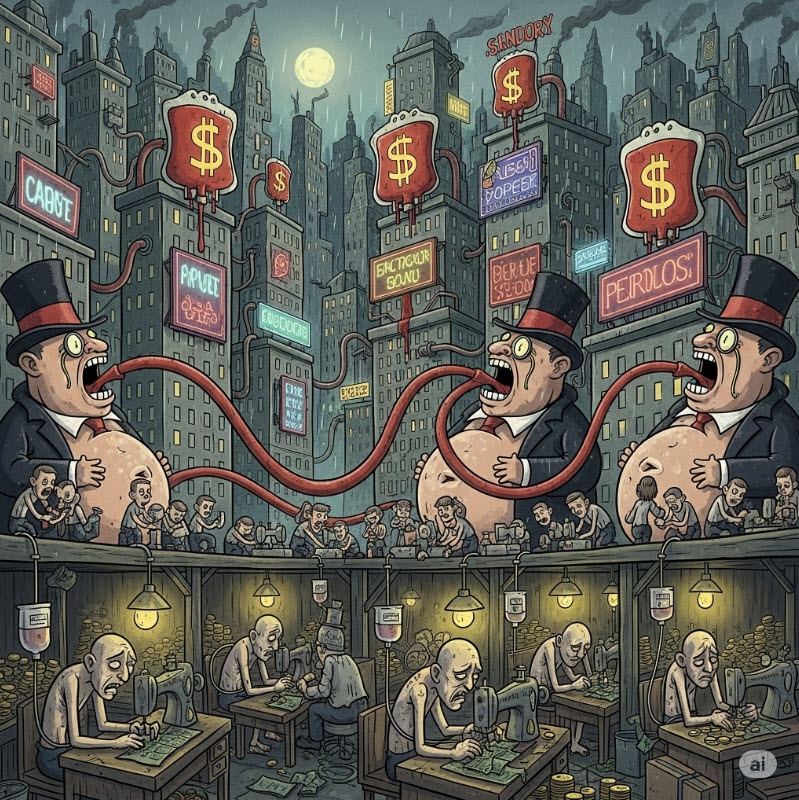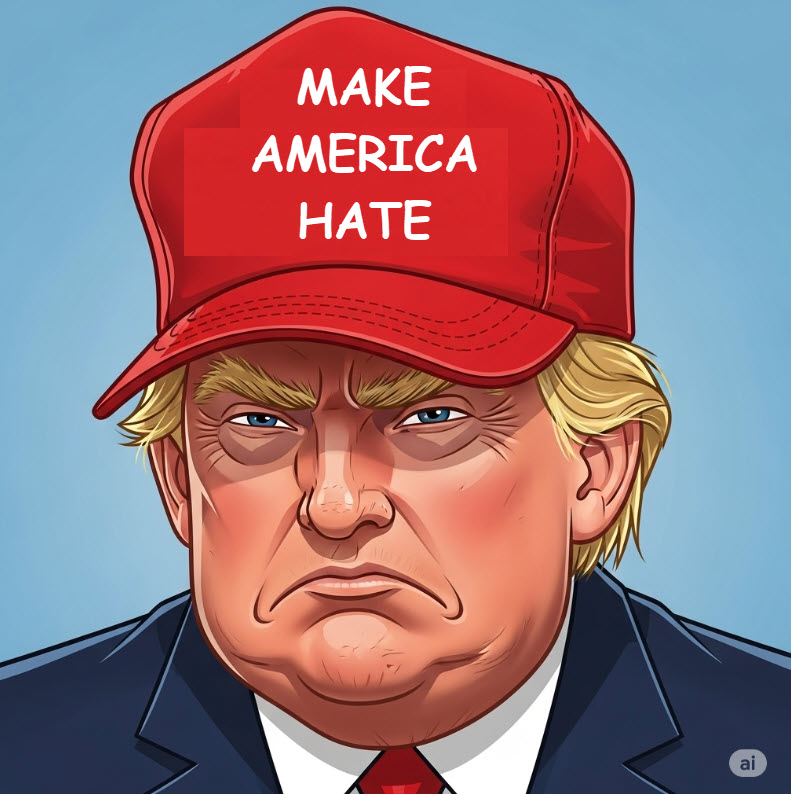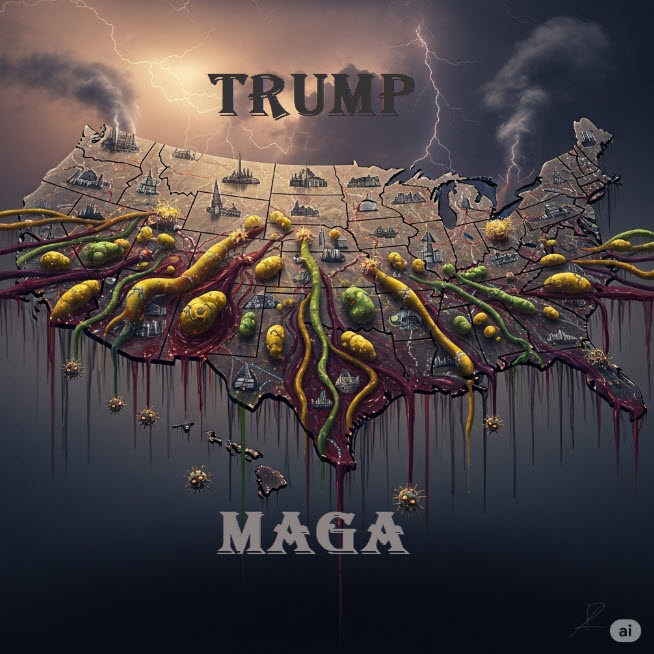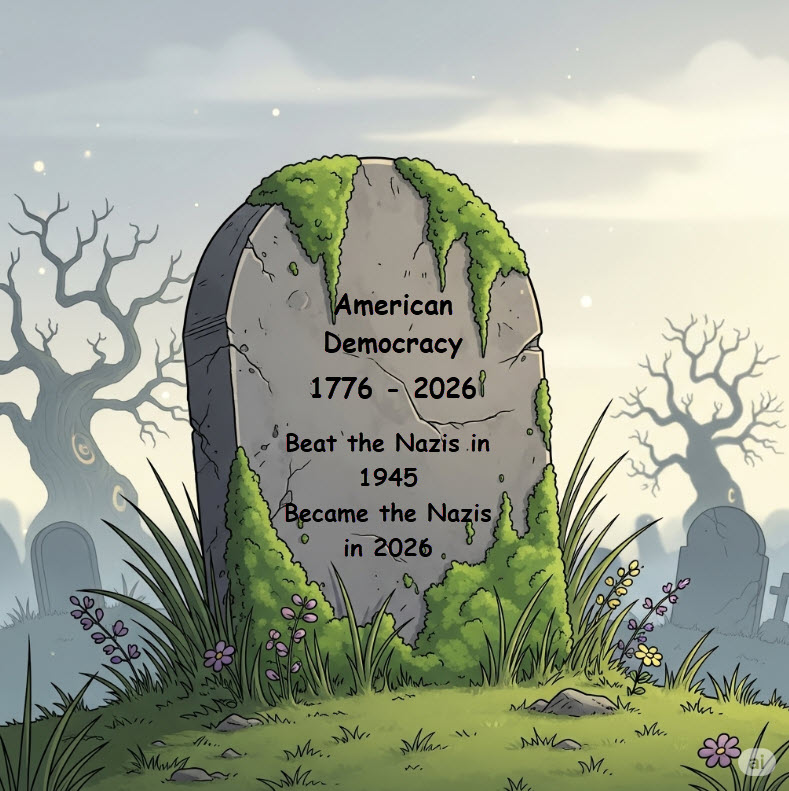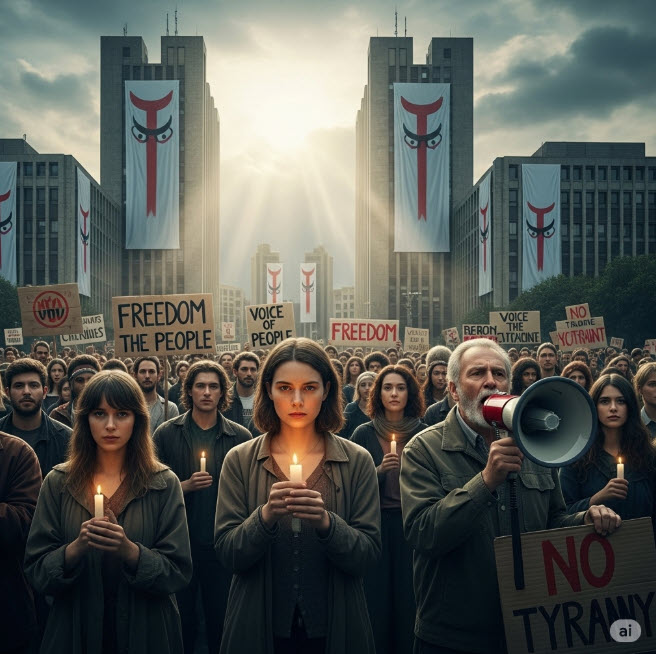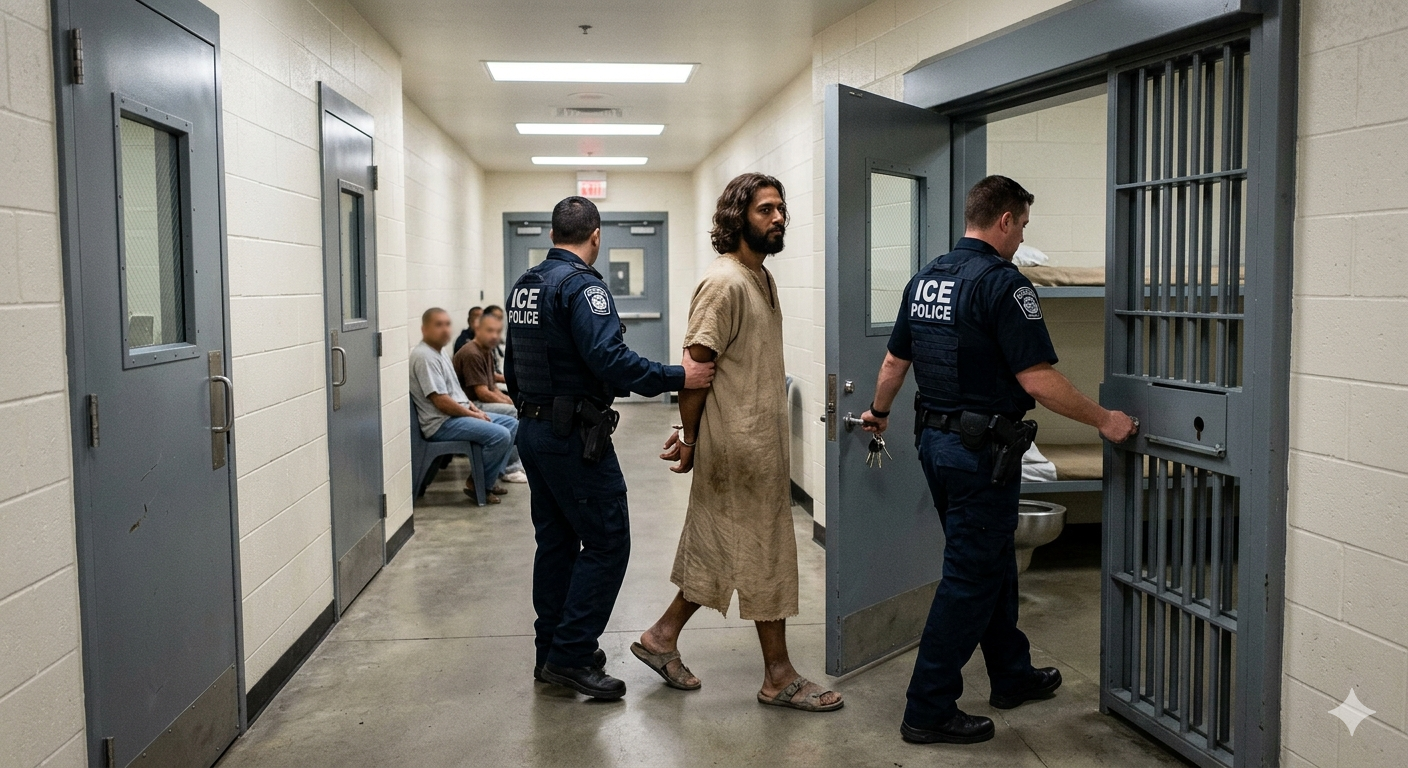
News is now tribal with no true reporting FOX is the bible a church for consorting Where lies lead to lust for the ignorant masses gaping and raping in their Eva Braun glasses
Troubadour tribesmen of white patriarchy pied-piping pitchmen for the new oligarchy Putin has puppets Elon and Don a triad of hatred running a con
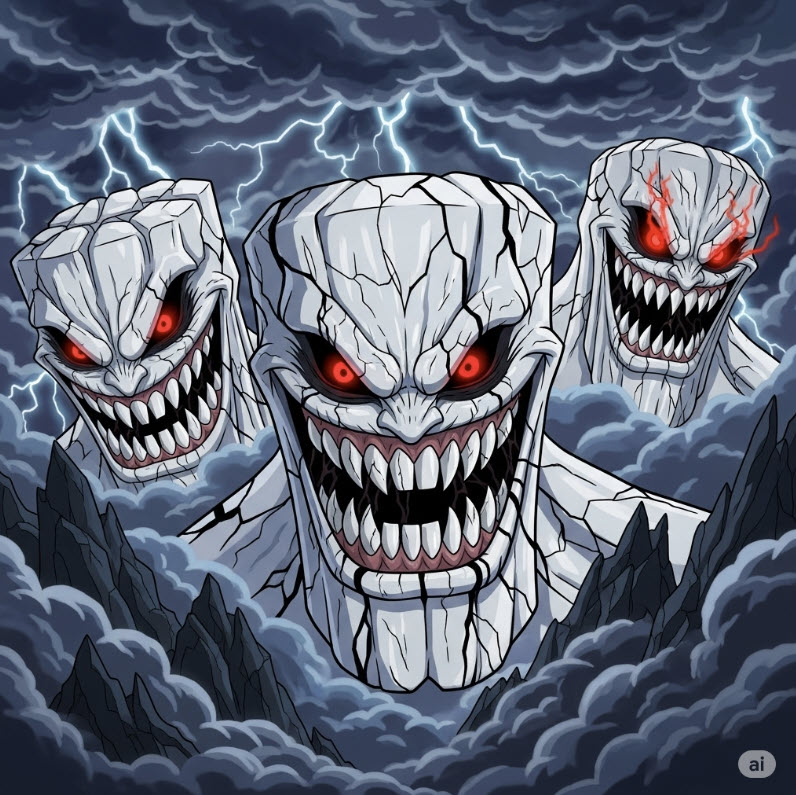
MAGA the psyop bot fueled infection, just misinformation, and mindful dissection Wake all the people Before its too late He never meant to make America Great
On 02/26/26, the single “MAGA The PYSOP” from the album “Wounded” comes out on Spotify, Apple Music, YouTube Music, and iTunes under the artist profile “Sapient Rain.”
Sapient Rain is the artistic collaboration of writer/lyricist Geoffrey Reilly and the AI music engine Suno.
My Paper, My Words is a collection of essays, stories, and poems that reflect the challenges of a middle-class husband and father trying to navigate a rapidly changing political, religious, and technological landscape of post-911 America.
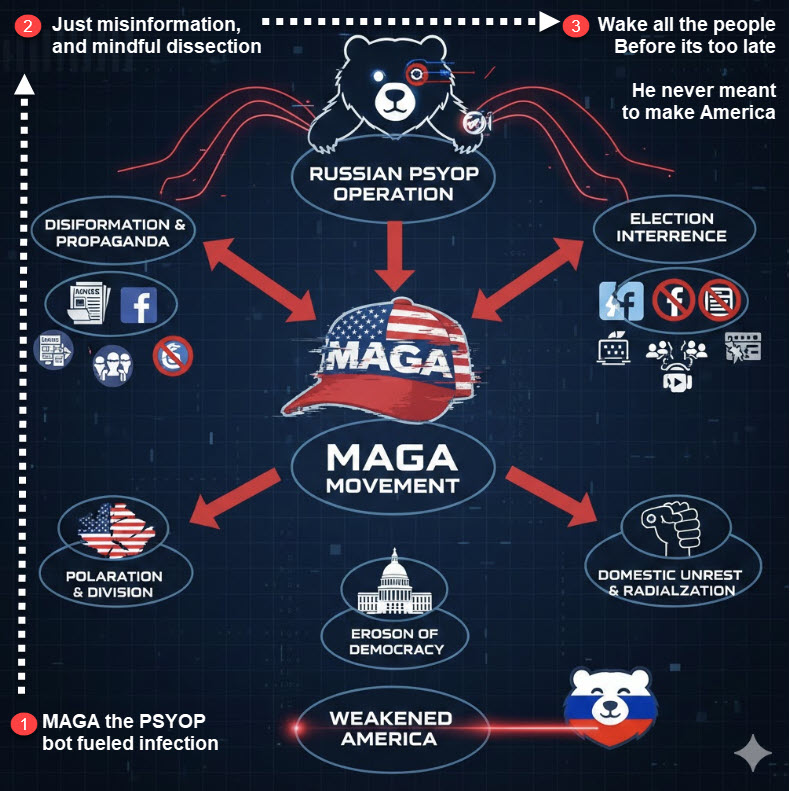
Did any “Christians” at the Prayer breakfast call out the President of the United States for his shameful statements and treatment of immigrants in America?
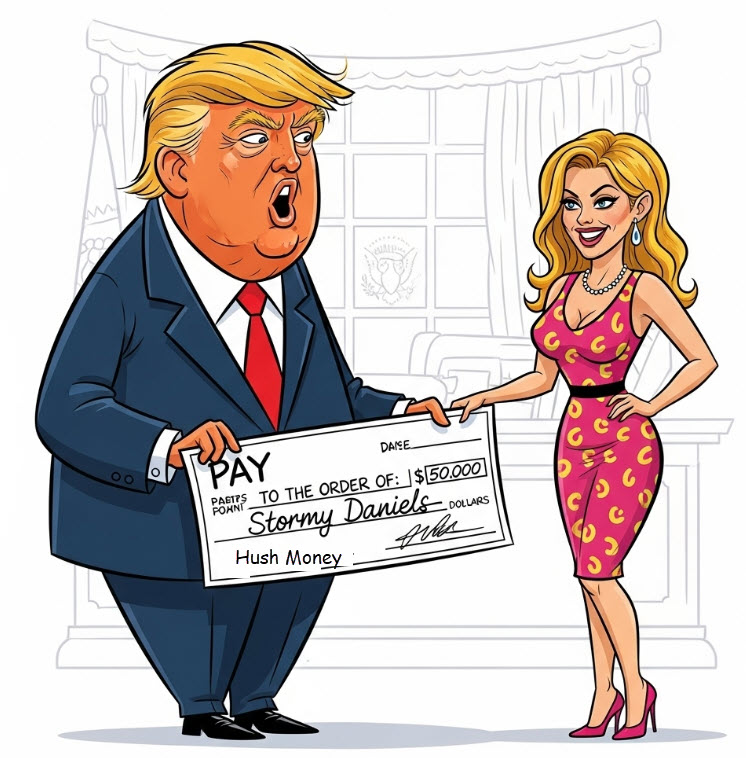
In between pancakes and coffee, did anyone speak to the hypocrisy of Donald Trump attending the event, considering his well-documented dishonesty, vindictiveness, and unrepentant sexual immorality, or was there just a hushed acceptance of this “flawed man”?
Did any of the “Christians” in attendance voice their concerns about the Trump administration’s cutting of USAID, which will lead to millions of deaths by 2030?
Did those in attendance lend support and prayer for marginalized people, and justice for young girls trafficked and abused by the rich and powerful, as documented in the Epstein files?
Seems like a prayer breakfast would be the perfect place for talking about all these things.
From what I’ve read, rather than promoting unity, spiritual reflection, and reconciliation, the Orange Ayatollah of Ice Brigades and Sexcapades turned the once venerated event into a boastful campaign rally brimming with self-promotion and partisan political attacks. Like every other institution he encounters, the president torched norms and obliterated traditions, while religious bigots in attendance bowed down to their true king.
One thing about Trump you can’t deny: there’s very little subterfuge when it comes to his bigotry, vindictiveness, and hate. And his unvarnished take on anyone who defies or challenges him has laid bare the true morality of his religious base, who have revealed themselves as people who care more about power and control than grace and humility, who want to subjugate and dominate, and who would sooner punch you in the face than turn the other cheek.
The National Prayer Breakfast is a National Farce. What used to be a bipartisan and unifying event has become a partisan pigpile, obscuring the event’s original, inclusive, ecumenical nature.
Examples:
President Trump used the breakfast to criticize political opponents, claiming they “oppose God and religious freedom.”
He also used the platform to attack political enemies along religious lines, turning the event into a partisan stage rather than a shared spiritual gathering.
Trump mocked Democratic lawmakers and questioned why “people of faith would ever vote for a Democrat,” despite the event’s bipartisan leadership.
Trump’s rhetoric excludes Christians who refuse to align themselves with the undeniably Christian Nationalist identity of the MAGA movement. Through words and actions, the President continues to make a mockery of Christianity, and that mockery gets amplified by conservative Christian leaders who to turn a blind eye to Trump’s amoral behavior.
The quote “When fascism comes to America, it will be wrapped in the flag and carrying a cross” describes perfectly what occurred at this year’s National Prayer Breakfast and what’s happening in America today. The president’s remarks are indicative of the dangerous merger of nationalist demagoguery and religion.
How long before Christianity in America undergoes a full-blown sectarian split?
As America struggles to maintain Jefferson’s wall of separation between church and state, Atheists, Agnostics, and religiously unaffiliated need to unite behind the version of Christianity that promotes kindness, empathy, and love.
My Paper, My Words is a collection of essays, stories, and poems that reflect the challenges of a middle-class husband and father trying to navigate a rapidly changing political, religious, and technological landscape of post-911 America.


Through his organization Turning Point USA (TPUSA), Charlie Kirk became a significant force in conservative youth politics by tapping into a feeling of cultural displacement among young white men—especially those outside elite institutions—by validating their frustrations and offering a political identity that felt empowering.
He successfully rebranded conservatism for youth by leaning into cultural grievances, opposing progressive ideas (like DEI, CRT, gender fluidity), which resonated with young men who felt blamed or sidelined in mainstream discourse.
In many ways, Charlie Kirk’s meteoric rise embodies the quintessential American success story, where money, power, and fame are all that matter and where kindness, empathy, and service to others are for suckers.
On the surface, some of what Charlie Kirk did and achieved seems almost noble. He reached out to a segment of society that felt politically voiceless and culturally alienated, and he gave them a voice. He recognized the underrepresentation and an utter lack of organized advocacy for non-college-educated white males in America and championed their needs.
The problem was how Charlie Kirk framed their economic disenfranchisement.
Kirk sold young white non-college-educated males on the simplistic notion that the source of their economic disenfranchisement were immigrants, women, minorities, and wokeism, when in reality, their alienation from mainstream American society and its institutions and their feeling of lost purpose and status stems from economic and social shifts that have eroded the traditional path of a stable, middle-class life for those without a bachelor’s degree.
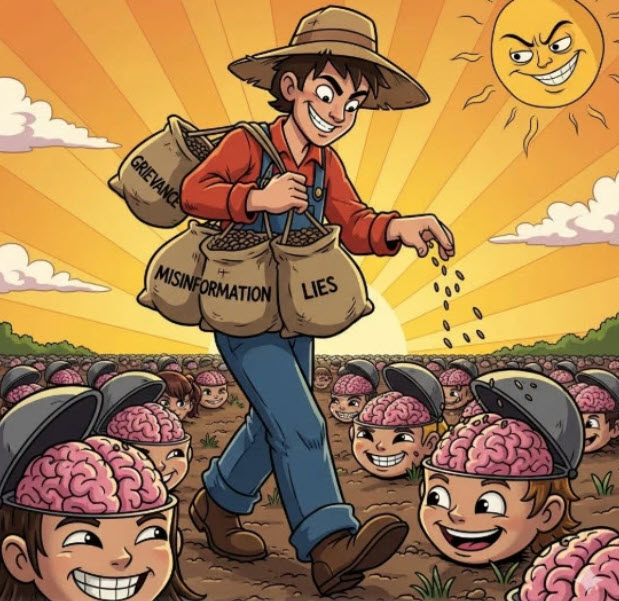
When a large segment of the population feels economically useless and politically invisible, it creates fertile ground for resentment, polarization, and instability. Discontentment is low-hanging fruit for the opportunistic and power-hungry, and Trump and Kirk cultivated and harvested that low-hanging fruit with great success, while continuing to spread the seeds of grievance, misinformation, and lies across the fertile minds of disaffected American youth for fame, fortune, and power.
Charlie Kirk and Donald Trump are emblematic of the deep rot in America’s political system, where politicians and influencers exploit the disaffected for their own personal gain, indoctrinating followers with cultural hot-button issues and identity politics to the point where the cultivated group doesn’t even care that they’re not being helped.
Like Trump, Kirk was never interested in helping his followers; he was only interested in exploiting them. To Charlie Kirk, America’s disaffected youth were a cash crop.
Genuine solutions to political disempowerment and economic disenfranchisement are complicated, expensive, and require systemic intervention from empathetic, pragmatic, and intelligent leaders who are genuinely interested in helping others. Amplifying polarization, promoting misinformation, and framing politics as a zero-sum cultural war are not solutions; those actions ensure the status quo.
We must connect the disaffected to hope and aspiration, rather than hatred and anger. It’s one thing to say, I feel your pain, quite another to do the hard work of alleviating the pain – and as we see with Trump and saw with Charlie Kirk, it’s a lot easier and more lucrative to point a finger and say, “them, they, those people, they’re the reason you are not flourishing.“
Doing the hard work to bring the disaffected back into the fold means investing in government-sponsored programs, training, and empathy, and those things are a tough sell in today’s political environment.
My Paper, My Words is a collection of essays, stories, and poems that reflect the challenges of a middle-class husband and father trying to navigate a rapidly changing political, religious, and technological landscape of post-911 America.
My Paper, My Words is a collection of essays, stories, and poems that reflect the challenges of a middle-class husband and father trying to navigate a rapidly changing political, religious, and technological landscape of post-9/11 America.
I’ve just published “Imagine There’s No Donald” on Amazon.com.
Imagine There’s No Donald is a lyrical collection that channels the melodic cadence of (mostly) Beatles songs to deliver searing poetic indictments of Donald Trump, the MAGA movement, and their corrosive impact on American democracy.
Each poem echoes the structure and emotional resonance of iconic musical tracks—think “Rocky Racoon” reimagined as the tale of Donald Trump’s destructive path to the presidency, or Terry Jacks’ “Seasons in the Sun” transformed into a lament on Republican cowardice and lost democratic norms.
Through this fusion of pop nostalgia and political critique, the collection:
🎶 Harnesses Familiar Rhythms: The song structures serve as scaffolding for verses that are both accessible and subversive, drawing readers in with rhythm before confronting them with truth.
🔥 Excoriates Authoritarianism: Trump and MAGA are portrayed not just as political figures but as symbols of a broader erosion of truth, decency, and constitutional integrity.
🕊️ Defends Democratic Ideals: The poems mourn the fragility of American institutions while fiercely advocating for civic engagement, accountability, and moral clarity.
🎤 Amplifies Dissent: With a voice that is at once satirical and sincere, the book invites readers to sing along in protest, turning melody into a megaphone for resistance.
Whether riffing on “She Came in Through the Bathroom Window” to expose the sycophantic rot of the Trump administration or twisting “When I Saw Her Standing There!” into an elegy against oligarchs and authoritarianism, this book is a poetic rebellion—an artistic act of defiance that refuses to be silent in the face of democratic decay.
Most free thinkers, poets, and essayists are but a thorn in the side of the authoritarian regime that is running roughshod over America’s democracy. Writing and speaking truth to power sometimes feels like screaming into the void. But with critical mass and momentum, art can influence public sentiment and mobilize opposition to repressive policies and tactics, making it a powerful adversary to regimes that rely on propaganda and control.
Verbal resistance alone won’t revive our democracy. If we’re going to right the ship in America, we’re going to have to do more than sing and complain. We’re going to have to take to the streets and, as the honorable Georgia Congressman John Lewis famously said, “get in good trouble, necessary trouble” by the millions.
Get your copy of Imagine There’s No Donaldon Amazon. Please feel free to share the link with others on your social media or simply by giving the book to a loved one as a gift.
My Paper, My Words is a collection of essays, stories, and poems that reflect the challenges of a middle-class husband and father trying to navigate a rapidly changing political, religious, and technological landscape of post-9/11 America.
The wreckage that Donald Trump is inflicting on American democracy is analogous to the widespread inflammation, leaky blood vessels, reduced blood flow to organs, and ultimately, organ failure caused by Sepsis in the human body.
Trumpism is a sepsis-like response to a massive infection of aggrieved, uneducated, bigoted, greedy, and hate-filled Americans – it engenders fear, anger, misinformation, and Christo fascist ideology that surges through the bloodstream of American politics and culture, poisoning democratic institutions, values, and traditions, stressing the entire body politic to the point of systemic failure.
The only chance of America surviving metaphoric organ failure and a complete collapse from political and cultural Sepsis is to prevent further infection — the best (and perhaps only) chance of doing that is a blue wave in the midterm elections (which Republicans are trying to gerrymander the fuck out of).
Suppose the Democrats don’t regain control of the House in 2026. In that case, we can pucker our collective lips, plant a fat kiss on the cold, colorless cheek of American democracy, and usher in an era of darkness, corruption, and repression unseen in our history.
Will voters see Trump for the lying, cheating, sociopathic thug he is and wake-the-fuck-up in 2026?
My Paper, My Words is a collection of essays, stories, and poems reflect the challenges of a middle-class husband and father trying to navigate a rapidly changing political, religious, and technological landscape of post-911 America.
Let’s Ask Arty uses existing Artificial Intelligence (AI) technology to query LLMs about politics in these troubled times.
Query 1: Are religious fundamentalists drawn to authoritarian political leaders? If so, why?
Yes, religious fundamentalists often show a strong affinity for authoritarian political leaders – and there’s a fascinating psychological and sociological logic behind it.
Shared Traits and Psychological Alignment
Rigidity and Certainty: Fundamentalism is rooted in the belief in an inerrant set of religious teachings; religious rigidity and certainty mirror Authoritarianism’s emphasis on strict rules, obedience, and moral absolutism.
Low Openness to Experience: Both religious fundamentalists and authoritarian personalities tend to resist ambiguity, novelty, and complexity.
Cognitive Simplicity: Studies show that fundamentalists often prefer clear-cut answers and hierarchical structures, which align with authoritarian leaders who promise order and control.
Perceived Threats and Social Change
Fear of Cultural Shifts: Fundamentalists may feel threatened by secularism, liberal social movements, or pluralism, as they perceive these as challenges to their traditional values. Authoritarian leaders often position themselves as defenders of “traditional values,” making them appealing protectors.
Us vs. Them Mentality: Authoritarian rhetoric thrives on identifying enemies—whether immigrants, minorities, or dissenters. An us vs. them mentality resonates with fundamentalist groups that view the world in moral binaries.
Political Strategy and Mobilization
Christian Nationalism: In the U.S., for example, white evangelical Protestants and Christian nationalists score high on authoritarianism scales and are more likely to support leaders who promise to restore religious dominance in public life.
Religious Endorsements: Authoritarian leaders often co-opt religious symbols and institutions to legitimize their rule. This creates a feedback loop where religious fundamentalists feel seen and empowered
Query 2: So, do all religious people have an affinity for authoritarians?
No, not all religious people are drawn to Authoritarianism.
The link between Religiosity and Authoritarianism is strongest among those with rigid, dogmatic beliefs. More open, reflective forms of spirituality tend to correlate negatively with authoritarian attitudes.
Query 3: Is there a link between Religiosity, the MAGA movement, and Authoritarianism?
Yes, there’s a well-documented link between religiosity, the MAGA movement, and authoritarianism—though it’s nuanced and varies across race, gender, and religious traditions.
How Religiosity Connects to MAGA and Authoritarianism
White Christian Nationalism plays a central role. Surveys show that white evangelical Protestants and Christian nationalists are among the strongest supporters of authoritarian politics and the MAGA agenda.
Dominionist Ideologies like the Seven Mountains Mandate—which calls for Christians to control key societal institutions—are embraced by some MAGA-aligned religious leaders.
MAGA figures frequently use Religious Rhetoric and Symbolism to frame political battles as spiritual warfare, reinforcing authoritarian narratives of good vs. evil
Psychological Drivers
Right-Wing Authoritarianism (RWA) is a key predictor of MAGA support, especially among white men and white women. RWA includes submission to authority, aggression toward outgroups, and adherence to traditional norms.
Social Dominance Orientation—a belief in group-based hierarchies—also correlates with MAGA support, even among some women and people of color.
Race and Gender Matter
White Women show surprisingly high levels of authoritarianism and MAGA support, challenging assumptions that women are uniformly progressive.
Women of Color, by contrast, consistently show the lowest levels of authoritarianism and MAGA support, even when controlling for religiosity.
Religion as a Political Tool
MAGA leaders often invoke religious identity to legitimize their authority and mobilize voters. Trump’s use of phrases like “our religion” signals a vision of America as a white Christian nation.
Some former members of religious sects have even compared MAGA’s structure and messaging to authoritarian religious movements they escaped.
My Input
Religious fundamentalism and nationalist-tinged religious views are fueling authoritarian politics within the MAGA movement, putting Americans on a dangerous path, unseen since our war of independence in 1776.
Many of us probably never imagined America, a country that fought a world war to end fascism in Europe, would be on the precipice of falling to it at home. But we are.
Religion is fueling America’s flirtation with fascism.
We’re in a high-conflict / high-stakes environment, where groups (like MAGA) with an undying commitment to religious, political, and cultural identity flourish. Through Group Cohesion, Mobilization Power, and Clear Identity, MAGA’s loyalty, zeal, and adherence to rigid beliefs serve as the engine to Trump’s authoritarian politics.
To many in the MAGA movement, America’s constitutional democracy takes a back seat to religious and cultural identity. When MAGA members think the Constitution infringes ontheir perception of America’s religious or cultural identity, they’re okay with disregarding or tossing the Constitution altogether.
So, how do millions of Americans who don’t have the Group Cohesion, Mobilization Power, and Clear Identity of MAGA fight fascism and save democracy?
Because honestly, this fight is coming.
Fascism doesn’t go away on its own – it either takes root, or it’s rooted out.
Donald Trump manufactures and feeds the MAGA mob a constant diet of chaos, grievance, conspiracy theories, and lies. It’s the lifeblood of that movement.
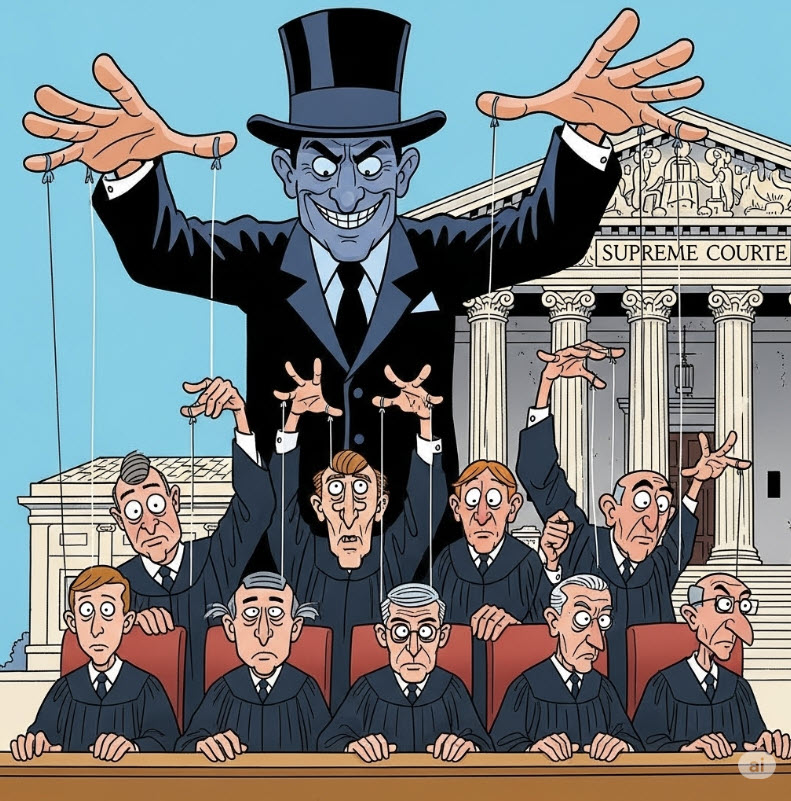
Authoritarian forces are clamping down on democratic institutions and values in America. And because the confederacy of cowards in Congress refuses to serve as a check on executive power and because the judiciary continues to provide cover for Trump’s unchecked power, the last line of defense is citizen resistance, led by the pragmatic and morality-driven.
Pragmatic and morality-driven groups tend to be more adaptable and sustainable over time, as explained here by Arty:
Flexibility: Pragmatists can adapt their strategies to changing conditions, which is crucial in complex societies.
Cooperation: Morality-driven groups foster trust and reciprocity, which are essential for large-scale collaboration and innovation.
Reduced Internal Conflict: Moral norms help regulate behavior and reduce destructive competition within the group.
“While fanaticism is a high-risk, high-reward strategy that can dominate revolutionary movements like MAGA, it often burns out or fractures when the environment shifts. Whereas morality and pragmatism are slower-burning fuels that build civilizations, institutions, and long-term alliances.”
With the Epstein files we’re seeing a slight shift in the environment, causing some turmoil and fractures in the MAGA-sphere. But I don’t think we can rely on an Epstein-file-fueled MAGA collapse to save America.
Here is how American citizens can push back against fascism, with some help from Arty:
Build Parallel Structures of Power
Grassroots organizing: Form local networks that provide mutual aid, legal support, and community safety. These become lifelines when official institutions fail.
Alternative media: Create and support independent journalism to counter propaganda and amplify truth.
Solidarity economies: Support cooperatives and local businesses that resist authoritarian influence.
Shift the Narrative
Expose authoritarian tactics: Use storytelling, art, and social media to reveal abuses and rally public opinion.
Frame resistance as patriotic: Reclaim national symbols and values to show that defending democracy is not fringe—it’s foundational.
Strategic Nonviolent Resistance
According to civil resistance experts like Gene Sharp and Erica Chenoweth:
Disruption works: Strikes, boycotts, and mass noncooperation can paralyze authoritarian regimes.
3.5% rule: Movements that mobilize at least 3.5% of the population in sustained nonviolent protest have historically succeeded in toppling regimes.
Forge Broad Coalitions
Cross-ideological unity: Bring together liberals, conservatives, religious groups, labor unions, and marginalized communities around shared democratic values.
Intersectional movements: Link struggles—racial justice, climate action, LGBTQ+ rights—to build a united front.
Protect Vulnerable Communities
Rapid response teams: Organize legal observers, medics, and safe houses.
Digital security: Train activists in encryption and surveillance evasion.
Defend Electoral Integrity
Even if institutions are compromised:
Monitor elections: Document abuses and mobilize international attention.
Run insurgent candidates: Use local races to build power from the ground up.
Learn from Global Movements
South Korea: Citizens blocked martial law by physically surrounding Parliament.
Chile: Small affinity groups quietly resisted Pinochet’s dictatorship through coordinated strikes and art.
In the town where I was born lived a boy of wealth and greed
and his dad was full of scorn at his mediocrity
The child failed in many ways and wasn’t liked by anyone
Dodged the draft and spent his days trying to shaft the moon and sun
Now . .
We all know he’s a yellow tangerine yellow tangerine, yellow tangerine
We all know he’s a yellow tangerine yellow tangerine yellow tangerine
Russia knew his debt had grown So, they groomed the tangerine and they threw this Don a bone To help him beat ole Hillary
Now . . .
We all live in a Donald Trump regime a Donald Trump regime a Donald Trump regime
Bezos, Musk, and Lindsay Graham Zuckerberg and Taylor Green
create the grift inside the scam that’s getting more and more obscene
Now . . .
We all live in a Donald Trump regime a Donald Trump regime a Donald Trump regime
Epstein’s list of pedophiles is of course a great concern
that is why the Tangerine wants the congress to adjourn
He’s a crook and fascist thug a narcissist extraordinaire
But to some he is a drug to help them deal with their despair
So . .
We all live in a Donald Trump regime a Donald Trump regime a Donald Trump regime We all live in a Donald Trump regime a Donald Trump regime a Donald Trump regime