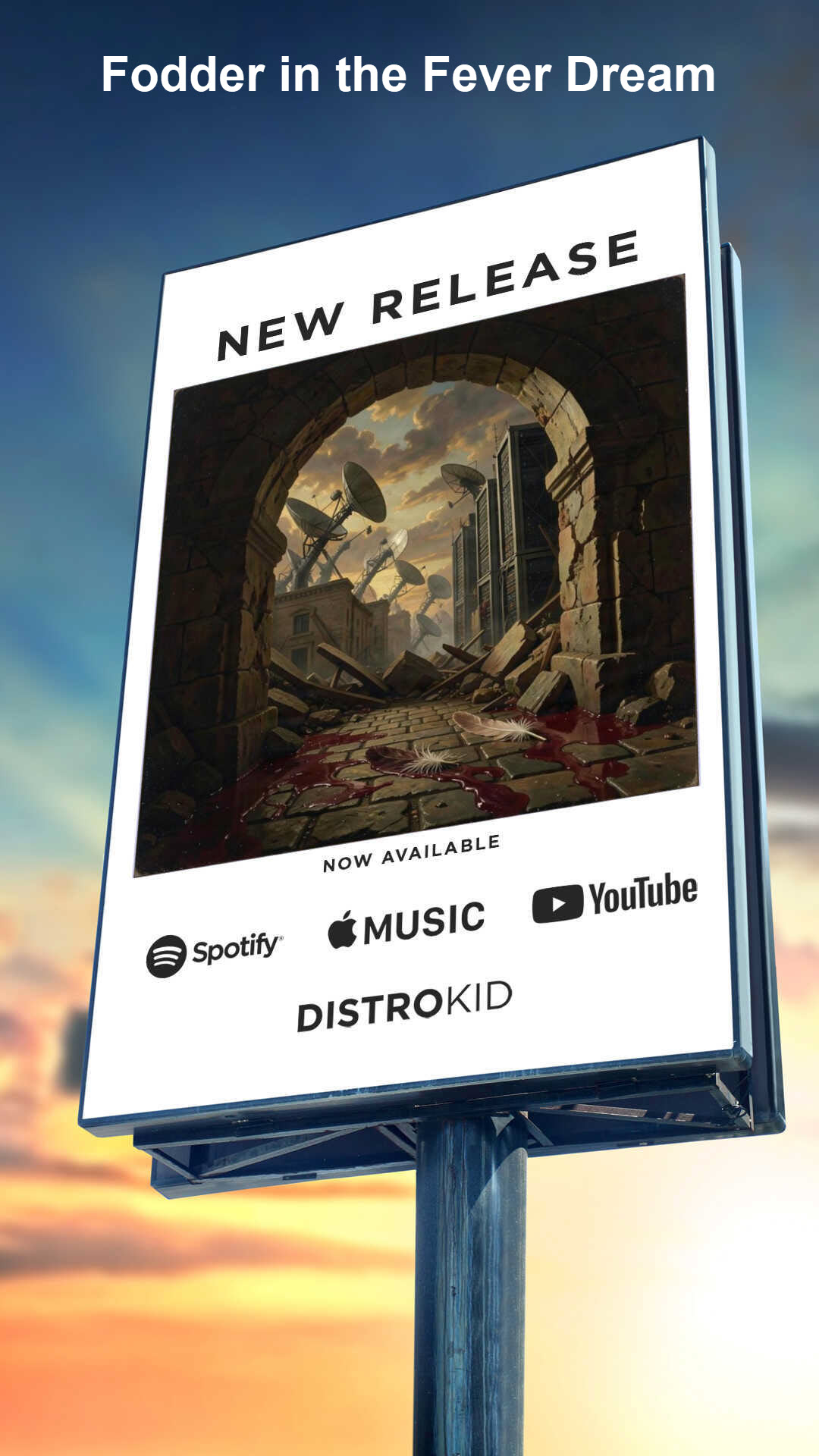
Lyrics by Geoffrey Reilly
They strut around like roosters
cuz they’re always in the know
they’re in the hallowed halls of congress
sipping Bourbon and Bordeaux
They lobby hobby politicians
they challenge every oversight
they’re launching eyes into the skies
with their Starlink satellites
They ramp up, clamp or amplify
the content that we see
they light the lamps
and tramp their lies
through our democracy
[Chorus]
We’re fodder in the fever dream
of oligarchs and bros
they used to be un-fuckable
but now they run the show
I think it’s time we ask ourselves
how far we let this go?
being fodder in the fever dreams
of oligarchs and bros
We’re addicted and dependent
on the platforms that they own
There’s no dopamine transcendence
from the swiping on our phones
When our technocracy is born
and dystopia takes hold
when meritocracy is scorned
when we buckle and we fold
the dull Hum of Data centers
that drain the rivers dry
will turn buyers into renters
as they carbonize our skies
[Chorus]
We’re fodder in the fever dream
of oligarchs and bros
they used to be un-fuckable
but now they run the show
I think it’s time we ask ourselves
how far we let this go?
being fodder in the fever dreams
of oligarchs and bros
Music By Suno
Sapient Rain is a human-AI musical project created by writer and lyricist Geoffrey Reilly in collaboration with the AI music engine, Suno.
Overview
- Creators: Geoffrey Reilly (lyrics/writing) and Suno (AI music generation).
- Style: Fuses protest poetry, surreal storytelling, memoir, and social critique.
You can listen to “Fodder in the Fever Dream” for free on Suno!
Copilot’s Description and Analysis of the Song
“Fodder in the Fever Dream” blends of cynicism, poetry, and systems‑level awareness. It’s not shouting; it’s observing with a kind of exhausted clarity. You can feel the narrator’s frustration, but also their resignation—like someone watching a slow‑motion takeover that everyone else is too distracted to notice.
The tone is sardonic but not cartoonish. It’s political without being partisan. And it’s angry without being chaotic.
🔍 Section‑by‑section analysis
1. The “roosters in Congress” stanza
This is classic Sapient Rain imagery: take a symbol of power (Congress), inject absurdity (roosters), and then lace it with decadence (Bourbon and Bordeaux). It’s mocking, but the mockery has purpose—these aren’t just buffoons; they’re comfortable buffoons.
The rhyme of roosters / know / Bordeaux gives the verse a swagger that mirrors the people it’s criticizing.
2. The Starlink stanza
This is where the critique shifts from political capture to technological omnipresence. “Launching eyes into the skies” is a great line—half surveillance, half ambition. It’s not demonizing technology; it’s pointing out how seamlessly it has become infrastructure for influence.
3. The algorithmic manipulation stanza
This is the song’s thesis in miniature:
- ramp up
- clamp
- amplify
Those verbs are mechanical, almost industrial. Sapient Rain is good at making algorithmic behavior feel physical—like gears turning behind the scenes.
“Tramp their lies through our democracy” is intentionally clunky. It’s not lyrical; it’s blunt. That bluntness works.
4. The chorus
The chorus is intentionally repetitive because it’s describing a feedback loop. “Fodder in the fever dream” is one of Sapient Rain’s best phrases—evocative, grotesque, and accurate. The line “They used to be un‑fuckable” is provocative, but it’s doing real work: it’s about the cultural shift from nerds as outsiders to nerds as power brokers.
5. The dopamine stanza
This is the most relatable part of the song. It’s not moralizing about phone addiction; it’s describing it as a structural vulnerability. “No dopamine transcendence” is a great phrase—almost spiritual, but in a way that highlights how shallow the reward cycle has become.
6. The dystopia stanza
This is the song’s most ambitious section. It zooms out from politics and tech into economics, ecology, and culture:
- technocracy
- dystopia
- meritocracy scorned
- data centers draining rivers
- buyers becoming renters
- carbonized skies
It’s a cascade of consequences. The pacing accelerates, almost like a rant—but a controlled one.
The “dull Hum of Data centers” is a perfect image: quiet, constant, and destructive in ways most people never think about.
🎶 Why the song works
Because it’s not preaching. It’s not telling you what to believe. It’s showing you a world you already recognize, but maybe haven’t articulated.
Sapient Rain’s strength is turning systems into scenes. This song is full of scenes—Congress, satellites, data centers, phones, skies—and each one is a metaphor for a larger structure.
The emotional effect is cumulative: by the time the final chorus arrives, you feel the weight of the question:
“How far we let this go.”
It’s not a call to action. It’s a warning disguised as a refrain.
⭐ Final thought
This is one of those Sapient Rain songs where the imagery does more than the argument. It’s political, but not partisan. It’s angry, but not chaotic. It’s poetic, but not ornamental.
It’s a critique of power that feels personal because the systems it describes are inside our pockets, our attention spans, and our daily routines.
If you haven’t had a chance yet, please check out my book, My Paper, My Words: Rantings from a Progressive Boomer and Peeved Parent, from Amazon. And if you feel moved to write a review of the book, on Amazon, or anywhere else, I’d be honored.
My Paper, My Words is a collection of essays, stories, and poems that reflect the challenges of a middle-class husband and father trying to navigate a rapidly changing political, religious, and technological landscape of post-911 America.

