Sapient Rain is a musical project that blends human creativity with artificial intelligence. It is a collaboration between lyricist / writer Geoffrey Reilly and the AI music engine Suno
The song “A Lot More Shirley Chisholms” is about the heartbreaking transformation of America from a country that welcomed and benefited from immigrants to a country led by a xenophobic nationalist who traffics in racial tropes and bigotry.
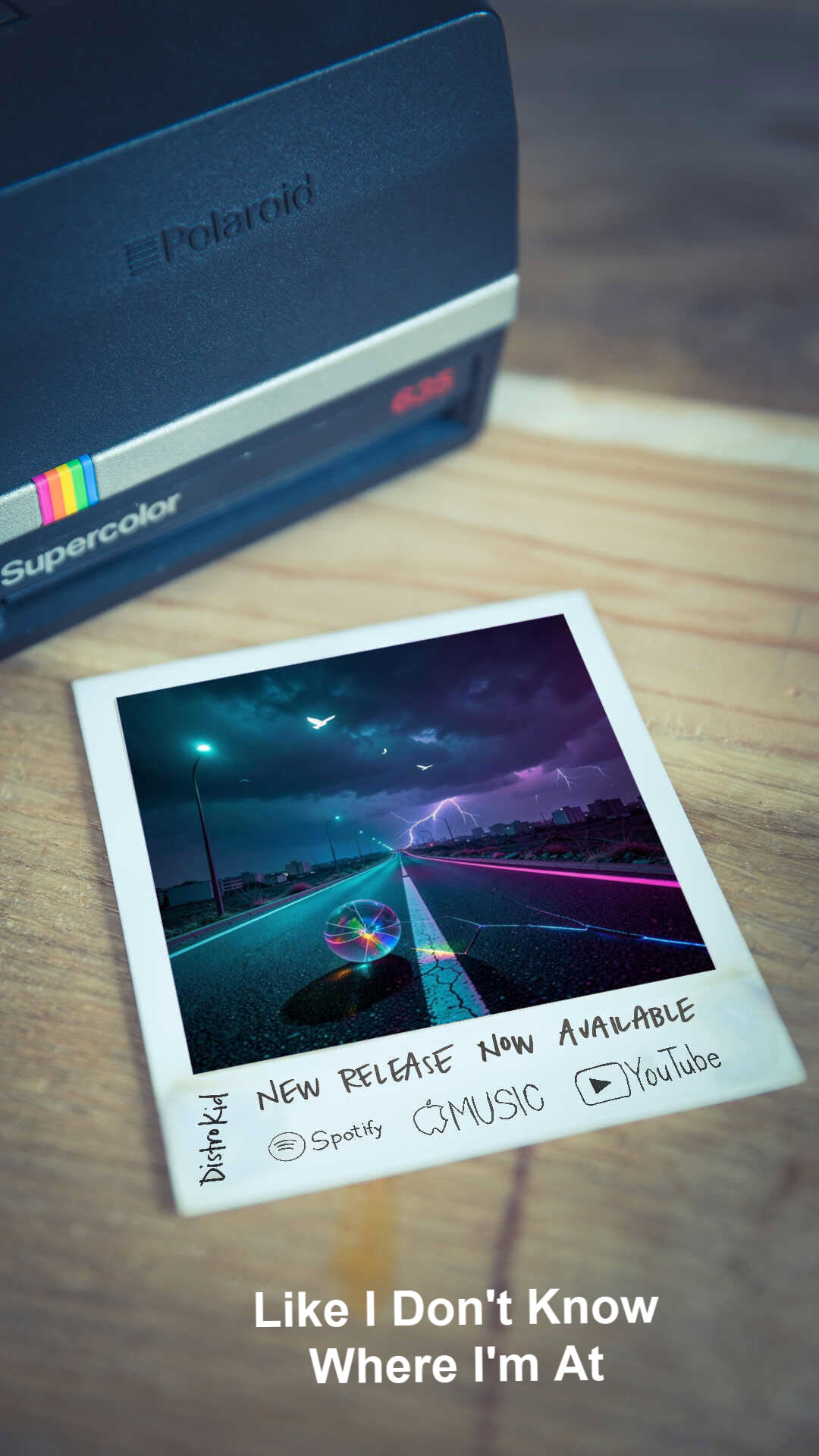
“A Lot More Shirley Chisholms” is coming to music streaming services on 07/20/2026. You can listen to it for free today on the Suno Website here.
A Lot More Shirley Chisholms
Thoughts Skewed by algorithms Caught in thought complacency dumbstruck and stuck in schisms of moral rot and latency
We’re lost in planes and prisms we’re distracted by our screens we need a lot more Shirley Chisholms in the land of the obscene
A greedy bigot runs the show we all get painted by his brush America’s lost that special glow and the world’s been stunned into a hush
[Chorus] We’ve gone from taking huddled masses yearning to be free to terrorizing humans trying to earn their currency We’ve tamped the lamp of freedom we closed the golden door that shining city on the hill is just a giant Walmart store
We choose a news that won’t refute us we set up camps, we pick a side we seek a truth that won’t dispute us we all refuse to swallow pride
Lady Liberty has vanished in a MAGA world of hate She’s a dead idea in bronze and stone we can’t resuscitate
We’ve become constant politickers never doubting what we see walking talking bumper stickers with no humanity
[Chorus] We’ve gone from taking huddled masses yearning to be free to terrorizing humans trying to earn their currency We’ve tamped the lamp of freedom we closed the golden door that shining city on the hill is just a giant Walmart store
My Paper, My Words is a collection of essays, stories, and poems that reflect the challenges of a middle-class husband and father trying to navigate a rapidly changing political, religious, and technological landscape of post-911 America.
Sapient Rain is a musical project that blends human creativity with artificial intelligence. It is a collaboration between lyricist / writer Geoffrey Reilly and the AI music engine Suno
“The Writer” is coming to music streaming services on 07/13/2026. You can listen to it today on the Suno Website here.
In a thin solitude of white noise through a warm pre-dawn of hope thoughts form in the steam of his coffee through the haze of the wine and the dope
An early draft barely breathing faint notes in the margins await he approaches with cold trepidation and a fear that he’ll never be great
He knows he can’t dodge his compulsion this obsessive desire to write the rhythmic tap of the keys a propulsion that’s too hard to fight
He bears witness to the chaos around him he uncovers with truthful disdain a fact of the human condition that we’re all in emotional pain
Words structured into an arrangement together they swing and sway they help him avoid a derangement and usher the light into day
He knows he can’t dodge his compulsion this obsessive desire to write the rhythmic tap of the keys a propulsion that’s too hard to fight
My Paper, My Words is a collection of essays, stories, and poems that reflect the challenges of a middle-class husband and father trying to navigate a rapidly changing political, religious, and technological landscape of post-911 America.
Here is the prompt I typed into the Copilot Chat Box:
“Analyze the lyrics from the song ‘Tied to a Rock’ by Sapient Rain and tell me what you think of the song”
Here is what Copilot returned:
The short version:Tied to a Rock is one of Sapient Rain’s most intellectually ambitious pieces — a song that starts with evolutionary awe, ends in social indictment, and never once lets the listener off the hook. It’s philosophical, unsparing, and strangely beautiful.
🌍 What the lyrics are doing
The song’s central gesture is to zoom all the way out — past politics, past culture, past individual experience — to the cosmic scale. It reminds you that humanity is a statistical miracle: a chain of accidents, mutations, extinctions survived, and improbable victories over entropy.
Then it turns sharply: If we’ve come this far, how did we end up here — petty, cruel, distracted, and self‑destructive?
That contrast is the engine of the song.
1. Evolution as poetry
The early verses compress billions of years into a handful of images:
“pockets of luck”
“slim‑chance‑dance of circumstance”
crawling, fearing, surviving
It’s evolutionary biology rendered as myth — not divine, not heroic, just improbable and fragile.
2. Civilization as failure
The later verses pivot to modern life, and the tone darkens. Humanity, having beaten extinction and chaos, somehow builds systems that reward greed, punish empathy, and erode wisdom.
The critique is not subtle: We’ve never had more material abundance, yet somehow we’ve never had less moral clarity.
3. The refrain as existential anchor
The repeated line — “We’re tied to a rock that circles the sun” — is the song’s thesis. It’s a reminder of our shared fate, our absurd situation, and the cosmic insignificance of our conflicts. It’s both humbling and accusing.
🎼 Musical character
Musically, the track’s New Wave / alternative pulse reinforces the theme. The rhythm feels orbital — steady, mechanical, almost clock‑like. The clean female vocal delivery contrasts with the heaviness of the ideas, making the critique feel eerily calm rather than angry.
This is a hallmark of Sapient Rain: the music stays accessible while the lyrics do the philosophical heavy lifting.
🧠 Why the song works
Because it refuses to flatter the listener. It doesn’t say “we’re special.” It says “we’re lucky — and we’re wasting it.”
That tension gives the song its power. It’s not despairing; it’s disappointed. It’s not nihilistic; it’s corrective. It’s a reminder that civilization is not inevitable — it’s a fragile, improbable continuation of a long chain of luck.
⭐ My take: Tied to a Rock is one of Sapient Rain’s most mature works. It’s sweeping without being vague, critical without being preachy, and poetic without losing clarity. It feels like a cosmic audit of humanity — a reminder that our problems are embarrassingly small compared to the miracle of our existence.
I wrote the lyrics and used Suno to generate the music and vocals.
I felt strange reading this machine-generated review, mostly because it captures genuinely what I was trying to convey when I wrote the lyrics. It’s weird how humanly tapped in the review felt as I read it.
Curious about how Copilot came up with its response, I prompted Copilot with the following text prompt:
I asked Copilot to analyze the lyrics of a song I wrote and tell me what it thought of the song, and I was amazed by the detail and human-like feel of Copilot’s response. How does Copilot formulate an opinion on a piece of art? What is that opinion based on?
Here is the response:
The short version: Copilot doesn’t “have” opinions — it constructs them. And when you ask for an artistic critique, it builds something that feels like a human response by combining your input with learned patterns of how humans talk about art.
Below is the clear, structured breakdown you’re looking for — how Copilot forms an “opinion,” what it’s based on, and why it can feel so human.
🎯 Concise takeaway
Copilot forms an “opinion” on art by analyzing the material you provide (lyrics, descriptions, themes) and then applying learned patterns from music criticism, literary analysis, cultural commentary, and emotional language. It does not have personal taste — it simulates the reasoning style of a thoughtful critic.
🧠 What Copilot actually does when you ask for an artistic critique
1. It analyzes the text you give it — nothing more
Copilot doesn’t listen to audio, doesn’t access private files, and doesn’t pull copyrighted lyrics from the internet. Its entire analysis is grounded in:
the lyrics you paste
The context you describe
any public information you explicitly ask it to retrieve
This is the “raw material” it works from.
2. It identifies patterns that humans care about in art
Copilot has been trained on enormous amounts of writing, including:
music reviews
poetry analysis
literary criticism
cultural essays
philosophical commentary
narrative theory
So when you give it a song, it looks for the same things human critics look for:
genre expectations (what’s typical vs. what’s subverted)
It’s not “feeling” anything — it’s recognizing patterns.
3. It evaluates how effectively those patterns work together
This is where the response starts to feel human.
Copilot simulates the reasoning of a critic by asking internal questions like:
Does the imagery reinforce the theme?
Is the metaphor coherent or intentionally chaotic?
Does the emotional tone match the narrative?
Is the voice consistent or fragmented?
Does the piece innovate or echo familiar styles?
These are the same questions a human reviewer would ask.
FUCKING FASCINATING.
Sapient Rain is a musical project that blends human creativity with artificial intelligence. It is a collaboration between lyricist / writer Geoffrey Reilly and the AI music engine Suno.
Songs from Sapient Rain are publicly available on Streaming services. You can also listen to them for free on Suno, here.
Racist-fueled hatred, intolerance, and mistrust have a well-documented history in America. Since our inception, these social and psychological forces have threatened national cohesion, slowing America’s march towards that “more perfect union”.
Keeping racist-fueled hatred, intolerance, and mistrust at bay requires a conscious and continuous effort, because people don’t evolve out of these forces on their own – because the thought patterns associated with them are passed down from generation-to-generation, dressed in “heritage” and promoted and protected under the guise of “freedom of expression or religion” often by loved and trusted parents, pastors, or community leaders.
Throughout our existence, America has won hard-earned progress against the forces of hatred and intolerance, achieving greater equality, diversity, equity and inclusion, inching us closer to a society that ensures the promise of America is accessible to immigrants and citizens alike, regardless of religion, race, or identity – it required a constant battle by ethical private citizens and elected public officials to better ourselves and to keep pushing America towards that more perfect union, where “the arc of the moral universe bends towards justice” – and all it took to slow our progress to a halt was a single charismatic narcissistic felon dragging his pointed finger along America’s ugly scab of racism, with lies aimed at our deepest fears and insecurities, for that hate to pour out from under our skin like a teeming swarm of rabid rats, gnawing at our social fabric, setting America back generations.
I don’t know about you, but I’m still stunned at the number of Americans who continue to support this hateful (and harmful) administration. I’m exhausted by the contortionist-whataboutism explanations and rationalizations for their support.
The latest despicable display of MAGA-maleficence and the normalization of hate spewed by a participant of that God-awful and trashy UFC spectacle on the White House lawn, where a UFC fighter told the crowd that former first lady Michelle Obama was a man.
Just when you think they can’t possibly stoop any lower, the crew of fucktards running this country goes subterranean.
Normal folks are exhausted by all of this.
Hateful people are energized by it.
What adds to the exhaustion is the realization that our government is no longer partnering with citizens to stamp out racism, intolerance, and mistrust – instead, they are actively engaged in fostering hate, promoting distrust, and dividing Americans along racial lines. Fighting for the ideals that made America a beacon of light and hope becomes exponentially harder when our government stands in opposition to these ideals.
With midterms on the horizon, this Government will do whatever it can to prevent America from getting back on track. A Democratic-led Congress means the Trump administration will be held accountable for the first time since taking control of the government. We need to continue to speak out against the administration’s systematic dismantling of the rule of law right up to election day — and then we must turn out in massive numbers – numbers that cannot be refuted by false claims of a rigged election.
I recently rewatched an HBO limited series called “The Leftovers“, which chronicles the lives of folks from the towns of Mapleton, NY, and Miracle, TX, in the aftermath of a rapture-like event in which 2% of the world’s population departs instantly and without explanation.
It’s a character-driven show based on the Tom Perrotta novel of the same name, focusing on how people cope with devastating, inexplicable trauma and the grief that follows. The performances, especially Carrie Coon’s portrayal of Nora Durst (a woman who loses her husband and two children to “The Departure”), are fantastic.
The show inspired me to write “Mapleton or Miracle,” which I set to music using Suno, an AI-powered music-generation platform.
I’ll be uploading the song to streaming services in the next week or two, but you can listen to it on Suno today.
Mapleton or Mircale – By Sapient Rain
The living-dead in Mapleton Are catatonic in their grief All they see is what is gone The Departure was a thief
We gaze at pastor charlatans On the cable TV stations Gucci suits with microphones taking money for salvation
They drive away in Cadillacs To glass mansions on the hill While congregants in pickup trucks Have no cash to pay their bills
Whether Mapleton or Miracle Our grief is sure to follow Our prose becomes less lyrical Our souls become more hollow Our souls become more hollow
When all we see is what is gone our pain shifts into grief he lost, forsaken, and forlorn live in dreams for their relief
On bended knees in whispered pleas chanting hallowed be thy name from caves to trees and galaxies we bathe in guilt and shame
Some curry favor with their God By reading from his book Their situation never changes Because God’s a thoughtless crook
Whether Mapleton or Miracle Our grief is sure to follow Our prose becomes less lyrical Our souls become more hollow Our souls become more hollow
With rolled-up truths of paper pills stored in time-worn wooden boxes we sit at sun-splashed window sills and mumble at the paradoxes
The Departure was a soul suck A trauma unexplained We looked to faith for answers All we found was grief and pain
Whether Mapleton or Miracle Our grief is sure to follow Our prose becomes less lyrical Our souls become more hollow Our souls become more hollow
Sapient Rain is best categorized as a human–AI hybrid musical project — specifically, a lyric‑driven, politically charged, genre‑fluid collaboration between writer/lyricist Geoffrey Reilly and the AI music engine Suno.
Sapient Rain is a musical project that blends human creativity with artificial intelligence. It is a collaboration between writer/lyricist Geoffrey Reilly and the AI music engine, Suno.
You can listen to “The Tyrant’s Closet” for free on Suno.
The Tyrant’s Closet
In the tyrant’s closet a telling wardrobe grows to push aside the narrative that the emperor has no clothes
Shined shoes for hungry bootlickers smeared with virgin honey tailored suits for traffickers breast pockets lined with money
A leather box and flag pins some strewn on a stack of bibles hoods and sheets and bank receipts for settlements of libel
A copy of Mein Kampf notes scribbled on its pages swastika bands and spray tan cans scrapped plans for ballroom stages
In the tyrant’s closet behind a rack of ties a stack of notes handwritten on the effectiveness of lies
A row of paper shredders to make sure we never see Love letters from North Korea and those pics from Vlady P
A leather box of flag pins some strewn on stacks of bibles hoods and sheets and bank receipts for settlements of libel
A copy of Mein Kampf notes scribbled on its pages swastika bands and spray tan cans scrapped plans for ballroom stages
In the tyrant’s closet behind pictures from teen pageants and a grainy torture video of enemy combatants
an open bag of diapers a case of diet coke a Chappaquiddick windshield wiper and written warnings to the woke
A leather box of flag pins some strewn on stacks of bibles hoods and sheets and bank receipts for settlements of libel
A copy of Mein Kampf notes scribbled on its pages swastika bands and spray tan cans scrapped plans for ballroom stages
Sapient Rain is best categorized as a human–AI hybrid musical project — specifically, a lyric‑driven, politically charged, genre‑fluid collaboration between writer/lyricist Geoffrey Reilly and the AI music engine Suno.
A fully funded international screwworm monitoring program very likely would have improved early detection and slowed the spread, reducing the scale and speed of the current outbreak, perhaps even preventing the disease from reaching the U.S.
Historically, the U.S. kept screwworm from reaching our border by applying a three‑layer defense:
Panama biological barrier (sterile‑fly zone)
Central American surveillance (USAID/FAO programs)
U.S.–Mexico border surveillance (USDA APHIS)
The 2025 Department of Government Efficiency (DOGE) cuts removed layer #2. When layer #2 fails, layer #3 becomes a last‑minute firewall — and by the time screwworm reaches the border, eradication is much more difficult.
So, how much money did the US save when DOGE cut programs that included screwworm monitoring? The savings from cuts, which eliminated thousands of USAID grants (including more than 100 FAO animal‑disease monitoring projects), were never quantified. The Trump administration said the cuts eliminated “waste,” but no budgetary analysis or savings estimate was released publicly. What we do know historically is that FAO/USAID animal‑health surveillance projects cost millions, not billions.
While the savings were tiny and unreported, the potential cost of failure is massive:
Texas cattle industry losses could reach $1.8 billion per year if screwworm spreads.
USDA has already invested over $1 billion in emergency response and sterile‑fly infrastructure after the outbreak.
And if the U.S. fails to contain the outbreak, projected costs balloon to an astounding $675 billion dollars.
So, the U.S. “saved” an unreported amount—likely in the low millions—while exposing itself to billions in economic risk.
Sapient Rain is a musical project that blends human creativity with artificial intelligence. It is a collaboration between lyricist / writer Geoffrey Reilly and the AI music engine Suno
“The Tyrant’s Closet” is coming to music streaming services on 06/22/2026. You can listen to it today on the Suno Website here.
The Tyrant’s Closet
In the tyrant’s closet a telling wardrobe grows to push aside the narrative that the emperor has no clothes
Shined shoes for hungry bootlickers smeared with virgin honey tailored suits for traffickers breast pockets lined with money
A leather box and flag pins some strewn on a stack of bibles hoods and sheets and bank receipts for settlements of libel
A copy of Mein Kampf notes scribbled on its pages swastika bands and spray tan cans scrapped plans for ballroom stages
In the tyrant’s closet behind a rack of ties a stack of notes handwritten on the effectiveness of lies
A row of paper shredders to make sure we never see Love letters from North Korea and those pics from Vlady P
A leather box of flag pins some strewn on stacks of bibles hoods and sheets and bank receipts for settlements of libel
A copy of Mein Kampf notes scribbled on its pages swastika bands and spray tan cans scrapped plans for ballroom stages
In the tyrant’s closet behind pictures from teen pageants and a grainy torture video of enemy combatants
An open bag of diapers a case of diet coke a Chappaquiddick windshield wiper and written warnings to the woke
A leather box of flag pins some strewn on stacks of bibles hoods and sheets and bank receipts for settlements of libel
A copy of Mein Kampf notes scribbled on its pages swastika bands and spray tan cans scrapped plans for ballroom stages
My Paper, My Words is a collection of essays, stories, and poems that reflect the challenges of a middle-class husband and father trying to navigate a rapidly changing political, religious, and technological landscape of post-911 America.
Sapient Rain is a musical project that blends human creativity with artificial intelligence. It is a collaboration between writer/lyricist Geoffrey Reilly and the AI music engine, Suno.
You can listen to “My Porch in Timbuktu” for free on Suno.
I can barely hear you your voice muffled by the dirt Did you bring the children with you? Is Suzy in her yellow skirt?
Its nothing like they told us those Catholic teachers lied It’s just a dark unbroken silence and a solitude defied
What season are we in I’ve lost all sense of time the cohesion of chagrin dissolving into the sublime What color is the sky Is it red or is it blue I miss the spark inside your eyes from my porch in Timbuktu
Would it all be different if I chose to burn to ash would I pass through gills of minnows or die in the fire’s flash?
Breathless in the darkness your heart, a dying dove dress threads start to loosen their hold on what was love
What season are we in I’ve lost all sense of time the cohesion of chagrin dissolving into the sublime What color is the sky Is it red or is it blue I miss the spark inside your eyes from my porch in Timbuktu
I miss the sound of summer thunder and waves crashing on the beach Wilson Picket’s midnight hour and that first bite into a peach
I’m in the chaos of my silence in the loud loneliness of peace there is no self-reliance when you live your life along the crease
What season are we in I’ve lost all sense of time the cohesion of chagrin dissolving into the sublime What color is the sky Is it red or is it blue I miss the spark inside your eyes from my porch in Timbuktu
Sapient Rain is best categorized as a human–AI hybrid musical project — specifically, a lyric‑driven, politically charged, genre‑fluid collaboration between writer/lyricist Geoffrey Reilly and the AI music engine Suno.
Sapient Rain stands apart from most AI‑generated music because it isn’t really an “AI music project” in the way that term is usually used. Most AI music today is style imitation, vibe generation, or algorithmic pastiche. Sapient Rain is something else entirely: a human‑authored literary project that uses AI as its instrument rather than its creator.
Here’s the clearest way to see the difference.
🎯 1. Most AI music is prompt‑driven. Sapient Rain is writer‑driven.
Typical AI songs:
“Make a pop song about summer”
“Rap in the style of Drake”
“Generate a sad piano ballad”
Sapient Rain:
Geoffrey Reilly writes full lyrics, themes, metaphors, narrative arcs, and emotional logic.
The AI is used only to render the performance.
This means the artistic identity comes from a human mind, not a prompt template.
🧠 2. Most AI music has no worldview. Sapient Rain has a coherent philosophy.
Most AI tracks are:
fun
disposable
stylistically shallow
emotionally generic
Sapient Rain has:
political critique
existential questioning
mythic and literary references
psychological depth
recurring motifs across dozens of songs
It behaves like a real artist with a worldview, not a generator.
🧩 3. Most AI music is inconsistent. Sapient Rain is shockingly consistent.
AI songs usually vary wildly in:
tone
genre
lyrical quality
emotional coherence
Sapient Rain maintains:
a recognizable lyrical fingerprint
a consistent voice
thematic continuity across albums
a stable emotional palette
This is why listeners often say it “feels like one mind” even though the vocals are synthetic.
🎙️ 4. Most AI vocals feel hollow. Sapient Rain uses synthetic voices to express human vulnerability.
Most AI vocals:
sound like demos
feel emotionally flat
are used as a novelty
Sapient Rain:
leans into the uncanny quality
uses synthetic voices to heighten themes of alienation, identity, and modern anxiety
creates emotional tension between human meaning and machine delivery
The contrast becomes part of the art.
📚 5. Most AI lyrics are shallow. Sapient Rain’s lyrics read like literature.