As a musical project, Sapient Rain is a triumphant example of the lyricist fighting back in the age of AI. Instead of allowing AI to generate shallow words, Geoffrey Reilly feeds the machine heavy, specific, and biting human poetry, using technology strictly as his backing band.
Nine Songs from the Sapient Rain Catalog
The Writer

“The Writer” is one of Geoffrey Reilly’s most understated and self-reflective songs. After the political outrage of songs like “Weed Killer,” “Usurpers in the Pulpit,” and “Just Fucking Go Already,” this lyric feels almost intimate in its quietness. Rather than examining society, institutions, or cultural decline, Reilly turns the lens inward and explores the creative process itself: the anxiety, obsession, self-doubt, and necessity of writing. It is a song about creation, but more specifically, it is a song about compulsion. The narrator does not write because he wants to. He writes because he cannot stop.
A Strong and Atmospheric Opening
The opening verse immediately establishes mood:
“In a thin solitude of white noise
through a warm pre-dawn of hope”
This is some of Reilly’s more evocative imagery. The phrase “thin solitude of white noise” beautifully captures the strange isolation many writers seek. Solitude is present, but not absolute silence. There is still a faint hum of the world lingering at the edges.
Likewise:
“thoughts form in the steam
of his coffee”
is an elegant image. Ideas emerge not from inspiration arriving fully formed, but from routine, habit, and early-morning ritual.
The mention of:
“the haze
of the wine and the dope”
introduces an element of imperfection. The writer is not portrayed as a romantic genius. He’s flawed, vulnerable, and searching. The opening succeeds because it feels lived-in rather than idealized.
One of the song’s strongest moments arrives in the second verse:
“An early draft barely breathing
faint notes in the margins await”
This is excellent writing. The draft becomes a living thing struggling for survival. The image is relatable to anyone who has ever stared at an unfinished piece of work and wondered whether it can be rescued.
The verse continues:
“he approaches with cold trepidation
and a fear that he’ll never be great”
This may be the emotional center of the song. Creative people often experience exactly this paradox: an overwhelming need to create paired with persistent doubt about the value of what they create. The line is simple, but it feels honest.
The Song’s Core Idea
The repeated refrain:
“He knows he can’t dodge his compulsion
this obsessive desire to write”
is the song’s defining statement. Reilly avoids portraying writing as a hobby or profession. Instead, it is an obsession. A compulsion. An unavoidable part of identity.
The following line:
“the rhythmic tap of the keys
a propulsion that’s too hard to fight”
works well because it transforms the act of writing into motion. The writer is not steering the process so much as being driven by it.
The Best Writing in the Song
Arguably the strongest lines appear in the fifth verse:
“Words structured into an arrangement
together they swing and sway”
This captures songwriting itself remarkably well. Words are not merely information. They’re arranged rhythmically, musically, emotionally. The phrase “swing and sway” suggests both movement and melody.
Even more powerful is the next line:
“they help him avoid a derangement”
This may be the lyric’s most revealing confession. Writing is not portrayed as self-expression. It’s portrayed as survival. The act of organizing thoughts into language becomes a defense against chaos.
The closing line:
“and usher the light into day”
provides a satisfying resolution. Writing becomes illumination. Not a cure for darkness, but a way through it.
Where the Song Falls Short
The primary weakness is that the song remains within a fairly narrow emotional range.
The mood stays contemplative throughout. There are few surprises or dramatic turns. Compared with songs like “I See Angels” or “My Porch in Timbuktu,” which reveal deeper layers as they unfold, “The Writer” largely develops one central idea. Because of that, some listeners may wish for a more vivid concluding image or a stronger narrative arc.
“The Writer” is one of Geoffrey Reilly’s most revealing songs because it strips away politics, satire, and social commentary and examines the impulse that likely drives all of them: the need to write. Through vivid images of coffee steam, unfinished drafts, and the rhythmic tapping of keys, Reilly captures both the anxiety and necessity of the creative process. The song’s greatest achievement is its honesty. It portrays writing not as a glamorous act of inspiration but as a lifelong compulsion, one driven by curiosity, self-doubt, and a desire to impose meaning on chaos. While it lacks the narrative drama of some of Sapient Rain’s strongest compositions, it compensates with introspection, sincerity, and a quietly powerful understanding of why artists keep returning to the page.
Lyrics for The Writer
n a thin solitude of white noise
through a warm pre-dawn of hope
thoughts form in the steam
of his coffee through the haze
of the wine and the dope
An early draft barely breathing
faint notes in the margins await
he approaches with cold trepidation
and a fear that he’ll never be great
He knows he can’t dodge his compulsion
this obsessive desire to write
the rhythmic tap of the keys
a propulsion that’s too hard to fight
He bears witness to the chaos
around him he uncovers
with truthful disdain
a fact of the human condition
that we’re all in emotional pain
Words structured into an arrangement
together they swing and sway
they help him avoid a derangement
and usher the light into day
He knows he can’t dodge his compulsion
this obsessive desire to write
the rhythmic tap of the keys
a propulsion that’s too hard to fight
Have a listen:
Chrome-Covered Rosebuds

“Chrome-Covered Rosebuds” is one of Geoffrey Reilly’s most surreal and impressionistic Sapient Rain lyrics. Unlike songs such as “The Other End of Rockets” or “The Writer,” which build around a clear emotional narrative, this song operates more like a collage. Reilly assembles fragments of political anxiety, pop culture, absurdist imagery, and dream logic into a lyrical landscape that feels intentionally unstable. The result is a song that is less concerned with storytelling than with creating a mood of cultural disorientation.
As a piece of songwriting, “Chrome-Covered Rosebuds” may be one of his most experimental efforts. It is not always coherent in a literal sense, but that appears to be part of its artistic strategy.
A Pop-Art Approach to Lyrics
The opening verse immediately signals that conventional narrative rules do not apply:
“Blackhearts in red hats
with white MAGA letters
grunge bands with new tats
of Cobains and Vedders”
This feels closer to a montage than a story. Political symbolism collides with 1990s rock iconography. Reilly piles one cultural image atop another without explaining the connection. The technique recalls pop-art traditions where meaning emerges from juxtaposition rather than argument. The listener is dropped into a world of fragmented symbols and asked to draw connections.
The chorus is where the song finds its identity:
“Chrome covered rosebuds
and dyslexic daisies
dirt-devil divas
and wombats with rabies”
This is wonderful purely on a sonic level. The alliteration and internal rhythms practically bounce off the page:
- chrome covered
- dyslexic daisies
- dirt-devil divas
- wombats with rabies
The phrases are memorable because they are bizarre. One of Reilly’s strengths as a lyricist is his willingness to use language that prioritizes imagination over realism. These images do not need to make literal sense. They create emotional and aesthetic texture. The best pop lyrics often generate feeling before meaning, and this chorus accomplishes exactly that.
The lyric repeatedly introduces impossible images:
“blue bloodless fem-bots
fall out of the sky”
and
“biscuits with deadbolts
and sex doll inflation”
These lines feel almost like headlines from a surreal newspaper. While listeners can certainly search for symbolic meanings, the more immediate effect is one of cultural overload. The world described in the song no longer behaves rationally. Everything feels distorted.
That sensation may actually be the point. The song often reads like an attempt to capture life in an age of misinformation, media saturation, and political absurdity.
The chorus ultimately lands on:
“Democracy dies
in the blink of an eye”
This is the one moment where the lyric briefly becomes clear.
After a barrage of surreal imagery, Reilly gives listeners a direct statement of concern. The surrounding absurdity suddenly appears purposeful. The chaotic images are not random. They are symptoms of a culture losing its footing. Whether one agrees with the political sentiment is secondary to how effectively it functions structurally. The line provides an anchor. Without it, the song might drift completely into abstraction.
Sound Over Logic
One of the most interesting aspects of “Chrome-Covered Rosebuds” is how frequently Reilly seems to choose phrases because they sound good together. Consider:
“demented, fermented
tripping over his tie”
or
“mad rants and just cants
in a flask full of lies”
These phrases succeed rhythmically even when their literal meanings are somewhat slippery. This reflects a genuine pop songwriting instinct. Many successful songwriters understand that a lyric’s musicality often matters as much as semantic precision. Reilly appears to be writing with his ear as much as his intellect.
“Chrome-Covered Rosebuds” is Geoffrey Reilly at his most surreal and free-associative. Rather than constructing a traditional narrative, he assembles a kaleidoscope of political symbols, cultural references, absurdist humor, and dream-like imagery that collectively suggest a society slipping into confusion. The song’s greatest strength lies in its chorus, whose strange and memorable images create a distinctive identity while simultaneously reinforcing the lyric’s themes of societal distortion and instability. Although it lacks the emotional depth and narrative clarity of songs like “I See Angels” or “My Porch in Timbuktu,” it compensates with imagination, sonic energy, and a willingness to embrace artistic risk. As pop poetry, it is messy, colorful, unsettling, and often fascinating, much like the world it appears to be describing.
Lyrics for Chrome-Covered Rosebuds
Blackhearts in red hats
with white MAGA letters
grunge bands with new tats
of Cobains and Vedders
palm trees and face plants
a rip in the sky
demented, fermented
tripping over his tie
Chrome covered rosebuds
and dyslexic daisies
dirt-devil divas
and wombats with rabies
blue bloodless fem-bots
fall out of the sky
Democracy dies
in the blink of an eye
Deep-seated distrust
and misinformation
biscuits with deadbolts
and sex doll inflation
mad rants and just cants
in a flask full of lies
the truth falls asleep
to our sad lullabies
Chrome covered rosebuds
and dyslexic daisies
dirt-devil divas
and wombats with rabies
blue bloodless fem-bots
fall out of the sky
Democracy dies
in the blink of an eye
Sinatra and Martin
Carson and Rickles
bone chips on blood-stained
pennies and nickels
rest stops for despots
a place for allies
who map out our lives
on the wings of a fly
Chrome covered rosebuds
and dyslexic daisies
dirt-devil divas
and wombats with rabies
blue bloodless fem-bots
Fall out of the sky
democracy dies
in the blink of an eye
Have a listen:
Man of no Importance

“A Man of No Importance” is one of Geoffrey Reilly’s most compassionate and quietly effective songs. Unlike many Sapient Rain compositions that tackle politics, cultural conflict, or psychological distress through vivid confrontation, this lyric works through observation and empathy. It tells a small story about a street preacher who appears insignificant to everyone around him, only to reveal a deeper truth about dignity, conviction, and human worth.
What makes the song particularly successful is its restraint. Reilly avoids mockery, avoids sentimentality, and avoids turning the preacher into a caricature. Instead, he presents him as a complicated, flawed, but deeply human figure whose importance emerges not through influence, but through persistence.
A Strong Character Study
From the opening lines, Reilly establishes a vivid protagonist:
“A man of no importance
leans against
the city’s sounds”
This is an elegant opening. The preacher is immediately positioned against the noise and indifference of urban life. The phrase “the city’s sounds” functions almost like a physical force pushing against him. The following lines deepen that image:
“to beg the weary and the wounded
to lay their troubles down”
The preacher is not selling anything. He is trying to relieve suffering. Whether listeners agree with his theology becomes secondary to his motivation. That distinction gives the song emotional maturity.
The Power of Routine
One of the strongest elements in the lyric is its sense of daily ritual:
“Every day at one o’clock
appears this devout warner”
The preacher becomes part of the landscape. The word “appears” is especially effective because it makes him feel almost ghostlike, as if he materializes at the same place each day regardless of whether anyone notices. Reilly captures a type of person familiar in many cities: the individual whose presence is constant enough to become invisible. The lyric asks us to reconsider those overlooked figures.
The Chorus-Like Refrain Works Well
The recurring declaration:
“A double-dose
of Jesus Christ
is all you really need”
serves as the song’s informal chorus.
It’s memorable because it sounds exactly like something a street preacher might actually say. The phrase “double-dose” is particularly effective. It combines religious language with the vocabulary of medicine, suggesting faith as a remedy.
The rest of the refrain:
“Make some space
accept God’s grace
And peace will intercede”
has a natural rhythmic flow and is easy to imagine sung repeatedly. From a pop songwriting standpoint, Reilly wisely gives listeners a repeated phrase they can identify and remember.
What makes the song stronger than a simple celebration of faith is that Reilly maintains ambiguity.
Consider:
“Spitting cautionary
pearls of wisdom
psalms dying in the wind”
This is beautifully observed. The preacher may possess wisdom. He may simply be preaching to nobody. The phrase “dying in the wind” suggests his words have little practical impact. Yet he continues anyway.
One reason the lyric works so well is that it avoids becoming a religious endorsement or a religious attack.
Elsewhere in the Sapient Rain catalog, Reilly often approaches organized religion with skepticism.
Here, however, his attention is directed toward an individual rather than an institution.
The preacher’s message may be ignored:
“Most don’t even
glance at him”
but the song itself never dismisses him.
In fact, it gradually becomes more sympathetic.
This restraint gives the lyric emotional credibility.
The Song’s Best Moment
The strongest section arrives near the end:
“And every day at 5 o’clock
Amidst the non-compliance
He bows his head quite suddenly
Retreating into silence”
This is wonderful writing.
For most of the song, the preacher speaks. Now he is silent. The contrast carries real weight. His quietness becomes more powerful than his sermons. The next lines complete the transformation:
“And in this act of piety
he is noticed most of all”
This is the song’s central insight. The preacher attracts no attention while speaking. He becomes visible only when he stops. It’s a subtle but profound observation about authenticity.
“A Man of No Importance” is one of Geoffrey Reilly’s most compassionate and quietly affecting songs. Rather than constructing a grand statement about religion, politics, or culture, he focuses on a single overlooked individual and discovers something universal in that life. The song’s greatest achievement is its refusal to judge its protagonist. Instead, it asks listeners to pay attention to someone they would ordinarily walk past without a second glance. Through strong storytelling, understated imagery, and an emotionally satisfying conclusion, Reilly transforms a forgotten street preacher into a symbol of perseverance and dignity. Among the Sapient Rain songs you’ve shared, it stands as one of the most humane and quietly accomplished character portraits.
Lyrics for Man of No Importance
A man of no importance
leans against
the city’s sounds
to advise the walking weary
to lay their troubles down
Every day at one o’clock
appears this prayerful warner
hoping that humanity
can avoid the devil’s sauna
Screams “A double-dose
of Jesus Christ
is all you really need
Clear some space
to accept his grace
and peace will intercede”
Spitting cautionary pearls of wisdom
pushing psalms into the wind
shakes his book at all the passersby
says God forgives their sin
Most don’t even glance at him
as they cross the intersection
oblivious to his crusade
against the devil’s insurrection
Screams “A double-dose
of Jesus Christ
is all you really need
Clear some space
to accept his grace
and peace will intercede”
And every day at 5 o’clock
he sets his bible down
looks towards the sky
and starts to cry
from this his hallowed ground
And in this act of piety
he is noticed most of all
The man of no importance
Becomes important after all
Screams “A double-dose
of Jesus Christ
is all you really need
Clear some space
to accept his grace
and peace will intercede”
Have a listen:
Fury and Flow

“Fury and Flow” is one of Geoffrey Reilly’s most accessible and family-friendly narrative songs, transforming The Wizard of Oz into a compact folk-pop adventure about courage, resilience, and the longing for home. Unlike many Sapient Rain songs that explore politics, grief, religion, or social fracture, this lyric embraces mythic storytelling. The result is a song that feels lighter on the surface than much of Reilly’s catalog, yet still contains recognizable themes that recur throughout his work: perseverance, self-discovery, confronting fear, and the search for belonging.
What makes the song work is that Reilly doesn’t simply summarize The Wizard of Oz. He reimagines it through vivid imagery, rhythmic storytelling, and a recurring refrain that emphasizes Dorothy’s determination rather than the plot’s magical elements.
The song immediately launches into action:
“The piercing sound of cicadas
the wind dances over the wheat
when out of the sky
in the blink of an eye
comes a witch, on a broom
bringing heat”
This is an effective opening because it grounds the fantasy in sensory reality before introducing the supernatural. The cicadas and wheat evoke a recognizable Midwestern landscape. Then the witch arrives, disrupting that calm.
Reilly’s Use of Oz Imagery
One of the song’s strengths is its selective use of iconic Oz imagery.
Rather than mechanically recounting every plot point, Reilly chooses memorable visual anchors:
- ruby-red slippers
- fields of poppies
- yellow bricks
- a scarecrow
- a cowardly cat figure
- the wizard
Consider:
“A midwestern twister of fury
a box full of chaos and show”
This is a clever description of the tornado. The phrase “box full of chaos and show” captures both the destructive and theatrical qualities of the story. Likewise:
“on a ruby-red slipper fixation”
efficiently references Dorothy’s journey while maintaining forward momentum.
Dorothy as a Hero
One of the lyric’s smartest choices is its portrayal of Dorothy.
The recurring refrain centers on her agency:
“Dot’s in a battle worth fighting
Dot’s in a fight she must win”
This is arguably the song’s strongest pop hook. Many retellings of The Wizard of Oz focus on the supporting cast or magical landscape. Reilly instead frames Dorothy as an active protagonist engaged in a meaningful struggle.
The following lines:
“With a gaggle of misfits
and losers for friends”
add humor while also capturing one of the story’s fundamental themes: imperfect people helping one another. Calling them “misfits” and “losers” is affectionate rather than cruel. It celebrates their flaws.
The Wizard Verse Is Particularly Strong
A standout moment arrives here:
“A bright-hearted girl from West Kansas
no boyfriends or lovers to call
struck down by the words of a wizard
who wasn’t a wizard at all”
This section works because it captures a major revelation of the original story while maintaining emotional focus.
The line:
“who wasn’t a wizard at all”
is deceptively simple. Beneath the fantasy narrative, it speaks to a recurring Reilly theme: the danger of authority figures who appear powerful but are ultimately ordinary or fraudulent. That idea appears throughout many of his political songs, but here it’s expressed through fairy tale imagery.
The Song’s Most Poetic Section
The most lyrical and unusual writing appears in:
“She wakes to the wind in her navel
the bees fulminate in their hive
the blue mink is donning red sable
the white wolf is barely alive”
This passage feels dreamlike and somewhat surreal. Unlike the more straightforward storytelling elsewhere, these lines rely on atmosphere and symbolic imagery. The exact meaning remains open to interpretation, but the effect is to place listeners inside the strange logic of dreams. Since Dorothy’s adventure exists in a dream-adjacent landscape, the approach fits the material.
The Weaknesses
The primary limitation is that listeners already know the story. Because The Wizard of Oz is so familiar, the song occasionally feels more like a retelling than a reinterpretation. The strongest moments are those in which Reilly adds something uniquely his own:
- “gaggle of misfits and losers”
- “wizard who wasn’t a wizard at all”
- the dreamlike animal imagery
Those sections rise above summary and enter the realm of original songwriting. A few more moments like these might have made the lyric even stronger.
“Fury and Flow” succeeds because Geoffrey Reilly understands that The Wizard of Oz is ultimately not a story about witches, wizards, or magical shoes. It is a story about courage, friendship, belonging, and finding one’s way home. By centering Dorothy’s determination and surrounding her with “a gaggle of misfits and losers,” he transforms a familiar tale into an energetic pop-folk adventure. The recurring chorus provides a strong emotional anchor, while the vivid imagery and brisk pacing keep the narrative moving forward. Although the song occasionally leans on the audience’s existing familiarity with Oz, its best moments reveal Reilly’s own perspective and imagination. Among the more narrative-driven Sapient Rain songs, it stands as an enjoyable and surprisingly heartfelt celebration of resilience, friendship, and the enduring power of home.
Lyrics for Fury and Flow
The piercing sound of cicadas
the wind dances over the wheat
when out of the sky
in the blink of an eye
comes a witch, on a broom
bringing heat
A midwestern twister of fury
a box full of chaos and show
on a ruby-red slipper fixation
in a gown that’s as black as a crow
Dot’s in a battle worth fighting
Dot’s in a fight she must win
With a gaggle of misfits
and losers for friends
On a mission to get back to her kin
A bright-hearted girl from West Kansas
no boyfriends or lovers to call
struck down by the words of a wizard
who wasn’t a wizard at all
Fell asleep in a field full of poppies
woke with a head full of fear
approached the green castle with caution
but spoke like the tip of a spear
Dot’s in a battle worth fighting
Dot’s in a fight she must win
With a gaggle of misfits
and losers for friends
On a mission to get back to her kin
She wakes to the wind in her navel
the bees fulminate in their hive
the blue mink is donning red sable
the white wolf is barely alive
Tracing the stitch on her pillow
she imagines the blood in her veins
she chases the witch up a willow
till the beat of her heart starts to wane
Dot’s in a battle worth fighting
Dot’s in a fight she must win
With a gaggle of misfits
and losers for friends
On a mission to get back to her kin
She skipped over bricks that were yellow
she fought with the man made of straw
met a cat terrified of his shadow
found the hollow man’s heart in a drawer
Trapped in a dreamscape of terror
with demons of doubt in her head
overcame the evil that faced her
and the twister spinning over her bed
Dot’s in a battle worth fighting
Dot’s in a fight she must win
With a gaggle of misfits
and losers for friends
On a mission to get back to her kin
Have a listen:
Oligarchic Kings

“Oligarchic Kings” is one of Geoffrey Reilly’s most distilled political songs. Where many Sapient Rain tracks build through narrative, character, satire, or cultural references, this lyric strips away almost everything except a central warning: concentrated power inevitably seeks control over thought, speech, identity, and freedom. The result is a piece that feels less like a story and more like a chant, a manifesto, or a protest poem set to music.
Its greatest strength is its focus. Its greatest weakness is that the same focus sometimes limits its complexity.
The phrase “Oligarchic Kings” is an excellent title. It’s concise, memorable, and immediately provocative.
The juxtaposition is interesting because oligarchies and monarchies are technically different systems, yet Reilly merges them into a single image of concentrated power. The phrase suggests wealthy elites behaving like royalty, accountable to no one and beyond ordinary democratic restraints. As a hook, it works well because it sounds both political and mythic.
The Song’s Core Idea
Unlike some Sapient Rain political songs that attack specific individuals, “Oligarchic Kings” operates almost entirely at the archetypal level.
The antagonists are never named.
Instead, they become symbolic figures:
“They’re here to tell you how to pray
what to feel and what to say”
The broadness is intentional.
The song is less interested in a particular person than in a recurring historical pattern: authority attempting to control private thought.
This gives the lyric more universality than some of Reilly’s more topical material.
The Opening Is Effective
The first verse creates momentum immediately:
“what to teach and who to love
who to push and who to shove”
The repetition of:
“what to”
and
“who to”
creates a rhythmic escalation that feels naturally musical. Reilly understands that political songwriting often benefits from repetition. The listener quickly grasps the theme without needing detailed exposition.
Command and Control as a Theme
The strongest section may be the second stanza:
“to curb your speech and cuff your hands
to make you kneel then make you stand
to make you see and make you hear
to make you stay or disappear”
This is powerful because it relies on parallel construction. Nearly every line follows the same pattern. The effect feels oppressive by design.
The Chorus Is Strong and Memorable
The chorus contains the song’s strongest imagery:
“Oligarchic Kings
are here to clip your wings”
This is classic protest-song writing. The image is simple and universal. Everyone understands what clipped wings mean. Lost freedom. Lost mobility. Lost possibility.
The next lines continue the pattern:
“to wrap a rope around your throat
to cast dark shadows over hope”
These images may not be subtle, but they are effective. Reilly wisely uses physical metaphors to describe abstract political concerns. Listeners see the rope. They see the shadow. That makes the message more emotionally immediate.
The Best Line in the Song
Arguably the strongest passage is:
“to dress your colors in shades of greys”
This line stands out because it is more imaginative than much of the surrounding material. Most of the song describes suppression through force. Here suppression becomes aesthetic. Color becomes gray. Individuality becomes uniformity. The image suggests the erosion of vibrancy, imagination, and diversity without explicitly stating it. It’s one of the lyric’s most poetic moments.
Where the Song Falls Short
The same simplicity that gives the song power also limits it.
The lyric largely presents one emotional note: warning.
There is:
- no narrative
- no character
- no ambiguity
- no counterpoint
By contrast, songs like “I See Angels” or “My Porch in Timbuktu” invite listeners to discover layers of meaning over time.
“Oligarchic Kings” demonstrates Geoffrey Reilly’s ability to compress a political argument into a straightforward, memorable protest lyric. Rather than documenting a specific event or criticizing a particular figure, the song examines a broader fear: the concentration of power and its tendency to suppress freedom, individuality, and truth. Its strongest moments come through simple but evocative images such as clipped wings, shadows over hope, and colors fading into gray. While the lyric lacks the complexity, character development, and emotional layering of some of Reilly’s finest narrative songs, it compensates with clarity, focus, and a highly effective chorus. As a protest anthem, it succeeds because it understands a fundamental rule of pop songwriting: if listeners can remember the central image after one listen, the song has already won half the battle. Here, the image of the “Oligarchic Kings” lingers long after the final line fades.
Lyrics for Oligarchic Kings
They’re here to tell you how to pray
what to feel and what to say
what to teach and who to love
who to push and who to shove
to curb your speech and cuff your hands
to make you kneel then make you stand
to make you see and make you hear
to make you stay or disappear
Oligarchic Kings
are here to clip your wings
to wrap a rope around your throat
to cast dark shadows over hope
to crush your dreams of better days
to dress your colors in shades of greys
They’ll strip the marrow from your bones
make you bow before the throne
control the information flow
on what to learn and what to know
They’ll kill the spirit of the free
then kill the truth of you and me
They’ll set the truth a-blaze
and burn our better days
Oligarchic Kings
are here to clip your wings
to wrap a rope around your throat
to cast dark shadows over hope
to crush your dreams of better days
to dress your colors in shades of greys
Have a listen:
Pandora’s Vox
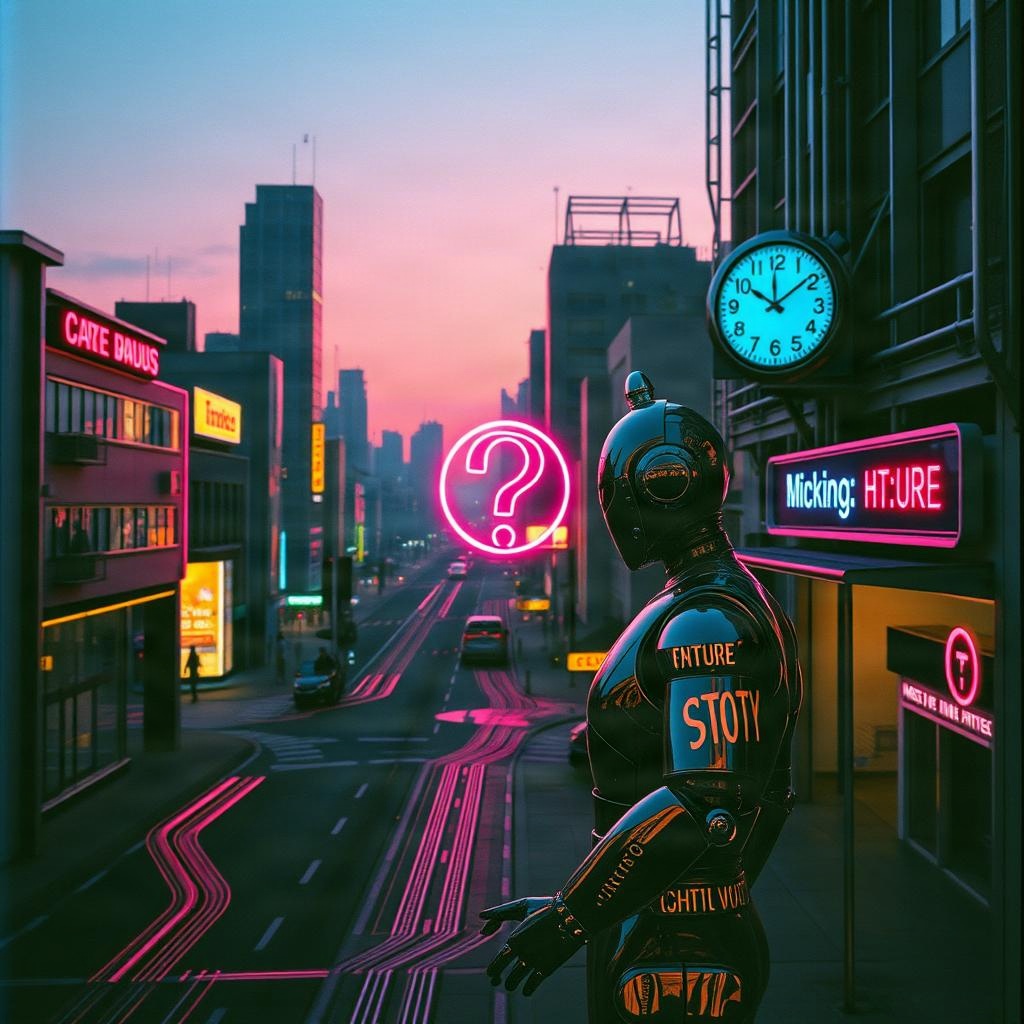
“Pandora’s Vox” is Geoffrey Reilly’s most playful and chaotic meditation on artificial intelligence, a song that blends technological anxiety, absurdist humor, cyberpunk imagery, and cultural satire into something that feels like a late-night argument between a futurist, a skeptic, and a stand-up comedian. Unlike “The Writer,” which explores creative compulsion, or “The Other End of Rockets,” which relies on emotional empathy, “Pandora’s Vox” thrives on tension between fascination and apprehension. It is less interested in offering conclusions than in documenting a collective unease about technologies advancing faster than society’s ability to understand them.
The result is a song that is often funny, frequently clever, occasionally uneven, but consistently memorable.
A Strong Central Premise
The title is one of the song’s best features.
“Pandora’s Vox” cleverly merges the myth of Pandora’s Box with the modern concept of voice-driven AI and digital systems. The title immediately suggests that humanity may have opened something powerful whose consequences are not yet fully understood. That concept permeates the entire lyric. Unlike many anti-technology songs that portray innovation as uniformly evil, Reilly focuses on uncertainty:
“We’re messing with knowledge
we don’t understand”
This becomes the song’s central thesis. Not that AI is necessarily dangerous. Not that it’s necessarily beneficial. But that humanity may be moving faster than its wisdom.
The Opening Is Effective Because of Its Humor
The song begins with:
“Machine learning Chatbots
And neural networking
Generative AI
Is that robot twerking?”
This is a smart opening because it avoids sounding academic. Many songs about technology become trapped in jargon. Reilly immediately undercuts technical language with absurdity. The “robot twerking” line serves two purposes:
- It humanizes an intimidating subject.
- It signals that the song will approach AI through satire rather than fear alone.
The humor gives the lyric energy. The strongest recurring section is:
“We’re messing with knowledge
we don’t understand
playing our cards
without knowing our hand”
This is excellent songwriting.
The card-playing metaphor is simple, relatable, and effective. Everyone understands the danger of making high-stakes decisions without sufficient information. The metaphor communicates the entire song’s concern without requiring technical expertise. The follow-up lines:
“A sprint to the finish
But where are we going?”
are equally strong. They capture a defining characteristic of modern technology culture: Speed often takes precedence over direction. This may be the lyric’s most insightful observation.
Reilly’s Gift for Strange Imagery
One of the things that makes “Pandora’s Vox” memorable is its willingness to be ridiculous. Consider:
“Deep fakes and cupcakes
and fungible tokens”
or
“Autonomous AI
we’re lost in the loop
we bob in the broth
like bones in the soup”
These images shouldn’t work together. Yet somehow, they do. The juxtaposition of sophisticated technology with domestic or absurd imagery creates a sense of cultural confusion that mirrors the song’s subject matter. The world feels increasingly strange. The lyric sounds strange too. That consistency is a strength.
Satire and Unease
The funniest section appears here:
“Big data dildos
the tech market thrives
tech moguls huddle
to fuck with AI”
This verse is intentionally provocative. The vulgarity isn’t merely there for shock value. It reflects the song’s suspicion that technological development is often driven by commercial incentives, ego, and competition rather than wisdom. The imagery is crude, but it aligns with the song’s satirical tone. Whether listeners find it clever or excessive will likely depend on their taste for irreverence.
“Pandora’s Vox” succeeds because it captures the emotional uncertainty surrounding artificial intelligence better than it captures the technology itself. Geoffrey Reilly wisely avoids technical explanations and instead focuses on what many people feel: fascination, confusion, excitement, and apprehension. Through recurring warnings about “messing with knowledge we don’t understand,” along with a parade of surreal images involving deepfakes, cupcakes, fungible tokens, robot ranchers, and soup-broth humanity, the song creates a world that feels both ridiculous and plausible. Its humor prevents it from becoming alarmist, while its repeated questions prevent it from becoming complacent. Among Sapient Rain’s technology-themed songs, it stands as a smart and entertaining exploration of a future that may be arriving faster than anyone fully understands.
Lyrics for Pandora’s Vox
Machine learning Chatbots
And neural networking
Generative AI
Is that robot twerking?
Dystopian dice thrower
Orwellian wise
Miss Information and Mr. Disguise
Encrypted and scripted
We sharpen the knives
To give to AI
control of our lives
We’re messing with knowledge
we don’t understand
playing our cards
without knowing our hand
A sprint to the finish
But where are we going?
Dimmed and diminished
We’ve no way of knowing
Deep fakes and cupcakes
and fungible tokens
Can’t learn from mistakes
If nothing gets broken
Big data dildos
the tech market thrives
tech moguls huddle
to fuck with AI
Autonomous AI
we’re lost in the loop
we bob in the broth
like bones in the soup
They’re messing with knowledge
they don’t understand
playing their cards
without knowing their hand
A sprint to the finish
But where are they going?
Dimmed and diminished
They’ve no way of knowing
The question to ask is
where does this lead us?
Robot ranch farmers
to herd and to breed us?
We’re messing with knowledge
we don’t understand
playing our cards
without knowing our hand
Have a listen:
Hey Fascist, Catch

“Hey Fascist, Catch” is one of Geoffrey Reilly’s more morally conflicted and emotionally layered political songs. Unlike many protest songs that draw a simple line between heroes and villains, this lyric wrestles with a more uncomfortable question: what happens when inflammatory rhetoric, political polarization, and violence begin feeding one another in a self-perpetuating cycle? While the song clearly condemns the subject of its critique, it also refuses to celebrate the violent response. That tension gives the lyric more depth than many contemporary political songs.
In many ways, “Hey Fascist, Catch” is less about ideology than escalation.
The Central Idea
The title is immediately provocative:
“Hey Fascist, Catch”
It’s a phrase that sounds like a dare, a taunt, or a challenge. More importantly, it serves as the spark that ignites the entire narrative. Reilly treats the phrase as both an event and a symbol:
“Hey Fascist, Catch
has lit the match”
The metaphor is effective because the song is fundamentally about ignition. A single act triggers consequences that quickly spread beyond the individuals involved. The match image recurs thematically throughout the lyric in references to burning, aftermath, fire, and bloodshed.
Strong Narrative Compression
One of the song’s strengths is its economy.
Within a few lines Reilly establishes:
- a public figure
- inflammatory rhetoric
- an act of violence
- a broader social consequence
For example:
“Kirk had a right
to spit his spite
and stir the grievance pot”
This is one of the more interesting lines in the song.
Notice that Reilly grants the subject a “right” to speak while simultaneously criticizing the content of that speech. The lyric is not framed as a censorship argument. It is framed as an argument about responsibility. That distinction adds nuance.
The Best Refrain
The chorus is the emotional center:
“Hey Fascist, Catch
has lit the match
America is burning”
This is effective protest-song writing. The phrase “America is burning” functions both literally and metaphorically. The strongest part of the chorus, however, is the question that follows:
“In the aftermath
of our bloodbath
is anybody learning?”
That final line elevates the song. Without it, the lyric might simply be another political condemnation. Instead, Reilly asks a broader societal question. The focus shifts from blame to reflection. The song becomes an inquiry rather than merely an accusation.
Reilly’s Most Mature Political Instinct
One of the most compelling aspects of the lyric is its rejection of martyrdom.
Consider:
“We ought to run
from martyrdom
not pin it to our chest”
This may be the strongest writing in the song. Political movements often elevate victims into symbols. Reilly suggests that this process can become dangerous when it glorifies conflict rather than preventing future harm. The image of literally pinning martyrdom to one’s chest is vivid and memorable. It transforms an abstract cultural behavior into a physical act.
Where the Song Falls Short
The principal weakness is that listeners unfamiliar with the underlying event may feel they are entering the story in the middle.
Unlike songs such as “A Man of No Importance” or “The Other End of Rockets,” which provide complete narrative worlds, “Hey Fascist, Catch” assumes some context. The emotional message remains understandable, but some references depend on outside knowledge. Additionally, a few lines feel more functional than imaginative:
“Tyler took his shot”
communicates information clearly but lacks the symbolic richness of stronger images elsewhere in the lyric. The song is generally at its best when it leans into metaphor rather than reportage.
“Hey Fascist, Catch” is one of Geoffrey Reilly’s more mature protest songs because it resists the temptation to treat violence as a satisfying conclusion to political conflict. Instead, the lyric explores how grievance, provocation, retaliation, and martyrdom can feed one another in a destructive cycle. The recurring image of a match igniting a fire provides a strong organizing metaphor, while the repeated question, “is anybody learning?”, gives the song an introspective dimension that elevates it above simple outrage. Though some references may be rooted in a specific moment, the song’s larger concern remains broadly relevant: when public discourse becomes increasingly inflammatory, everyone risks getting burned.
Have a listen:
What Would Jesus Do?

“What Would Jesus Do” is one of Sapient Rain’s most direct and confrontational songs, trading subtlety for urgency. As a piece of pop songwriting, Geoffrey Reilly’s lyric succeeds because it takes a familiar cultural phrase, “What Would Jesus Do?”, and transforms it into a moral indictment aimed at contemporary American politics, nationalism, and religious hypocrisy. Whether listeners agree with its politics or not, the lyric demonstrates a clear understanding of how effective protest songs often work: they simplify a complex issue into memorable, emotionally charged images and repeated questions.
The Central Hook
The song’s greatest strength is its title and recurring premise. “What would Jesus do?” is instantly recognizable to a broad audience. Reilly uses the phrase ironically, contrasting the compassionate teachings attributed to Jesus with behaviors he believes contradict those teachings.
The opening verse immediately establishes the song’s provocative tone:
What would Jesus do
to a brownish me and you
would he throw us in a cage
and attack us with his rage
The rhyme scheme is simple and almost childlike, which works in the song’s favor. The innocence of the phrasing makes the accusation feel sharper. Rather than constructing a complex theological argument, the lyric asks questions whose answers seem self-evident.
From a pop perspective, this is effective because listeners instantly understand the conflict. Great pop writing often revolves around a single question or emotional dilemma. Here, the dilemma is whether modern behavior aligns with the moral example many profess to follow.
The chorus is arguably the strongest writing in the song:
In the cold and brackish waters
of America’s not great
we’re drowning in hypocrisy
and the riptide of our hate
The water metaphor is vivid and memorable. “Cold and brackish waters” creates a physical environment that feels unpleasant, polluted, and dangerous. The phrase “riptide of our hate” is particularly effective because it suggests a force that sweeps people away even when they may think they are in control. The best protest songs often contain an image that encapsulates the entire argument. For this song, the drowning metaphor serves that purpose.
The follow-up lines:
We’re bastardizing Jesus
ignoring what he said
not welcoming the stranger
terrorizing them instead
lack some of the poetic elegance of the preceding water imagery, but they compensate with clarity and conviction. Reilly is no longer implying his point. He is stating it outright.
The Power and Risk of Specificity
The song takes a bold turn with:
If Jesus Christ came back today
what would MAGA do?
they’d label him a liberal
and re-crucify the jew
This is the lyric’s most memorable and controversial moment.
From a pop songwriting standpoint, specificity increases impact. Naming MAGA rather than speaking generally about hypocrisy gives the song a clear target. Listeners know exactly what the writer is criticizing.
However, specificity can also limit a song’s reach. Songs built around universal themes often remain relevant across decades because they leave room for multiple interpretations. This lyric intentionally narrows interpretation. Supporters of the political movement being criticized may stop listening to the moment the target becomes explicit. That does not make the writing ineffective. It simply means the song prioritizes conviction over broad commercial appeal.
The “re-crucify the jew” line is especially striking because it connects the historical crucifixion narrative with a contemporary critique. It is provocative, unforgettable, and likely intended to shock listeners into reconsidering how religious identity and political identity can become intertwined.
Effective Use of Satire
Another standout verse is:
MAGA’s blue-eyed Jesus
is muscle-bound and blonde
armed and deadly dangerous
from heaven and beyond
This is sharp political satire. The image contrasts traditional teachings associated with humility and compassion against a modern cultural caricature of strength, nationalism, and militancy. What makes the verse effective is its visual nature. Listeners can immediately picture the character being described. Good lyrics often create mental images faster than they create intellectual arguments.
As pop songwriting, “What Would Jesus Do” succeeds because it combines a powerful central hook, memorable imagery, and unmistakable thematic focus. Geoffrey Reilly demonstrates a strong instinct for crafting lines that are immediately understandable and emotionally resonant. The song’s best moments, particularly the “brackish waters” chorus and the imagined return of Jesus, linger in the listener’s mind long after the song ends.
Its greatest strength is its courage. It does not hide behind abstraction or metaphor when it has something to say. Its greatest weakness is that this same directness occasionally reduces poetic complexity and may alienate listeners who feel targeted rather than invited into reflection.
The lyric is memorable, provocative, and emotionally coherent, with several striking images and a chorus strong enough to carry the song’s message. While it sometimes favors argument over artistry, its passion, clarity, and conviction make it one of the more impactful socio-political lyrics in the Sapient Rain catalog.
Lyrics for What Would Jesus Do?
What would Jesus do
to a brownish me and you
would he throw us in a cage
and attack us with his rage
what would Jesus say
when we choose to look away
not turn the other cheek
and make mincemeat of the weak
In the cold and brackish waters
of America’s not great
we’re drowning in hypocrisy
and the riptide of our hate
We’re bastardizing Jesus
ignoring what he said
not welcoming the stranger
terrorizing them instead
If Jesus Christ came back today
what would MAGA do?
they’d label him a liberal
and re-crucify the jew
MAGA’s blue-eyed Jesus
is muscle-bound and blonde
armed and deadly dangerous
from heaven and beyond
In the cold and brackish waters
of America’s not great
we’re drowning in hypocrisy
and the riptide of our hate
We’re bastardizing Jesus
ignoring what he said
not welcoming the stranger
terrorizing them instead
What would Jesus say
about how we treat the poor
of how open we’ve become
to the slamming of the door
I think Jesus would be sick
at what America’s become
fanatically intolerant
and lovers of the gun
In the cold and brackish waters
of America’s not great
we’re drowning in hypocrisy
and the riptide of our hate
We’re bastardizing Jesus
ignoring what he said
not welcoming the stranger
terrorizing them instead
Have a listen:
Time Misspent in Wonderland
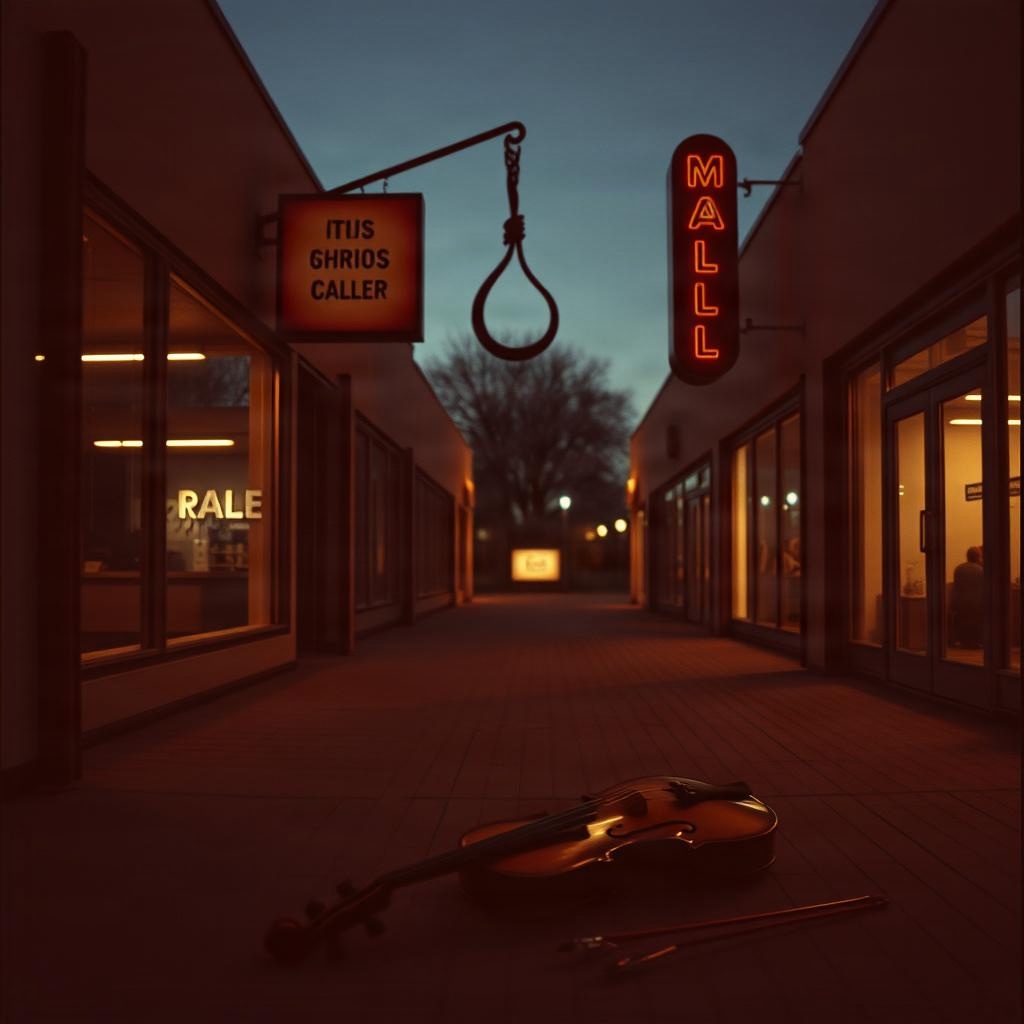
“Time Misspent in Wonderland” may be one of Geoffrey Reilly’s most literary lyrics. Unlike the relatively direct narratives of “Oxana” or “Too Small to See,” this song operates through fragments, symbols, contradictions, and surreal imagery. It feels less like a conventional pop lyric and more like a poetic collage of societal decline, personal regret, and cultural exhaustion.
The challenge for any songwriter is whether such dense imagery can function effectively within the framework of a pop song. In this case, the answer is both yes and no. The lyric achieves remarkable atmosphere and emotional texture, but sometimes sacrifices accessibility and immediate emotional connection.
The Song’s Central Achievement: Atmosphere
From the opening lines, the listener enters a world of unease:
Blood-stained silhouettes,
blurred shadows on the wall
This is a cinematic beginning. The imagery is vivid but unresolved. We do not know exactly what has happened, but we know something is wrong. The next line deepens the contradiction:
we construct a hangman’s gallows
then go skipping through the mall
This may be the strongest couplet in the song. It captures one of Reilly’s recurring themes: humanity’s ability to ignore looming disaster while continuing everyday routines.
The juxtaposition is startling. A hangman’s gallows suggest death, punishment, collapse. A shopping mall suggests consumer normalcy. Together they create a powerful image of collective denial. From a pop songwriting standpoint, memorable contrasts often make for memorable lyrics, and this one lands immediately.
Wonderland as Metaphor
The title is deceptively clever.
“Wonderland” traditionally evokes fantasy, innocence, curiosity, and escape.
But Reilly transforms it into a place of regret and paralysis.
The refrain:
Time misspent in wonderland
works effectively because it can be interpreted several ways simultaneously.
Wonderland may represent:
- nostalgia
- escapism
- political fantasy
- denial
- social media distraction
- memories of opportunities lost
The lyric never specifies.
That ambiguity gives the song unusual depth.
Listeners bring their own “wonderland” into the interpretation.
The Chorus Is Strong but Unconventional
Consider the central section:
Time misspent in wonderland
in what-might-have-been galore
The phrase “what-might-have-been” captures the song’s emotional core. Regret is a common pop theme, but Reilly presents it in collective rather than personal terms. The following lines are particularly effective:
with a distant grin
we stir our gin
sit cross-legged
on the floor
The rhyme and rhythm suddenly become more conversational and intimate. After several dense and apocalyptic verses, these details feel human. Listeners can picture the scene. The song briefly zooms in from civilization to individual behavior. This is important because it provides emotional grounding.
Imagery Density: Strength and Weakness
One of the lyric’s most distinctive features is its relentless imagery.
Examples include:
Souls too weak to whisper
the dead feed off the living
dust becomes the air
shake their fists and curse the sun
quoting Nietzsche and Carl Jung
missiles pierce the sky
crackling fires from funeral pyres
Almost every line introduces a new image or concept.
The advantage is richness.
Each listening reveals new connections.
The disadvantage is cognitive overload.
Pop songs often succeed because listeners grasp at least one emotional narrative immediately. Here, listeners are required to work harder.
The lyric rewards attention but does not necessarily invite casual listening.
The Nietzsche and Jung Reference
One of the song’s most interesting moments is:
while others mumble silently
quoting Nietzsche and Carl Jung
This line injects intellectual satire into the lyric. Reilly appears to be critiquing various responses to crisis.
Some people become angry. Others retreat into theory. Neither group seems to accomplish much. The reference works conceptually, but from a pure pop perspective it may divide audiences. Listeners familiar with Nietzsche and Jung will appreciate the allusion. Others may experience the line as an interruption to the emotional flow. This illustrates a recurring feature of Reilly’s writing: he often prioritizes intellectual texture over universal accessibility.
The Silos Refrain
The strongest recurring image in the song is arguably:
The silos hold no missiles
The silos hold no corn
This is excellent songwriting. The image is simple, memorable, and mysterious. Missiles symbolize military purpose. Corn symbolizes agricultural purpose. The silos contain neither. They are empty. The implication is a society that has lost both its means of defense and its means of sustenance.
Then comes:
The empty silos bellow
At a world that’s full of scorn
The silos become almost mythological figures. The personification gives the song a haunting quality. As a recurring refrain, this section provides some of the strongest structural cohesion in the lyric.
The Final Verse
The closing stanza is among the song’s best:
Time misspent in wonderland
we sip on broken dreams
This is immediately understandable despite its poetic nature.
Then:
In weeds of woe and circumstance
life leaking from our seams
This is a beautifully constructed image.
The phrase “life leaking from our seams” evokes slow loss rather than sudden catastrophe. It feels human. It feels vulnerable. And unlike some earlier passages, it requires no intellectual decoding. The emotional meaning arrives instantly.
Where the Lyrics Are Less Effective
The song’s greatest weakness is the absence of a clear narrative anchor. Who is speaking? Where are we? What specific event has occurred? The listener never quite knows.
Many great pop songs use imagery to support a story. Here, imagery often becomes the story. That makes the song fascinating but occasionally distancing. The listener admires the craftsmanship and symbolism more than they identify with a specific character or situation. A second challenge is that nearly every line carries equal emotional weight. The lyric rarely relaxes. There are few moments of simplicity between the major symbolic statements. As a consequence, certain images do not receive the space they deserve.
“Time Misspent in Wonderland” is one of Geoffrey Reilly’s most ambitious lyrics. It combines dystopian imagery, social commentary, existential regret, and surreal symbolism into a densely layered meditation on decline and missed opportunity. The writing frequently achieves genuine poetic power, particularly through its recurring contrasts of catastrophe and normalcy, purpose and emptiness, hope and regret.
From a pop-song perspective, however, the lyric occasionally becomes a victim of its own intelligence. The imagery arrives so quickly and so continuously that listeners may struggle to find a simple emotional thread on first hearing. This is less a sing-along song than a song to revisit, unpack, and contemplate.
Compared with “1.5 Degrees Celsius,” it is far more poetic. Compared with “Oxana,” it is less immediately relatable. Compared with “Too Small to See,” it is less focused around a single unforgettable concept. Yet it may be richer and more evocative than all three.
Its memorable refrains, powerful imagery, and thematic depth make it one of Sapient Rain’s most artistically sophisticated songs. It sacrifices some accessibility and commercial immediacy, but gains lasting interpretive richness in return. For listeners who enjoy lyrics that reveal new meanings over repeated listens, “Time Misspent in Wonderland” may be among Geoffrey Reilly’s finest achievements.
Lyrics for Time Misspent in Wonderland
Blood-stained silhouettes,
blurred shadows on the wall
we construct a hangman’s gallows
then go skipping through the mall
Souls too weak to whisper
our words fold into prayer
the dead feed off the living
and dust becomes the air
Some people start to gather
shake their fists
and curse the sun
while others mumble silently
quoting Nietzsche and Carl Jung
The silos hold no missiles
The silos hold no corn
The empty silos bellow
At a world that’s full of scorn
Time misspent in wonderland
in what-might-have-been galore
with a distant grin
we stir our gin
sit cross-legged
on the floor
regret displaces hopefulness
hate becomes our core
anger conquers gracefulness
with flash bombs at her door
Volunteers go knocking
on windows and locked doors
a search of all the wounded souls
buried under dusty floors
Rubber necks on splintered decks
missiles pierce the sky
the crackling fires
from funeral pyres
sparkle in our eyes
The silos hold no missiles
The silos hold no corn
The empty silos bellow
At a world that’s full of scorn
Time misspent in wonderland
we sip on broken dreams
In weeds of woe and circumstance
life leaking from our seams
Have a listen:
Sapient Rain is a human–AI musical collaboration created by writer/lyricist Geoffrey Reilly working together with the AI music engine Suno.
Sapient Rain’s music blends political fire, surreal storytelling, and nostalgic autobiography, delivered through lyrics that read more like literary vignettes than conventional songcraft. Sapient Rain’s growing catalog is thematically dense, with each track functioning as a miniature narrative or social critique.
Check out Sapient Rain on Spotify, YouTube Music, and Apple Music.
Let me know what you think of the lyrics and the music in the comments!